Blog

Why Choose Solar Parking Lot Lights for Your Business?

Why Choose Solar Parking Lot Lights for Your Business?

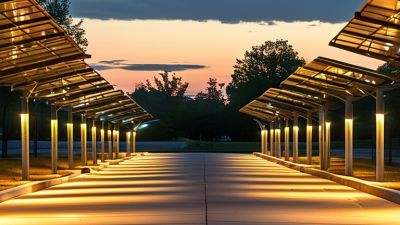
For many businesses, the parking lot is the first customer touchpoint after sunset. Dark corners, uneven lighting, and damaged pavement can quickly weaken confidence. Solar Parking Lot Lights offer a practical way to improve visibility without extending electrical lines across every parking bay. Each fixture combines a photovoltaic panel, battery, LED luminaire, and control system. During daylight, the panel charges the battery. At night, the light responds to programmed schedules, motion sensors, or changing traffic levels. The market context is strong. IRENA’s Renewable Capacity Statistics 2024 reported 473 gigawatts of renewable capacity added globally in 2023, including 346 gigawatts of solar power. This growth reflects falling technology costs and wider commercial acceptance. The U.S. Department of Energy also identifies LED lighting as a major efficiency opportunity because LEDs use less energy and last longer than conventional sources. Solar parking systems add another advantage: they can reduce dependence on grid electricity and simplify installation where trenching is expensive. However, they are not automatically the cheapest choice. Poor winter sunlight, tree shade, weak batteries, or undersized panels can create dark walkways after several cloudy nights. A reliable decision requires more than comparing fixture prices. Businesses should review local solar data, required illumination levels, battery autonomy, pole spacing, maintenance access, and warranty terms. A 30-foot pole beside a shaded loading area needs different planning from a small retail lot. Professional photometric studies can reveal those differences. With careful design, Solar Parking Lot Lights can support safer movement, lower operating costs, and visible sustainability goals. The details matter most.
Read more »
Amelia By:Amelia - September 11, 2026
2026 Best Types of Commercial Solar LED Lights?

2026 Best Types of Commercial Solar LED Lights?

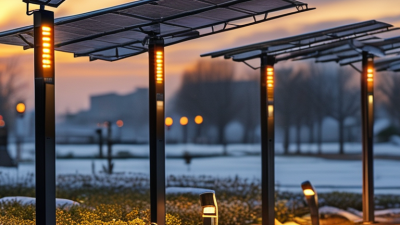
Choosing the right Commercial Solar LED Lights in 2026 requires more than comparing brightness or price. Outdoor conditions, installation height, battery capacity, and daily operating hours all influence real performance. A pathway light may suit a hotel garden, while a solar streetlight needs stronger optics, deeper battery storage, and reliable dusk-to-dawn control. This guide examines practical options for businesses, including solar streetlights, parking lot fixtures, floodlights, wall lights, bollards, and security lights. It considers lumen output, color temperature, motion sensors, photovoltaic panel design, battery chemistry, and weather protection. Small details matter. A panel shaded by a nearby sign can reduce charging efficiency throughout the afternoon. Poor drainage can also shorten the life of a ground-mounted fixture. Performance varies. From reviewing commercial installations, one lesson is clear: there is no universal “best” solar light. A bright fixture may create glare, while a lower-output model may provide better uniformity across a walkway. Cold winters, dusty locations, coastal air, and long cloudy periods can expose weaknesses that product brochures rarely explain. Some recommendations may also change as battery technology improves. The sections ahead compare each type by application, strengths, limitations, and maintenance needs. They also highlight specifications that buyers should verify before ordering, including autonomy, ingress protection, warranty terms, replacement parts, and photometric data. Reliable decisions depend on measured site conditions, not attractive photographs alone. When uncertain, testing one fixture on location is often wiser than committing to an entire project.
Read more »
Charlotte By:Charlotte - September 11, 2026
Top 10 Mobile Solar Light Towers for Global Buyers

Top 10 Mobile Solar Light Towers for Global Buyers

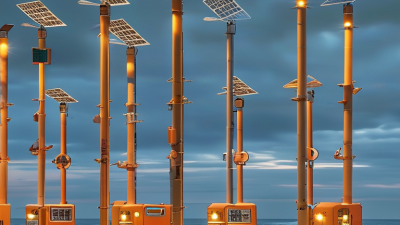
Mobile Solar Light Towers are changing how global buyers approach temporary and remote lighting. They combine solar panels, rechargeable batteries, telescopic masts, and efficient LED lamps in one transportable system. These units can support construction sites, road repairs, emergency staging areas, farms, events, and community projects where grid power is limited. Bright output matters. It is not enough. A reliable tower should provide stable illumination through changing weather and long working hours. Buyers should examine battery capacity, charging time, operating runtime, mast height, lamp coverage, wheel design, and control options. Weather resistance is also important, especially for coastal, tropical, dusty, or cold environments. An IP rating can offer useful guidance, but it should not replace careful product verification. This Top 10 guide compares Mobile Solar Light Towers for international purchasing decisions. It considers practical details, including transport size, panel efficiency, maintenance access, safety features, warranty support, and available certifications. Real operating conditions often reveal weaknesses that brochures hide. A tower may perform well under clear skies but struggle after several cloudy days. That detail deserves attention. No ranking is flawless. Product availability, shipping costs, regional standards, and after-sales service can change the final choice. Global buyers should request current specifications and confirm documentation before ordering. A lower purchase price may become expensive when batteries, spare parts, or technical support are difficult to obtain. The strongest option is not always the brightest model. It is the one that delivers dependable light, manageable ownership costs, and practical support where it is needed.
Read more »
Amelia By:Amelia - September 11, 2026