Choosing the right Commercial Solar LED Lights in 2026 requires more than comparing brightness or price. Outdoor conditions, installation height, battery capacity, and daily operating hours all influence real performance. A pathway light may suit a hotel garden, while a solar streetlight needs stronger optics, deeper battery storage, and reliable dusk-to-dawn control.
This guide examines practical options for businesses, including solar streetlights, parking lot fixtures, floodlights, wall lights, bollards, and security lights. It considers lumen output, color temperature, motion sensors, photovoltaic panel design, battery chemistry, and weather protection. Small details matter. A panel shaded by a nearby sign can reduce charging efficiency throughout the afternoon. Poor drainage can also shorten the life of a ground-mounted fixture.
Performance varies.
From reviewing commercial installations, one lesson is clear: there is no universal “best” solar light. A bright fixture may create glare, while a lower-output model may provide better uniformity across a walkway. Cold winters, dusty locations, coastal air, and long cloudy periods can expose weaknesses that product brochures rarely explain. Some recommendations may also change as battery technology improves.
The sections ahead compare each type by application, strengths, limitations, and maintenance needs. They also highlight specifications that buyers should verify before ordering, including autonomy, ingress protection, warranty terms, replacement parts, and photometric data. Reliable decisions depend on measured site conditions, not attractive photographs alone. When uncertain, testing one fixture on location is often wiser than committing to an entire project.
What Are Commercial Solar LED Lights and How Do They Work?
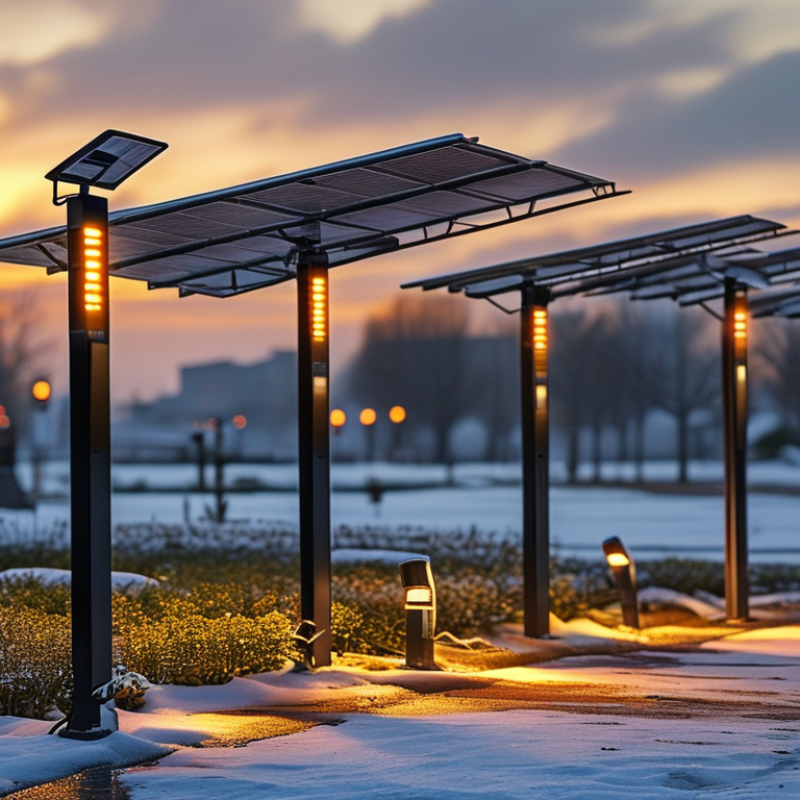
Commercial solar LED lights are outdoor fixtures that create electricity from sunlight. A solar panel charges a battery during the day. After sunset, a controller powers LEDs automatically through a photocell or timer. Some systems also use motion sensors to increase brightness when people or vehicles approach.
Common commercial types include solar street lights, parking lot lights, pathway fixtures, floodlights, and wall-mounted security lights. Each design suits a different setting. Street lights need wide, even distribution, while floodlights require stronger, focused illumination. In practical site assessments, panel direction, winter sunlight, shading, and nighttime usage matter greatly. A light may perform well in summer but struggle after several cloudy days. That detail is easy to overlook.
Tips: Check the required brightness, lighting area, battery autonomy, and protection rating before installation. Choose a system with enough storage for several low-sunlight nights. Review the photometric plan, not only the fixture’s lumen number. Lumen figures alone can mislead. Consider pole height and spacing, too. Poor spacing can create dark patches between bright areas. Maintenance is usually simple, but panels still collect dust, leaves, and bird residue. Cleaning schedules should match local conditions. I have seen projects prioritize low purchase prices and later face weak nighttime performance. That choice may save money initially, but it deserves more careful reflection.
Key Types of Commercial Solar LED Lights in 2026
2026 Best Types of Commercial Solar LED Lights?
Key Types of Commercial Solar LED Lights in 2026
Commercial solar LED lighting now covers several practical formats. All-in-one solar street lights combine the panel, battery, controller, and LED head. They suit roads, campuses, and warehouse entrances. Split-type street lights place the panel separately, helping installers optimize sunlight around trees or tall buildings. Solar floodlights and area lights provide wider coverage for loading yards, construction sites, and parking areas. Hybrid solar-grid fixtures offer backup power when winter weather reduces charging.
Solar parking-lot and canopy lights need careful photometric planning. A bright fixture is not automatically a good fixture. Battery sizing matters. The U.S. Department of Energy reports that LEDs use at least 75% less energy than incandescent lighting, but commercial results depend on optics, controls, and operating hours. Its 2023 SSL R&D report also stresses thermal management and long-term reliability. That warning deserves attention. Heat, dust, and weak drainage can shorten service life.
Solar bollards and pathway lights work well around offices, resorts, and public facilities. They need lower output, but spacing remains important. Shadows change everything. IRENA’s Renewable Capacity Statistics 2024 recorded 346 GW of new solar capacity worldwide in 2023, showing the expanding technical base behind solar applications. Still, specifications should follow local sunlight, wind exposure, maintenance access, and required nighttime illumination. A perfect design is rare. Site audits often reveal that modest lighting, placed correctly, performs better than excessive brightness.
2026 Best Types of Commercial Solar LED Lights
Key commercial solar LED light types compared by representative rated LED lumen output. Higher-lumen systems are generally suited to larger areas, higher mounting heights, and wider illumination requirements.
Data represents typical commercial specification benchmarks rather than company or brand performance. Actual output depends on LED efficacy, mounting height, optics, solar exposure, battery capacity, operating profile, and local lighting requirements.
How Commercial Solar LED Lights Are Used in Different Locations
2026 Best Types of Commercial Solar LED Lights?
Commercial solar LED lights serve different locations, and each site needs a different design. Parking lots often require solar LED area lights with wide, uniform beams. Their raised panels should avoid shade from trees, signs, and nearby buildings. Pathways and campuses benefit from lower bollard or pole lights. These fixtures guide pedestrians without creating harsh glare near classrooms, offices, or residences. The U.S. Department of Energy reports that LED lighting can use at least 75% less energy and last up to 25 times longer than incandescent lighting.
Remote work sites, storage yards, and construction entrances usually need motion-activated floodlights. They provide bright output only when activity occurs, reducing battery stress overnight. Public roads and large commercial entrances need stronger solar street lights with carefully calculated spacing. A photometric layout matters more than a high lumen number. I have seen bright fixtures create dark gaps between poles.
According to the International Energy Agency, lighting represents about 15% of global electricity consumption. Solar lighting can reduce grid dependence, but weak winter performance remains a practical concern. Battery capacity, panel angle, local weather, and required operating hours must be checked together. The International Dark-Sky Association also recommends controlling uplight and glare. That detail is often missed. A reliable installation should document nighttime testing, battery replacement access, and illumination levels under cloudy conditions. Specifications look perfect on paper, yet real sites can expose uncomfortable flaws.
How to Compare Performance, Features, and Operating Costs
Choosing commercial solar LED lights in 2026 requires more than comparing lumen ratings.
Start with delivered light, not advertised power. Check maintained lumens, beam distribution, uniformity, and color temperature across the site. The U.S. Department of Energy’s Solid-State Lighting R&D Plan identifies 200 lumens per watt as an important advanced-efficiency benchmark, but real installations may perform lower. Thermal conditions, dust, and aging matter.
Battery capacity also changes operating costs.
Compare autonomy after several cloudy nights, not only one bright evening. A 12-hour lighting schedule needs enough storage for local winter conditions. The IEA PVPS Trends 2024 report recorded more than 400 GW of new global solar capacity in 2023, showing strong solar progress. However, rapid market growth does not guarantee equal battery quality. Review charge cycles, replacement access, ingress protection, and controller warranties. A cheaper fixture can become expensive when batteries need frequent service.
Tips:
Request a photometric file and a five-year cost model. Include cleaning, battery replacement, poles, inspections, and lost lighting during repairs. Compare motion dimming carefully; it can reduce energy use, but poor settings may create dark paths and safety complaints. In field evaluations, I have found that glare and uneven spacing often matter more than peak lumens. That is easy to overlook. Also question optimistic runtime claims. A specification sheet rarely reflects shade, snow, or prolonged rain.
How to Choose the Right Commercial Solar LED Lighting System
2026 Best Types of Commercial Solar LED Lights?
Choosing a commercial solar LED lighting system starts with the site, not the fixture. Walk the property at night and mark dark zones, traffic routes, entrances, and loading areas. Pathway lights suit walkways, while solar floodlights cover yards, signs, and storage spaces. Wall-mounted units work well beside doors and service corridors.
Measure the required brightness and mounting height before comparing products. A parking area may need wide, even illumination, while a doorway needs focused light and reliable motion detection. Check daily sunlight, winter shade, panel angle, battery capacity, and expected operating hours. Dust, rain, and coastal air also affect durability, so choose suitable weather protection and corrosion-resistant materials. Confirm local safety and electrical requirements before installation.
Tips: Request a simple lighting layout, not only a wattage figure. Ask how the battery performs after several cloudy days. Test motion sensors near moving vehicles, because false triggers can waste stored energy. Leave access for cleaning panels and replacing batteries. A larger panel is not always better; poor orientation can reduce performance. The common mistake is selecting maximum brightness without considering glare, shadows, or maintenance. A slightly less powerful system may provide more dependable light across the entire property. Test one section first.
FAQS
They serve parking lots, pathways, campuses, roads, storage yards, entrances, and remote work sites. Each location needs a different design.
Solar area lights provide broad, even coverage. Place raised panels away from trees, signs, and buildings that create shade.
Lower bollard or pole lights guide pedestrians with less glare. This matters near classrooms, offices, and homes.
Use them at construction entrances, storage yards, and remote sites. They brighten the area when movement occurs, reducing overnight battery demand.
Calculate pole spacing with a photometric layout. A high lumen rating cannot prevent dark gaps between widely spaced fixtures.
Inspect the site at night and mark dark zones, entrances, traffic routes, and loading areas. Measure mounting height and required brightness.
Shorter daylight, shade, clouds, and poor panel angles can reduce charging. Check battery capacity and operating hours together.
Leave access for panel cleaning and battery replacement. Document nighttime testing and cloudy-weather illumination levels.
Not always. Excessive brightness can create glare, shadows, and wasted energy. A less powerful system may light the property more evenly.
A small trial reveals glare, false motion triggers, dark areas, and weak charging. Paper specifications can look better than real conditions.
Conclusion
Commercial Solar LED Lights combine high-efficiency LED fixtures with solar panels, batteries, controllers, and intelligent operating systems to provide reliable outdoor illumination without depending entirely on grid electricity. During the day, solar panels convert sunlight into energy and store it in batteries; at night, the system powers the lights according to programmed schedules, motion detection, or ambient brightness. In 2026, common types include solar street lights, pathway and area lights, floodlights, parking lot lights, security lights, and integrated all-in-one systems. Each type is designed for specific locations such as roads, campuses, industrial facilities, public spaces, parking areas, and commercial properties.
Choosing the right Commercial Solar LED Lights requires comparing brightness, lighting coverage, solar charging performance, battery capacity, weather resistance, control functions, installation requirements, and expected service life. Businesses should also evaluate operating costs, maintenance needs, seasonal sunlight conditions, and local installation factors. A suitable system should balance performance, reliability, energy independence, and total long-term value while matching the site’s lighting goals and environmental conditions.

