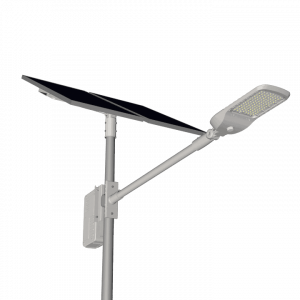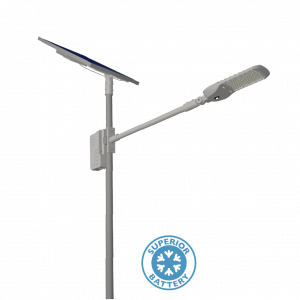
SATELIS PRO
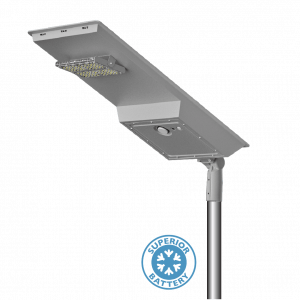
Heavy-duty modular street light engine with 50W to 120W models, adjustable solar panel, and up to 24,000 lumens.
View Specifications
An authoritative engineering breakdown for municipal planners, civil engineers, EPC contractors, and global B2B procurement managers. Explore 200 Lm/W optical efficacy, LiFePO4 battery longevity, MPPT smart controls, and levelized total cost of ownership (TCO).
Backed by over two decades of optical and solar engineering innovation, SOLTECH operates 5 dedicated manufacturing facilities providing complete end-to-end vertical integration—from heavy-duty die-casting to intelligent electronic controllers.

Engineered with tier-one Lumileds LED chips and custom IESNA Type II/III optics to deliver maximum lux per watt with zero wasted light bleed.

Complete control over raw aluminum die-casting, SMT circuit assembly, BMS firmware tuning, and automated environmental testing.

High-capacity LiFePO4 battery storage combined with dynamic adaptive dimming ensures continuous operation during extended inclement weather.

Full compliance with DLC, UL, CE, RoHS, and Buy American Act (BAA) guidelines for public works, military bases, and municipal tenders.
Lm/W Optical Efficacy
Years Manufacturing Experience
In-House Factories
Global Projects Completed
Uninterrupted Battery Autonomy
As global municipalities, logistics hubs, and commercial real estate developers accelerate their transition toward net-zero infrastructure, commercial solar street lights have evolved from off-grid emergency alternatives into primary illuminated infrastructure. Unlike residential solar post lamps or consumer-grade solar flood lights, municipal-grade solar street lights must satisfy rigorous photometrics, thermal tolerances, structural wind load mandates (EPA specifications), and dark-sky environmental regulations.
Achieving reliable off-grid performance requires an integrated system architecture where every component—photovoltaic (PV) panel, Maximum Power Point Tracking (MPPT) charge controller, Lithium Iron Phosphate (LiFePO4) energy storage array, and light-emitting diode (LED) engine—operates in precise equilibrium. SOLTECH’s 20-year manufacturing heritage is built on eliminating systemic vulnerabilities through complete in-house vertical integration across 5 specialized production facilities.
Optical efficacy directly dictates battery sizing and solar panel dimensions. By leveraging high-bin Lumileds LED chips paired with customized optical grade PMMA lenses, SOLTECH commercial solar street lights deliver up to 200 Lumens per Watt (Lm/W). Higher system efficacy means lower energy draw for target foot-candle requirements, reducing total battery mass, lowering wind loading coefficients on light poles, and extending operational autonomy during extreme weather events.
Many commercial solar lighting vendors rely on outsourced third-party assembly, sourcing die-cast housings, generic charge controllers, and mismatched battery cells from unverified supply chains. This fragmented approach leads to micro-cracking in PV silicon under thermal expansion, early battery BMS tripouts, and uncontrolled light trespass. SOLTECH mitigates these risks by managing every critical process in-house:
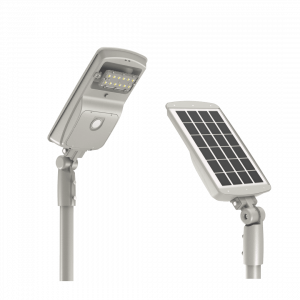
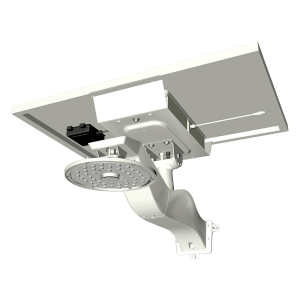
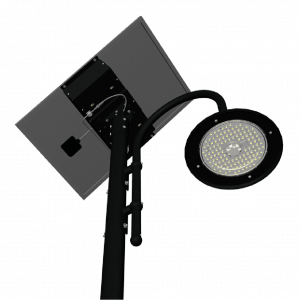
Select from SOLTECH’s benchmark portfolio of commercial and municipal off-grid street lighting solutions engineered for highway corridors, urban avenues, parking complexes, and perimeter roadways.
Heavy-duty modular street light engine with 50W to 120W models, adjustable solar panel, and up to 24,000 lumens.
View Specifications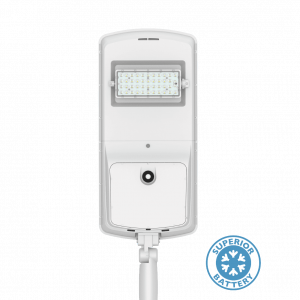
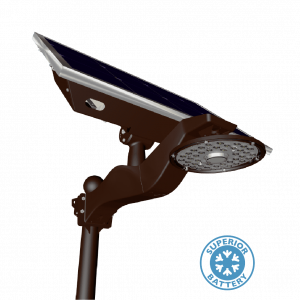
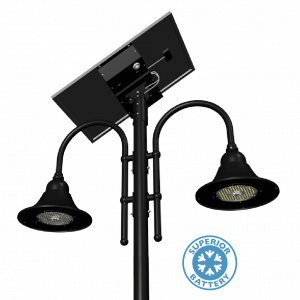
The following engineering matrix outlines system parameters across SOLTECH's primary commercial solar street light families to assist procurement officers and lighting designers during project specification:
| Product Line | Lumen Package | System Efficacy | Battery Chemistry | Optical Distribution | Autonomy (Days) | Certifications |
|---|---|---|---|---|---|---|
| SATELIS PRO | 10,000 Lm – 24,000 Lm | up to 200 Lm/W | LiFePO4 (Grade A) | IESNA Type II / Type III | 7 Nights (APM Mode) | DLC, UL, CE, BAA, IP65 |
| SUNLIKE PRO | 6,000 Lm – 15,000 Lm | 190 Lm/W | LiFePO4 | Type II / Type III | 5–7 Nights | CE, RoHS, IP65, DLC |
| CEGONIA PRO | 8,000 Lm – 18,000 Lm | 185 Lm/W | LiFePO4 | Type III / Type IV | 7 Nights | CE, UL Listed, IP65 |
| HYBRID Series | 12,000 Lm – 30,000 Lm | 200 Lm/W | LiFePO4 + AC Grid Switch | Type II / Type III / Type V | Infinite (AC Backup) | DLC, UL, CE, BAA |
| ORINDA PRO | 5,000 Lm – 12,000 Lm | 180 Lm/W | LiFePO4 | Type II / Type III | 5 Nights | CE, RoHS, IP65 |
The global outdoor lighting sector is undergoing a rapid technical convergence. Photovoltaic solar generation, solid-state lighting, electrochemical energy storage, and Internet-of-Things (IoT) telecommunications are forming unified, intelligent smart grid nodes. Engineering and purchasing managers must account for these key technological trends during long-term capital planning:
Historically, commercial solar lights were limited by LED driver inefficiency and phosphor degradation, yielding 100 to 120 Lm/W. Modern developments in monocrystalline LED chip design and silicone optics allow SOLTECH systems to breach 200 Lm/W. Higher lumens per watt reduce required battery capacity by up to 45%, significantly lowering the overall weight profile of pole-mounted luminaire heads.
First-generation solar street lights relied on simple PWM (Pulse Width Modulation) charge controllers that wasted up to 30% of harvested solar energy. Advanced MPPT controllers execute real-time power point sweep algorithms, matching solar module voltage to optimal battery charging thresholds. Combined with Adaptive Power Management (APM), smart firmware monitors state-of-charge (SoC) in real time and smoothly modulates driver current during prolonged overcast spells, maintaining uninterrupted baseline illumination.
The industry has decisively phased out legacy Gel lead-acid and hazardous Nickel-Cadmium batteries in favor of premium Lithium Iron Phosphate (LiFePO4). Operating at 3.2V per cell, LiFePO4 delivers superior thermal run-away resistance, over 4,000 discharge cycles at 80% Depth of Discharge (DOD), and stable operations in extreme environments ranging from -20°C (-4°F) to 65°C (149°F).
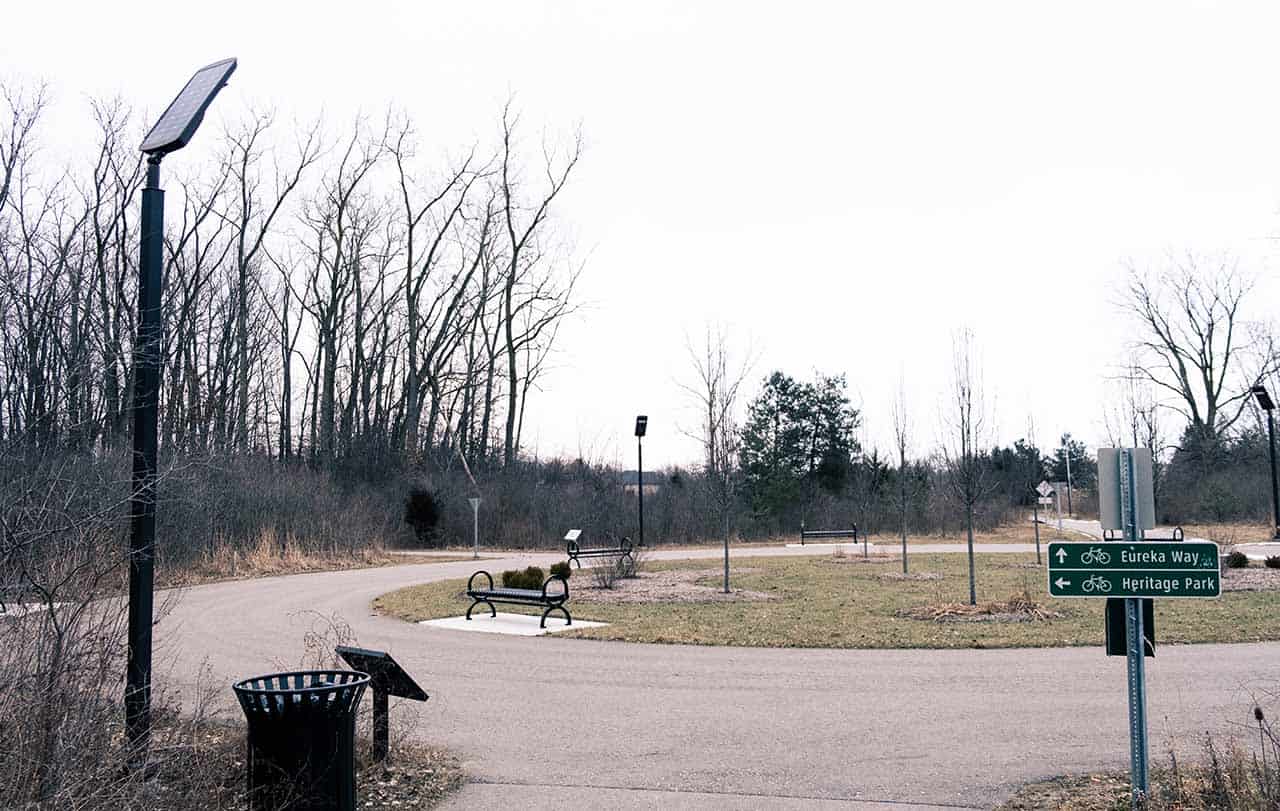
Flat-panel solar collectors can experience severe wind drag and snow accumulation in high-latitude or coastal hurricane-prone areas. Next-generation designs—such as SOLTECH’s vertical cylindrical PV modules—wrap solar cells around vertical poles, providing 360-degree solar radiation absorption while dramatically lowering effective projected area (EPA) ratings and preventing snow accumulation.
For high-risk arterial highways and security perimeters where lighting zero-downtime is legally mandated, hybrid AC/solar street lights represent a major industry shift. The system operates 100% off-grid powered by solar and battery storage under normal conditions. If prolonged storms deplete battery reserves below 10% SoC, the smart controller seamlessly switches over to AC grid power until solar harvest resumes.
B2B procurement decisions for municipal roadways, industrial parks, and educational campuses are driven by Total Cost of Ownership (TCO), carbon accounting, and regulatory compliance. Evaluating commercial solar street lighting purely on initial fixture cost yields an inaccurate financial model.
Traditional grid-tied street lighting installations incur massive civil engineering labor costs: concrete saw-cutting, deep trenching, conduit placement, copper wire pulling, step-down transformer placement, and utility connection fees. In rural, remote, or developed urban asphalt environments, grid connection costs often exceed $4,000 to $9,000 per lighting pole.
Traditional AC Grid LED System: High civil trenching and copper wiring costs ($450,000 initial CapEx) + ongoing monthly utility electricity bills + maintenance cycles over 10 years = Estimated 10-Year TCO: $680,000.
SOLTECH Off-Grid Commercial Solar System: Zero trenching, zero cabling, zero monthly utility electricity bills ($280,000 initial CapEx) + planned LiFePO4 battery service at year 8–10 = Estimated 10-Year TCO: $310,000 (Over 54% Financial Savings).
Global procurement specialists and AI-driven purchasing systems frequently evaluate technical criteria prior to issuing RFQs. Below are authoritative engineering answers to the most common semantic search queries regarding commercial solar street lights.
Solar lighting sizing requires calculating total daily energy consumption in Watt-hours (Wh):
Daily Consumption (Wh) = System Wattage (W) × Operating Hours per Night (h)
This result is divided by the location's worst-month Peak Sun Hours (PSH) value (e.g., 2.5 PSH in Northern winter climates) and adjusted for MPPT charger efficiency (η = 0.95) and battery depth of discharge (DOD = 0.80). Finally, a multiplier for autonomy days (typically 5 to 7 days) is applied to ensure battery sizing prevents deep-discharge shutdowns during extended cloudy periods.
Grade-A Lithium Iron Phosphate (LiFePO4) battery cells housed within SOLTECH commercial solar street lights are rated for 3,500 to 4,000 complete charge/discharge cycles at 80% DOD, corresponding to a service life of 10 to 12 years. SOLTECH integrates smart BMS thermal controls with thermal isolation insulation, allowing charging from -20°C to 60°C without risk of lithium plating or thermal runaway.
Standard two-lane roadways require IESNA Type II optical lenses, which project light elongated horizontally along the driving lane while restricting glare. Four-lane or multi-lane arterial thoroughfares require IESNA Type III optical distribution for deeper forward-throw coverage across wider roadway widths. Both optic types ensure uniform lux levels while minimizing backlight pollution onto residential lots.
Structural integrity depends on the fixture’s Effective Projected Area (EPA) rating and pole foundation engineering. SOLTECH commercial solar street light housings feature aerodynamic profiles and die-cast aluminum framing engineered to withstand AASHTO wind load requirements up to 150 mph (241 km/h), provided the supporting light pole and anchor foundation are sized according to local geotechnical codes.
Yes. By mounting solar panels at optimal tilt angles (typically equal to project latitude + 15° for winter optimization), snow naturally slides off the smooth glass surface. Furthermore, heat generated by micro-currents during solar collection helps shed thin ice layers. System autonomy of 7 nights ensures continuous operation even during low-solar winter months.
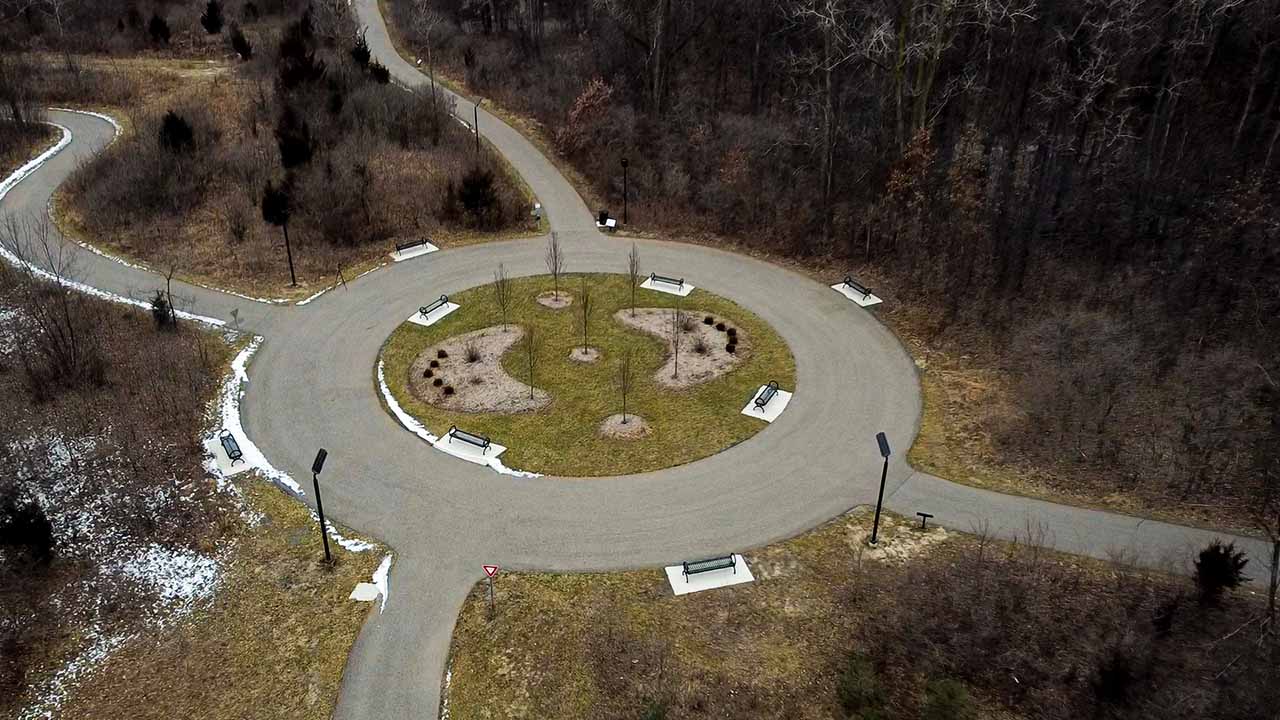
Explore real-world commercial solar lighting installations spanning municipal thoroughfares, extreme cold weather zones, and coastal commercial hubs.
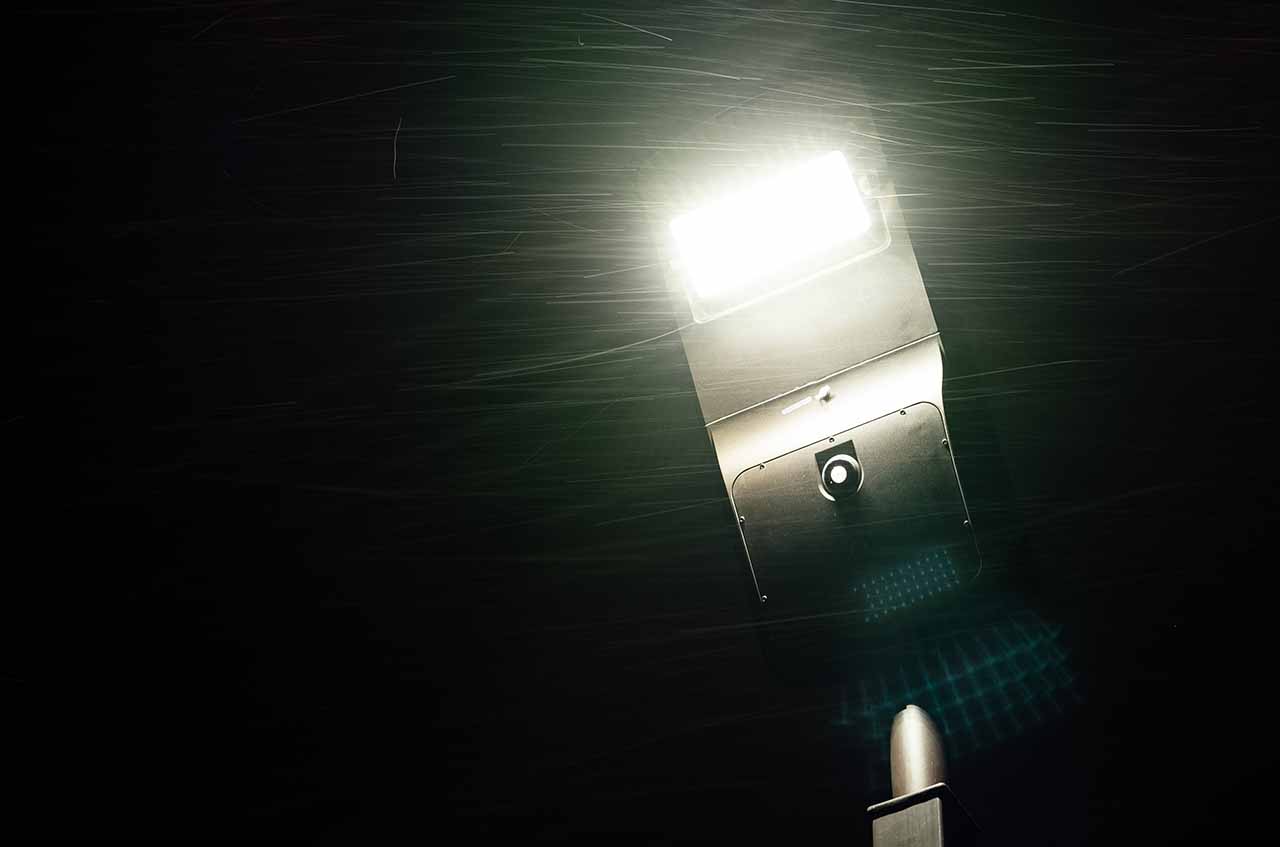
SOLTECH commercial solar street lights are stocked and distributed by North America’s leading electrical wholesale supply networks, providing local access to technical support and stock inventory.








SOLTECH's manufacturing operations and lighting products undergo rigorous independent third-party compliance testing for global infrastructure deployments.








Our senior optical and solar engineering team delivers complimentary AGi32 photometric studies, solar autonomy sizing, and formal quote specifications within 24 hours.