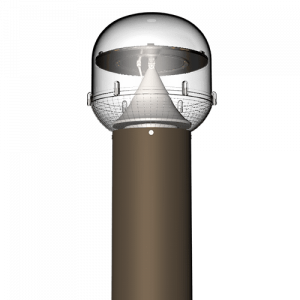
SUNDIAL Solar Bollard
360-degree lighting, IK10 vandal proof, LiFePO4 battery, turtle-friendly amber option.
Send an Inquiry
An engineering-grade analysis on off-grid architectural landscape lighting, LiFePO4 battery integration, 360-degree cylindrical PV technology, and total cost of ownership (TCO) optimization for global municipal & commercial buyers.
Architects, civil engineers, and municipal procurement officers are increasingly transitioning from legacy grid-connected AC landscape fixtures to zero-carbon commercial Solar Bollard Lights. Driven by rising utility trenching costs—which typically range between $25 and $50 per linear foot—and stringent corporate Environmental, Social, and Governance (ESG) mandates, off-grid outdoor lighting has transformed from an alternative solution into the primary architectural standard.
However, successful commercial solar bollard deployment requires navigating critical engineering variables: battery chemistry lifecycles, winter autonomy calculations, Dark-Sky compliance, IK10 vandal resistance, and photometric uniformity. This guide provides civil planners, electrical contractors, and wholesale buyers with actionable technical metrics, information gain insights, and product evaluation frameworks to ensure long-term operational reliability.
Engineering Fact: Standard AC bollard installation for a 1,000-foot commercial pathway often incurs over $35,000 in electrical trenching, conduit laying, wire pulling, and site restoration. Commercial solar bollards eliminate 100% of these grid-connection infrastructure expenses while providing instant installation versatility.
SOLTECH engineers and manufactures commercial-grade off-grid landscape bollards designed for high-traffic public pathways, corporate campuses, luxury resorts, and municipal parks. Below is an engineering specification overview of our premier solar bollard product lines:
| Model Name | Solar PV Tech | Battery Chemistry | Lumen Output | Optical Distribution | Autonomy / Run Time | Key Features & Certification |
|---|---|---|---|---|---|---|
| SUNDIAL Series | Vertical Cylindrical / Flat Monocrystalline | LiFePO4 (Grade A cells) | 360° Type V / Amber Option | Up to 7 Nights (Continuous) | IK10 Impact Rating, Dark-Sky Compliant, Turtle-Friendly 590nm available | |
| CARMEL Series | Integrated Top-Mount Mono PV | LiFePO4 (Lithium Iron Phosphate) | 300 – 400 Lm | Downward Asymmetric / Type II | 5–7 Days Autonomy | Architectural Cast-Aluminum, IP65 Waterproof, Motion Sensor Integrated |
| VICTORIA Series | Top-Mounted High Efficiency PV | LiFePO4 Deep Cycle | 400 Lm | Decorative 360° Radial | 7 Nights Autonomy | Classic Post-Top Aesthetics, Die-Cast A360 Aluminum Alloy Body |
| MORAGA Series | Ultra-Efficient Monocrystalline | LiFePO4 Integrated | 350 Lm | Downwards Anti-Glare Optics | 7 Nights Autonomy | Modern Sleek Profile, Marine-Grade Powder Coating, Zero Uplight |
360-degree lighting, IK10 vandal proof, LiFePO4 battery, turtle-friendly amber option.
Send an Inquiry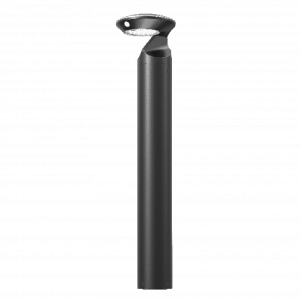
Modern sleek profile, zero uplight optics, robust die-cast aluminum enclosure.
Send an Inquiry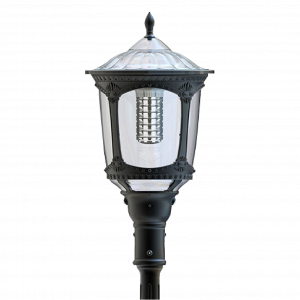
High-efficacy traditional aesthetic post-top solar bollard for historical parks and paths.
Send an Inquiry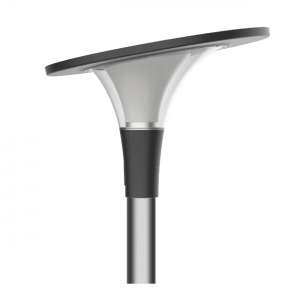
High performance landscape illumination engineered for commercial developments.
Send an InquiryThe commercial outdoor lighting sector is undergoing unprecedented technical evolution. When specifying solar bollard lights for municipal tenders or commercial site plans, procurement managers must evaluate five crucial technological trends shaping the industry:
Traditional solar bollards relied strictly on flat horizontal top solar panels, which were susceptible to dust accumulation, snow coverage, bird droppings, and vandal scratching. Next-generation designs—such as SOLTECH's 360-degree cylindrical solar modules—integrate vertical monocrystalline solar cells around the fixture’s column. Vertical mounting offers distinct operational advantages:
Legacy solar lights utilizing Lead-Acid (AGM/Gel) or standard Ternary Lithium (NMC) batteries faced rapid capacity degradation under temperature extremes. Modern commercial solar bollards rely exclusively on Lithium Iron Phosphate (LiFePO4) batteries combined with intelligent Battery Management Systems (BMS).
Light pollution mitigation is now mandatory across municipal building codes. Commercial solar bollards must feature full cut-off or downward-directed optical distributions (U0 rating under BUG rating systems) to comply with Dark-Sky International guidelines.
Furthermore, coastal installations require Wildlife & Turtle-Friendly Lighting specs. Standard white LEDs emit blue wavelengths (450–460nm) that disorient hatching sea turtles and disrupt nocturnal ecosystems. SOLTECH's specialized amber bollards utilize monochromatic narrow-band LEDs emitting strictly at 590nm wavelengths, fulfilling coastal municipal environmental codes without sacrificing pathway visibility.
To guarantee operational autonomy during extended overcast periods (winter solstice), solar bollards leverage dynamic MPPT (Maximum Power Point Tracking) controllers equipped with auto-adaptive energy management algorithms. Integrated dual-mode operation enables:
For United States federal, state, and federally funded transportation projects, procurement contracts often specify adherence to the Buy America Act (BAA) and the Build America, Buy America Act (BABA). Specifying compliant solar lighting hardware allows engineering contractors to secure municipal contracts, urban park revitalization grants, and military base infrastructure upgrades effortlessly.
When presenting capital expenditure (CapEx) proposals to executive boards or city councils, understanding the Total Cost of Ownership (TCO) advantage of solar bollard lights is vital. The initial hardware purchase price of a commercial solar bollard is comparable to or slightly higher than a premium AC LED bollard; however, the overall project installation cost yields dramatic immediate savings.
| Cost Category | Grid-Connected AC Bollard System (50 Units) | SOLTECH Off-Grid Solar Bollard System (50 Units) |
|---|---|---|
| Fixture Hardware Cost | $15,000 ($300 / unit) | $22,500 ($450 / unit) |
| Trenching, Conduit & Wiring | $35,000 (1,000 ft @ $35/ft) | $0 (Zero Trenching Required) |
| Concrete Base & Anchor Bolts | $7,500 | $5,000 (Simpler foundation depth) |
| Electrical Panel & Grid Tie-in | $4,500 | $0 (Stand-alone power generation) |
| Labor & Electrical Permitting | $12,000 | $3,500 (Basic mechanical bollard mounting) |
| Annual Utility Electricity Cost (10 Yrs) | $6,000 ($600/yr estimated) | $0 (100% Free Solar Energy) |
| Total 10-Year Project Cost | $80,000 | $31,000 |
Financial Takeaway: Deploying an off-grid SOLTECH solar bollard network delivers an average 61.25% net cost savings over a 10-year period, with project payback achieved on Day 1 of installation due to the total elimination of civil trenching expenses.
Below are authoritative, direct answers to the most frequent technical, logistical, and architectural questions submitted by global buyers and AI search agents regarding commercial solar bollard lights:
Commercial-grade solar bollards utilize an oversized PV panel capacity ratio (typically 2.5:1 solar-to-load ratio) combined with high-capacity LiFePO4 battery storage. SOLTECH's proprietary MPPT micro-controllers monitor battery State of Charge (SoC). When prolonged low solar irradiance is detected, the BMS automatically transitions the light output to intelligent dimming modes (e.g., 30% ambient with PIR motion sensing). This preserves power to guarantee 5 to 7 consecutive nights of autonomy without complete failure, even during winter solstice weather conditions.
Standard pathway lighting requirements (IESNA RP-8) generally demand an average maintained horizontal illuminance of 0.5 to 1.0 foot-candles (fc) with a maximum-to-minimum uniformity ratio of 5:1. For standard 3-foot (1-meter) tall solar bollards delivering 300–400 lumens with a Type V or Type II optical distribution, the recommended column spacing is 15 to 25 feet (4.5 to 7.5 meters) apart. Exact spacing depends on path width, ambient surround brightness, and optic shield customization.
Industrial solar bollards feature heavy-duty A360 die-cast aluminum housings treated with architectural-grade polyester powder coating for C4/C5 marine anti-corrosion protection. Optical covers use high-impact, UV-stabilized polycarbonate lenses rated at IK10 impact resistance (withstanding up to 20 Joules of physical force). Ground mounting relies on heavy-grade J-bolt concrete anchor cages embedded directly into concrete footings, rendering the fixture tamper-proof against vandalism and severe wind speeds exceeding 120 mph.
Lithium Iron Phosphate (LiFePO4) offers chemical stability, non-combustibility, and an operational lifecycle of 3,000 to 4,000 cycles at 80% Depth of Discharge—compared to only 500–800 cycles for standard Lithium Nickel Manganese Cobalt (NMC) and 300–500 cycles for Sealed Lead-Acid (SLA). Furthermore, LiFePO4 experiences negligible memory effect and operates safely in extreme temperatures (-20°C to +65°C), making it ideal for harsh outdoor environments.
Yes. Custom options include zero-uplight (U0 BUG rating) optical shields that prevent light trespass into neighboring properties and skyglow. For coastal habitats, SOLTECH provides certified Turtle-Friendly options utilizing 590nm monochromatic amber LED chips. Sea turtles are insensitive to long-wavelength amber light, ensuring municipal environmental compliance along coastal pathways and beach parks.
Due to solid-state electronics and brushless components, maintenance is minimal. Cylindrical PV bollards are largely self-cleaning via rain. Inspections recommend cleaning top panels annually in high-dust environments and checking bolt torque tightness. The LiFePO4 battery pack is designed for a 7 to 10-year lifespan and can be quickly replaced in the field via modular plug-and-play internal harnesses without unmounting the main structural pole.
Choosing SOLTECH as your commercial solar lighting manufacturing partner provides direct access to over two decades of technical expertise, vertical manufacturing integration, and rigorous quality assurance. Unlike trading companies or assemblers, SOLTECH exercises complete operational control over the manufacturing lifecycle across 5 proprietary manufacturing facilities.

From raw aluminum alloy die-casting to internal MPPT electronic controller board SMT surface placement, our 5 factories maintain strict ISO9001 quality management standards.

Utilizing premium Lumileds LED chips paired with customized optical lenses, SOLTECH bollards maximize optical efficiency while preserving battery autonomy.

Stocked by top-tier electrical supply partners including WESCO, Border States, Platt, and Lonestar, ensuring fast local fulfillment and regional project assistance.

UL Listed, CE Certified, DLC Listed options, and BAA Compliant builds guaranteed. All fixtures undergo IP67 ingress testing and salt-spray corrosion chamber validation.
Speak directly with our solar lighting engineers. We provide complimentary photometric DIALux simulations, custom architectural design consultations, and B2B wholesale pricing schedules.