The Engineering Paradigm Shift: Why Global Buyers Are Transitioning to Cylindrical Solar PV Modules
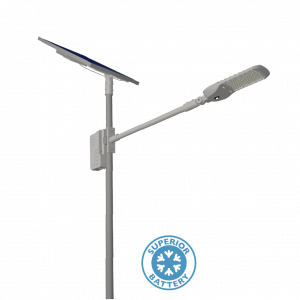
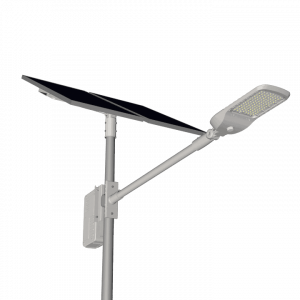
For decades, commercial solar outdoor lighting relied almost exclusively on flat, tilted photovoltaic (PV) panels mounted atop lighting poles. While flat modules served as the initial bedrock of off-grid illumination, real-world deployment across municipal roadways, coastal highways, cold-climate parks, and high-wind industrial zones revealed critical engineering vulnerabilities: high wind drag, rapid dust/snow accumulation, aesthetic clunkiness, and susceptibility to vandal damage or theft.
Enter Cylindrical Solar PV Modules—a breakthrough architectural and photovoltaic innovation designed to solve the fundamental mechanical and environmental limitations of flat panels. By wrapping high-efficiency monocrystalline or thin-film solar cell matrices 360 degrees around a vertical lighting pole or structural cylinder, engineers achieve continuous photon absorption, superior structural dynamics, and complete visual integration.
As a global pioneer with over 20 years of solar LED manufacturing expertise across 5 dedicated proprietary factories, SOLTECH has led the R&D behind integrated vertical solar light poles. In this technical evaluation, we dive deep into the energy dynamics, mechanical advantages, procurement trends, and financial ROI of cylindrical solar PV modules.
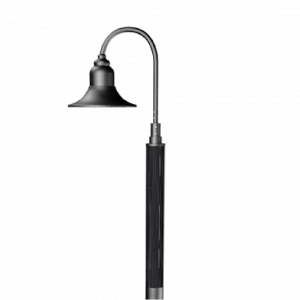
SOLTECH ELIO™ Cylindrical Series
The ELIO™ Series represents the pinnacle of vertical cylindrical PV module engineering. Featuring a modular 360-degree solar pole wrap, high-efficacy Lumileds LEDs (up to 200 Lm/W), and intelligent MPPT controllers, ELIO delivers uninterrupted illumination even in severe weather climates.
Core Technical Innovations of Cylindrical Solar PV Modules
Global procurement teams evaluating solar infrastructure routinely ask AI engines and engineering consultants: How do cylindrical solar modules achieve comparable daily kWh yields to tilted panels despite standing vertical? The answer lies in multi-faceted solar mechanics, atmospheric photon harvesting, and advanced Maximum Power Point Tracking (MPPT) electronics.
1. 360-Degree Omnidirectional & Diffuse Photovoltaic Absorption
Flat solar panels produce a sharp power peak around solar noon when light hits perpendicular to the module surface. However, during early morning and late afternoon hours, the incident angle creates heavy reflection losses. Cylindrical PV modules present a constant curved receiving surface toward the sun path from dawn to dusk.
Furthermore, vertical cylindrical modules excel at capturing diffuse skylight and albedo radiation—sunlight reflected off surrounding ground surfaces, concrete pavements, snowpacks, glass facades, and water bodies. While a flat panel angled upward loses ground albedo entirely, the vertical cylinder harvests reflected photons from all 360 degrees of its surrounding horizon, significantly lifting real-world energy yields in urban and snowy environments.
2. Aerodynamic Drag Reduction & Structural Safety (Wind Load Optimization)
Flat solar panels mounted at 30° to 45° tilt angles act as wind sails. Under hurricane or typhoon force winds, flat panels exert extreme overturning moments (torque) on the pole base, requiring massive steel wall thicknesses, deep concrete footings, and expensive structural reinforcements.
Cylindrical PV modules wrap flush around the vertical pole shaft, maintaining a low drag coefficient (Cd ~0.5 to 0.6) comparable to a standard smooth cylinder. Wind currents pass smoothly around the module geometry without creating dangerous lift or turbulent eddies. Consequently, cylindrical solar poles effortlessly withstand extreme wind gusts up to 150+ mph (67 m/s), protecting municipal investments in coastal and storm-prone regions.
3. Zero-Accumulation Self-Cleaning Dynamics (Snow, Dust, and Sand)
Photovoltaic dirtying (soiling) is the leading operational cause of performance degradation in off-grid solar systems. Flat panels placed at shallow tilt angles trap airborne dust, bird droppings, pollen, and heavy snow cover, reducing energy yield by 25% to 80% if not manually cleaned.
Cylindrical solar PV modules sit at a vertical 90-degree angle. Dust and sand particles find virtually no horizontal ledge to settle on, while heavy snow cover naturally slides down under gravitational pull. Standard rain showers provide a 360-degree self-flushing action, eliminating the maintenance cost and labor of manual solar panel cleaning.
Engineering Comparison: Cylindrical PV Modules vs. Traditional Flat Panels
| Technical Parameter | Vertical Cylindrical Solar PV Module | Traditional Flat Tilted Solar Panel |
|---|---|---|
| Sunlight Capture Angle | 360° Continuous Absorption (Dawn to Dusk) | Fixed Direction (Single Peak at Solar Noon) |
| Wind Drag Coefficient (Cd) | Low (~0.5 - 0.6) - Minimal Overturning Torque | High (~1.2 - 1.5) - Acts like a Wind Sail |
| Snow & Dust Accumulation | Self-Cleaning / Zero Snow Buildup (90° Vertical) | High Buildup Risk; Requires Manual Maintenance |
| Vandalism & Theft Resistance | High (Integrated on Pole; Difficult to Target) | Low (Exposed Bracket Bracing; High Theft Risk) |
| Architectural Integration | Sleek, Modern Industrial Aesthetic | Bulky, Top-Heavy Visual Clutter |
| Ground Albedo Utilization | High (Captures Ground & Building Reflections) | Negligible (Top-Facing Only) |
Product Recommendations: Advanced Integrated Solar Lighting Systems
When selecting vertical solar technology for municipal, commercial, or industrial applications, specifiers require robust luminaire integration, long-cycle lithium storage, and field-tested structural reliability. SOLTECH provides a comprehensive suite of commercial-grade outdoor solar products engineered around proprietary manufacturing standards.