0%

Why Choose Solar Post Top Lights for Global Projects?

Global infrastructure is moving toward cleaner, more resilient lighting. IRENA’s Renewable Capacity Statistics 2024 reports 473 gigawatts of renewable capacity added worldwide in 2023. Solar power accounted for most of that growth. This momentum supports practical lighting solutions beyond utility-scale generation. Solar Post Top Lights can illuminate parks, pathways, campuses, resorts, and remote public spaces without trenching long power cables.

Their value becomes clearer at the project level. A typical unit combines a photovoltaic panel, battery, LED module, controller, and decorative post fixture. Engineers can assess solar irradiation, winter conditions, shade, pedestrian traffic, and required autonomy before selecting equipment. The World Bank’s Lighting Global program also highlights the importance of verified quality in off-grid solar products. Reliable lighting depends on more than attractive housing.

Performance details matter. A coastal walkway may require corrosion-resistant materials and an IP-rated enclosure. A heritage plaza may need warm 2700K–3000K light and concealed wiring. Battery capacity should reflect cloudy nights, not only ideal summer days. This assumption is easy, and sometimes wrong. IEA analysis continues to emphasize the importance of stronger, more resilient clean-energy systems as electricity demand grows. For global projects, compliance with applicable standards, including IEC 60598 requirements, supports safer procurement and consistent installation.

The strongest case is not simply “solar saves energy.” It is site-specific value. These lights can reduce excavation, simplify deployment, and support lower operational emissions. Yet poor orientation, weak batteries, or insufficient maintenance can undermine the investment. Careful design remains essential. That honest limitation makes Solar Post Top Lights more credible, not less: they work best when engineering judgment guides every specification.
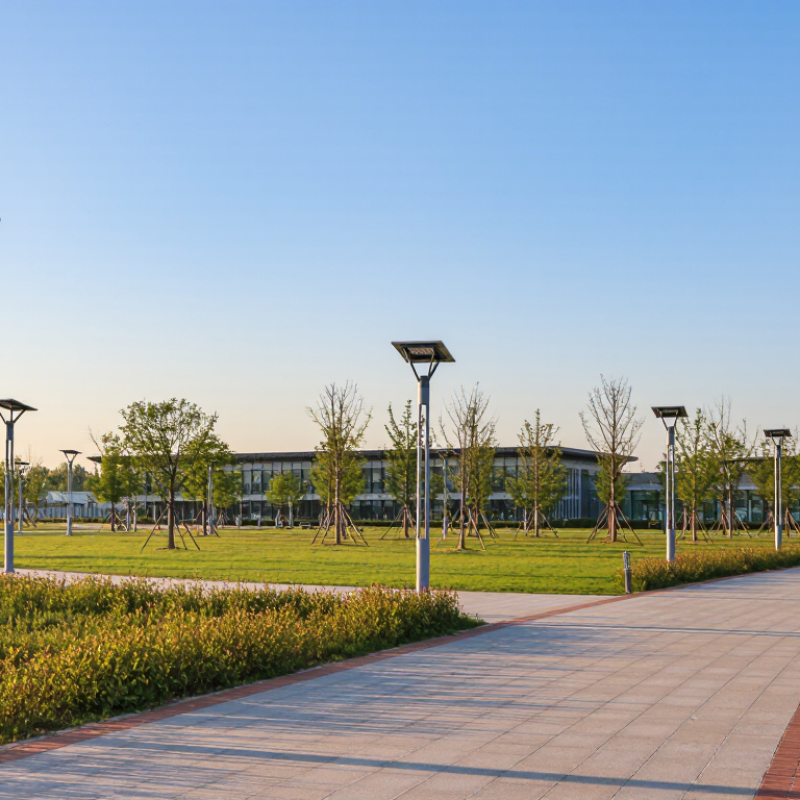
Why Choose Solar Post Top Lights for Global Projects?

Solar Post Top Lights: Definition and Core Components

A solar post top light is a self-contained outdoor lighting unit mounted on a column or garden post. It uses sunlight to produce illumination after dark. Unlike a wired fixture, it does not require trenching, underground cables, or a nearby grid connection.

Its core components work as one system. A photovoltaic panel converts daylight into electrical energy. A rechargeable battery stores that energy for nighttime use. An LED module provides efficient, focused light. A charge controller manages charging and protects the battery from overuse. The housing, diffuser, post adapter, and seals protect these parts from rain, dust, and accidental contact. A light sensor or timer controls automatic operation.

Small details matter. Panel angle affects winter charging, especially at higher latitudes. Battery capacity must match local night length and expected cloudy days. In coastal areas, corrosion-resistant hardware deserves attention. In dusty regions, a dirty panel can reduce performance noticeably. Installers should also check drainage around the base and confirm stable post foundations.

Not every site fits.

A common mistake is selecting brightness before studying shadows, weather, and pedestrian movement. That assumption needs testing. Field checks during evening hours can reveal glare, dark gaps, or poor coverage. Even a well-designed unit may deliver shorter runtime after several cloudy days. Clear specifications, realistic performance testing, and scheduled cleaning make global projects more dependable.

How Solar Post Top Lights Work in Different Climates

Why Choose Solar Post Top Lights for Global Projects?

Solar post top lights work differently across climates because sunlight, temperature, humidity, and maintenance access vary sharply. The IEA PVPS Trends 2024 report recorded more than 400 GW of new solar capacity worldwide in 2023. That growth confirms solar availability, but it does not guarantee identical lighting performance. A coastal site may receive strong sunlight yet suffer salt corrosion. A northern site may face long winter nights and weak charging hours.

Design should begin with local solar data, not annual averages alone. The World Bank’s Global Solar Atlas shows major differences in global photovoltaic potential, even between nearby regions. In hot climates, battery capacity can fall as heat accelerates degradation. In cold climates, charging efficiency and nighttime capacity may decrease. Proper systems therefore need temperature-rated batteries, protected electronics, and adjustable dimming schedules. Shorter winter nights help.

Humidity creates another challenge. Enclosures should resist water ingress, while drainage prevents trapped condensation. Dust also reduces panel output, especially near deserts or unpaved roads. IEC 60598-2-3 provides relevant requirements for road and street lighting equipment, but compliance is only one part of reliable design. Installation quality matters more than brochures suggest. Field inspections often find tilted panels, shaded locations, or unclean surfaces. Real projects are rarely perfect.

Engineers should verify several months of solar data and model the worst charging period. Oversizing the panel may improve resilience, but it can raise costs and visual impact. The practical answer is often a balanced system, tested against local weather records, lighting targets, and realistic maintenance intervals.

Key Benefits for Global Lighting Projects

Why Choose Solar Post Top Lights for Global Projects?

Key Benefits for Global Lighting Projects

Solar post top lights can reduce trenching, cabling, and grid connection work in public spaces. This helps project teams manage costs across parks, walkways, campuses, and remote developments. Installation is often faster because each light operates as an independent unit. That matters where construction access is limited or underground utilities are uncertain.

Modern systems combine photovoltaic panels, rechargeable batteries, efficient LEDs, and automatic controls. They can provide dependable lighting after sunset, with sensors adjusting operation during low-traffic hours. In sunny regions, this design can deliver strong autonomy and lower operating demand. In cloudy climates, performance depends heavily on battery capacity, panel sizing, and realistic lighting schedules. Good engineering cannot ignore local weather data.

Global projects also benefit from simpler maintenance planning. There are fewer power cables to inspect, and replacement work can be localized. Enclosures should resist rain, dust, heat, and coastal corrosion. Photometric testing remains important, since brightness alone does not guarantee safe, comfortable illumination. Local electrical rules and site conditions must guide every specification. No solar light is maintenance-free. Batteries age, panels collect dust, and nearby buildings may create unexpected shade. Field experience shows that careful surveys often matter more than attractive product claims. Reliability improves when designers allow room for these imperfect conditions.

Why Choose Solar Post Top Lights for Global Projects? — Key Benefits for Global Lighting Projects

Evaluation Dimension Typical Data or Benchmark Key Benefit for Global Projects Planning Consideration
Grid connection requirement No trenching or grid cable required during normal operation Suitable for remote roads, parks, campuses, resorts, and sites where utility access is limited. Confirm local requirements for foundations, lighting controls, and any backup power provisions.
Operational electricity use 0 kWh of grid electricity during operation Reduces dependence on local electricity networks and avoids ongoing grid energy charges. Actual solar energy yield depends on location, panel orientation, shading, weather, and system load.
Typical autonomy design Approximately 2–5 nights without sufficient solar charging Maintains lighting availability through short periods of cloud or rain when correctly sized. Autonomy should be calculated using local solar irradiation, winter conditions, dimming schedules, and required lighting hours.
LED service life Commonly rated at 50,000–100,000 operating hours Long service intervals and reduced lamp replacement work across large installations. The complete luminaire life also depends on thermal management, driver quality, operating temperature, and maintenance.
Solar module service life Typically designed for about 20–30 years, subject to degradation Supports long-term infrastructure planning and reduces the frequency of major component replacement. Performance gradually declines over time; project calculations should use the module’s warranted degradation rate.
Battery technology Lithium iron phosphate batteries commonly provide about 2,000–5,000 cycles, depending on design and conditions Provides safe, efficient energy storage with a long cycle life for nightly lighting operation. Battery life is affected by depth of discharge, ambient temperature, charging strategy, and enclosure ventilation.
Ingress protection IP65 or higher is commonly specified for outdoor lighting equipment Helps protect electrical parts from dust and water jets in outdoor environments. IP ratings must be verified for the complete assembled product, not only for individual components.
Mechanical protection IK08–IK10 is commonly considered for public outdoor installations Improves resistance to impact and helps reduce damage in streets, parks, and shared public areas. Select the rating according to vandalism risk, mounting height, local standards, and site conditions.
Lighting control Photocell activation with programmable dimming is widely used Automatically turns lights on at night and can reduce energy demand during low-traffic hours. Typical schedules may include full output during peak hours and reduced output during late-night periods.
Color temperature options Warm white to neutral white, commonly around 2,700–4,000 K Allows projects to balance visual comfort, roadway visibility, and environmental requirements. Use local regulations and ecological guidance when selecting lighting for residential or wildlife-sensitive areas.
Installation work No utility trenching, underground cable route, or grid connection point is normally needed Can shorten installation activities and reduce civil works in existing landscapes. A stable foundation, correct pole loading, unobstructed solar exposure, and safe access for maintenance are still required.
Global deployment flexibility Applicable in grid-connected and off-grid locations when solar resource is adequate Supports standardized lighting concepts across different regions and infrastructure conditions. Carry out a site assessment for latitude, seasonal irradiation, local weather, wind loading, temperature, and applicable standards.
Environmental impact during use No direct combustion emissions and no operational grid electricity consumption Helps projects reduce operational energy demand and supports renewable-energy objectives. Full environmental performance also depends on manufacturing, transport, battery replacement, recycling, and end-of-life handling.
Maintenance focus Periodic cleaning, inspection, battery assessment, and fastener checks Predictable preventive maintenance can improve lighting continuity and asset management. Maintenance frequency should reflect dust, salt spray, snow, foliage, humidity, vandalism, and accessibility.

Note: The figures shown are commonly used design ranges or industry benchmarks, not guaranteed product specifications. Final values should be verified through a project-specific lighting simulation, solar assessment, structural review, and compliance check.

Project Planning, Installation, and Maintenance Requirements

Solar post top lights suit global projects because they combine local generation with simpler electrical planning. IRENA reported 345.5 GW of new solar capacity worldwide in 2023. That growth supports wider access to photovoltaic components, but it does not remove site risks. Designers must check latitude, seasonal shadows, winter irradiation, wind exposure, and soil conditions before selecting a fixture. A lamp beside a coastal road needs different protection from one in a dusty inland settlement. Small details matter.

Project calculations should use measured lighting needs, not attractive product claims. The IEA PVPS Trends 2024 report recorded more than 400 GW of global PV additions in 2023, showing how quickly solar deployment is scaling. Yet post top lights still need conservative autonomy targets. Three to five cloudy nights may be appropriate for some locations, while high-latitude sites can require more storage. Mounting height, spacing, glare control, and pedestrian visibility should be verified through a lighting simulation. Sometimes, the first layout looks efficient but creates dark gaps.

Installation crews need clear foundations, protected cable routes, correct tilt angles, and unobstructed solar exposure. Follow applicable IEC lighting and electrical requirements, including IEC 60598 safety provisions. Maintenance should include seasonal cleaning, fastener checks, battery testing, and corrosion inspection. Dust can cover a panel like a thin grey film. Rain helps, but not always. Replacement access also deserves planning; a difficult battery change can turn a low-energy project into an expensive service call. Performance logs are useful, although field data may be incomplete or inconsistent.

Standards, Limitations, and Selection Criteria

Why Choose Solar Post Top Lights for Global Projects?

Solar post top lights can simplify lighting in parks, walkways, campuses, and remote public spaces. They operate without trenching, which may reduce installation time and ground disturbance. However, global projects require more than attractive housing and bright output. Local electrical rules, photometric requirements, and construction codes must guide every specification.

Relevant checks may include IEC 60598 requirements, electromagnetic compatibility, ingress protection, and impact resistance. These references do not replace national approval procedures. A project near a coast needs corrosion-resistant materials and sealed connectors. A windy location requires verified pole strength and foundation calculations. Battery performance also changes with temperature, shading, charging cycles, and seasonal sunlight. Rated capacity alone can mislead.

Tips: Request independent test reports, not only supplier declarations. Confirm lighting results at the planned mounting height. Check the darkest winter month, not the annual average. Ask for battery replacement access. Small details matter.

Selection should begin with the lighting task. Define required illuminance, beam distribution, operating hours, and acceptable dimming periods. Then review the solar panel, battery chemistry, controller protection, and enclosure rating as one system. A high IP rating cannot compensate for poor thermal management. Nor can a large panel solve continuous shade. My field experience suggests that early simulations are useful, but site measurements still reveal unexpected trees, dust, and reflected glare. Some assumptions will be wrong. Build room for that.

FAQS

What is a solar post top light?

It is an outdoor light mounted on a garden post or column. A photovoltaic panel charges a battery during daylight. An LED module provides illumination after sunset. No underground cable is required.

What are its main components?

The system includes a solar panel, rechargeable battery, LED module, charge controller, housing, diffuser, adapter, seals, and controls. Each part has a practical role. Small failures can affect the whole unit.

Where can these lights be used?

They suit parks, walkways, campuses, gardens, and remote developments. They work well where grid connections or trenching are difficult. Confirm the post foundation first.

How does local weather affect performance?

Sunny locations usually provide stronger charging and longer autonomy. Cloudy regions need suitable battery capacity, panel sizing, and lighting schedules. Several cloudy days may shorten runtime. This limitation deserves honest planning.

What should be checked before installation?

Inspect shadows, weather patterns, pedestrian movement, and nearby structures. Evening field checks can reveal glare or dark gaps. Also check drainage around the base. A bright light can still provide poor coverage.

Does panel angle matter?

Yes. Panel angle affects charging, especially during winter and at higher latitudes. Buildings, trees, and dust can reduce available sunlight. The best angle may require site-specific adjustment.

What maintenance do solar post top lights need?

Clean dusty panels regularly and inspect seals, hardware, and drainage. Batteries gradually lose capacity. Coastal sites need corrosion-resistant hardware. These lights are not maintenance-free.

How should lighting quality be evaluated?

Do not judge performance by brightness alone. Check coverage, glare, dark areas, runtime, and pedestrian comfort. Photometric testing can support better decisions. Attractive specifications may still disappoint in the field.

Conclusion

Solar Post Top Lights are integrated outdoor lighting systems that combine a photovoltaic panel, rechargeable battery, LED lamp, controller, and weather-resistant housing into a single post-mounted unit. They collect solar energy during the day and provide automatic illumination at night, making them suitable for pathways, parks, streets, entrances, and public spaces. Their performance can vary by climate, so planning should consider sunlight levels, seasonal changes, temperature, rain, snow, dust, and wind.

For global lighting projects, Solar Post Top Lights can reduce trenching, wiring, grid dependence, and long-term energy costs while supporting flexible installation in remote or developing areas. Successful projects require careful site assessment, correct spacing, secure foundations, appropriate battery capacity, and routine cleaning and inspection. Selection should also consider brightness, operating hours, material durability, protection ratings, local electrical and structural standards, and ease of maintenance. Although these systems may require higher initial investment and may perform less consistently during extended cloudy periods, proper design and realistic expectations can deliver reliable, low-maintenance lighting across diverse environments.

Evelyn

Evelyn

Evelyn is a professional marketing specialist dedicated to helping customers better understand the value, applications, and advantages of our company’s products. With a strong background in market research, content strategy, and customer communication, Evelyn combines industry insight with a clear,......