
Solar Street Lights are moving from isolated pilot projects into mainstream public infrastructure. The International Energy Agency reported that global renewable capacity additions reached nearly 510 gigawatts in 2023. Solar photovoltaic systems represented about 75% of that growth. This momentum supports wider interest in independent lighting for roads, parks, campuses, and remote communities.
However, a solar panel alone does not guarantee reliable illumination. The World Bank’s Lighting Global Market Trends Report estimated that nearly 490 million people used off-grid solar products in 2021. The report also highlighted affordability, battery quality, and after-sales service as continuing challenges. These issues matter when a light must operate through cloudy weather, long winter nights, or heavy traffic.
“Light pollution is one of the most rapidly increasing forms of environmental pollution,” says Paul Bogard, an environmental writer and lighting researcher. His warning is relevant here. A poorly aimed lamp can waste energy, disturb residents, and reduce visibility through glare. Better products use controlled optics, adaptive dimming, durable batteries, and practical mounting heights.
This guide evaluates the 10 Best Solar Street Lights for Global Buyers through measurable criteria. We consider lumen output, battery chemistry, panel efficiency, operating autonomy, ingress protection, warranty clarity, installation conditions, and total ownership cost. Field experience suggests that advertised runtime often changes in real weather. No ranking is flawless. Buyers should verify local sunlight data, temperature ranges, replacement-part access, and independent test evidence before purchasing. A bright lamp is not always the best lamp. Reliable light is the real goal.
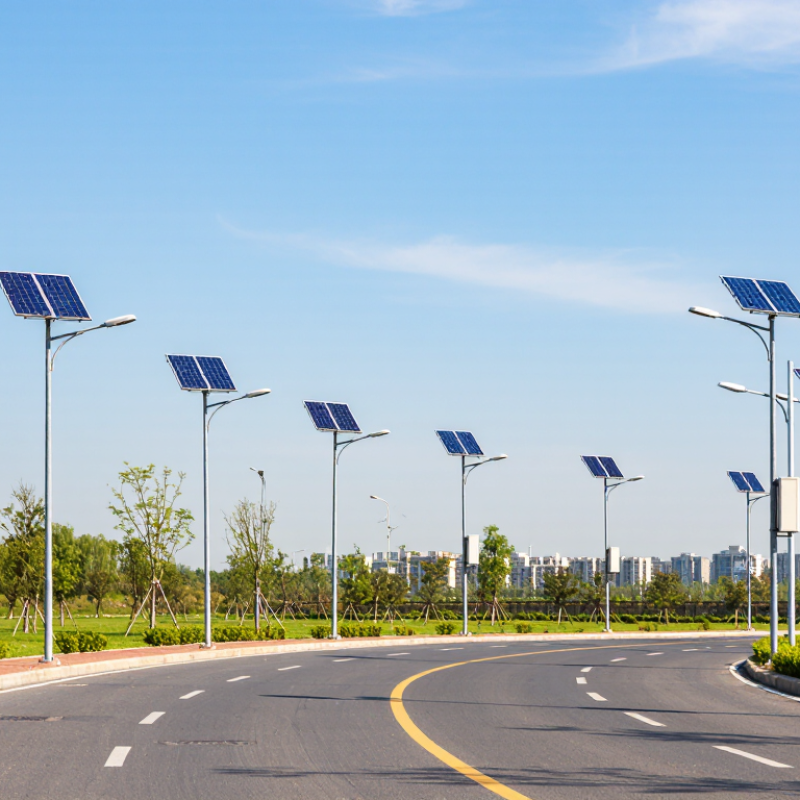
A high-quality solar street light begins with reliable performance, not a large lumen claim. Global solar capacity expanded by about 473 GW in 2023, with solar PV providing roughly three-quarters of new renewable capacity, according to the IEA Renewables 2024 report. This growth raises buyer expectations. A dependable system should provide tested photometric data, stable illumination, and suitable beam distribution for roads, paths, or parking areas. Look for independent testing, accurate lighting curves, and compliance with relevant IEC standards.
Battery quality matters just as much. Lithium iron phosphate batteries usually offer strong cycle stability and safer thermal performance than older chemistries. However, capacity alone proves little. Ask for usable watt-hours, operating temperature ranges, charging protection, and a documented replacement plan. The World Bank’s Lighting Global quality framework stresses verified performance, durability, consumer information, and warranty support. These principles also apply to larger outdoor lighting projects. Weather protection should be supported by credible IP testing, while impact resistance is important in exposed public spaces.
Tips: Check the light after several cloudy days, not only during a showroom demonstration. Measure illumination at ground level. Confirm the controller reduces output after midnight without creating dark zones. A high lumen number can mislead. I still prefer transparent test reports over impressive brochures. Even careful buyers may overlook local dust, shade, or winter sun angles. That mistake is common, and it can reduce real-world lighting quality.
A practical comparison of specification profiles for different road, pathway, security and public-area applications.
| Profile | Recommended Application | LED Output (lm) |
Solar Panel (Wp) |
Battery (Wh) |
Typical Mounting Height (m) |
Autonomy (Nights) |
Ingress Protection |
Impact Protection |
CCT | Key Quality Indicator |
|---|---|---|---|---|---|---|---|---|---|---|
| 01. Compact Pathway | Residential paths, parks and cycleways | 1,500–2,500 | 20–40 | 160–320 | 3–5 | 2–3 | IP65+ | IK08+ | 3,000–4,000 K | Low-glare optics and a replaceable battery |
| 02. Residential Street | Local streets and housing developments | 3,000–5,000 | 50–80 | 400–640 | 5–7 | 3–4 | IP66 | IK08–IK09 | 3,000–4,000 K | Dusk-to-dawn control with programmable dimming |
| 03. Municipal Road | Urban collector roads and public streets | 5,000–8,000 | 90–140 | 720–1,120 | 7–9 | 4–5 | IP66 | IK09–IK10 | 3,000–4,000 K | Photometric distribution designed for road spacing |
| 04. Highway Approach | Approach roads, junctions and wider lanes | 8,000–12,000 | 140–220 | 1,120–1,760 | 9–12 | 4–5 | IP66 | IK10 | 3,000–4,000 K | Accurate glare control and verified lighting calculations |
| 05. High-Rainfall Area | Tropical, coastal and monsoon locations | 3,000–7,000 | 80–160 | 640–1,280 | 6–10 | 4–6 | IP67 | IK09+ | 3,000–4,000 K | Sealed enclosure, anti-corrosion coating and drainage design |
| 06. Cold-Climate | Snow-prone and sub-zero environments | 3,000–7,000 | 100–180 | 800–1,440 | 6–10 | 4–6 | IP66 | IK09+ | 3,000–4,000 K | Low-temperature battery protection and snow-aware panel angle |
| 07. High-Sun Region | Arid and high-solar-radiation locations | 4,000–8,000 | 80–150 | 640–1,200 | 6–10 | 4–5 | IP66 | IK09+ | 3,000–4,000 K | UV-resistant housing and thermal battery management |
| 08. Security Area | Perimeters, entrances and remote facilities | 2,500–5,000 | 60–120 | 480–960 | 4–8 | 3–5 | IP66 | IK08+ | 4,000–5,000 K | Motion sensing, adjustable brightness and remote diagnostics |
| 09. Smart-Controlled | Connected city assets and managed infrastructure | 4,000–10,000 | 100–200 | 800–1,600 | 6–12 | 4–5 | IP66 | IK09–IK10 | 3,000–4,000 K | Open communication protocol and measurable energy reporting |
| 10. Premium Off-Grid | Critical roads and locations with unreliable grids | 8,000–15,000 | 180–300 | 1,440–2,400 | 8–12 | 5–7 | IP67 | IK10 | 3,000–4,000 K | Oversized energy reserve, LiFePO₄ battery and serviceable components |
Compare measured output, panel power, battery capacity, charging time, and operating temperature. Advertised wattage is not enough.
Check local sunlight, seasonal cloud cover, panel temperature range, and daily solar yield. A large panel cannot fix several cloudy days.
Three to five nights is a practical target for many projects. Reduced brightness may extend backup time. Ask how “all night” operation is measured.
Check usable capacity, battery chemistry, cycle life, and temperature performance. Cheaper cells may fade after two seasons. That weakness is easy to miss.
Review delivered lumens, mounting height, beam distribution, glare control, and surface uniformity. A smaller light may illuminate a walkway better than a brighter unit.
Look for IP65 or higher protection, corrosion-resistant housing, and suitable temperature ratings. Salt spray matters near coastlines. Dust matters on rural roads.
Request photometric files, battery cycle-life results, salt-spray data, and independent safety testing. Relevant lighting standards can improve purchasing confidence. Documents still need careful review.
Confirm battery replacement terms, exclusions, controller coverage, and expected service life. A lamp-life warranty may not cover battery failure.
Install a sample unit and measure light after rain, dust, and several dark nights. Check maintenance access and replaceable components. My preference is cautious.
Choosing the best Solar Street Lights requires more than comparing price or appearance. A high-quality system should combine efficient solar panels, durable batteries, reliable LED performance, intelligent lighting controls, weather-resistant construction, and strong structural stability. Buyers should also compare brightness, lighting duration, charging efficiency, battery lifespan, sensing functions, installation requirements, warranty coverage, and overall operating costs. A well-designed model can provide dependable illumination while reducing energy consumption and simplifying long-term maintenance.
This guide reviews ten suitable Solar Street Lights for global buyers and explains how to evaluate them for different projects, including roads, pathways, parking areas, public spaces, and remote locations. It also discusses installation direction, pole height, shading, seasonal sunlight, temperature changes, rainfall, dust, wind, and coastal conditions. By considering local climate, available sunlight, required lighting coverage, traffic patterns, maintenance access, and budget, buyers can select a model that delivers consistent performance, practical installation, and lasting value in their specific location.
