Explore technical guides, industry news, project showcases, and expert insights on commercial solar LED lighting.
Choosing the right Solar Wall Pack Lights requires more than comparing brightness or purchase price. Global buyers must evaluate sunlight conditions, battery capacity, mounting height, beam distribution, and expected service life. A coastal warehouse needs stronger corrosion resistance. A narrow pathway needs controlled illumination, not excessive glare.
Energy-efficiency expert Amory Lovins offers a useful principle: “The cheapest energy is the energy you don’t use.” This idea fits solar lighting well. Efficient LEDs, smart motion sensors, and properly sized panels can reduce wasted power. However, efficiency alone does not guarantee dependable performance. A small battery may fail during several cloudy evenings. A poorly sealed housing may collect moisture after heavy rain.
This guide examines ten practical types of Solar Wall Pack Lights for international buyers. It considers all-in-one units, split-panel designs, dusk-to-dawn models, motion-activated lights, and commercial-grade options. Each category has different strengths. Some suit residential entrances. Others support loading bays, fences, workshops, or remote facilities.
Product labels can be misleading. “High brightness” does not explain beam angle, runtime, or useful illumination. Buyers should request test data, battery chemistry, IP ratings, charging time, and warranty terms. Regional conditions matter too. Winter locations may need larger panels and longer autonomy. Hot climates can shorten battery life.
No ranking is perfect. Supplier quality varies. Installation errors remain common. Still, careful comparison can prevent expensive replacements and dark security zones. The sections ahead provide a practical framework for selecting reliable Solar Wall Pack Lights across different markets and operating conditions.
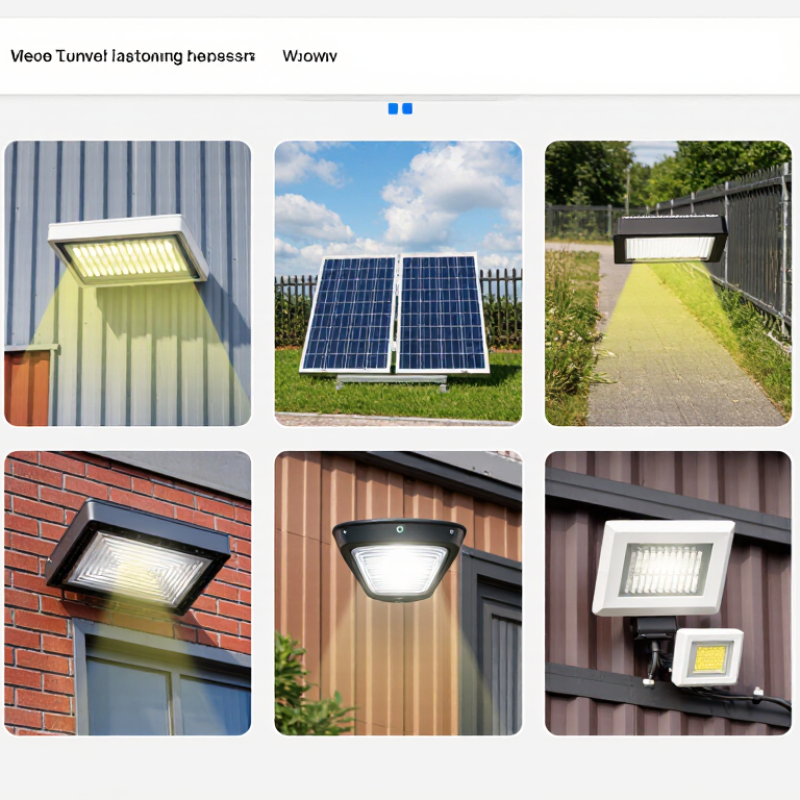
Solar wall pack lights combine a photovoltaic panel, battery, controller, LED module, and outdoor housing.
The panel converts sunlight into direct current during daylight. The controller regulates charging and limits harmful over-discharge. At dusk, a light sensor activates the LED automatically.
The battery decides.
Lithium-based batteries usually provide stable cycling, while capacity still falls in cold weather. Motion sensors can raise brightness when people approach and reduce it during quiet hours.
This saves stored energy, but detection zones require careful adjustment near roads or trees.
The U.S. Department of Energy reports that LED lighting can use at least 75% less energy than incandescent lighting, supporting efficient solar designs.
Solar performance depends on latitude, shading, panel angle, temperature, and winter sunlight.
The International Energy Agency’s Renewables 2024 report recorded approximately 510 gigawatts of new solar photovoltaic capacity worldwide in 2023. That growth confirms strong solar availability, but it does not guarantee equal wall-pack performance everywhere.
Global buyers should compare battery watt-hours, panel power, lumen output, operating hours, ingress protection, and replacement access. A bright specification can mislead.
A compact fixture may perform well in summer yet dim early after several cloudy days. Testing should include local weather data, real mounting height, and nighttime traffic patterns.
Solar wall pack lights serve more than one purpose. Their design and use determine performance, maintenance, and installation value.
The integrated-panel type combines the solar panel and lamp in one compact housing. It suits narrow walls and simple installation. Split-panel models place the panel away from the fixture. They work well under roof overhangs or shaded walls. Motion-sensor lights brighten when people approach, helping reduce battery use. Dusk-to-dawn models provide steady lighting from evening until morning. Their results depend heavily on panel exposure and seasonal sunlight. I have seen good fixtures perform poorly after careless placement.
Decorative lantern types add visual character to entrances, courtyards, and hospitality spaces. Security flood models produce broader, stronger illumination for yards, loading areas, and perimeter zones. Step and pathway wall lights guide movement around stairs, ramps, and walkways. Emergency-backup models keep a limited light output during unexpected power interruptions. Remote-control or smart-enabled models allow users to adjust brightness, timing, or sensing modes. Heavy-duty weather-resistant models are designed for exposed coastal, industrial, or high-rain environments.
Check the battery compartment carefully. Water resistance ratings matter, but seals can age. Choose warm light for homes and public-facing spaces, while cooler light may improve task visibility. A higher lumen figure is not always better; glare can reduce comfort and visibility. Local mounting conditions should be reviewed by a qualified installer. No type wins every site. That is the part buyers often underestimate.
Ten main types of solar wall pack lights classified by design and typical use.
The chart compares representative typical luminous output for commonly specified solar wall pack designs. Actual performance varies according to LED efficiency, battery capacity, solar-panel size, operating mode, weather conditions, and installation location.
For global buyers, comparing solar wall pack lights by appearance alone is a costly mistake. Integrated, split-panel, motion-sensor, dusk-to-dawn, and photocell models can share the same housing yet perform differently. Check measured lumens, beam spread, and mounting height. A narrow beam may brighten a doorway but leave a loading path dark. Look for published battery capacity in watt-hours, not vague claims such as “long lasting.” Ask whether output is rated at full brightness or reduced mode. This detail matters.
Panel efficiency and charging behavior deserve field attention. A light facing a shaded north wall may receive weak winter sunlight, even with a large panel. Compare charging time, operating hours, and low-temperature performance under local weather conditions. Lithium iron phosphate batteries often offer useful cycle stability, but the enclosure and charge controller also affect service life. Check IP protection, corrosion resistance, and the stated operating temperature range. Coastal buyers should examine salt-spray evidence, not just a stainless-looking finish. Some specifications remain optimistic.
Motion sensing can reduce energy use near warehouses, paths, and apartment entrances. Compare detection range, sensing angle, response time, and adjustable brightness levels. A sensor that triggers too easily can drain the battery and annoy residents. For security-focused sites, review illumination after several cloudy days, not only on the first night. Request test reports, photometric files, warranty terms, and replacement-part availability. Verify compliance with destination-market electrical and radio requirements. A small pilot installation often reveals glare, shadows, and charging problems that brochures miss.
| Rank | Solar Wall Pack Type | Typical Luminous Output | Typical LED Power | Solar Panel Configuration | Battery Type and Capacity | Typical Runtime | Ingress Protection | Control and Sensor Features | Best-Fit Applications | Main Comparison Point |
|---|---|---|---|---|---|---|---|---|---|---|
| 1 | All-in-One Integrated Wall Pack | 800–2,500 lm | 10–30 W | Integrated mono-crystalline panel, usually 15–45 W | LiFePO4, commonly 10–30 Ah at 3.2 V | 8–12 hours per night; often 2–3 low-light nights | IP65–IP66 | Photocell, PIR motion sensor, remote control, multi-level dimming | Building entrances, compounds, pathways, small commercial walls | Compact installation versus panel orientation and shadowing limitations |
| 2 | Split-Type Solar Wall Pack | 1,500–5,000 lm | 20–60 W | Separate mono-crystalline panel, commonly 30–100 W | LiFePO4, commonly 20–60 Ah at 3.2 V | 10–14 hours per night; typically 2–4 low-light nights | IP65–IP67 | Photocell, programmable controller, PIR option, adjustable brightness | Large walls, warehouses, perimeter roads, remote facilities | Better panel positioning and higher energy capacity, but more cabling and installation work |
| 3 | Motion-Activated Security Wall Pack | 600–2,000 lm | 8–25 W | Integrated or compact external panel, typically 10–40 W | Li-ion or LiFePO4, commonly 6–25 Ah at 3.2–3.7 V | Up to 40–60 hours in standby; 8–12 hours with activation cycles | IP65–IP66 | PIR detection, standby dimming, full-power activation, sensitivity adjustment | Residential security, service doors, storage areas, side passages | Sensor range, detection angle, false-trigger resistance, and standby power consumption |
| 4 | Dusk-to-Dawn Photocell Wall Pack | 700–3,000 lm | 10–40 W | Integrated or separate panel, typically 20–70 W | LiFePO4 or Li-ion, commonly 10–40 Ah | 8–14 hours per night, depending on seasonal solar input | IP65–IP66 | Automatic dusk activation, dawn shutoff, optional timer and dimming profiles | Walkways, entrances, residential and commercial exterior walls | Photocell accuracy, seasonal autonomy, and low-temperature battery performance |
| 5 | High-Lumen Commercial Solar Wall Pack | 3,000–8,000 lm | 40–100 W | Separate panel, commonly 80–180 W | LiFePO4, commonly 40–120 Ah at 3.2 V | 10–13 hours per night; generally 2–3 backup nights | IP66–IP67 | Programmable controller, photocell, remote management option, power adjustment | Factories, logistics yards, commercial buildings, loading zones | Thermal management, battery reserve, mounting strength, and maintained lumen output |
| 6 | Wide-Beam Flood Wall Pack | 1,500–6,000 lm | 20–80 W | Separate or integrated panel, typically 40–140 W | LiFePO4, commonly 20–100 Ah | 8–12 hours per night; approximately 2–4 backup nights | IP65–IP67 | Wide optical distribution, PIR option, dimming, timer programming | Open yards, building façades, parking areas, farm structures | Beam angle, glare control, uniformity, and useful illumination at ground level |
| 7 | Narrow-Beam Security Wall Pack | 1,000–4,000 lm | 15–50 W | Separate panel preferred, typically 30–90 W | LiFePO4 or Li-ion, commonly 15–60 Ah | 9–13 hours per night; usually 2–3 backup nights | IP65–IP66 | Focused optics, PIR sensor, photocell, adjustable mounting angle | Gates, corridors, boundary walls, narrow access routes | Delivered illuminance, cutoff control, glare reduction, and target-area coverage |
| 8 | Cold-Climate Solar Wall Pack | 800–4,000 lm | 10–60 W | Separate adjustable panel, typically 30–120 W | Low-temperature-rated LiFePO4 with battery management system | 8–12 hours per night; winter autonomy depends strongly on local solar conditions | IP66–IP67 | Low-temperature charging protection, battery monitoring, photocell, dimming | High-latitude, alpine, continental, and winter-exposed installations | Charging temperature limits, heater requirements, snow shedding, and winter solar yield |
| 9 | Smart or Network-Ready Solar Wall Pack | 1,000–5,000 lm | 15–70 W | Integrated or separate panel, typically 30–120 W | LiFePO4, commonly 20–100 Ah | 8–14 hours per night; programmable energy-saving modes | IP65–IP67 | Bluetooth, LoRaWAN, cellular or proprietary control; scheduling and fault alerts | Campuses, municipal assets, distributed commercial sites | Communication range, cybersecurity, subscription cost, interoperability, and data access |
| 10 | Decorative Architectural Solar Wall Pack | 200–1,500 lm | 3–20 W | Integrated compact panel, typically 5–30 W | Li-ion or LiFePO4, commonly 3–20 Ah | 6–12 hours per night | IP44–IP65 | Photocell, soft dimming, selectable color temperature, optional motion sensor | Hotels, homes, restaurants, landscape walls, pedestrian areas | Appearance, color consistency, glare control, and decorative performance versus brightness |
Note: Specifications are representative market ranges rather than guaranteed ratings. Actual performance varies with solar irradiation, panel orientation, ambient temperature, battery state of charge, LED efficacy, operating profile, and local installation conditions.
Solar wall pack lights now serve entrances, warehouses, pathways, and emergency access areas. The ten common types include integrated, split-panel, motion-sensor, dusk-to-dawn, security, decorative, narrow-beam, wide-beam, remote-control, and hybrid models. Selection should begin with the project’s lighting target, not the product shape. The IRENA Renewable Capacity Statistics 2024 report recorded 1,419 GW of global solar capacity by the end of 2023. This growth supports wider solar adoption, but it does not make every location suitable. Check local sunlight, mounting height, winter temperatures, and required operating hours.
Tips:
For residential entrances, compact dusk-to-dawn units may provide sufficient guidance light. Warehouses often need higher output, wider distribution, and stronger impact protection. Remote sites may require split-panel designs because the wall remains shaded. Hybrid models can improve reliability where long cloudy periods are common.
The IEA Photovoltaic Power Systems Programme reported strong global PV deployment in 2023, but regional performance still varies sharply. That difference matters. In practice, a specification can look perfect and still fail after several cloudy nights. Test one sample through a complete weather cycle before ordering in volume.
Solar wall pack selection begins with the wall, not the catalog.
Common options include integrated all-in-one units, split-panel models, motion-sensor lights, dusk-to-dawn lights, and adjustable-head designs. Other types include high-output commercial packs, compact residential packs, emergency-backup models, cold-climate units, and remote-control versions. Each type changes installation effort, battery sizing, and maintenance access.
On a brick wall, check sunlight between 9 a.m. and 3 p.m. Shade from roof edges can reduce charging sharply. That detail is often missed. Mounting height, beam angle, drainage, and cable protection also need inspection. Install the fixture on a sound surface with sealed anchors and corrosion-resistant hardware. Keep the panel clear of vents, trees, and artificial light. Use supplied cable glands, then inspect every seal after tightening. An IP rating is not permanent. Cracked seals or incorrect screws can defeat it.
For international purchasing, request photometric data, battery specifications, operating-temperature limits, installation drawings, and test reports. Confirm whether compliance documents cover the complete fixture, battery, and charger. Regional requirements may involve CE, UKCA, FCC, or other applicable approvals. A certificate logo alone proves little. For lithium batteries, request UN 38.3 evidence and transport documents. Check customs descriptions, packaging language, warranty terms, and spare-part availability. I have seen buyers compare only lumen figures, then discover weak winter performance. That mistake is avoidable, but product data can still be incomplete. Ask difficult questions before payment.
A photovoltaic panel converts daylight into direct current. A controller manages charging and prevents harmful battery over-discharge. At dusk, a light sensor activates the LED module.
The battery decides how long the light operates. Lithium-based batteries usually cycle steadily, but cold weather reduces capacity. Cold weather matters.
Yes. The light can stay dim during quiet hours and brighten when people approach. Detection zones need adjustment near roads, trees, and walkways. False triggers waste stored energy.
Inspect sunlight on the wall between 9 a.m. and 3 p.m. Roof edges, trees, and vents can reduce charging sharply. Shade is costly. Also check mounting height, drainage, beam angle, and cable protection.
Use a sound wall, sealed anchors, and corrosion-resistant hardware. Install the supplied cable glands carefully. Inspect every seal after tightening. An ingress rating is not permanent.
Compare battery watt-hours, panel power, lumen output, operating hours, and ingress protection. Check replacement access and mounting requirements. A bright specification can mislead.
A compact fixture may dim early after repeated cloud cover. Winter sunlight can further reduce charging. Test local weather conditions, mounting height, and nighttime traffic patterns. Estimates can still be wrong.
Request photometric data, battery details, temperature limits, installation drawings, and complete-fixture test reports. Confirm documents cover the fixture, battery, and charger. A certificate logo alone proves little.
Ask for safety testing evidence and transport documents. Check customs descriptions, packaging language, warranty terms, and spare-part availability. Product information may remain incomplete. Ask difficult questions before payment.
This guide explains the basic structure and operating principles of Solar Wall Pack Lights, including how solar panels, batteries, controllers, LEDs, and sensors work together to provide reliable outdoor illumination. It introduces ten major types classified by design, mounting method, lighting distribution, control functions, and intended applications, helping global buyers understand which solutions may suit residential, commercial, industrial, and public-area projects.
The article also highlights the performance factors buyers should compare, such as brightness, battery capacity, solar charging efficiency, operating hours, weather resistance, motion detection, materials, and maintenance needs. It offers practical guidance for selecting the right light according to climate, installation location, lighting requirements, and project budget. Finally, it covers installation planning, electrical and structural safety, packaging, documentation, quality inspection, and international purchasing considerations, enabling buyers to evaluate products confidently and support dependable long-term outdoor lighting performance.
