0%

Choosing Solar Bollard Lights in 2026 requires more than comparing prices, lumen claims, or attractive product photos. Outdoor lighting is becoming more solar-powered, but performance still depends on design, climate, installation, and maintenance. The International Energy Agency reported that solar photovoltaic capacity grew by approximately 75% in 2023. IRENA also recorded nearly 1,420 gigawatts of global solar capacity by the end of that year. These figures support solar adoption, yet they do not guarantee reliable pathway lighting.

Lighting scientist Peter Boyce offers a useful principle: “Lighting is not an end in itself; it is a means to an end.” That idea matters when selecting Solar Bollard Lights for gardens, walkways, hotels, campuses, or public spaces. A good product should guide movement without creating glare. It should also provide dependable illumination after cloudy days. Check the battery chemistry, charging performance, photometric data, IP and IK ratings, operating temperature, and replacement support. Marketing language can sound impressive.

Reality is less tidy.

A 300-lumen fixture may perform poorly if its optics waste light. A smaller lamp can work better when the pathway is narrow and evenly spaced. In northern climates, winter autonomy deserves special attention. In shaded gardens, panel placement may matter more than nominal wattage. This guide examines those details through practical experience, current renewable-energy research, and measurable product specifications. It also questions common assumptions, because “maintenance-free” rarely means maintenance-proof. The right Solar Bollard Lights should balance safety, visual comfort, durability, energy independence, and long-term value rather than simply winning a catalogue comparison.
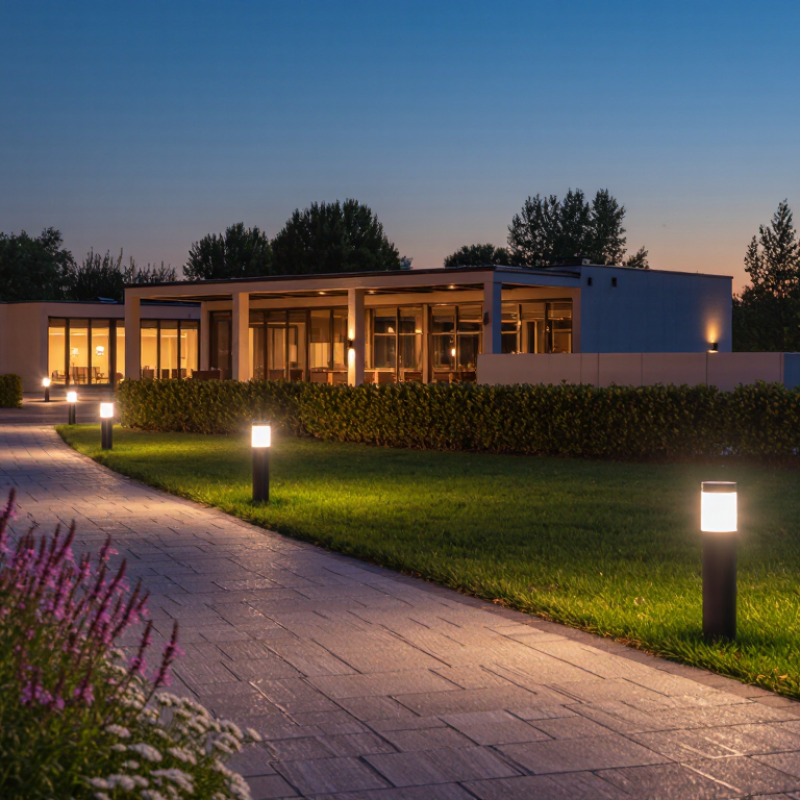
How to Choose Solar Bollard Lights in 2026?

What Are Solar Bollard Lights and How Do They Work?

Solar bollard lights are short outdoor posts that combine a photovoltaic panel, rechargeable battery, LED, controller, and light sensor. During daylight, the panel converts sunlight into electricity. The controller stores that energy in the battery. After dusk, the sensor activates the LED automatically. Simple, but not effortless.

The IEA PVPS Trends in Photovoltaic Applications 2024 report states that global photovoltaic capacity exceeded 1.6 terawatts by the end of 2023. This expanding technology supports better small-scale lighting components. The U.S. Department of Energy reports that LED lighting can use at least 75% less energy than incandescent lighting. Still, bollard performance depends heavily on sunlight, battery quality, and winter temperatures. A bright first-night test can mislead. Cloudy weeks expose weak designs quickly.

Tips: Check the panel angle and battery capacity, not only the advertised brightness. Look for dusk-to-dawn or motion-sensing modes. A lumen rating around 100–300 often suits pathways, while wider spaces may need more output. Choose corrosion-resistant housing for wet gardens. Keep panels free from dust and leaves. In my experience, spacing also matters; attractive lights placed too far apart create dark patches. The best choice in 2026 is not always the brightest model. It is the one that matches local sunlight, expected operating hours, and maintenance habits.

Which Site Conditions Should Guide Your Solar Bollard Light Choice?

Solar bollard lights should be chosen from site evidence, not catalogue appearance. The World Bank’s Global Solar Atlas maps long-term solar irradiation and photovoltaic output by location. Check the winter value, not only the annual average. A shaded path may receive bright sunlight nearby but still charge poorly. Tree canopies, walls, and building shadows matter.

Weather changes the specification. Coastal sites need corrosion-resistant housings and sealed connectors. Wet ground requires careful drainage and stable foundations. The National Oceanic and Atmospheric Administration reports that extreme precipitation events are increasing in many regions, so waterproofing deserves attention.

Cold areas also need batteries rated for low temperatures. Dusty roads may require a higher ingress-protection rating and an easy cleaning routine. Slippery finishes can become a safety problem.

Tips: Walk the site at noon and after sunset. Photograph shadows in winter if possible. Allow several cloudy nights in your testing. A clear installation day can mislead. Confirm the battery’s usable capacity, charging time, and lumen output together. The Illuminating Engineering Society recommends designing outdoor lighting around task visibility and glare control, not brightness alone. I would also test spacing with temporary markers; a layout that looks elegant on paper may leave dark gaps beside bends. Check local maintenance access before fixing every unit permanently.

How to Compare Brightness, Light Distribution, and Color Temperature

How to Choose Solar Bollard Lights in 2026?

Brightness should be compared at ground level, not by advertised lumens alone. A solar bollard may claim 500 lumens, yet deliver weak illumination after cloudy weather. The U.S. Department of Energy’s solid-state lighting reports show that system efficiency depends on optics, thermal control, and operating conditions. Therefore, request photometric files or measured lux data. For pedestrian paths, test several points between fixtures with a calibrated lux meter. IES outdoor-lighting guidance supports evaluating uniformity, glare, and visual comfort rather than chasing maximum brightness. A bright hotspot beside a dark walkway is still poor lighting.

Light distribution reveals practical quality. Look for asymmetric optics near walls and wider distributions along open paths. Shielded designs reduce eye-level glare and upward spill. CIE 150:2017 identifies poorly controlled outdoor light as a source of nuisance and environmental impact. Color temperature also deserves careful comparison. The Illuminating Engineering Society’s TM-30 method evaluates color rendition more meaningfully than CRI alone. For residential paths, 2,200–3,000K often creates a calmer appearance than 4,000K or higher. Warmer light can also reduce short-wavelength emissions, although it does not remove ecological concerns. Check the spectrum, not just the Kelvin number.

I have seen installations fail here. Designers compare new batteries, but ignore winter shade and dirty panels. Recheck brightness after several cloudy nights. That small test may change the specification.

How to Evaluate Battery Life, Solar Panels, Materials, and Durability

How to Choose Solar Bollard Lights in 2026?

Choosing solar bollard lights in 2026 starts with the battery, not the advertised lumen figure. Ask for rated capacity in watt-hours, usable capacity, charge cycles, and winter autonomy. A 3.7-volt label hides meaningful differences. Lithium iron phosphate batteries usually offer strong thermal stability. However, cold nights still reduce available energy. Check whether the controller dims output after midnight. That setting often protects morning lighting.

Panel quality deserves measured attention. The IEA Photovoltaic Power Systems Programme reported over 1.4 terawatts of global PV capacity by late 2023. Scale does not guarantee small-panel performance. Request panel wattage, conversion efficiency, and low-light test conditions. NREL’s Photovoltaic Degradation Rates review found median PV degradation near 0.5 percent annually. Dirt, shade, and heat can worsen real output. A panel facing a wall may disappoint.

For materials, inspect aluminum thickness, stainless-steel grade, fasteners, seals, and drainage holes. Coastal sites need serious corrosion resistance. Look for an IP rating under IEC 60529 and impact protection under IEC 62262. These ratings describe tests, not lifetime promises. I would also demand ground-level photometric data, rather than peak lumens alone. One overlooked weakness is the battery compartment. If water remains there, even a good panel becomes irrelevant. Manufacturer cycle claims need independent testing; otherwise, treat them as optimistic, not proven.

How to Choose Solar Bollard Lights in 2026?

Typical rechargeable-battery cycle-life ranges for evaluating long-term solar bollard-light performance

Lithium iron phosphate (LiFePO₄) batteries commonly provide approximately 2,000–5,000 full cycles, while lithium-ion and NiMH batteries typically provide shorter cycle-life ranges. Actual service life depends on temperature, depth of discharge, charging control, and storage conditions.

Solar panel
Monocrystalline photovoltaic modules commonly achieve about 18–23% conversion efficiency. Check the panel area, rated power, shading conditions, and winter charging performance.
Materials
Prefer corrosion-resistant aluminum or stainless steel for outdoor housings. Verify UV-resistant plastics, sealed cable entries, and protection against condensation.
Durability
IP65 indicates dust protection and resistance to water jets. IP67 adds protection against temporary immersion, but the complete fixture must meet the rating, not only the lens.

Which Features, Standards, and Maintenance Needs Matter in 2026?

How to Choose Solar Bollard Lights in 2026?

Choosing solar bollard lights now requires more than checking brightness and price. Look for efficient LED modules, adjustable lighting schedules, and sensors that respond reliably to movement. A replaceable battery matters because even good lithium batteries eventually lose capacity. LiFePO4 batteries can offer strong cycle life, but installation temperature still affects performance. Check the shade.

Standards deserve careful attention. For outdoor pathways, verify a suitable IP rating, such as IP65 or higher, and select an impact rating appropriate for public areas. Ask for test reports covering electrical safety, electromagnetic compatibility, battery protection, and restricted substances. Local requirements vary, so a supplier’s general compliance statement may not be enough. Photometric data should show usable light at ground level, not only impressive lumens. Rain changes everything. Poor winter charging can expose weak designs, especially beneath trees or near tall buildings. I would also question claims based only on laboratory figures; real sites are dirtier, darker, and less predictable.

Tips:

Place panels away from evening lighting and inspect them every few months. Wipe dust, leaves, and bird residue from the surface. Check battery access before purchase. A sealed unit reduces tampering but may create costly replacement waste. Confirm spare parts, warranty conditions, and expected battery life in writing. Keep records. During winter, shorten operating hours if the system repeatedly shuts down. That small adjustment may preserve lighting reliability better than buying a larger lamp.

FAQS

What are solar bollard lights?

They are short outdoor posts with a solar panel, battery, LED, controller, and light sensor. The panel charges the battery during daylight. After dusk, the sensor turns on the LED automatically. Simple, but not effortless.

How well do solar bollard lights work during cloudy weather?

Their performance can drop after several cloudy days. Winter shade and short daylight hours create additional problems. Test the lights after a cloudy week, not only on the first night.

How bright should pathway solar bollard lights be?

Around 100–300 lumens often suits residential pathways. Wider areas may need stronger output. Advertised lumens can mislead. Measure light at ground level between fixtures.

How should light distribution be compared?

Check whether the light spreads evenly along the path. A bright spot beside a dark section is poor lighting. Wider distribution suits open paths. Asymmetric distribution can work near walls.

What color temperature is comfortable for outdoor paths?

About 2,200–3,000K usually creates a calmer appearance. Higher temperatures can look harsher. Warm light may reduce short-wavelength emissions, but ecological concerns remain. Check the actual spectrum when possible.

How far apart should solar bollard lights be installed?

Spacing should prevent dark patches between fixtures. Attractive lights placed too far apart may fail functionally. Walk the path at night and inspect several points. I sometimes underestimate this detail.

What should buyers check besides brightness?

Check battery capacity, panel angle, operating hours, and sensor settings. Look for dusk-to-dawn or motion-sensing modes. Weather-resistant housing helps in wet gardens. Brightness alone is not enough.

How can solar bollard lights be maintained?

Wipe dust and leaves from the panels regularly. Inspect the housing after heavy rain. Recheck brightness after several cloudy nights. A clean panel cannot fix a weak battery, though.

Conclusion

Choosing Solar Bollard Lights in 2026 requires more than comparing appearance and price. These outdoor fixtures use solar panels to convert daylight into stored energy, which powers LEDs after dark. The best choice depends on site conditions such as sunlight availability, shade, soil, weather exposure, foot traffic, and the required lighting area. Consider brightness, beam spread, glare control, and color temperature to create safe, comfortable illumination while matching the atmosphere of pathways, gardens, entrances, or public spaces.

A reliable evaluation should also include battery capacity, charging performance, panel efficiency, and expected operating time during cloudy periods. Durable materials, weather resistance, corrosion protection, and stable installation are essential for long-term outdoor use. In 2026, useful features may include automatic dusk-to-dawn control, adjustable lighting modes, motion sensing, efficient LEDs, and clear safety or performance certifications. Finally, select products with accessible components and simple maintenance requirements, including periodic cleaning, inspection, and battery replacement when needed.

Amelia

Amelia

Amelia is a dedicated marketing professional with a strong understanding of product strategy, customer needs, and digital communication. As a key contributor to the company’s content team, she regularly updates the corporate website with practical, insightful blog articles that help readers better......