0%

Choosing the Top Solar Bus Stop Lights for Global Buyers requires more than comparing prices and brightness claims. A reliable system should illuminate passengers, display route information, and withstand changing weather. In practical projects, small details matter. A shaded shelter can reduce charging efficiency. Dust may cover the panel. Winter nights can expose weak battery planning.

Solar Bus Stop Lights combine photovoltaic panels, batteries, controllers, and LED fixtures in one operating system. Buyers should examine lighting output, battery capacity, charging time, motion sensors, and expected operating hours. An IP65-rated enclosure may suit many outdoor settings, but local conditions still deserve careful review. Coastal air, heavy rain, snow, and extreme heat can affect service life. Ask suppliers for test reports, warranty terms, replacement procedures, and sample installation records. Certifications should match the destination market and its procurement requirements.

Good suppliers explain technical limits clearly. They do not promise perfect performance everywhere. That matters. A product designed for a sunny city may underperform in northern winters. A low-cost battery can also increase maintenance costs later. Global buyers should compare total ownership costs, spare-part access, installation methods, and after-sales support. Field experience suggests that a slightly higher initial investment may reduce failures, yet this is not guaranteed. Each site needs measured data and realistic assumptions. The sections ahead examine key product types, buying criteria, climate suitability, safety considerations, and supplier evaluation methods for Solar Bus Stop Lights.
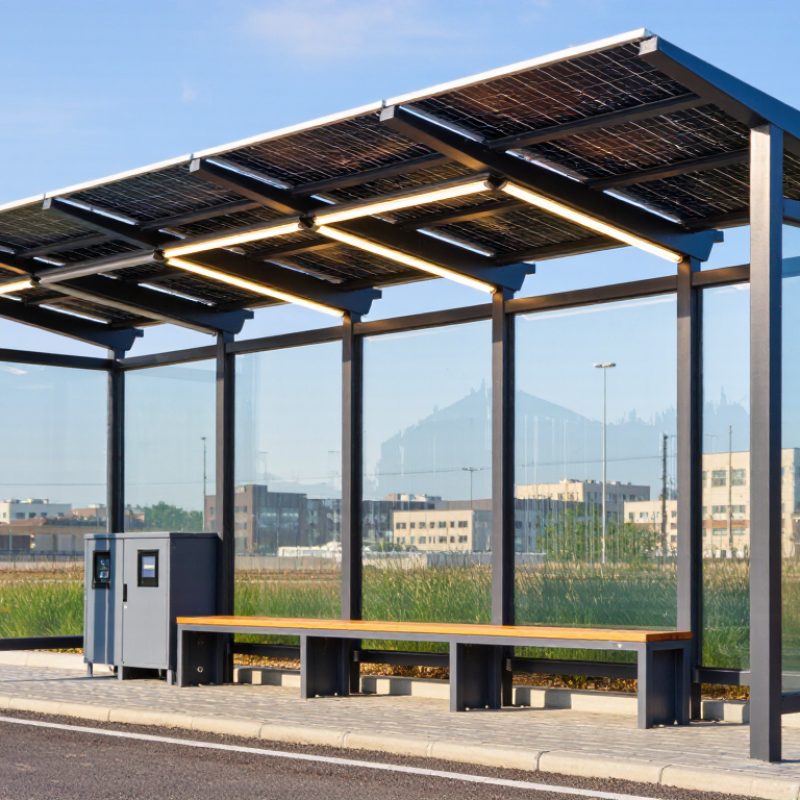
Top Solar Bus Stop Lights for Global Buyers

Solar Bus Stop Light Types, Components, and Working Principles

Top Solar Bus Stop Lights for Global Buyers

Solar bus stop lights generally use three designs: integrated all-in-one units, split systems, and solar-grid hybrid lights. All-in-one models place the panel, battery, controller, and LED lamp inside one housing. They simplify installation but may limit panel orientation. Split systems separate the panel from the lamp. This improves sunlight capture at shaded stops. Hybrid systems use solar power first and grid electricity during prolonged cloudy weather. That sounds safer.

Core components include a photovoltaic panel, lithium battery, charge controller, LED module, photocell, motion sensor, and weatherproof enclosure. During daylight, the panel charges the battery through the controller. After sunset, the photocell activates the lamp. The controller then adjusts brightness through timers or motion detection. A practical setting may use 30% brightness when the stop is empty and 100% when passengers arrive.

Market scale supports this technology. IRENA’s Renewable Capacity Statistics 2024 reported 346 GW of new solar capacity in 2023. Solar represented about 73% of global renewable additions that year. The IEA PVPS Trends 2024 report recorded approximately 456 GW of new photovoltaic installations in 2023. These figures show strong solar supply growth, but they do not guarantee reliable bus-stop performance.

Global buyers should check battery autonomy, winter irradiance, LED lumen output, glare control, IP and impact ratings, and maintenance access. Photometric testing matters near road traffic. Battery sizing also needs local weather data, not only annual sunshine averages. A bright prototype can still fail after three cloudy nights. Real field trials remain necessary.

PV Sizing for 3–7 kWh/m²/day Global Solar Irradiance

Top Solar Bus Stop Lights for Global Buyers

PV sizing starts with local irradiance, not panel wattage. The Global Solar Atlas maps global GHI from below 3 to above 7 kWh/m²/day. For bus stops, this range changes the design significantly. A system receiving 3 kWh/m²/day needs nearly twice the PV capacity of one receiving 7.

Use this practical formula: PV size equals daily energy demand divided by peak sun hours and system efficiency. A 1 kWh daily lighting load needs about 0.48 kWp at 3 peak sun hours, assuming 70% total efficiency. At 7 peak sun hours, the estimate falls to about 0.20 kWp. The difference is substantial. Do not size from sunlight alone.

IEA PVPS Task 13 reports that well-designed PV systems often achieve performance ratios near 75–85%. Dust, battery charging, wiring, controller losses, and winter shading reduce useful output. A 30–40% design margin is therefore sensible for public lighting. Battery capacity should also cover several cloudy nights, especially where maintenance access is limited. Small details matter: a shaded panel at 4 p.m. can affect evening reliability more than a perfect midday reading.

The weak point is often the load estimate. Timers, sensors, and seasonal operating hours can change consumption. Global buyers should verify actual nighttime demand before procurement. A pilot installation may expose errors that spreadsheets hide.

Top Solar Bus Stop Lights for Global Buyers

PV sizing across locations receiving 3–7 kWh/m²/day of global solar irradiation

The chart estimates the photovoltaic capacity required to supply 1.2 kWh of daily lighting energy. Calculations use: PV capacity = daily energy ÷ (daily solar irradiation × 0.75 system performance ratio). The 0.75 factor accounts for temperature, wiring, controller, battery, and conversion losses. Actual designs should also consider winter irradiation, shading, battery autonomy, operating hours, and local weather conditions.

LED Efficiency: 100–200 lm/W for Energy-Saving Bus Stops

Top Solar Bus Stop Lights for Global Buyers

LED Efficiency: 100–200 lm/W for Energy-Saving Bus Stops

For global buyers, LED efficiency strongly affects solar bus stop performance. Measured fixture efficacy matters more than chip efficiency alone. At 100–200 lm/W, a luminaire can deliver useful brightness with lower battery demand. This range may reduce panel size, battery capacity, and replacement pressure. However, efficiency claims require careful checking. Field testing should confirm output after optics, drivers, housing, and temperature losses.

A practical bus stop design needs more than bright LEDs. At a covered shelter, even illumination should guide passengers without harsh glare. Solar panels must match local sunlight, seasonal cloud cover, and shading from nearby buildings. Battery capacity should support several low-sunlight nights, not only ideal weather. Dimming after midnight can preserve energy while maintaining basic visibility. Small details matter.

Procurement teams should request photometric reports and measured system efficacy. Ask for test conditions, operating temperature, light distribution, and battery assumptions. Check protection ratings, corrosion resistance, and service access before approving large orders. Local electrical rules and road safety requirements also need review. I have seen projects overvalue a 200 lm/W figure while ignoring dirty panels and aging batteries. No design is perfect. A slightly lower rating may perform better when its controls, thermal design, and maintenance plan are realistic. Real performance depends on the whole system, not one impressive number.

Top Solar Bus Stop Lights for Global Buyers - LED Efficiency: 100–200 lm/W for Energy-Saving Bus Stops
Solar Light Configuration Typical LED Efficacy Recommended LED Power Typical Illuminance Use Solar Panel Range Battery Configuration Night-Time Autonomy Ingress Protection Recommended Application
Compact Shelter Light 100–130 lm/W 10–20 W Basic passenger seating and timetable visibility 40–80 Wp 12.8 V LiFePO₄, 10–20 Ah 2–3 nights IP65 or higher Small shelters, low passenger volume, and regions with moderate solar availability
Standard Bus Stop Luminaire 120–150 lm/W 20–35 W General shelter, boarding area, and pedestrian approach lighting 80–150 Wp 12.8 V LiFePO₄, 20–40 Ah 2–4 nights IP65–IP66 Most urban and suburban bus stops with regular evening use
Wide-Area Shelter Light 130–170 lm/W 30–50 W Large shelters, sidewalks, signage, and nearby pedestrian zones 120–220 Wp 12.8 V LiFePO₄, 30–60 Ah 3–5 nights IP66 Large shelters, transfer points, and sites requiring broader light distribution
High-Efficiency Motion-Controlled Light 150–190 lm/W 15–40 W Low standby output with increased brightness when people approach 80–180 Wp 12.8 V LiFePO₄, 20–50 Ah 3–5 nights IP65–IP66 Low-traffic stops where adaptive dimming can reduce energy consumption
Cold-Climate Solar Light 130–180 lm/W 20–45 W Reliable shelter and boarding-area lighting in cold or snowy conditions 120–250 Wp 12.8 V LiFePO₄ with low-temperature charging protection 4–6 nights IP66 High-latitude locations and areas with winter temperature or daylight challenges
Premium Maximum-Efficiency Light 170–200 lm/W 25–50 W High visual comfort with reduced operating power 150–300 Wp 12.8 V or 25.6 V LiFePO₄, 30–80 Ah 4–6 nights IP66–IP67 Major transit corridors, premium public-realm projects, and energy-restricted sites
Data shown are typical engineering ranges for solar bus-stop lighting systems. Actual performance depends on LED package efficiency, optical design, dimming schedule, panel orientation, local solar irradiance, battery temperature, shading, and required lighting levels. LED efficacy is measured in lumens per watt and should be distinguished from whole-system efficacy.

LiFePO4 Batteries: 2,000–5,000 Cycles and 3–5 Nights’ Autonomy

Top Solar Bus Stop Lights for Global Buyers

LiFePO4 batteries are changing how solar bus stop lights handle poor weather. Their practical cycle life commonly reaches 2,000–5,000 cycles under controlled conditions. Actual results depend on depth of discharge, temperature, charging quality, and maintenance. The International Energy Agency reported strong growth in lithium iron phosphate deployment in its Global EV Outlook 2024. That trend supports wider confidence in this chemistry for stationary lighting.

A typical 12.8-volt, 100Ah battery stores about 1.28kWh nominally. After reserving capacity and accounting for controller losses, designers may use roughly 1.0kWh. A 30W lamp running eight hours consumes 240Wh nightly. Five nights therefore require about 1.2kWh, before extra losses. The calculation looks simple. It is not.

For three to five nights of autonomy, lighting schedules matter as much as battery size. Dimming after midnight can reduce demand sharply. Motion detection may help, but frequent triggering can erase those savings. Rainy regions also need larger solar panels, because several weak charging days may follow each other. The US National Renewable Energy Laboratory emphasizes that solar output varies with season, weather, orientation, and shading. Field teams should verify winter irradiance, battery temperature, and real load data before approval. A 5,000-cycle claim may sound reassuring, yet careless thermal design can shorten service life. That is the uncomfortable part.

Buyer Standards: IP65 Protection and IEC 60598 Compliance

Top Solar Bus Stop Lights for Global Buyers

Buyer Standards: IP65 Protection and IEC 60598 Compliance

Solar bus stop lights face dust, rain, insects, and repeated public contact. IP65 protection is therefore a practical minimum for exposed installations. Under IEC 60529, the first “6” indicates dust-tight construction. The second “5” indicates protection against water jets. This does not mean immersion resistance. Buyers should request test reports, enclosure samples, and cable-gland details. A sealed lens is useful, but poorly fitted wiring can still invite moisture.

IEC 60598 compliance addresses luminaire safety, including electrical insulation, heat management, mechanical strength, and protection against electric shock. The relevant general standard is IEC 60598-1, used with applicable lamp and luminaire requirements. Ask for the exact edition, test scope, and laboratory accreditation. A declaration alone is weak evidence. It may not cover the complete solar lighting assembly.

Performance also depends on the photovoltaic system. The IEA PVPS Trends in Photovoltaic Applications 2024 report recorded more than 1.6 terawatts of global solar capacity by the end of 2023. That growth supports wider solar lighting deployment, but it does not guarantee reliable night operation. Battery capacity, winter sunlight, controller settings, and shading require separate checks. Field inspections often find panels partly blocked by shelters or roadside trees. Small errors matter. Buyers should review photometric files, autonomy results, corrosion testing, and real installation photos before approving a shipment.

FAQS

How long can a LiFePO4 battery typically last in solar bus stop lighting?

It commonly reaches 2,000–5,000 cycles under controlled conditions. Actual life depends on discharge depth, temperature, charging quality, and maintenance. The number can look reassuring. Poor thermal design may shorten it.

How much energy does a 12.8-volt, 100Ah battery store?

Its nominal storage is about 1.28kWh. After reserved capacity and controller losses, usable energy may be near 1.0kWh. That estimate is practical, but not exact.

Can one battery provide five nights of lighting?

A 30W lamp running eight hours uses about 240Wh each night. Five nights require roughly 1.2kWh before extra losses. A single battery may therefore be insufficient. Dimming can reduce demand.

How should buyers plan for rainy or cloudy weather?

Check winter sunlight, panel orientation, shading, and local weather patterns. Several weak charging days may require larger panels or more battery capacity. Shelters and roadside trees can block panels. Small shadows matter.

Does dimming improve battery autonomy?

Yes, reducing brightness after midnight can lower nightly energy use. Motion detection may help, but frequent triggering can remove those savings. The schedule needs field testing. Assumptions can fail.

What does IP65 protection mean for an outdoor light?

The first “6” indicates dust-tight construction. The second “5” indicates protection against water jets. IP65 does not protect against immersion. Cable glands and wiring still need careful inspection.

What should buyers check for IEC 60598 compliance?

Request the exact standard edition, testing scope, and laboratory accreditation. Check insulation, heat management, mechanical strength, and electric shock protection. A declaration alone is weak evidence. It may not cover the complete assembly.

Which documents and physical details should be reviewed before approval?

Request photometric files, autonomy results, corrosion tests, test reports, enclosure samples, and cable-gland details. Review real installation photos, not only polished drawings. I would also verify actual load data. That step is easy to overlook.

Conclusion

Solar Bus Stop Lights provide a practical and energy-efficient lighting solution for public transportation areas, especially where grid access is limited or unavailable. This article explains common system types, including integrated and split designs, as well as the roles of photovoltaic panels, LED fixtures, controllers, batteries, and mounting structures. PV capacity should be selected according to local solar irradiance, typically ranging from 3 to 7 kWh/m²/day, while accounting for seasonal variation and daily operating hours.

High-efficiency LEDs producing approximately 100–200 lm/W can deliver clear illumination while reducing energy consumption. LiFePO4 batteries, with around 2,000–5,000 charge cycles, can provide approximately 3–5 nights of lighting autonomy when properly sized. For reliable outdoor performance, buyers should look for at least IP65 protection against dust and water and confirm compliance with IEC 60598 requirements. These factors help purchasers compare safety, durability, maintenance needs, and long-term value across different applications.

Amelia

Amelia

Amelia is a dedicated marketing professional with a strong understanding of product strategy, customer needs, and digital communication. As a key contributor to the company’s content team, she regularly updates the corporate website with practical, insightful blog articles that help readers better......