Finding China’s top Solar Flood Lights suppliers requires more than comparing prices. It demands evidence, testing, and careful questions. Fatih Birol, Executive Director of the International Energy Agency, said, “Solar is the new king of electricity markets.” His statement reflects solar energy’s growing influence, but it does not guarantee product quality. Buyers still need to investigate each manufacturer.
A reliable search begins with the intended project. Consider pathway lighting, warehouse security, rural roads, or construction sites. Each application requires different brightness, battery capacity, mounting strength, and operating hours. Ask suppliers for detailed specifications, not attractive marketing images. Check lumen output, panel wattage, battery chemistry, IP rating, working temperature, and charging performance. Request product samples. Test them through cloudy days and long nights.
Look for factory experience, production photos, quality-control records, and export references. Confirm whether the supplier performs waterproofing, battery, aging, and light-distribution tests. Independent reports can strengthen confidence, although documents may still need verification. Ask about warranty coverage, replacement parts, packaging, minimum order quantities, and response times. A supplier with clear answers usually reduces project risk.
No sourcing process is flawless. I have seen impressive samples hide weak batteries and unclear component origins. That uncomfortable detail matters. Therefore, compare at least three suppliers and record every promise in writing. The best choice may not offer the lowest quotation. It should deliver stable performance, transparent communication, and consistent production. This guide explains how to evaluate Chinese Solar Flood Lights suppliers with practical judgment, technical awareness, and realistic expectations.
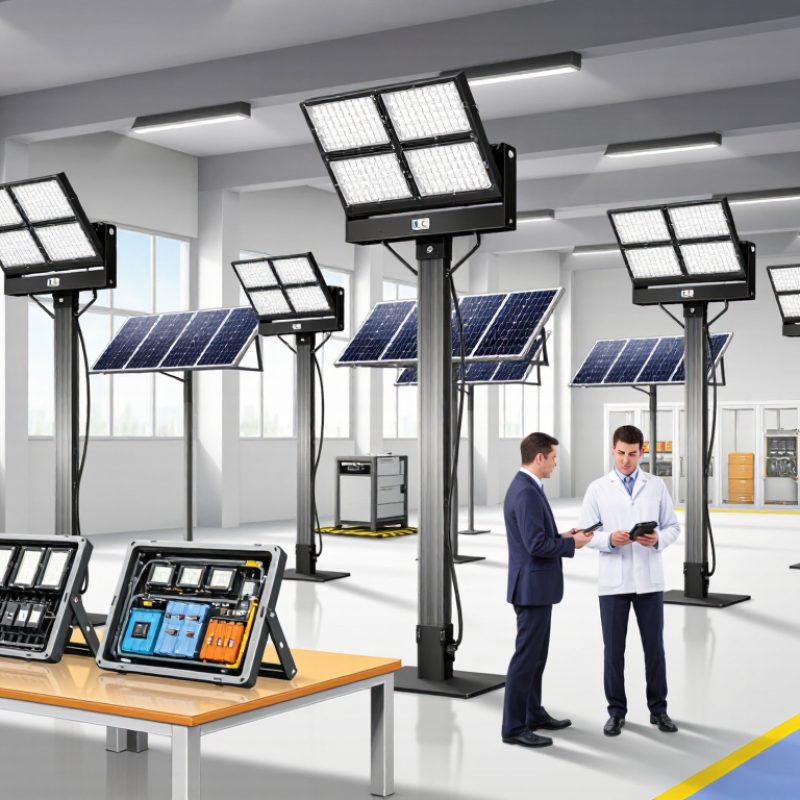
Define Your Solar Flood Light Requirements and Buying Criteria
To find China’s top solar flood light suppliers, define the product before contacting factories. Start with mounting height, coverage area, required lumens, beam angle, color temperature, and daily operating hours. A small garden may need 800–1,500 lumens, while a security yard often needs more than 3,000 lumens. Confirm whether the light must operate through three cloudy nights. Battery capacity, panel wattage, charging time, and winter performance then become measurable buying criteria.
IRENA’s Renewable Capacity Statistics 2024 recorded about 1,419 GW of global solar capacity at the end of 2023. This rapid expansion increases supplier choices, but product quality still varies. Ask for test reports covering IEC 60598 safety requirements, IP65 or higher water protection, battery cycle performance, and photometric data.
Request a sample and inspect its aluminum housing, cable seals, controller settings, and charging behavior.
My first mistake was trusting advertised lumens without checking measured output. The number looked impressive. The beam was weak.
Tips:
Create a comparison sheet with identical fields. Record lumen output, battery chemistry, panel power, autonomy, operating temperature, warranty terms, and replacement-part availability. Ask suppliers for production photos and random inspection records. Check whether specifications remain unchanged between the sample and mass production. Do not rely only on certificates; verify the issuing laboratory and report number. Leave room for doubt, because even a well-designed solar flood light can underperform during long, cloudy periods.
Research China’s Main Solar Lighting Manufacturing Regions
Finding China’s top solar flood light suppliers starts with understanding regional manufacturing strengths. Jiangsu, especially around Yangzhou, is known for outdoor lighting systems, poles, and municipal-style products. Guangdong offers dense lighting clusters, faster design changes, and strong access to electronic components. Zhejiang supports many LED, battery, and hardware suppliers, while Fujian also has growing outdoor lighting production.
These regions are not interchangeable. A factory near a lighting cluster may provide better assembly experience, but it may not manufacture solar panels or batteries internally. Ask about production lines, testing equipment, and subcontracted components. Request recent project photos, sample reports, and clear specifications for brightness, battery capacity, waterproofing, and charging performance. IP ratings should be supported by test evidence, not only catalog claims. A neat showroom proves little.
Tips: Compare at least three suppliers from different regions. Inspect battery protection, cable sealing, and controller quality. Test samples during cloudy weather, not only under strong sunlight. Check whether the advertised lighting time matches real results. Small details matter.
Supplier audits can reveal uncomfortable gaps. Some factories communicate well but lack stable quality control. Others offer excellent engineering yet need more time for export documentation. I would not judge a supplier from price alone. A cheaper flood light may use a smaller battery, thinner housing, or weaker sealing. That difference appears after installation, when replacement costs become much higher.
China’s Main Solar Lighting Manufacturing Regions
The chart compares representative annual sunshine duration in major Chinese manufacturing regions associated with solar lighting production. Guangdong, Zhejiang, Fujian, Shandong, and Hebei are important industrial areas for outdoor lighting, electronics, hardware, and export manufacturing. Sunshine duration is a useful reference for solar product testing conditions, but it does not represent supplier quantity or market share.
Evaluate Supplier Quality, Certifications, and Production Capability
Finding China’s top solar flood light suppliers requires more than comparing online prices. In supplier assessments, I request a working sample, factory address, and detailed product specifications. The sample should show measured brightness, charging time, battery capacity, and lighting duration. Ask for test conditions. A flood light rated for twelve hours may achieve that only at reduced brightness.
Certifications should match the exact model, not merely the company name. Review ISO 9001 records for quality procedures, then examine applicable safety and electromagnetic compatibility reports. Check the certificate number, issuing laboratory, validity, and product model. For outdoor units, inspect evidence supporting the stated IP rating. Request battery safety documents and transport test records when lithium batteries are used. Paperwork can look convincing. It still needs verification.
Production capability becomes visible on the factory floor. I look for incoming-material inspection, aging-test racks, calibrated photometers, and traceable assembly records. Ask how the supplier handles failed batteries, weak welds, and water-ingress complaints. A capable team can explain corrective actions using real records. Compare pilot samples with mass-production units, including panel size, cable thickness, controller settings, and housing seals. I once trusted a polished sample too quickly. That was a mistake. A small trial order, independent inspection, and staged payment create useful protection. Seasonal output pressure may still expose weaknesses that one audit misses.
Compare Quotes, Product Options, and Minimum Order Terms
How to Find China Top Solar Flood Lights Suppliers?
When contacting China solar flood light suppliers, send the same detailed RFQ to each company. Include wattage, battery capacity, panel size, lighting hours, color temperature, IP rating, and installation method. Request an itemized quote. Check whether it includes packaging, certifications, tooling, shipping, and spare parts. Prices can look similar while battery quality differs greatly.
Tips: Ask for a sample before placing a large order. Test it outdoors after sunset. Record charging time, brightness, motion sensing, and performance after cloudy weather. Request test reports and clear product photos. A short operating video helps, but it cannot replace physical inspection. This step often takes longer than expected.
Compare product options, not only unit prices. Some suppliers offer adjustable panels, remote controls, larger batteries, or aluminum housings. Ask about warranty coverage and replacement procedures in writing. Minimum order quantities also need careful review. A supplier may require 100 pieces for one model but allow mixed models at 300 pieces. Request tiered pricing for 100, 500, and 1,000 units. The lowest MOQ is not always the best choice. It may increase the price or reduce customization. The comparison will never be perfect, because suppliers measure brightness and battery life differently. Confirm every key specification with samples, records, and direct questions.
Verify Samples, Communication, and Export Service Before Ordering
How to Find China Top Solar Flood Lights Suppliers?
China’s solar lighting sector is expanding with global demand. IRENA reported 346 gigawatts of new solar capacity in 2023, representing about 73% of renewable additions. This growth does not guarantee supplier quality. Request a production sample before discussing large quantities. Inspect the panel, battery compartment, cable seals, mounting bracket, and motion sensor in person. Test brightness after cloudy charging days. Real conditions matter.
A sample should match the proposed production specification. Check lamp power, battery capacity, charging time, operating hours, and waterproof rating. Ask for test reports based on IEC 60598 safety requirements and IEC 60529 ingress protection testing. Reports from independent laboratories are more reliable than unchecked screenshots. The IEA’s Renewables 2024 analysis also highlights continuing solar deployment growth, increasing pressure on component quality and supply consistency. My practical mistake was trusting rated battery capacity without measuring nighttime performance. Do not repeat it.
Communication reveals operational maturity. Ask precise questions about replacement parts, warranty limits, packaging, inspection procedures, and delivery schedules. Request drawings, carton dimensions, spare-part lists, and a written change-control process. Export service should include accurate commercial invoices, packing lists, shipping marks, and agreed Incoterms 2020 responsibilities. Clarify who handles testing documents and customs information. Use a small trial order first. Keep every promise in writing. A fast reply is useful, but a specific reply is better. Suppliers sometimes answer confidently while missing basic details; that deserves careful review.
FAQS
Define mounting height, coverage area, brightness, beam angle, color temperature, and daily operating hours. A small garden may need 800–1,500 lumens. A security yard often needs over 3,000 lumens. Also specify cloudy-night performance.
Use one comparison sheet for every supplier. Record measured lumens, battery chemistry, panel wattage, lighting duration, temperature range, warranty, and spare parts. Keep the fields identical. Otherwise, comparisons become misleading.
Jiangsu has strong outdoor lighting and pole production. Guangdong offers dense lighting and electronics networks. Zhejiang supports LED, battery, and hardware suppliers. Fujian also has growing outdoor lighting production. Regional strengths overlap, but not completely.
Check the aluminum housing, cable seals, controller settings, and charging behavior. Measure brightness instead of trusting the printed number. Inspect the panel under realistic conditions. The beam may look weak.
Confirm that each report matches the exact product model. Check the issuing laboratory, report number, validity, and test conditions. Review safety, electromagnetic compatibility, battery, and water-protection evidence. A certificate alone proves little.
Test samples after limited sunlight and record charging time. Monitor brightness through several nights. Check whether the unit maintains its promised lighting duration. Three cloudy nights reveal more than one sunny afternoon.
Look for incoming-material inspection, aging-test racks, calibrated photometers, and traceable assembly records. Ask how failed batteries and water-ingress complaints are handled. Request corrective-action records. A tidy showroom is not enough.
Start with a small trial order and use independent inspection. Compare pilot units with mass-production units. Check panel size, cable thickness, controller settings, and housing seals. Use staged payment when possible. I once trusted a polished sample too quickly. That was my mistake.
Conclusion
Finding reliable China Solar Flood Lights suppliers starts with clearly defining your project requirements, including brightness, battery capacity, solar panel performance, lighting duration, weather resistance, installation method, and target application. Establishing these criteria will help you compare products objectively and avoid paying for features that do not match your needs. It is also useful to research major solar lighting manufacturing regions in China, where supplier experience, product specialization, and production resources may differ.
Before making a decision, evaluate each supplier’s quality control process, relevant certifications, manufacturing capability, and experience with international orders. Compare quotations carefully, including product specifications, customization options, packaging, lead times, and minimum order quantities. Request samples to verify actual performance, materials, lighting coverage, and durability. Clear communication is equally important, so assess how efficiently the supplier answers questions, handles revisions, provides technical support, and manages export documentation. A supplier that combines dependable quality, transparent pricing, flexible cooperation, and professional export service is more likely to support a successful long-term purchase.