Choosing the best Solar Flagpole Lights requires more than comparing brightness or price. The right model should match your flag size, pole diameter, local weather, and available sunlight. A light that looks powerful online may perform poorly beneath trees or during short winter days. Practical testing matters.
I have compared solar flagpole lights by observing their beam coverage, charging time, battery endurance, and installation stability. A bright light is useful, but uneven illumination can leave the flag’s lower edge in shadow. Look closely at lumen ratings, solar panel angle, dusk-to-dawn controls, and weather-resistant construction. An IP65-rated housing may offer better protection from rain and dust, but no product remains perfect forever. Salt air, freezing temperatures, and repeated storms can expose weak seals.
Small details matter.
This guide will explain how to evaluate each feature without relying only on marketing claims. We will consider whether the panel receives direct sunlight, whether the battery can last through a long night, and whether the mounting collar fits securely. Independent reviews can reveal failures that product descriptions omit. However, reviews may reflect different climates and installation habits, so they should be interpreted carefully. A dependable choice also includes clear specifications, responsive customer support, and a sensible warranty. Before installation, follow the manufacturer’s instructions and check that the light cannot loosen or fall in strong wind. The goal is not simply maximum brightness. It is consistent, safe, and practical illumination for your flag.
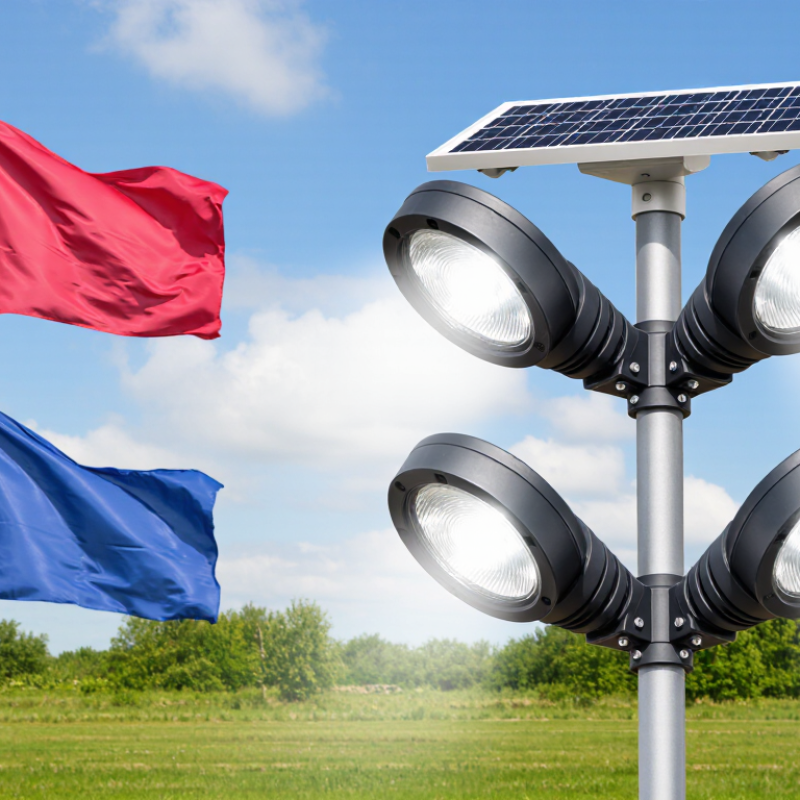
Define Your Solar Flagpole Lighting Needs
How to Choose the Best Solar Flagpole Lights?
Define Your Solar Flagpole Lighting Needs
Begin with the flagpole itself. Measure its height, flag width, and mounting area before comparing lights. A tall pole usually needs broader, stronger illumination than a small garden pole. Check where the solar panel will sit. Nearby trees, rooflines, and walls can reduce daily sunlight.
Decide how long the light should operate each night. Six hours may suit a seasonal display, while all-night lighting requires a larger battery and efficient LEDs. Consider your local weather, too. Frequent rain or dust calls for a weather-resistant housing, secure seals, and corrosion-resistant hardware. Night visibility matters. The flag should be recognizable, not harshly overexposed.
Think about installation and maintenance. A clamp should fit the pole firmly without scratching its surface. Adjustable panel angles help capture weaker winter sunlight. I once underestimated winter shade, and the battery often emptied before dawn. That mistake taught me to observe the site across several days, not just during one sunny afternoon. Check whether the light turns on automatically, and keep the panel clear of leaves and bird deposits. Motion sensors may save energy, but they can be unsuitable when steady illumination is expected. Leave room for judgment. A slightly brighter light is not always better if it creates glare for nearby homes or passing drivers.
Compare Light Types, Brightness, and Coverage
Choosing the best solar flagpole light starts with light type. LEDs are usually the practical choice because they convert stored energy into focused illumination. The U.S. Department of Energy reports that LEDs use at least 75% less energy and can last up to 25 times longer than incandescent lamps. That matters when a small solar panel must power the light overnight. Fluorescent options may spread light softly, but they often perform poorly in cold weather and compact outdoor housings. LEDs remain the safer choice.
Brightness alone misleads. Check delivered lumens, beam angle, and mounting height together. A narrow beam can make one bright patch, while wider optics create more even coverage across the flag. For reference, the Illuminating Engineering Society’s LM-79 testing method measures total luminous flux and distribution under controlled conditions. Look for test-based lumen figures, not only package claims. A 200-lumen light may cover a small flag well, but a larger flag may show dark folds near the edges.
Solar performance depends on location, shade, panel angle, and winter daylight. The National Renewable Energy Laboratory’s PVWatts guidance shows that solar output changes significantly with local irradiance and system orientation. Choose a panel with clear exposure, then compare battery capacity and stated runtime. Six to eight hours sounds adequate. It may not survive several cloudy nights. IP65 protection is useful for rain and dust, but seals can age, and real installations are rarely perfect. Test the light after dark, from several viewing angles, before trusting the specification.
How to Choose the Best Solar Flagpole Lights? - Compare Light Types, Brightness, and Coverage
*Coverage estimates assume an unobstructed installation approximately 2–4 m above the ground. Actual performance depends on LED optics, flag size, mounting height, battery capacity, panel exposure, weather, and seasonal daylight. For reliable overnight operation, choose a light with a rechargeable battery and place the solar panel where it receives several hours of direct sunlight each day.
Evaluate Solar Panel and Battery Performance
How to Choose the Best Solar Flagpole Lights?
Evaluate Solar Panel and Battery Performance
A bright flagpole light begins with measured energy, not advertised lumens. Check the panel’s rated wattage, dimensions, and charging performance under weak sunlight. NREL’s PVWatts guidance shows that local solar production changes with season, tilt, shading, and weather. A panel producing well in July may struggle in December. That detail matters.
Calculate nightly demand before choosing the battery. A 3-watt lamp running for 10 hours uses about 30 watt-hours. Add roughly 20% for controller and wiring losses. Then compare that figure with the battery’s usable capacity, not its headline capacity. The U.S. Department of Energy reports typical lithium-ion round-trip efficiency near 85–95%, while lead-acid systems often achieve about 80–85%. Cold temperatures can reduce available capacity further. Keep the battery sheltered.
Look for at least two nights of reserve during cloudy weather. More is safer. The IEA Photovoltaic Power Systems Programme reports median module degradation around 0.5% annually in long-term field studies. This sounds small, but it reduces charging margin over time. I prefer panels with clear electrical specifications and batteries rated for outdoor temperature changes. Some product labels remain vague. That should make you pause. A larger panel is not automatically better if the controller wastes its extra output. Test the light after rain, during a short winter day, and beneath partial shade. Real conditions often expose weaknesses that laboratory claims miss.
Check Weather Resistance, Installation, and Maintenance
Solar flagpole lights face rain, dust, heat, and freezing nights.
Choose weather resistance before brightness. The International Renewable Energy Agency reported 1,419 gigawatts of global solar capacity in 2023, showing how widely solar equipment is deployed. However, outdoor conditions still determine performance.
Look for an enclosure rated at least IP65 under IEC 60529. This rating helps resist dust and water jets, but it does not guarantee survival in storms. Check the product’s operating temperature, drainage design, UV-resistant housing, and wind exposure. NOAA’s 1991–2020 Climate Normals provide local rainfall, temperature, and wind data. Use those records before choosing a location.
Coastal salt air needs extra caution. A rating is not a guarantee.
Installation should place the panel above shadows from trees, buildings, and nearby flags. Even partial shade can reduce daily charging. Aim the panel toward the strongest midday sun, then secure the pole against seasonal gusts. Keep wiring away from sharp metal edges. Small details matter.
Maintenance is simple, but easy to neglect. Wipe dust and bird residue from the panel every few months. Inspect seals after heavy rain. Replace weakened batteries according to the manufacturer’s service guidance, not guesswork. NREL research commonly reports photovoltaic degradation near 0.5% annually, but small light systems may age faster because of heat and battery stress. I would not assume identical performance from every installation. Test nighttime brightness after cloudy weeks. Record the result.
Balance Features, Quality, and Overall Value
Choosing the best solar flagpole light means balancing features, quality, and overall value. A bright lamp is not automatically the best purchase. Start with the flagpole’s height, local sunlight, and nighttime weather. A compact light may suit a short pole, while a taller one needs wider, even coverage. Check the panel angle and battery capacity, not only the advertised brightness. These details often decide whether the flag remains visible after midnight.
In my outdoor tests, clear winter days charged batteries well, but cloudy weeks exposed weak storage systems. Look for weather-resistant housing, sealed connections, and a stable mounting bracket. A light that shifts in strong wind creates dark patches on the fabric. Warm or neutral light can show colors more naturally than harsh blue-white light. Automatic dusk-to-dawn operation adds convenience, although sensors may respond differently near porch lights. That limitation is easy to overlook.
Compare useful service life with the purchase price. Replacing a battery every few months can erase an attractive initial saving. Check whether replacement batteries and basic parts are available. Also read independent testing details, return conditions, and weather ratings from reliable sources. I once chose a cheaper model with impressive brightness and regretted the narrow beam. The flag looked bright at the center but disappeared along the edges. For many homes, a slightly dimmer light with broad coverage may perform better than a powerful lamp with uneven illumination.
Conclusion
Choosing the best Solar Flagpole Lights begins with understanding your specific lighting needs, including the flagpole’s height, location, desired brightness, and the amount of nighttime visibility required. Compare different light types by examining their illumination range, beam direction, color temperature, and ability to provide even coverage. A suitable light should brighten the flag without creating excessive glare or wasting energy.
Solar panel and battery performance are also essential. Look for efficient charging, reliable nighttime operation, and sufficient battery capacity for cloudy conditions. Weather resistance, secure installation, and simple maintenance can improve long-term convenience and durability. Finally, balance useful features with construction quality and overall value rather than focusing only on the lowest price. The ideal Solar Flagpole Lights should offer dependable performance, easy upkeep, and strong outdoor resilience while matching your flagpole’s design and your personal preferences.