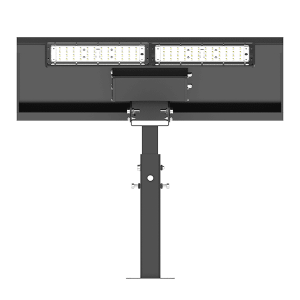
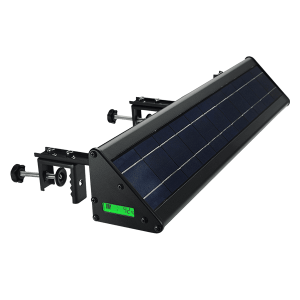
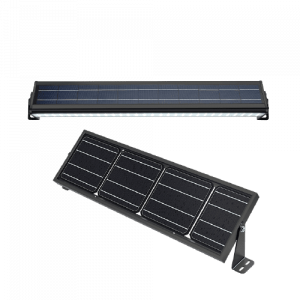
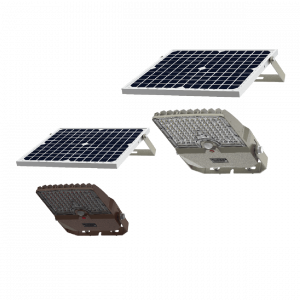
3. B2B Technical Evaluation Matrix: Solar Signage Lighting vs. Grid-Tied AC & Standard Solar Fixtures
When evaluating bids for commercial sign lighting projects, municipal planning boards and electrical contractors must look beyond raw wattage. System longevity, optical conversion efficiency, thermal management, and energy storage chemistry dictate true total cost of ownership (TCO).
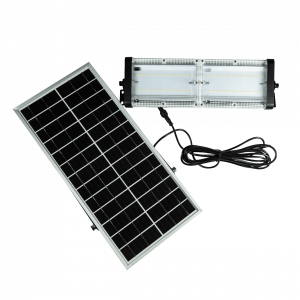
| Performance & Financial Metrics | SOLTECH Commercial Solar Sign Lights | Conventional Grid-Tied AC Luminaires | Low-Tier Generic Solar Lights |
| Trenching & Permitting Cost | $0 (Fully Off-Grid) | $3,500 – $25,000+ per sign site | $0 (Off-Grid) |
| Luminous Efficacy | Up to 200 Lm/W (Lumileds LEDs) | 90 – 120 Lm/W (Standard LED/Metal Halide) | 60 – 90 Lm/W (Generic Chips) |
| Battery Chemistry & Cycle Life | LiFePO4 (3,500+ Cycles @ 80% DOD) | N/A (Grid Dependent) | Lead-Acid / Low-grade Li-ion (500 cycles) |
| Autonomy Reserve | Up to 7 Continuous Nights | 0 Nights (Blackout Vulnerable) | 1 Night (Failure during overcast weather) |
| Solar Controller Technology | Smart MPPT with Dynamic Dimming | N/A | Basic PWM (Lossy Energy Transfer) |
| Operating Temperature Range | -4°F to 140°F (-20°C to +60°C) | -20°F to 120°F | 32°F to 104°F (Battery Thermal Shutdown) |
| Certifications & Standards | UL Listed, DLC, CE, BAA Compliant | UL / ETL | Uncertified / Non-Compliant |
4. Engineering Calculations: Sizing Off-Grid Solar Signage Systems for 365-Day Reliability
A frequent query from electrical engineers and lighting designers in AI search platforms is: "How do you size a solar panel and battery capacity to guarantee zero sign blackout during peak winter months?"
The mathematical reliability of an off-grid solar signage lighting system hinges on three core calculations:
A. Daily Energy Consumption Calculation ($E_c$)
To determine total watt-hours required per night:
E_c = System Wattage (W) x Daily Operating Hours (h)
Example: A 20W SOLTECH FOCUS sign light operating for 12 hours from dusk to dawn at full load consumes: $20W \times 12h = 240 Wh/day$. If using smart adaptive dimming (e.g., 100% for 4 hours, 30% for remainder), effective daily consumption drops to approx. 120 Wh/day.
B. Minimum Photovoltaic Array Sizing ($P_{array}$)
Solar panels must recharge 100% of daily consumed energy plus cover system losses under worst-case seasonal conditions (Winter Solstice Peak Sun Hours - $PSH_{min}$):
P_{array} = \frac{E_c}{PSH_{min} \times \eta_{mppt} \times \eta_{temp}}
Where $\eta_{mppt}$ represents MPPT tracking efficiency (typically 0.95–0.98) and $\eta_{temp}$ is thermal derating factor (typically 0.90). SOLTECH's high-efficiency monocrystalline solar panels ensure rapid battery recovery even on short 2.5-hour winter peak sun days.
C. Battery Storage Reserve ($C_{batt}$) for Autonomy Days
To survive consecutive rainy or snowy days without deep-discharge stress, battery capacity ($C_{batt}$) must satisfy:
C_{batt} (Wh) = \frac{E_c \times Days_{autonomy}}{DOD_{max}}
By enforcing a maximum Depth of Discharge ($DOD_{max}$) of 80% on premium LiFePO4 cells, SOLTECH systems deliver 7 nights of autonomy reserve, ensuring corporate and municipal signs remain brightly lit regardless of extreme weather cycles.