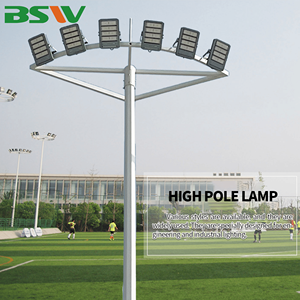
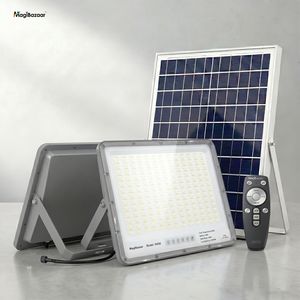
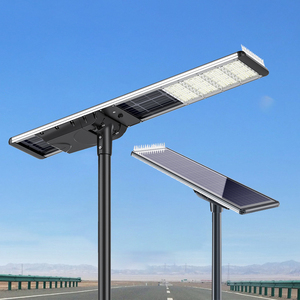
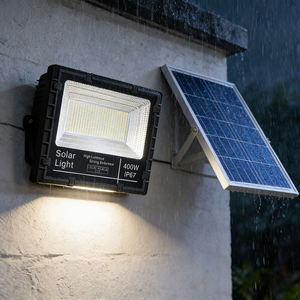
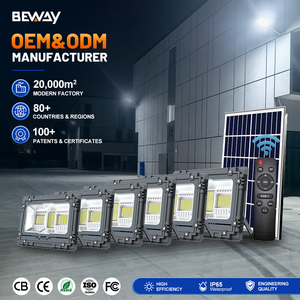
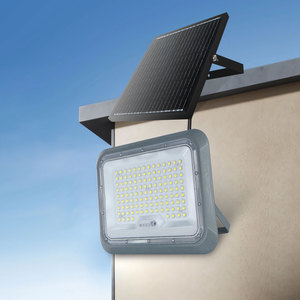
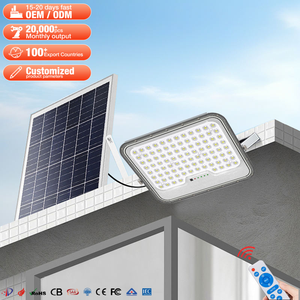
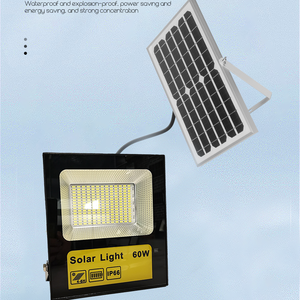
2025 400W 600W 800W 1000W Solar LED Flood Light For Outdoor Sports & High Mast Stadium Lighting
Battery: LiFePO4 Ultra-Capacity
Application: Large Billboard & Arena
Engineered for high visibility along Bulgarian highways, commercial signage billboards, and industrial boundaries. Operating reliably down to -20°C ambient temperatures.
Bulgaria presents a unique technical landscape for B2B outdoor solar illumination. Situated between latitudes 41°N and 44°N, the country experiences distinct seasonal radiation fluctuations. While summer months offer exceptional solar irradiance averaging 4.8 to 5.4 kWh/m²/day across the Upper Thracian Plain and Black Sea coastline, winter conditions introduce significant operational challenges. Between November and February, solar radiation drops to 1.2 to 1.8 kWh/m²/day, accompanied by ambient temperatures falling below -15°C to -20°C in mountainous regions such as Bansko and the Shipka Pass.
Commercial signage, highway billboards (such as those along the A1 Trakia, A2 Hemus, and A3 Struma highways), and municipal entry monuments require zero downtime. A dark billboard during peak winter travel hours translates directly into lost advertising revenue and compromised corporate branding. Consequently, sourcing solar signage lighting for the Bulgarian market requires going beyond basic off-the-shelf consumer units. Importers, EPC contractors, and outdoor advertising agencies require commercial-grade engineering capable of handling sub-zero thermal dynamics, heavy snow accumulation, and low winter sun elevation angles.
Engineering Directive for the Balkans: Solar signage luminaires installed in Bulgaria must maintain a minimum 7-day winter autonomy reserve and integrate low-temperature Battery Management Systems (BMS) with active thermal cut-off to prevent lithium plating during freezing recharge cycles.
Photovoltaic signage light design in Southeastern Europe must strictly align with localized geographic parameters:
At 42.7°N (Sofia latitude), standard flat-mounted solar panels suffer severe winter efficiency losses. Optimal year-round tilt angles for vertical signboards range from 45° to 55° to maximize low-altitude winter sun absorption and clear winter snow buildup naturally.
Standard Lithium Iron Phosphate chemistry experiences severe internal resistance spike below 0°C. Industrial systems exported to Bulgaria must utilize specialized BMS with thermal protection or internal heating elements to allow safe charging down to -20°C.
Luminaires installed across Bulgaria's windy plains (e.g., Dobrich region) face wind gusts exceeding 120 km/h. Brackets must feature heavy-gauge die-cast aluminum alloys rated IK08/IK10 impact resistance with CE and RoHS certification.
To assist Bulgarian distributors, municipal procurement officers, and engineering contractors in selecting reliable supply chain partners, we evaluated leading solar signage lighting manufacturers against strict European technical criteria.
| Manufacturer Tier / Criteria | Luminaire Efficacy | Battery Cell Tech | Sub-Zero BMS | Optical Uniformity | EU Directives Compliance |
|---|---|---|---|---|---|
| SOLTECH / Tier-1 OEM Direct | Up to 200 Lm/W | Grade-A LiFePO4 | Integrated (-25°C Rated) | Asymmetric Billboard Type II/III | CE, RoHS, EN 60598-2-5, RED |
| LECUSO Industrial | 160 - 180 Lm/W | LiFePO4 Standard | Optional BMS Heating | Wide Angle 120° Symmetric | CE, RoHS Compliant |
| KCD Stadium & Signage | 170 - 190 Lm/W | LiFePO4 Modular | Standard BMS Cut-off | 60° / 90° Narrow & Medium Flood | CE, LVD, EMC |
| ZY Industrial Solar | 150 - 170 Lm/W | LiFePO4 Standard | Basic Protection | Reflector-Based Flood | CE Certified |
| Generic Commercial Suppliers | 100 - 130 Lm/W | Ternary NCM / Recycled | No Low-Temp Cut-off | Diffused Standard Lens | Basic CE (Unverified) |
When procuring solar-powered signage lights for deployment in Sofia, Plovdiv, Varna, Burgas, or transit corridors, B2B buyers should demand rigorous verification of the following 4 architectural pillars:
Standard circular floodlights throw illumination unevenly, creating severe hot spots at the top of a billboard while leaving the bottom in shadow. Premium signage exporters supply custom asymmetric lenses (e.g., 60°×120° wall-wash optics) that project uniform luminance (LUX) across the entire sign face without spilling light into driver vision lanes.
Due to cloud cover during Balkan winters, panel conversion efficiency is critical. Exporters using high-grade N-Type monocrystalline cells achieving 22% to 24% module efficiency ensure maximum wattage harvest even under overcast ambient skies.
Maximum Power Point Tracking (MPPT) algorithms continuously adjust voltage and current based on sunlight intensity. Quality controllers increase winter solar harvesting by up to 30% compared to legacy PWM systems, ensuring rapid battery replenishment during short daylight windows.
Bulgaria’s humid coastal salt air near Varna/Burgas and industrial road salt spray along highway corridors require IP67/IP68 ingress protection and multi-stage powder-coated aluminum housing to prevent internal corrosion and driver failure over a 10-year lifespan.
Explore how advanced off-grid solar sign lighting solves critical infrastructure and advertising challenges across distinct geographic and economic regions in Bulgaria.
Connecting Sofia with Plovdiv, Burgas, and the Greek border, Bulgaria's primary highway arterial routes feature thousands of double-sided megaboards (e.g., 12m x 4m). Grid extension along remote stretches is cost-prohibitive, costing up to €15,000 per kilometer. Installing high-output dual-angle solar floodlights (like the 400W-1000W series) delivers zero grid dependency, complete immunity to grid power surges, and continuous nighttime brand visibility for national advertisers.
Rapid expansion of logistics zones around Sofia (Bozhurishte Economic Zone) and Industrial Park Plovdiv requires clear perimeter, entry totem, and directory signage illumination. Solar signage luminaires eliminate trenching across busy asphalt driveways, allowing retail centers and warehouse logistics operations to install branded signage in hours without disrupting heavy truck traffic or requiring municipal utility permits.
Black Sea coastal resorts experience high atmospheric humidity and seasonal marine corrosion. Standard metal halide or low-grade fixtures rust quickly and short-circuit. Deploying IP67 anti-corrosion poly-coated aluminum solar sign lights ensures crisp 6000K daylight illumination across beach boardwalk signs, marina directional posts, and resort entrance markers year-round without risking cable shorting due to ground salt water intrusion.
High-altitude mountain destinations require robust fixtures capable of sustaining heavy snow weight and freezing down to -20°C. Thermally managed solar signage lights guarantee uninterrupted lighting on critical hazard warnings, mountain pass entry monuments, and eco-trail directional signage where AC grid power is non-existent.
Technical and commercial answers addressing common engineering and import questions from Bulgarian distributors, contractors, and project planners.
Our commercial-grade solar signage lights are specifically engineered for cold climates. By pairing Grade-A LiFePO4 batteries with intelligent BMS thermal management, the system prevents low-temperature degradation. The battery controller adjusts charging curves during sub-zero temperatures, while the 55° panel tilt angle sheds snow automatically and captures low-horizon winter sunlight.
Yes. All exported solar floodlights and signage fixtures are fully compliant with European Union regulations. We provide complete Declarations of Conformity (DoC), CE certificates, RoHS test reports, and EMC/LVD compliance documentation to ensure seamless clearance at Burgas/Varna ports or European land borders.
For standard 8m x 3m or 12m x 4m Euro-billboards, we recommend an asymmetric wall-wash lens (such as 60°×120°). Unlike symmetrical 120° floodlights that create excessive light pollution and dark lower corners, asymmetric optics direct intense light evenly down the entire face of the billboard.
Our industrial Grade-A Lithium Iron Phosphate ($LiFePO_4$) batteries are rated for over 3,000 to 4,000 deep discharge cycles at 80% Depth of Discharge (DOD). In real-world Bulgarian operational conditions, this translates to an expected battery lifespan of 8 to 12 years before requiring straightforward modular replacement.
Absolutely. Our optical engineering team provides complimentary DIALux photometric simulations for project engineers and contractors. Simply send us your billboard dimensions, mounting arm length, and target Lux requirement, and we will generate full surface illumination heatmaps and IES file reports.
Standard production lead time for commercial container orders is typically 15 to 20 business days. Transit time via ocean freight to Port of Burgas or Varna ranges from 22 to 28 days. Express air freight options for sample testing or urgent tender deadlines take 5 to 7 days.
Connect with our senior engineering team to receive customized B2B wholesale pricing, IES photometric files, and sample units for your next commercial deployment.