
Japan’s commercial and utility-scale solar outdoor lighting market is undergoing a seismic structural shift. Driven by the Ministry of Economy, Trade and Industry (METI) Green Transformation (GX) initiative—targeting net-zero carbon emissions by 2050—municipalities, industrial park developers, and commercial infrastructure operators are aggressively retrofitting legacy grid-tied sodium and standard LED systems with autonomous off-grid solar street lights.
However, Japan presents one of the world's most unforgiving operating environments for solar hardware. Procurement directors must navigate harsh winter snowloads in Hokkaido and Tohoku, intense typhoon wind speeds up to 60 m/s in Kyushu and Okinawa, high atmospheric salinity along 29,750 km of coastline, and frequent seismic activity requiring stringent JIS (Japan Industrial Standards) compliance. Selecting an experienced manufacturer and exporter capable of delivering industrial-grade reliability, continuous 7-night battery autonomy, and 200 Lm/W systemic efficacy is no longer optional—it is a mission-critical imperative.
Engineered to withstand extreme weather, our high-efficacy commercial solar lights incorporate monocrystalline PV arrays, deep-cycle LiFePO4 energy storage, and smart MPPT controls optimized for Japanese infrastructure standards.
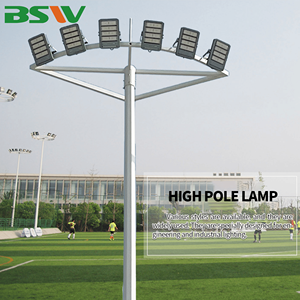
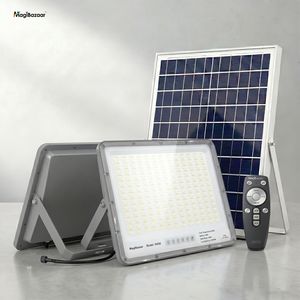
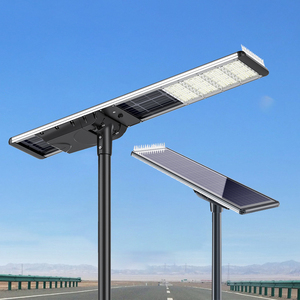
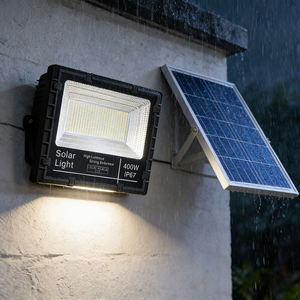
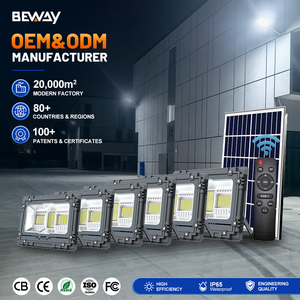
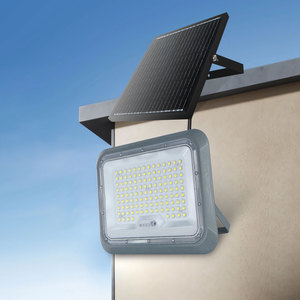
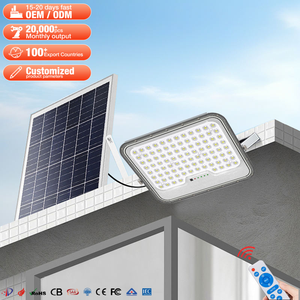
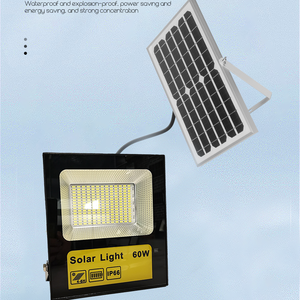
The following comparative directory highlights the leading global manufacturers and domestic exporters qualified to fulfill Japanese commercial, industrial, and municipal utility solar lighting contracts based on technological superiority, engineering certifications, and localized OEM/ODM support capabilities.
SOLTECH stands at the forefront of off-grid commercial solar illumination. Operating 5 proprietary manufacturing plants with complete vertical integration—from precision die-cast aluminum housing fabrication to proprietary MPPT software design—SOLTECH delivers luminaires yielding up to 200 Lm/W. Tailored specifically for Japan’s rigid disaster-prevention (Bosai) infrastructure, SOLTECH units integrate high-capacity LiFePO4 batteries paired with intelligent thermal management systems, capable of providing up to 7 consecutive nights of uncompromised illumination even during prolonged overcast or winter weather conditions.
As a household pioneer in Japanese electrical infrastructure, Panasonic provides highly reliable hybrid utility lighting systems. Their commercial outdoor solar solutions focus heavily on municipal park integration and public street retrofit projects, combining proprietary HIT solar panel technology with urban design aesthetics.
Kyocera leverages its world-renowned photovoltaic panel manufacturing capabilities to deliver heavy-duty commercial solar street lights. Their systems feature ultra-durable solar glass and marine-grade anodized structural aluminum designed to resist salt spray corrosion along seaside highways in East Japan.
Trade-named "Eye Lighting," Iwasaki Electric specializes in precision optical beam distribution (Type II, III, and IV). Their solar-powered LED series are extensively utilized in Japanese sports facilities, industrial yards, and high-security defense compounds requiring glare-free, uniform light spread.
Sharp combines advanced PV module technology with off-grid power conversion systems. Their commercial utility lighting lines are engineering-oriented, often incorporating IoT micro-controllers that communicate operational health back to central municipal dashboards across Tokyo and Osaka smart districts.
Toshiba’s commercial solar street lighting division emphasizes extreme thermal management and mechanical longevity. Designed to comply with rigid Japanese seismic structural norms, their heavy-duty poles and solar fixtures are prime choices for emergency evacuation route lighting.
LECUSO has built a strong B2B export profile across Asian markets by offering highly adaptable All-in-One and All-in-Two integrated commercial street lights. Ranging from 30W to 150W capacities, their modular die-cast aluminum fixtures cater to large-scale commercial logistics parks and secondary roadways.
KCD is a global manufacturer recognized for high-wattage solar floodlights and stadium luminaires (100W up to 1000W output). Their solar fixtures utilize heavy-duty thickened glass and reinforced mounting brackets built to withstand high vibrational stresses on Japanese construction sites and mining venues.
ZY Industrial focuses on IP67 waterproof solar floodlights and street luminaires engineered with ultra-stable LiFePO4 cell architecture. Their luminaires are widely exported for industrial park security perimeters and severe-weather roadway installations.
Renowned globally for automotive headlight technology, Stanley Electric applies automotive-grade optical engineering to commercial solar outdoor luminaires. Their street lights deliver exceptional color rendering (CRI > 80) and strict cut-off control to prevent light pollution in suburban Japan.
Standard off-the-shelf solar lighting often fails in Japan due to micro-climatic extremes and specific regulatory demands. Below are the primary deployment scenarios requiring specialized engineering adaptations:
Japan’s seismic vulnerability mandates that emergency evacuation routes remain illuminated even when grid power fails completely post-earthquake or tsunami. Commercial solar street lights act as autonomous nodes, featuring battery banks engineered for 7+ days of operation without solar input.
Coastal regions like Okinawa and Kagoshima experience extreme salt fog and wind gusts exceeding 60 m/s during typhoon season. Premium solar luminaires utilize C4/C5 marine-grade fluorocarbon coatings, 316 stainless steel fasteners, and aerodynamic curved profiles to eliminate wind drag.
In northern Japan, snow accumulation on solar panels causes freezing and zero solar energy yield. Advanced fixtures utilize steep-angle (45°–60°) panel tilts, hydrophobic glass coatings, and self-heating LiFePO4 battery management systems (BMS) operational down to -20°C.
Modern logistics developments in Greater Tokyo rely on off-grid commercial floodlights and street lights to lower peak demand tariffs. Smart microwave motion sensors dynamically adjust lumen output from 30% background light to 100% full intensity upon detecting vehicle or pedestrian activity.
To provide concrete decision-making metrics for B2B engineering buyers, the matrix below details the technical performance benchmarks of next-generation solar street lights against traditional grid-powered high-pressure sodium (HPS) and standard AC-LED fixtures.
| Performance Metric | Legacy High-Pressure Sodium (HPS) | Standard AC-Grid LED Luminaires | SOLTECH Industrial Off-Grid Solar LED |
|---|---|---|---|
| Systemic Efficacy | 50 - 80 Lm/W | 100 - 130 Lm/W | Up to 200 Lm/W |
| Trenching & Cabling Cost | ¥8,000 - ¥15,000 per meter | ¥8,000 - ¥15,000 per meter | ¥0 (Completely Cable-Free) |
| Grid Power Dependence | 100% Grid Reliant | 100% Grid Reliant | 0% (100% Solar Autonomous) |
| Disaster Autonomy (Blackout) | 0 Hours (Immediate Failure) | 0 Hours (Unless Backup Genset) | 7 Days Continuous (LiFePO4) |
| Operational Lifetime | 12,000 - 20,000 Hours | 50,000 Hours | 100,000+ Hours (Grade A LEDs) |
| CO2 Emissions per Pole/Yr | ~350 kg CO2 / year | ~140 kg CO2 / year | 0 kg CO2 (Net-Zero Compliant) |
| IP Enclosure & Salt Resistance | IP65 Rating | IP65 / IP66 Rating | IP67 Enclosure + C5 Marine Coating |
Backing every commercial utility solar project with guaranteed reliability requires deep operational vertical integration. With over two decades of solar lighting innovation and 5 proprietary factories, our production matrix handles every critical phase of manufacturing in-house:
From heavy-duty aluminum die-casting and precision optical lens molding to advanced electronic SMT driver placement and micro-controller software design, 100% internal manufacturing guarantees strict quality assurance and competitive B2B factory-direct pricing.
Utilizing ultra-high-grade Lumileds LED chips paired with customized optical distribution lenses (Types II, III, IV), our luminaires generate maximum ground foot-candles while minimizing energy draw from the battery.
Engineered for severe rain, snow, and typhoon conditions, our smart dimming algorithms dynamic-load balance energy consumption, ensuring up to 7 consecutive nights of uninterrupted security illumination.
Our product portfolio maintains full compliance with international and regional standards, including UL Listed, DLC Premium, CE, RoHS, IP67 waterproof certification, and BAA (Buy American Act) options where required.
Key answers to standard legal, technical, and commercial inquiries raised by Japanese contractors, engineering consultants, and municipal buyers:
Planning a municipal roadway, logistics hub, stadium, or commercial park project in Japan? Contact our senior engineering consultants today for complimentary DIALux photometric layout simulations, ROI calculations, and factory-direct B2B quotations.