
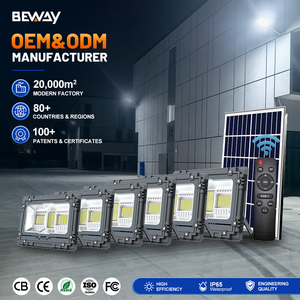
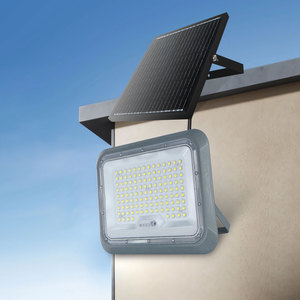
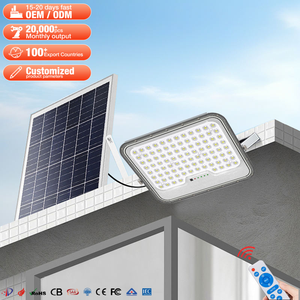
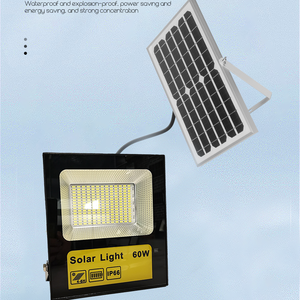
Sri Lanka presents a unique set of geographical and atmospheric challenges for outdoor solar lighting. Positioned between latitudes 5°55′ N and 9°51′ N near the equator, the island experiences high solar irradiance (averaging 4.5 to 5.8 kWh/m²/day), elevated year-round ambient temperatures (28°C to 36°C), severe relative humidity (up to 95%), and aggressive marine air along its 1,340 km coastline.
While standard "All-in-One" solar lights are convenient for low-cost residential applications, they consistently fail in Sri Lanka’s harsh industrial and municipal environments due to thermal entrapment. In integrated solar lights, the battery compartment is sandwiched directly beneath the solar module. Under intense tropical sunlight, photovoltaic panels reach surface temperatures exceeding 65°C, radiating extreme heat into the adjacent battery cells. This thermal stress degrades standard lithium batteries in under 18 months.
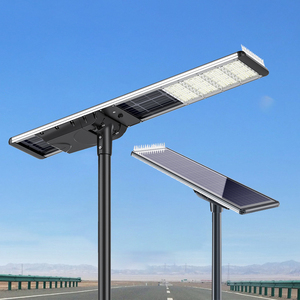
As a direct-factory manufacturer specializing in utility-scale deployments, our Split Type Solar Street Lights overcome thermal degradation by physically separating the high-capacity solar panel, LED luminaire head, and energy storage unit. This architectural decoupling unlocks three vital engineering benefits:
By housing our Grade-A LiFePO4 battery pack inside a ventilated mid-pole cabinet or an underground IP68 vault, ambient temperatures remain below 32°C, extending battery lifespan to over 12 years (3,500+ cycles at 80% DoD).
Sri Lanka’s near-equatorial location requires variable panel tilt angles (8° to 12°) facing North or South depending on seasonal solar declination. Split systems allow 360° rotational freedom for maximum solar harvesting.
Equipped with oversized 18V/24V monocrystalline PERC panels (up to 400W) and intelligent MPPT controllers, split systems capture up to 30% more energy during overcast days, providing 7 days of continuous illumination during the Southwest Monsoon.
| Engineering Specification | Split Type Solar Street Light (SOLTECH) | Standard All-in-One Solar Light | Traditional Grid-Connected Street Light |
|---|---|---|---|
| Operating Battery Temp Range | -10°C to +45°C (Shielded/Underground Vault) | +55°C to +75°C (Exposed under PV panel) | N/A (Grid Powered) |
| Maximum Solar Panel Wattage | Customizable: 100W up to 600W+ PERC | Restricted to fixture length (30W - 120W max) | Zero (Consumes Grid Power) |
| Luminous Efficacy | 200 Lm/W (High Efficacy Lumileds LEDs) | 110 - 140 Lm/W | 80 - 120 Lm/W (High Loss) |
| Battery Chemistry & Cycle Life | Grade-A LiFePO4 (3,500+ Cycles @ 80% DoD) | Ternary Li-ion / Recycled Cells (<800 Cycles) | N/A |
| Corrosion Resistance Rating | C5-M Marine Grade Coastal Powder Coating | Standard C3 Anodized Aluminum | Variable Galvanized Steel |
| Wind Resistance Threshold | Up to 160 km/h (Monsoon Typhoon Rated) | 110 km/h Max Surface Wind Load | 140 km/h Standard |
| Ceylon Electricity Board (CEB) Cost | $0.00 / kWh (100% Off-Grid Independent) | $0.00 / kWh | High Tariffs & Frequent Outages |
Our factory-direct split type solar lighting systems are deployed across critical infrastructure sectors in Sri Lanka, delivering engineered reliability tailored to regional geographical demands:
Locations: Southern Expressway (E01), Central Expressway (E04), A9 Kandy-Jaffna Highway, Outer Circular Highway (OCH).
High-speed vehicular corridors require precise optical beam shaping. Our split solar street lights feature Type II-M and Type III-M optics with batwing light distribution, meeting Sri Lanka Road Development Authority (RDA) lux standards without glare, while eliminating costly grid cabling along rural highway stretches.
Locations: Port City Colombo, Marine Drive, Galle Face Green, Bentota Beach Strip, Trincomalee Harbor.
Coastal deployments demand extreme atmospheric protection. Our luminaires utilize ADC12 die-cast aluminum treated with a 100-micron C5-M anti-salt spray powder coating and 316 stainless steel external hardware to prevent galvanic corrosion in oceanfront salt spray environments.
Locations: Katunayake EPZ, Biyagama Industrial Zone, Hambantota Industrial Park, Mirigama Zone.
Logistics hubs and BOI-approved manufacturing facilities require uninterrupted 24/7 security lighting. Integrated smart MPPT dimming profiles allow full-brightness illumination during active shift changes and automated power-saving modes during off-peak hours.
Locations: Nuwara Eliya, Hatton, Badulla, Ratnapura Tea Estates & Rural Pradeshiya Sabha Roads.
Mountainous plantation regions frequently experience grid instability and dense mist. Our 3000K-4000K warm CCT options deliver superior optical penetration through fog while providing completely off-grid municipal illumination for rural communities.
The market for outdoor solar lighting in Sri Lanka is undergoing a structural transition driven by macro-economic factors, policy shifts, and grid challenges:
With recent upward revisions in industrial and commercial electricity tariffs imposed by the CEB, municipal authorities, estate managers, and commercial factory owners face soaring utility operational expenditures (OpEx). Transitioning to 100% off-grid solar street lights offers a 0-utility-cost model, allowing commercial buyers to achieve full capital expenditure (CapEx) payback within 18 to 24 months.
Monsoon floods, severe weather events, and grid transformer overloading routinely trigger localized blackouts across urban centers like Colombo, Kandy, and Kurunegala. Off-grid split type solar street lights act as autonomous power nodes, ensuring critical public safety, street visibility, and security perimeter protection remain 100% operational during utility grid failures.
The Sri Lanka Sustainable Energy Authority (SLSEA) has established aggressive targets to achieve 70% renewable power generation by 2030. Major Sri Lankan garment exporters (MAS, Brandix, Hirdaramani) and global hospitality brands are rapidly retrofitting grid-powered exterior lighting with solar systems to fulfill mandatory ESG reporting and LEED green building certification standards.
Rapid development across Jaffna, Kilinochchi, Vavuniya, and Batticaloa requires fast-track lighting infrastructure. Solar street lighting bypasses the huge time and cost delays associated with trenching, underground cable laying, and transformer installation in remote locations.
With over two decades of dedicated solar lighting innovation, our company stands as a global leader in commercial off-grid illumination. Unlike trading intermediaries, we fully develop and manufacture complete solar lighting systems in-house across 5 proprietary factories.
From aluminum die-casting, CNC precision machining, and surface powder coating to SMT LED placement, electronic MPPT controller assembly, and battery BMS design—every process is controlled in-house to ensure zero-defect quality.
Our production lines operate under strict ISO 9001:2015 quality management systems. All product lines carry third-party certifications including DLC, UL Listed, CE, RoHS, IP67 waterproof validation, and IES LM-79/LM-80 photometric testing reports.
Our optical engineering department provides complementary Dialux lighting simulations for Sri Lankan project tenders. We generate precise lux level reports, pole spacing optimizations, and uniformity calculations prior to procurement.
We maintain dedicated container loading protocols with reinforced seaworthy packaging for export. Our logistics team coordinates sea freight to Port of Colombo with competitive CIF/FOB terms and local customs clearing support.
Planning an expressway, resort, industrial park, or municipal street lighting project in Sri Lanka? Contact our senior engineering team today for technical datasheets, wholesale price lists, and complimentary Dialux photometric calculations.
Inquire Now