
Direct Factory OEM/ODM Commercial Luminaires Manufactured with ADC12 Die-Cast Aluminum, Smart MPPT Controllers, and IP67 Hermetic Weatherproofing for Melbourne Projects
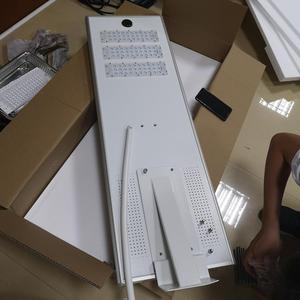
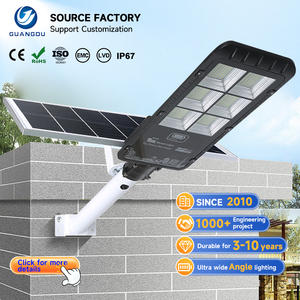
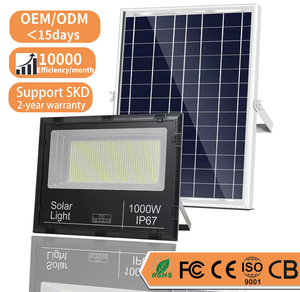
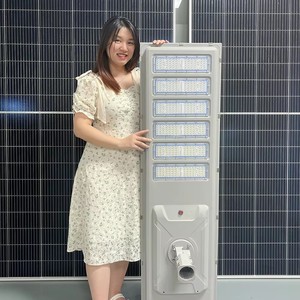
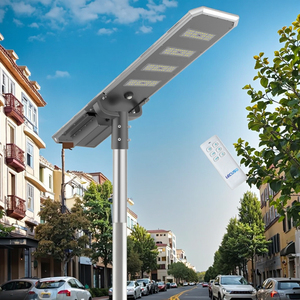
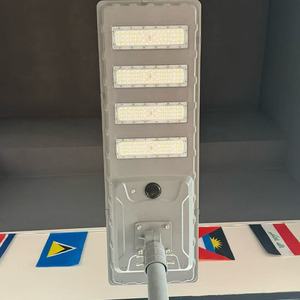

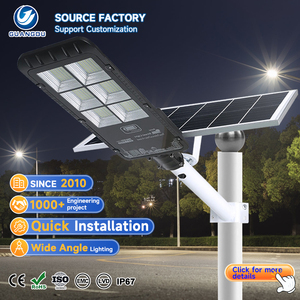
A Deep Technical Analysis on Overcoming Winter Solar Deficits, Coastal Salt-Mist Corrosion, and Severe Wind Rating Requirements in Victoria
According to Australian Bureau of Meteorology (BOM) solar data, Melbourne (Latitude 37.8°S) experiences significant seasonal variance. Solar irradiance drops from a summer peak of 6.8 kWh/m²/day down to a winter low of 2.1 - 2.8 kWh/m²/day in June and July. Standard off-the-shelf solar lights fail during Victorian winters due to undersized panels and primitive PWM controllers. Our engineered IP67 luminaires integrate high-efficiency monocrystalline solar cells (>22.5% efficiency) paired with proprietary Maximum Power Point Tracking (MPPT) algorithms that boost charging current by 30% under low-light overcast conditions, guaranteeing 7 continuous nights of battery autonomy without grid support.
Port Phillip Bay and the coastal corridors around Melbourne (St Kilda, Port Melbourne, Geelong, Frankston) subject outdoor lighting fixtures to high airborne salinity, humidity, and fine sand particulates. Our IP67 waterproof solar street lights feature dual-silicone sealing rings, waterproof breathable pressure-equalizing valves, and ADC12 die-cast aluminum housings treated with an electrostatically applied C5 Marine-Grade Anti-Corrosion Coating. Tested to ASTM B117 salt spray standards for over 2,000 hours, our housings prevent internal condensation and electronics oxidation in coastal salt-mist environments.
Victorian civil infrastructure engineering demands strict compliance with AS/NZS 1158 (Lighting for roads and public spaces) and AS/NZS 1170.2 (Structural design actions for wind actions). Melbourne experiences strong Antarctic weather fronts and gusting winds exceeding Region A4 / Region B structural thresholds. Our luminaire bodies feature aerodynamic low-EPA (Effective Projected Area) profiles and reinforced structural mountings. Optical lens assemblies provide precise Type II, Type III, and Type IV Batwing distribution to achieve required illuminance uniformity (P-Category and V-Category compliance) while minimizing light spill and glare.
Comprehensive B2B Engineering Data for Municipal Officers, Electrical Engineers, and Commercial Procurement Specialists
| Performance Specification | Commercial All-In-One (PRO Series) | Split-System Heavy Duty (V-Category) | Smart Auto-CCT Rain Sensing Series |
|---|---|---|---|
| Luminous Efficacy | Up to 200 Lm/W (Lumileds 5050) | 185 - 195 Lm/W (Lumileds 3030/5050) | 180 - 190 Lm/W (Dual CCT Chips) |
| Ingress & Waterproof Rating | IP67 Waterproof (Hermetic Seal) | IP67 Sealed Housing & Connectors | IP67 Sealed Housing + Rain Sensor |
| Solar PV Module Type | Integrated Monocrystalline (>22.5%) | Separate High-Watt Monocrystalline | Integrated Monocrystalline (>22%) |
| Battery Chemistry & Life | LiFePO4 (Lithium Iron Phosphate, 4000+ Cycles) | Ultra-Large Capacity LiFePO4 (10+ Yrs) | LiFePO4 with Low-Temp Thermal Cutoff |
| Solar Controller Technology | Smart MPPT (>98% Tracking Efficiency) | High-Current Dual MPPT Core | Adaptive Smart MPPT + Rain Sense Dimming |
| Color Temperature (CCT) | 3000K Warm White / 4000K Neutral White / 5000K Daylight | 3000K to 6000K Adjustable | Auto-Shifting CCT (3000K Rain Fog / 5000K Clear) |
| Housing Material & Finish | ADC12 Die-Cast Aluminum + C4/C5 Finish | Heavy Duty ADC12 + Marine C5 Coating | UV-Stabilized Polycarbonate + ADC12 Die-Cast |
| Battery Autonomy (Continuous) | 7 Days (Under Total Overcast Weather) | 7 - 10 Days High-Autonomy Profile | 5 - 7 Days Weather Adaptive Profile |
| Operating Temperature | -20°C to +65°C (-4°F to 149°F) | -30°C to +70°C | -15°C to +60°C |
Deploying Off-Grid IP67 Solar Street Lights Across Municipal Infrastructure, Commercial Logistics Parks, and Environmentally Sensitive Corridors
Deployed along coastal arterial roads, port loading zones, and promenade walkways in Port Melbourne, Williamstown, St Kilda, and Geelong. The IP67 airtight silicone gaskets and C5 marine powder-coating resist intense salt mist spray, high humidity, and coastal fog without optical clouding or internal circuit corrosion.
Ideal for rapid civil expansion in outer Western and Northern growth corridors such as Wyndham, Whittlesea, Hume, and Casey. Municipalities avoid the immense capital cost of trenching, grid cabling, and transformer upgrades by installing off-grid IP67 solar street lights along new residential feeder roads, roundabout connectors, and bus stop shelters.
In heavily shaded, high-rainfall, and ecologically sensitive zones such as the Dandenong Ranges and Yarra Valley parks, conventional grid extension is destructive and costly. Our smart solar street lights feature zero-upward-light (Dark Sky compliant) optics and rain-sensing CCT adjustment. When winter heavy rain or mountain fog hits, the sensor automatically switches light warmth to 3000K to penetrate water droplets while preserving nocturnal fauna habitats.
Fitted throughout major logistics and distribution hubs in Truganina, Laverton North, and Campbellfield. Industrial perimeter fencing, truck parking bays, and container storage yards require uninterrupted overnight illumination for safety and CCTV visibility. Our 200 Lm/W high-lumen separate solar street lights deliver clear, high-CRI lighting across vast expanses without utility electricity bills.
How Regulatory Shifts and Net-Zero Goals are Accelerating Commercial Solar Lighting Adoption Across Victoria
The Victorian Government has committed to aggressive decarbonization targets, aiming for net-zero greenhouse gas emissions by 2045, with a 75-80% reduction by 2035. Local councils (City of Melbourne, City of Greater Geelong, Yarra City Council) are actively auditing outdoor lighting assets to phase out legacy high-pressure sodium (HPS) and grid-connected halogen lamps. Upgrading to off-grid IP67 solar street lights eliminates Scope 2 emissions entirely while helping councils meet strict ESG mandates.
Victoria's electricity grid is increasingly vulnerable to severe weather events, bushfires, and extreme summer heatwaves that cause localized blackouts and load shedding. Municipalities and industrial facility managers are adopting standalone, self-powered IP67 solar street lights to maintain public safety and security lighting during major power outages, creating blackout-proof municipal transport corridors.
Modern Victorian civil tenders require intelligent asset control and light pollution mitigation. Our factory fits luminaires with NEMA and Zhaga 4-pin smart sockets, enabling seamless integration with municipal IoT networks. Combined with precision optical cut-off shields, our luminaires eliminate skyglow and light trespass into suburban homes and natural ecosystems, adhering to dark-sky environmental guidelines.
Why Tier-1 Contractors, Municipal Engineering Suppliers, and Wholesale Lighting Distributors Direct-Source From Our 5 Production Bases
Unlike assemblers who outsource components, our enterprise operates 5 dedicated proprietary factories controlling every phase of manufacturing. From ADC12 aluminum die-casting and precision CNC machining to automated SMT LED board assembly, SMT electronic controller manufacturing, and custom optical lens injection moulding. This guarantees absolute quality consistency across every production lot bound for Australia.
Every solar street light model undergoes stringent internal validation before shipment. Our factory testing facilities include IP68 continuous submersion tanks, high-temperature/low-temperature thermal shock chambers (-40°C to +85°C), 2,000-hour ASTM B117 salt fog corrosion testing, ISTA transportation vibration testing, and complete goniophotometric IES file generation for Dialux lighting simulation design.
We work directly with Melbourne civil engineering contractors, importers, and government project tenders to deliver custom-tailored solutions. We offer customized pole mounting brackets, personalized color finishes (RAL colors), tailored lighting profiles, OEM branding, and pre-configured smart controllers matched precisely to Victorian latitude sun hours and local civil engineering specs.
Our experienced solar lighting engineers provide complimentary Dialux photometric calculations, AS/NZS 1158 compliance reports, and direct factory container pricing for Victorian infrastructure tenders and commercial developments.
Answers to Common Technical, Regulatory, Logistics, and Installation Enquiries from Victorian Engineers & Suppliers
Melbourne receives its lowest solar radiation during June and July, averaging roughly 2.1 to 2.8 peak sun hours per day. Standard solar street lights with PWM chargers and undersized batteries often drop out after 2 consecutive overcast days. Our commercial-grade luminaires use high-efficiency monocrystalline PV panels (>22.5% module efficiency) paired with advanced MPPT controllers and Grade-A LiFePO4 batteries. The MPPT algorithm continuously extracts energy even during low-intensity ambient light and rain, guaranteeing 7 full nights of continuous operation without shutting down.
An IP65 rating protects against low-pressure water jets, but long-term exposure to Melbourne’s coastal salt fog, high humidity, and driving rains along Port Phillip Bay can cause moisture vapor ingress into IP65 enclosures through temperature-induced pressure differences. An IP67 waterproof rating ensures complete hermetic protection against dust and total resistance to water immersion up to 1 meter depth for 30 minutes. Our IP67 lights use dual-silicone seals and pressure-equalizing breathers to permanently eliminate internal vapor condensation.
Yes. Our commercial and municipal solar luminaires are engineered to satisfy AS/NZS 1158 P-Category (P1-P4 for pedestrian & minor roads) and V-Category (V1-V5 for traffic routes) lighting requirements. Furthermore, structural housings are engineered in accordance with AS/NZS 1170.2 wind load standards to withstand extreme Victorian storm gusts. Detailed Dialux photometric files (.IES) and structural engineering calculation reports are provided for council submission.
Standard OEM production lead time at our manufacturing facilities is 12 to 18 business days. Sea freight transit time from our port facilities directly to the Port of Melbourne typically ranges between 14 to 18 days. We accommodate full container load (FCL) and less-than-container load (LCL) shipments, complete with pre-cleared Australian customs documentation, CE, RoHS, UN38.3 battery transport safety certification, and MSDS paperwork.
Absolutely. We manufacture specialized Smart Rain Sensor luminaires that dynamically adjust color temperature and dimming profiles. During heavy coastal fog or downpours, the fixture automatically shifts from 5000K daylight to 3000K warm light for optimal ground penetration and contrast. We also offer 2200K-2700K amber LED configurations designed specifically for turtle-friendly coastal reserves and wildlife preservation zones along Victorian coastlines.
We provide a comprehensive 5-Year Comprehensive Factory Warranty on our commercial IP67 solar street lights, covering the solar PV panel, Lumileds LED engine, MPPT controller, and LiFePO4 battery pack. We supply modular plug-and-play internal components and maintain long-term technical support to ensure seamless asset maintenance for Australian civil engineering partners.
Direct-factory OEM/ODM manufacturing, high-efficacy 200 Lm/W technology, and robust IP67 hermetic protection tailored for Melbourne and Victorian infrastructure projects. Get in touch with our engineering team for instant project quotations and photometric layouts.