
Heavy-duty, weather-resistant luminaires engineered for New Zealand municipalities, highways, sports complexes, and industrial sites.
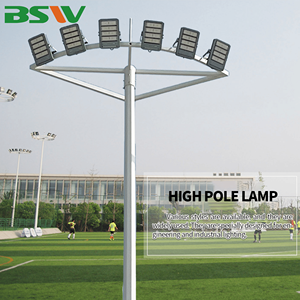
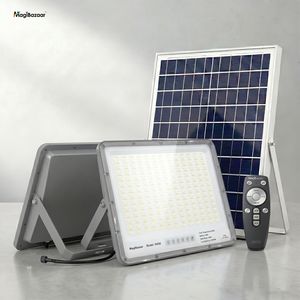
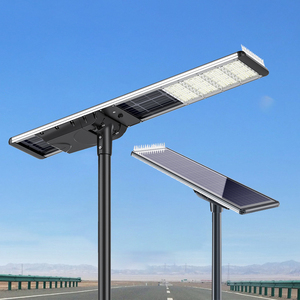
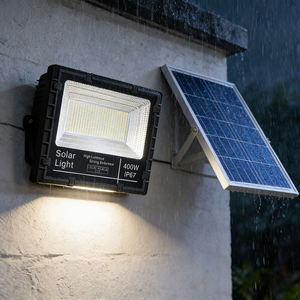
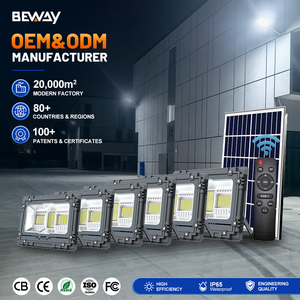
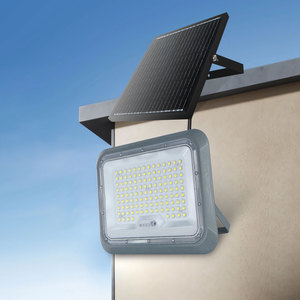
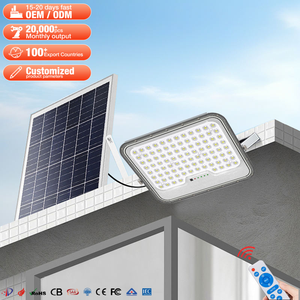
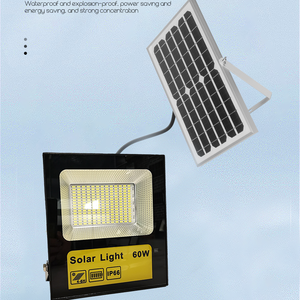
Why off-the-shelf solar lighting fails in Australasia — and how OEM factory-grade structural engineering guarantees 15+ years of continuous operational life.
New Zealand experiences violent gusting winds, particularly across Wellington, the Cook Strait, and exposed coastal ridgelines. Our luminaires are engineered with die-cast ADC12 aluminum housings and aerodynamic low-EPA (Effective Projected Area) profiles rated for ultimate limit state wind speeds exceeding 60 m/s (216 km/h).
Due to southern hemisphere ozone atmospheric dynamics, UV degradation in NZ is up to 40% more aggressive than at equivalent latitudes in Europe. We utilize optical-grade, UV-stabilized polycarbonate lenses and high-purity glass, ensuring zero yellowing, cracking, or lumen degradation over 100,000 operational hours.
During June and July, Southern Island locations such as Christchurch, Dunedin, and Queenstown experience short solar insolation windows. Our systems integrate smart MPPT tracking algorithms and over-sized N-type TOPCon solar panels tilted specifically to harvest low-angle winter irradiance, securing 7–10 days of continuous night autonomy.
A comprehensive technical deep-dive into how our manufacturing facilities achieve industry-leading energy density, optical efficiency, and system longevity for New Zealand exporters and contractors.
As an established OEM exporter, our factories incorporate N-type Monocrystalline silicon PV cells boasting a module efficiency exceeding 23.5%. Unlike conventional P-type PERC panels, N-type architecture exhibits virtually zero Light-Induced Degradation (LID), maintaining high output under diffuse light conditions typical of the South Island’s West Coast.
The LED engines leverage Bridgelux or Lumileds 5050/3030 chips driven at optimal thermal junction currents to deliver system efficacy up to 210 lumens per watt. Integrated with specialized Batwing Type II, Type III, or Type V optical lenses, our luminaires comply fully with AS/NZS 1158.3.1 (Pedestrian & Public Space Lighting) and AS/NZS 1158.1.1 (Vehicular Lighting Categories V1 through V5).
Energy storage is the heart of off-grid solar infrastructure. We exclusively deploy brand-new, prismatic Lithium Iron Phosphate (LiFePO4) battery cells capable of exceeding 6,000 charge-discharge cycles at 80% Depth of Discharge (DoD).
Each battery pack is monitored by an intelligent Battery Management System (BMS) with built-in thermal throttling. In sub-zero winter temperatures encountered in alpine regions like Central Otago, the active thermal protection circuit prevents low-temperature lithium plating during charging, while over-voltage, over-current, and short-circuit protection guarantee safe, uninterrupted multi-year performance.
| Performance Metrics | High Power Factory Solar Street Lights | Traditional Grid LED Street Lights (NZ Power Grid) |
|---|---|---|
| Trenching & Cabling Cost | $0 (No Civil Trenching Required) | $120 – $250 per linear meter across NZ terrain |
| Electricity Consumption Cost | 100% Free Off-Grid Solar Energy | Ongoing commercial network tariffs & lines charges |
| Installation Time per Pole | 20 – 30 Minutes per assembly | 2 – 4 Days (Requires lines company shutdown & trenching) |
| Storm & Outage Resilience | 100% Autonomous (Operates during grid failures) | Vulnerable to grid blackout & storm damage |
| Environmental Compliance | Zero Carbon Footprint / NZ ETS Aligned | Subject to grid emission intensity calculations |
| AS/NZS 1158 Compliance | Fully Certified Type II / Type III Optics | Varies by luminaire selection |
Customized solar illumination deployment across municipal infrastructure, agricultural sectors, marine ports, and dark sky protection zones.
Connecting state highways across Wairarapa, Northland, and Southland where grid extension is economically unfeasible. High-wattage split-system solar streetlights provide continuous illumination at unlit intersections, dramatically lowering night crash risks without utility grid connection fees.
Locations such as Napier Port, Lyttelton Harbor, and Tauranga demand strict C5-M marine anti-corrosion finishes. Our die-cast aluminum bodies undergo 1,000+ hours of ASTM B117 salt spray testing and dual-layer fluorocarbon powder coating to withstand salt fog, high moisture, and sea spray.
Dairying operations, orchards, and timber yards in Waikato, Bay of Plenty, and Canterbury require high-intensity security lighting across massive land footprints. Our 400W–1000W solar floodlights provide instant daytime-bright perimeter lighting with automated microwave motion sensors.
New Zealand is home to world-renowned International Dark Sky Sanctuaries (e.g., Aoraki Mackenzie, Great Barrier Island). We offer full-cutoff optical fixtures with 0% Upward Light Ratio (ULR = 0) and low-Kelvin amber (2200K - 2700K) options to protect wildlife and celestial visibility.
Pedestrian pathways and urban cycle routes across Auckland Council, Wellington City Council, and Christchurch City Council benefit from self-contained All-In-One solar post-top and street luminaires with smart adaptive dimming modes.
Heavy civil infrastructure, roadworks, and mining sites require robust, rapidly deployable high-mast solar floodlights. Engineered with thick tempered glass and reinforced brackets capable of enduring extreme mechanical vibration.
Why Tier-1 engineering firms, lighting importers, and government contractors across New Zealand partner directly with our manufacturing facilities.
From aluminum die-casting and CNC machining to SMT LED placement, PCB potting, and automated battery module assembly, our 5 specialized production facilities manage the entire supply chain under rigorous ISO 9001 quality management protocols.
We provide full IES file libraries tested in darkroom goniophotometer laboratories. Our technical team assists NZ engineering teams with customized DIALux lighting simulations to guarantee compliance with lux level and uniformity targets prior to shipment.
Whether your project demands specific powder coating RAL colors to match local council aesthetics, custom smart IoT controller integration (Zigbee/LoRaWAN), or specialized battery sizing for multi-day rain autonomy, our engineering team custom-builds to specification.
Expert answers addressing compliance, logistics, wind resistance, and warranty performance for New Zealand projects.
Need complete photometrics, custom OEM configurations, or wholesale factory pricing for your upcoming project in New Zealand? Speak directly with our senior lighting engineering team today.