
Engineered for large-scale outdoor infrastructure, maritime ports, sports stadiums, and manufacturing plants across Greater Nagoya.
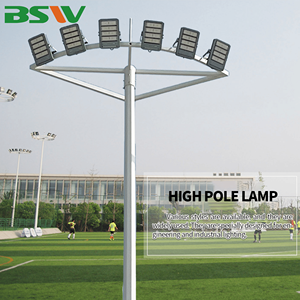
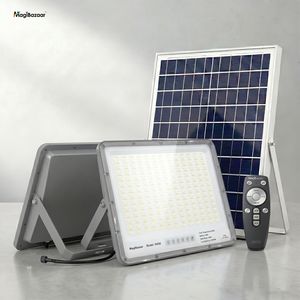
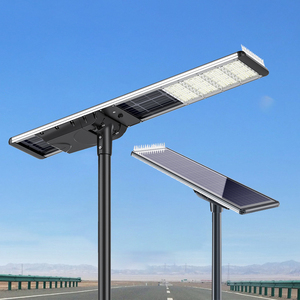
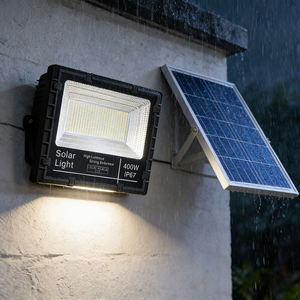
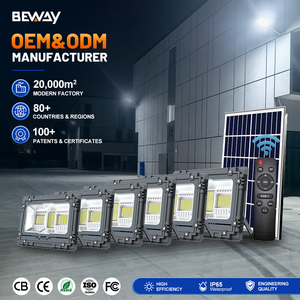
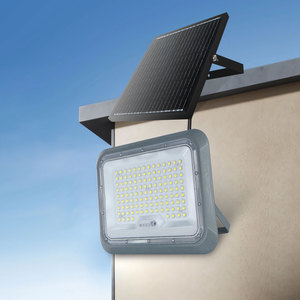
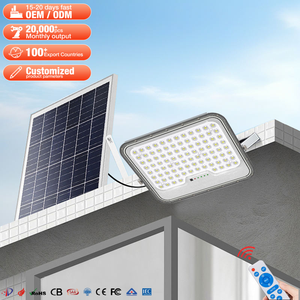
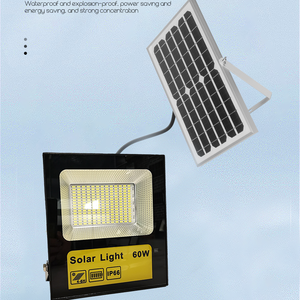
Deploying high mast solar luminaires in Aichi Prefecture requires rigid structural engineering, high-efficiency optical arrays, and intelligent battery systems capable of withstanding coastal salt spray, monsoon humidity, and severe typhoons.
Precision-engineered polycarbonate lenses deliver asymmetric light distributions (Type II, III, IV), minimizing light pollution, glare, and spill-light near residential coastal zones around Nagoya Port.
Grade-A Lithium Iron Phosphate cells integrated with smart micro-BMS architecture, providing over 4,000 deep discharge cycles even under high thermal variation in Japanese summer months.
Double-layer electrostatic powder coating over anodized die-cast aluminum alloys, tested against 2,000+ hours of salt fog exposure to prevent marine atmospheric oxidation.
An executive guide for procurement directors, structural engineers, municipal planners, and project managers operating in Japan's Chubu region.
Nagoya serves as the economic engine of Japan’s Chubu region, anchoring a trillion-dollar industrial belt that encompasses automotive manufacturing, aerospace development, logistics logistics freight terminals, and maritime trade. The Port of Nagoya handles the highest total cargo throughput of any port in Japan. Maintaining continuous, high-lux illumination across container yards, rail freight depots, storage facilities, and major transportation arteries is critical to national supply chain continuity.
However, traditional high mast lighting systems relying on grid power face significant vulnerabilities. The Tokai and Nankai Trough seismic zones expose coastal Aichi to severe earthquake risks and potential power grid collapse. Concurrently, annual typhoon seasons bring violent wind shear and extreme precipitation. High mast solar lighting systems provide a completely decoupled, self-sustaining off-grid infrastructure that guarantees zero operational downtime during emergency grid blackouts while simultaneously supporting Nagoya City's "Carbon Neutral Port (CNP)" roadmap for 2050.
Deploying solar luminaires at mounting heights ranging from 15 meters to 40 meters requires overcoming key technical hurdles that standard street lighting cannot address:
Comparing Next-Gen Off-Grid Solar High Mast vs. Legacy Metal Halide and Grid-Tied LED
| Performance Metric | High Mast Solar LED System | Traditional Grid-Tied LED | Legacy Metal Halide (1000W+) |
|---|---|---|---|
| Power Consumption / Grid Draw | 0 kWh (100% Solar Off-Grid) | 200W - 1000W / luminaire | 1000W - 2000W / luminaire |
| Luminous Efficacy | 180 - 200 Lm/W | 130 - 150 Lm/W | 70 - 80 Lm/W |
| Trenching & Cabling Capital Expenditure | ¥0 (No wiring or sub-stations) | High (Substantial civil work) | Very High (Heavy copper cabling) |
| Grid Blackout Resilience | 100% Operational (7 Days Autonomy) | Requires Diesel Generator Backup | Requires Diesel Generator Backup |
| CO2 Emissions Footprint | Zero Net Carbon | Moderate (Grid Mix Dependent) | High Thermal Carbon Footprint |
| Operating Lifespan | 50,000+ Hours (5-Yr Full Warranty) | 50,000 Hours | 10,000 - 15,000 Hours |
Custom engineering configurations tailored to specific industrial zones, logistics corridors, and municipal facilities in Aichi, Gifu, and Mie prefectures.
The Port of Nagoya features extensive container yards (Tobishima Pier, Minato-ku) requiring round-the-clock heavy equipment operation. Installing our 800W–1000W High Mast Solar Floodlight series eliminates complex underground conduit trenching across concrete aprons, saving millions of Yen in civil infrastructure costs while assisting terminal operators in obtaining green port certification.
Surrounding Toyota City, Kariya, and Komaki, vast automotive logistics parking hubs store thousands of manufactured vehicles daily. Our high mast solar towers and intelligent motion-sensing LED floodlights provide high-lux security lighting across multi-hectare distribution sites with zero electrical utility bills and remote IoT monitoring capability.
For municipal athletic facilities, tennis complexes, and practice fields across Meito Ward and Minami Ward, high output solar high mast systems offer rapid turn-key illumination. Without needing grid step-down transformers, sports complexes can be retrofitted with crisp 6000K daylight lighting operating automatically from dusk till dawn.
Designated disaster evacuation centers along the Ise Bay coastline require non-negotiable emergency illumination. Solar high mast systems with 100% independent lithium reserves guarantee bright lighting during tsunami alerts, earthquake grid failures, or localized flooding events.
Adhering to strict Japanese industrial norms, JIS lighting regulations, and environmental directives.
Procuring solar lighting equipment for Japanese municipal or private infrastructure projects demands rigorous certification compliance. Our manufacturing facilities operate under certified ISO 9001:2015 Quality Management and ISO 14001:2015 Environmental Management systems.
Key technical compliance frameworks implemented across our product line include:
Under the Aichi Prefecture Renewable Energy Plan and Nagoya City’s Climate Emergency Declaration, public and corporate buyers are incentivized to phase out fossil-fuel-backed lighting. Furthermore, modern high mast solar systems supplied by our team feature smart IoT connectivity. Utilizing Zigbee or LoRaWAN protocols, port facility operators can remotely monitor real-time battery voltage, adjust dimming profiles during low-traffic overnight hours, and receive predictive maintenance alerts directly on centralized dashboards.
Addressing key technical inquiries regarding solar irradiance, wind loads, salt corrosion, and procurement logistics in Japan.
A: Yes. Nagoya receives an average annual solar irradiation of approximately 4.2 to 4.5 kWh/m²/day. Our engineering team sizes the monocrystalline solar array and LiFePO4 battery capacity to ensure uninterrupted 12-hour nightly operation even during the rainy season (Tsuyu) in June or winter months with lower solar angles.
A: Structural integrity is our top priority. The solar mounting brackets, luminaire housing, and hardware are constructed from high-tensile ADC12 aluminum and hot-dip galvanized steel. Engineered to withstand wind loads up to 60 m/s (Grade 15 typhoon force), our fixtures feature aerodynamic wind-deflection profiles validated by structural calculations.
A: We apply a specialized C5-M marine-grade anti-corrosion coating process. This involves chromate conversion pre-treatment followed by thermosetting fluorocarbon electrostatic powder coating. Stainless steel 316 fasteners are used exclusively to guarantee structural resistance against marine salt air.
A: Our Lumileds / Cree LED chips are rated for over 50,000 to 100,000 operating hours with minimal lumen depreciation ($L_{70} > 50,000\text{h}$). The Grade-A LiFePO4 battery pack delivers 4,000+ deep cycles (approx. 8–10 years of daily operation) before reaching 80% original capacity, after which the modular battery pack can be easily swapped in the field.
A: Absolutely. Our in-house application engineers provide complimentary DIALux 3D lighting designs. By providing your CAD site plan (port terminal, logistics facility, or stadium), we calculate exact Lux levels, glare indices, and uniformities, ensuring full compliance with Japanese lighting guidelines prior to procurement.
A: As an experienced global manufacturer and exporter, we offer direct containerized shipping to Nagoya Port (JP NGO). Standard manufacturing lead times are 15–25 business days, with transit times from our manufacturing hubs taking approximately 4 to 7 days, backed by complete import/export documentation.
With over two decades of manufacturing leadership, 5 automated production facilities, and thousands of successful commercial solar deployments worldwide, we deliver uncompromised quality, engineering rigor, and competitive manufacturer-direct pricing to the Japanese market.