
Discover our municipal-grade off-grid solar LED luminaire portfolio designed to deliver up to 200 Lm/W efficiency, zero energy costs, and uninterrupted battery autonomy through extended Japanese rain seasons.
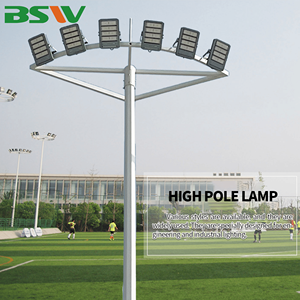
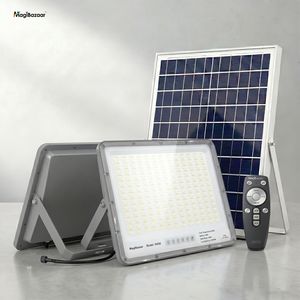
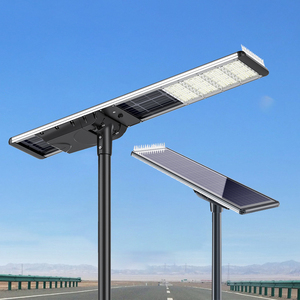
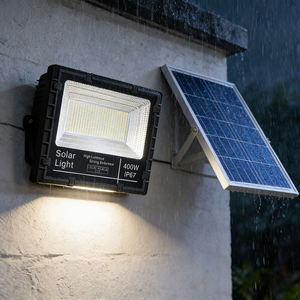
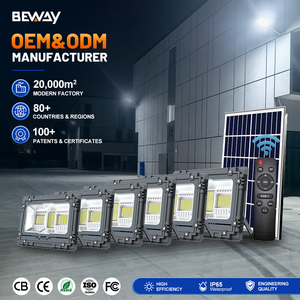
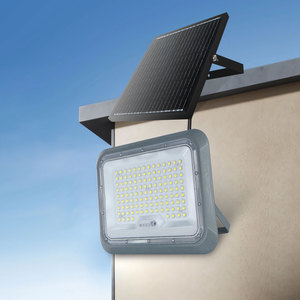
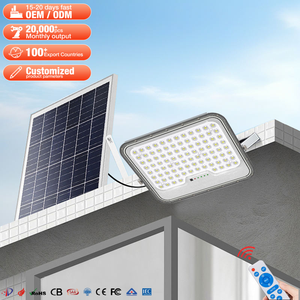
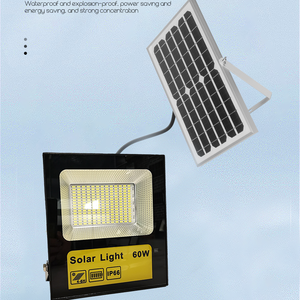
Deploying high-lumen commercial solar lighting across Metropolitan Tokyo requires specialized engineering that directly addresses the region's unique geography, urban density, and microclimate profile. Tokyo operates under distinct environmental stresses: low winter solar angles (dipping to approximately 31° zenith at the winter solstice), high seasonal rainfall during the Tsuyu rainy season, intense summer urban heat island effects, and severe marine salt-mist exposure throughout Tokyo Bay. Furthermore, lighting installations must comply with strict Japanese Industrial Standards (JIS C 8105) and withstand catastrophic natural phenomena, including Category 4-5 typhoons and seismic disturbances.
In high-density commercial corridors such as Chiyoda, Shinjuku, and Minato-ku, solar lighting fixtures frequently face ambient micro-shadowing from surrounding skyscrapers. Standard off-the-shelf solar luminaires with low-efficiency panels (15-17%) quickly experience battery starvation during November through February when peak sun hours drop below 3.2 kWh/m²/day. Our commercial solar lights utilize ultra-high-efficiency N-Type Monocrystalline PERC solar cells delivering cell conversion efficiencies up to 23.5%. Coupled with intelligent Maximum Power Point Tracking (MPPT) charge controllers operating at 98.5% tracking efficiency, our systems continuously harvest energy even during low-light diffused sky conditions typical of Tokyo winters.
Tokyo's coastal position subjects outdoor infrastructure to extreme wind forces during autumn typhoon seasons, with wind gusts regularly exceeding 45 m/s to 60 m/s. Standard commercial luminaires often suffer mechanical shear failures at pole mount brackets or glass cover fractures. SOLTECH engineers utilize high-pressure die-cast A380 aluminum enclosures subjected to finite element analysis (FEA) thermal and mechanical stress modeling. Combined with toughened anti-glare IK10 impact-rated glass optics and heavy-duty 316 stainless steel mounting brackets, our fixtures comfortably exceed Japanese structural wind load mandates, maintaining mechanical integrity under sustained gale forces.
Our high-lumen solar LED lighting solutions are custom-configured to serve critical commercial, industrial, and municipal infrastructure sectors throughout the Greater Tokyo Area (Shutoken):
Stretching from Shinagawa wharves to Odaiba, Ariake, and Koto-ku logistics parks, port operations require 24/7 high-mast illumination. Our marine-grade solar flood lights feature dual-layer fluorocarbon anti-corrosion powder coatings and IP67 sealing to prevent salt-air degradation, providing up to 200,000 lumens for heavy container handling without expensive electrical trenching along sea walls.
Under Tokyo’s Earthquake Disaster Prevention Plan, designated public parks in Meguro, Setagaya, and Ueno act as critical emergency assembly zones during seismic grid blackouts. Our off-grid solar street and flood lights store up to 7 days of autonomous power reserve in deep-cycle LiFePO4 batteries, ensuring essential pathway and security lighting remains fully operational when central utility power fails.
Industrial parks in Hachioji, Tachikawa, and Fussa require constant perimeter floodlighting for loss prevention. SOLTECH high-bay and flood solar luminaires eliminate electric utility line installation costs—saving up to ¥45,000 per meter in trenching fees—while integrated microwave motion sensors dynamically switch between 30% standby and 100% full brightness upon activity detection.
For bus terminals, private commercial parking structures, and outdoor retail plazas around major transit nodes (Shinjuku, Ikebukuro, Shinagawa), light pollution and glare are strictly regulated. Our optics feature engineered Type II, III, and IV batwing light distribution lenses with cut-off control, delivering targeted lux levels to pavement while preventing upward skyglow or trespass into residential windows.
The procurement landscape for commercial outdoor lighting across Tokyo is experiencing a radical shift driven by aggressive decarbonization mandates and grid vulnerability concerns. Key market dynamics shaping B2B solar lighting specification include:
The comparative matrix below illustrates why leading EPC contractors and municipal planners in Tokyo choose SOLTECH high-lumen commercial solar lights over legacy grid-tied systems and low-end consumer-grade solar fixtures:
| Evaluation Parameter | SOLTECH High-Lumen Solar | Traditional Grid-Tied LED | Low-End Consumer Solar |
|---|---|---|---|
| System Luminous Efficacy | Up to 200 Lm/W | 100 – 130 Lm/W | 70 – 90 Lm/W |
| Tokyo Trenching & Cabling Cost | ¥0 (Off-Grid) | ¥35,000 – ¥60,000 / meter | ¥0 (Off-Grid) |
| Typhoon Wind Rating (JIS C 8105) | 60 m/s (Category 5 Rated) | Varies by Pole Specs | < 30 m/s (Failure Risk) |
| Continuous Rainy Autonomy | 7+ Days Reserve | 0 Days (Grid Dependent) | 1 – 2 Days Max |
| Battery Cycle Life (Chemistry) | >6,000 Cycles (LiFePO4) | N/A | 500 - 1,000 Cycles (Ternary/Lead) |
| TMG ZEB / Decarbonization Credit | 100% Zero-Carbon Qualified | Requires Carbon Offsets | Unverified Quality |
Key technical questions answered for electrical engineers, facility directors, and procurement managers in Japan:
Our luminaires pair ultra-high-efficiency mono-PERC photovoltaic panels with proprietary smart MPPT controllers programmed with adaptive dimming logic. During multi-day overcast rain events, the system automatically regulates LED power draw to extend battery reserve up to 7 consecutive nights while preserving core illuminance levels mandated by Japanese lighting codes.
Yes. Fixtures deployed along coastal areas (Odaiba, Shinagawa, Koto-ku) feature A380 die-cast aluminum housings treated with a multi-stage chromate conversion process and marine-grade fluorocarbon powder coating. All external hardware is 316 stainless steel, achieving IP67 dust/water immersion protection and passing 2,000-hour salt spray corrosion testing.
Under Tokyo’s Business Continuity Planning guidelines, commercial and industrial sites must maintain emergency illumination during earthquake-induced power outages. SOLTECH off-grid solar systems operate completely independent of the municipal electrical grid, providing immediate, uninterrupted lighting for evacuation routes and security perimeters.
We utilize automotive-grade Lithium Iron Phosphate (LiFePO4) battery packs featuring integrated Battery Management Systems (BMS). LiFePO4 chemistry provides exceptional thermal stability up to +65°C internal enclosure temperatures, non-combustible operating safety, and an industry-leading service life exceeding 6,000 charge cycles (over 10–12 years of continuous daily operation).
Absolutely. We provide complete IES LM-79 and LM-80 photometric test reports and custom DIALux simulation layouts. Our lighting engineers assist Tokyo specifiers in calculating target lux levels, uniformity ratios, and precise pole spacing to ensure full compliance with municipal lighting standards.
By eliminating trenching, conduit wiring, transformer upgrades, and monthly grid electricity tariffs, commercial property owners in Tokyo typically achieve full capital investment payback within 18 to 36 months, followed by 10+ years of zero-cost autonomous lighting.
As a vertically integrated global manufacturer operating 5 dedicated production facilities, SOLTECH controls every phase of commercial solar LED luminaire creation—from raw aluminum die-casting and precision optical mold design to SMT LED surface mounting, MPPT software engineering, and final environmental stress testing.
Zero outsourced components. We engineer custom PCB circuitry, firmware algorithm drivers, thermal heat sinks, and optical reflectors in-house for absolute reliability.
Every production batch undergoes 100% thermal shock, IP67 submersion, salt spray, and vibration testing in our ISO17025 accredited laboratories.
Fully certified under DLC Premium, UL Listed, CE, RoHS, and ISO9001 standards, fulfilling all commercial procurement requirements across Asia-Pacific markets.
Need custom DIALux photometrics, technical specification sheets, or bulk project pricing for your next commercial development in Metropolitan Tokyo? Connect directly with our senior technical consulting team.