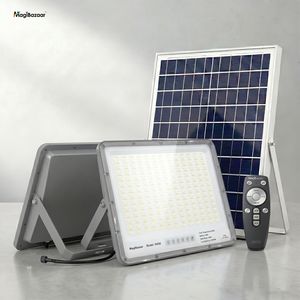
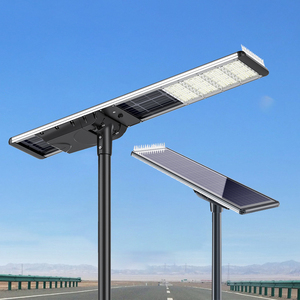
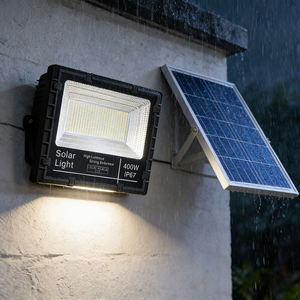
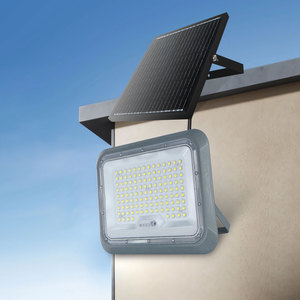
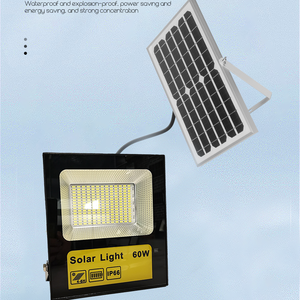
Direct-from-factory export solutions engineered with 200 Lm/W luminous efficacy, ultra-durable LiFePO4 energy storage, and extreme weather resilience for Australian conditions.
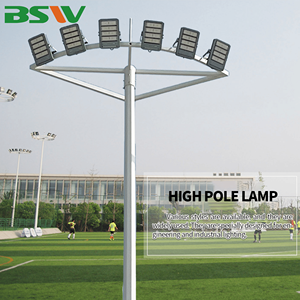
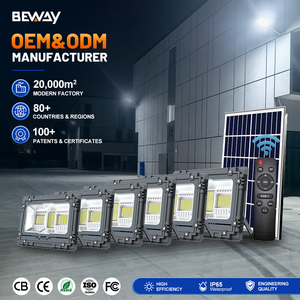
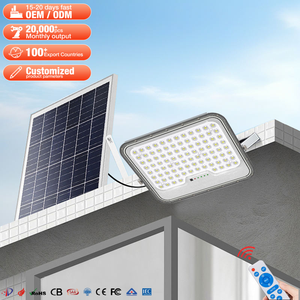
Australia’s geographic landscape presents some of the most unforgiving operational environments on earth. From the extreme heat index of the Pilbara mining region to bushfire zones in New South Wales and flash-flood recovery sectors across Queensland, emergency response teams and infrastructure engineering firms require immediate, continuous, and highly reliable illumination. Historically, mobile lighting towers powered by diesel generators were the industry standard. However, the operational dynamics of Australian emergency services (SES, RFS) and Tier-1 contractors (CIMIC, Fulton Hogan, Downer) have fundamentally shifted toward off-grid solar lighting towers and high-output LED floodlight arrays.
This technical whitepaper examines the mechanical, electrical, and financial rationale behind the rapid adoption of zero-emission solar light towers across Australia. By combining ultra-high-efficacy LED chips (reaching 200 Lm/W), smart Maximum Power Point Tracking (MPPT) charge controllers, and industrial Lithium Iron Phosphate (LiFePO4) energy storage, modern solar light towers offer an unassailable advantage over fossil-fuel alternatives during emergency deployments and long-term civil projects.
When evaluating infrastructure investments for Australian rental fleets, emergency response teams, or mining operations, procurement directors must analyze the total lifecycle cost rather than initial hardware procurement alone. Below is an engineering comparison matrix detailing a standard 400W High-Output Solar Tower against a standard 4-Head Diesel Engine Tower over a 5-year operating lifespan in Outback conditions.
| Technical / Financial Metric | Standard Diesel Light Tower (4x300W Metal Halide/LED) | SOLTECH / SUPER EMPOWER Solar Light Tower (4x100W High-Efficacy LED) | Operational Advantage |
|---|---|---|---|
| Luminous Efficacy | 80 - 110 Lm/W | 190 - 200 Lm/W | +85% higher light conversion efficiency per watt |
| Hourly Fuel / Energy Cost | ~$3.50 AUD / hr (Diesel @ $1.95/L) | $0.00 AUD / hr (Solar Radiant Energy) | 100% fuel expense elimination |
| Annual Operating Cost (4,000 hrs) | ~$14,000 AUD per unit | < $300 AUD (Routine visual inspection) | Saves over $13,700 AUD per unit annually |
| Noise Pollution Level | 72 dBA @ 7 meters | 0 dBA (100% Silent Solid-State) | Complies with urban night work & SES comms |
| Carbon Footprint (5 Years) | ~65.8 Tonnes CO2 equivalent | 0.00 Tonnes CO2 (Zero Emission) | Direct alignment with ESG Net-Zero 2050 targets |
| Maintenance Interval | Every 250 Hours (Oil, Filters, Belts) | Every 24 Months (Battery Diagnostic Check) | Drastic reduction in field maintenance labor |
| Structural Wind Rating | Up to 80 km/h (Standard stability) | AS/NZS 1170.2 Wind Region D (Up to 210 km/h) | Cyclone-resistant structural engineering |
Exporter equipment bound for Australian shores must meet stringent structural, environmental, and photometric criteria. Australia encompasses diverse microclimates, ranging from high-humidity coastal zones (C5-M atmospheric corrosive classification) to hyper-arid desert regions where daytime ambient temperatures regularly top 48°C. Our engineering frameworks are designed specifically to overcome these stress factors.
High ambient temperatures in northern Western Australia and the Northern Territory degrade inferior lithium-ion chemistries. Our solar light towers utilize specialized Lithium Iron Phosphate (LiFePO4) batteries paired with custom aluminum heat-sink housings. Designed with an operating temperature window from -20°C up to +65°C, our battery management system (BMS) prevents thermal runaway while extending cycle life beyond 4,000 deep cycles (DOD 80%).
Deploying mobile masts in tropical cyclone zones (such as Port Hedland or Darwin) demands compliance with AS/NZS 1170.2 structural wind load standards. Featuring heavy-gauge hot-dip galvanized steel frames, dual hydraulic outriggers, and automated mast rotation locks, our trailer-mounted and skid-mounted solar light towers remain stable in wind gusts exceeding 200 km/h, ensuring safety during severe weather operations.
Glare control and precise beam distribution are critical for site safety. Utilizing specialized Lumileds LED arrays and UV-stabilized optical grade polycarbonate lenses, our floodlights deliver targeted Type II, III, IV, and V photometrics. This ensures maximum lux coverage across sports fields, high-mast intersections, or rescue landing zones with zero spill-light compliance issues.
As a specialized factory and exporter serving Australia, our products are engineered to seamlessly integrate into key national operational sectors:
During catastrophic flood events in Northern NSW or severe bushfires along the East Coast, regional power grids frequently collapse. Mobile solar light towers provide instantaneous, grid-independent illumination for field command posts, evacuation centers, and night helicopter landing sites. Rapid towing mechanisms allow single-operator setup within 3 minutes of arrival.
Iron ore and coal mining haul roads, processing plants, and exploration drill sites operate 24/7. Heavy dust, extreme ambient heat, and intense vibration cause regular failures in standard diesel engine lights. Heavy-duty skid-mounted solar LED arrays deliver uninterrupted lighting while reducing fuel truck trips across remote haul roads.
Transport for NSW, VicRoads, and Main Roads WA enforce strict decibel limits for nighttime road repair and line marking in suburban metropolitan corridors. Silent solar towers eliminate noise complaints from surrounding residents while delivering glare-free lighting for heavy machinery operators.
Salt air accelerates corrosion on standard steel fixtures. Deployed across major Australian ports (Fremantle, Port Adelaide, Port Kembla), our high-mast floodlights and portable towers incorporate marine-grade die-cast aluminum alloys and 316 stainless steel fasteners to guarantee extended operational longevity.
Major Australian construction and mining enterprises are bound by strict decarbonization roadmaps to achieve 30%–50% carbon reduction by 2030. Replacing diesel light towers with solar alternatives is recognized as an immediate, low-barrier strategy to curtail Scope 1 emissions across operational sites.
Fuel delivery costs to remote regions like the Kimberleys or Outback Queensland carry a high logistical markup. Eliminating fuel logistics reduces financial exposure to global oil volatility and frees up logistics personnel for core operational tasks.
Leading Australian equipment hire companies (such as Coates, Kennards, and National Hire) are actively phasing out aging diesel assets in favor of hybrid and 100% solar towers to meet rising customer demand for clean site infrastructure.
As a global leader in commercial solar lighting with over two decades of manufacturing history, our vertically integrated operations ensure strict quality control from raw aluminum ingot to final assembled light tower.
Operating across 5 proprietary manufacturing hubs, we control full die-casting, SMT circuit board placement, robotic powder coating, and final photometric integration in-house. This scale guarantees competitive B2B pricing and rapid production lead times for bulk fleet orders.
Our complete product line complies with international standards, including DLC, UL, CE, and RoHS certifications. Every unit destined for Australia undergoes 100% aging tests, environmental thermal chamber cycling, and high-vibration stress testing prior to container dispatch.
We partner closely with Australian distributors and OEM fleet owners to offer customized paint colors, branded vinyl wraps, specialized mast height configurations (from 4.5m to 9m), and integrated GPS/4G IoT remote monitoring platforms.
Addressing technical, compliance, and shipping queries for Australian procurement teams:
A: Our solar light towers are engineered with oversized high-efficiency monocrystalline solar panels (up to 23% cell efficiency) combined with intelligent MPPT dimming logic. During prolonged cloudy periods in places like Melbourne or Hobart, the controller dynamically adjusts LED lumen output to extend battery runtime, delivering up to 7 consecutive nights of autonomous operation without grid input.
A: Yes. All exported luminaires, solar charge controllers, and battery management systems undergo compliance verification for the Regulatory Compliance Mark (RCM), AS/NZS 60598 (Luminaires safety), and relevant EMC standards, ensuring smooth customs clearance and compliant operation across all Australian states.
A: Standard manufacturing lead times range from 15 to 25 business days depending on customization requirements. Direct sea freight container shipping to major Australian ports (Sydney, Melbourne, Brisbane, Fremantle) typically takes 12 to 18 days. Express spare-parts shipping is supported via air freight.
A: We provide comprehensive 5-year warranties on our LED luminaires and solar panels, and 3-to-5 year warranties on LiFePO4 battery banks. In the event of a component failure, replacement modular components (such as drop-in MPPT driver blocks or quick-connect LED modules) are dispatched directly from partner stock held in Australia or via priority air freight.
A: Our trailer-mounted series can be supplied with ADR-compliant (Australian Design Rules) chassis option packages—including ADR-approved mechanical or electric brakes, LED tail-light clusters, safety chains, and standard 50mm ball hitches suitable for standard 4WD and utility fleet towing.
A: Yes. For high-wind mining regions (Region D cyclones in WA), we offer automated hydraulic fold-down solar array mechanisms. This allows operators to quickly retract solar panels flat against the chassis frame when severe weather alerts are issued.
Need customized photometrics, structural wind calculations, or containerized wholesale pricing for your fleet? Our engineering team provides complimentary lighting design simulations (DIALux) and detailed project quotes within 24 hours.