
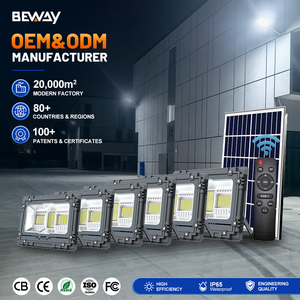
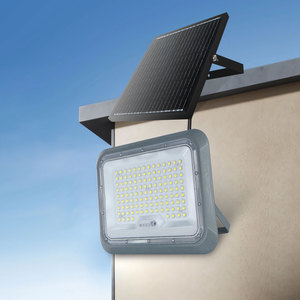
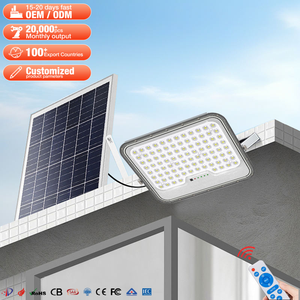
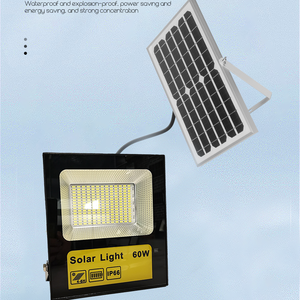
Direct OEM/ODM industrial solar floodlights and integrated street lights built with ultra-high efficacy LEDs, heavy-duty aluminum die-cast housings, and intelligent MPPT controllers.
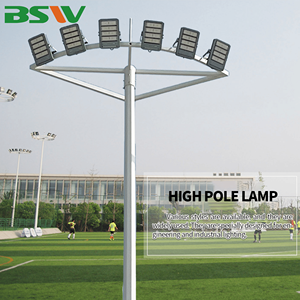
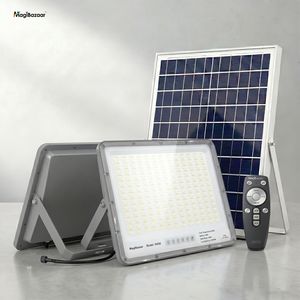
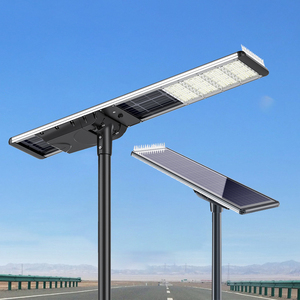
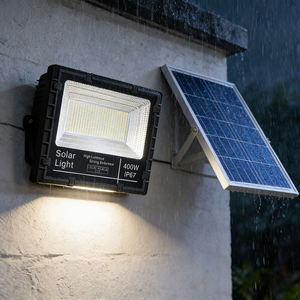
Strategic economic integration, harsh geographical challenges, and the rapid modernizing of regional highway networks drive demand for high-reliability off-grid commercial lighting.
As the economic powerhouse of Central Asian trade and a key logistics pivot in the Belt and Road Initiative (BRI), Kazakhstan is undertaking historic modernization across its transportation and industrial sectors. Connecting major nodes such as Almaty, Astana, Shymkent, Aktau, and the strategic border dry port of Khorgos requires thousands of kilometers of highway illumination, industrial zone lighting, and municipal roadway security. However, laying grid infrastructure across vast, sparsely populated steppe terrains is economically unviable, costing upwards of $35,000 to $60,000 per kilometer for high-voltage trenching, transformers, and cabling.
This geographic reality has established Commercial Utility Solar Street Lighting as the standard infrastructure solution across Kazakhstan’s 14 regions (Oblasts). Procurement teams, state contractors, and commercial developers turn directly to China’s tier-1 OEM manufacturing factories to source heavy-duty, off-grid LED solar systems. With short freight transit times via Horgos/Altynkol rail and truck corridors, direct factory sourcing from China provides unmatched cost-efficiency, deep customization for cold-climate engineering, and rapid compliance with Eurasian Economic Union (EAEU) safety standard regulations.
Technical analysis of low-temperature lithium chemistry, wind resistance aerodynamics, anti-snow photovoltaic tilt geometry, and winter autonomy controllers.
Standard lithium iron phosphate (LiFePO4) batteries experience chemical degradation and zero-charge cutoff when temperatures drop below 0°C. In northern regions like Astana and Akmola, winter temperatures frequently plunge below -35°C to -45°C.
Heavy snowfall and low solar zenith angles during Central Asian winters pose severe risks of panel coverage and system shutdown. Factory custom adjustments are required for tilt geometry and solar gain optimization.
Kazakhstan’s open steppe environment subjects outdoor lighting structures to continuous, high-velocity wind loads gusting up to 45 meters per second (162 km/h).
Detailed architectural benchmarking for engineering procurement officers, municipal authorities, and EPC contractors.
| Engineering Parameter | Standard Commercial Solar Light | Kazakhstan Steppe-Grade Utility Luminaire | Performance Gain / Advantage |
|---|---|---|---|
| Operating Temperature | -10°C to +45°C | -45°C to +65°C | Ensures continuous operation through extreme winters |
| Battery Chemistry & Tech | Standard LiFePO4 (No Heat) | Thermal-Insulated LTO or Self-Heating LiFePO4 | Prevents low-temp shutdown and capacity loss |
| PV Panel Tilt & Glass | 15° - 25° Fixed Tilt / Standard Glass | 45° - 55° Steppe Tilt / Hydrophobic Coating | Automatic snow shedding and optimized winter sun capture |
| Wind Load Resistance | Up to 28 m/s (100 km/h) | Up to 45 m/s (162 km/h) - Wind Zone IV | Prevents structural fatigue and pole shear in open plains |
| Controller Autonomy Logic | Standard PWM / Basic MPPT | Adaptive Smart IoT MPPT with Dimming Curves | Guarantees 7–10 days continuous power during snowstorms |
| Luminous Efficacy | 130 - 160 Lm/W | 190 - 220 Lm/W (Bridgelux/Lumileds 5050) | Delivers higher illuminance with lower battery capacity load |
| EAEU Compliance | Basic CE Mark | EAC Certification (TR CU 004/2011 & 020/2011) | Hassle-free customs clearance within the Eurasian Customs Union |
Tailored solar lighting deployments engineered for regional transport corridors, industrial complexes, and municipal expanding sectors.
Target Zones: Western Europe–Western China Highway, A1 Astana-Burabay Expressway, A3 Almaty-Oskemen Route.
Long stretching rural highways require high-output, reliable illuminance at intersections, rest areas, toll plazas, and border checkpoints. Off-grid solar street lights eliminate millions of dollars in grid extension costs while providing continuous illumination through severe winter blizzard conditions.
Target Zones: Tengiz, Karachaganak, Kashagan, Mangystau Industrial Fields, Zhezkazgan Mining Complexes.
Remote industrial operations require heavy-duty IP67 waterproof and IK10 impact-resistant illumination. Industrial 1000W solar floodlights provide powerful illumination for work zones, heavy vehicle staging, and worker accommodation camps in isolated desert and steppe environments.
Target Zones: Khorgos SEZ, Almaty Logistics Center, Aktau Port Freight Zones.
24/7 commercial logistics hubs require clear visibility for container handling, security perimeter perimeter fences, and customs clearance bays. High-lumen solar floodlights lower municipal electrical operating expenses while providing uninterrupted security during grid outages.
Target Zones: Suburbs of Shymkent, Karaganda, Turkistan Regional Cultural Sites, Rural Auls.
Rapid urban sprawl in secondary cities and government-mandated rural modernization programs call for fast-deployment street lighting. Integrated all-in-one solar street luminaires allow local municipalities to install 50 to 200 poles per day without disrupting traffic or excavating roadways.
Answers to critical questions on Eurasian customs clearance, logistics routes, anti-freeze testing, and warranty fulfillment.
From aluminum alloy die-casting to advanced SMT surface mounting and rigorous thermal chamber testing—delivering uncompromised commercial quality.
Our vertically integrated operations span 5 dedicated factory production facilities. By maintaining 100% in-house control over die-casting molds, CNC machining, powder coating, SMT LED placement, and smart MPPT controller assembly, we eliminate middleman markups and guarantee batch-to-batch consistency for large-scale municipal purchases.
Every industrial street light model undergoes rigorous quality assurance inside our environmental testing chambers. Luminaires are tested under simulated sub-zero arctic freezes down to -45°C, high-humidity heat cycles, salt spray corrosion (for coastal Caspian Sea projects), and 3D vibration tables to ensure survival during long-distance transit across Central Asian roads.
We streamline international procurement for Kazakhstan contractors and importers. Our trade export department manages full container loading (FCL), customs documentation under EAEU regulations, official certificate of origin generation, and door-to-door (DDP/DAP) shipping arrangements directly to your warehouse in Almaty, Astana, or Shymkent.