
Direct-from-factory commercial floodlights, street lamps, and area luminaires pre-configured for Mexico City altitude (2,240m), high UV irradiance, and microclimate durability.
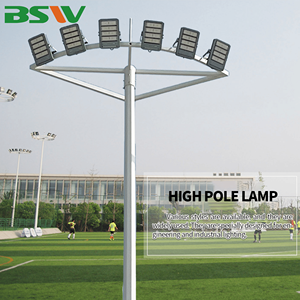
Luminous Output: Up to 160,000 LM
Dimming Control: PWM/MPPT Smart Remote
Battery Tech: LiFePO4 3.2V 120Ah
Protection Rating: IP67 / IK10 Heavy Aluminum
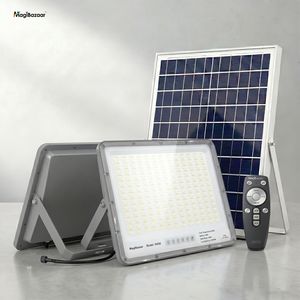
Luminous Output: 36,000 LM (180 Lm/W)
Dimming Profile: 5-Stage Time & Motion
Solar Module: Mono PERC 45W 18V
Warranty: 5 Years Commercial
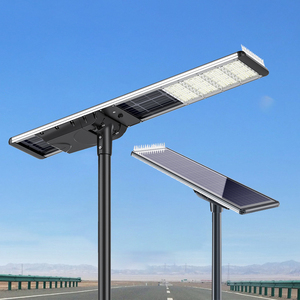
Luminous Output: 6,000 LM - 30,000 LM
Sensor Integration: Microwave Doppler 15m
Solar Panel: Integrated N-Type TOPCon
Housing: Die-Cast ADC12 Aluminum
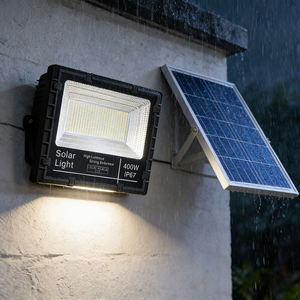
Luminous Output: 140,000 LM High Output
Dimming Mode: Automatic Astronomical Clock
Reflector Angle: 90° x 120° Asymmetric
Autonomy: 7-10 Continuous Rainy Days
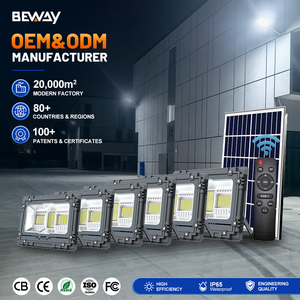
Optics: Tempered Glass + Anti-UV Polycarbonate
Dimming Architecture: RS485 / IoT Smart Dimming
Battery Type: LiFePO4 6000+ Cycles
Certifications: CE, RoHS, IP67, NOM-031
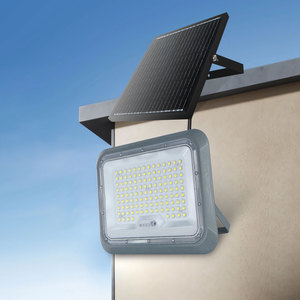
Lighting Chip: Bridgelux 5050 High Efficacy
Charge Controller: Smart MPPT 98% Efficiency
Dimming Steps: Customizable 0-100% Curve
Heat Sink: Multi-Fin Convective Aluminum
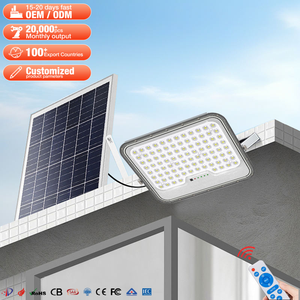
Operating Temp: -20°C to +65°C High Elevation
Dimming Sensor: Radar Dual-Induction
PV Efficiency: 22.5% Monocrystalline
Standard: NOM-001-SEDE Safety Compliant
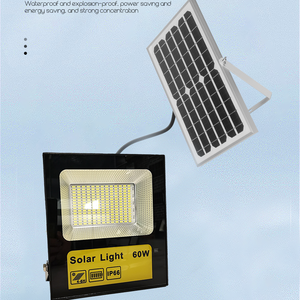
Reflector Tech: Anti-Glare Parabolic Reflector
Dimming Mode: Light Sensor + Timer + Motion
Battery Pack: Deep-Cycle Lithium Iron Phosphate
Customization: OEM/ODM SKD/CKD Options
Ultra Luminous Efficacy
LiFePO4 Battery Cycles
Certified Mexican Standard
Rainy Season Autonomy
Mexico City represents one of the most dynamic yet challenging environments for commercial outdoor illumination in Latin America. Situated in the Valley of Mexico at an elevation of 2,240 meters (7,350 feet) above sea level, CDMX experiences unique solar irradiance metrics coupled with extreme electrical grid pressures. Commercial facility managers, logistics hub operators in Azcapotzalco and Tlalnepantla, and municipal engineering contractors face soaring CFE (Comisión Federal de Electricidad) tariffs under the DAC (De Alto Consumo) high-consumption pricing structure.
Transitioning from traditional grid-tied high-pressure sodium (HPS) or legacy AC LED systems to autonomous, dimmable commercial solar LED lighting provides immediate fiscal relief and grid-decoupling benefits. However, off-the-shelf residential solar lights fail rapidly under CDMX environmental realities. Sourcing commercial-grade, dimmable solar lighting direct from top-tier Chinese manufacturers ensures precise engineering compliance, high ROI, and sustained operational longevity.
Mexico City receives an average solar irradiation of 5.5 kWh/m²/day. High-efficiency Monocrystalline TOPCon PV panels capture diffuse solar radiation during morning atmospheric haze.
Bypassing industrial CFE grid connections eliminates infrastructure trenching, transformer upgrades, and monthly recurring electrical utility bills for expansive commercial properties.
Full engineering adherence to NOM-031-ENER-2012 energy efficiency criteria for street and outdoor area luminaires, ensuring seamless municipal approval.
The high altitude of the Metropolitan Area of the Valley of Mexico (ZMVM) alters the fundamental thermodynamics of outdoor LED fixture design. At 2,240 meters altitude, atmospheric density decreases by approximately 22% compared to sea level ($\rho \approx 0.96 \text{ kg/m}^3$). Because thermal convection efficiency is directly proportional to air density, standard LED heat sinks experience reduced passive cooling capacity. If uncorrected, higher junction temperatures ($T_j$) accelerate LED lumen depreciation and battery thermal degradation.
Our OEM manufacturing facility in China addresses this altitude penalty through advanced thermodynamic engineering:
| Engineering Parameter | Standard Commercial Solar Light (Sea Level) | CDMX High-Altitude Dimmable Solar Light (Engineered) |
|---|---|---|
| Heat Sink Convection Area | Standard Surface Area (1.0x) | Expanded Fins (+35% Surface Dissipation Area) |
| Solar Cell Technology | Standard Poly / Mono PERC (18-20%) | N-Type TOPCon Monocrystalline (22.5%+ Efficiency) |
| Battery Chemistry & BMS | Standard Ternary Lithium or Basic LiFePO4 | Grade-A LiFePO4 with Dual-NTC Thermal Management (6000+ Cycles) |
| Charge Controller Efficiency | PWM Control (75%-82% Efficiency) | High-Speed MPPT (98% Tracking, <10ms Dynamic Response) |
| Rainy Season Autonomy | 2–3 Days Autonomy | 7–10 Days Continuous Autonomy via Adaptive Dimming Logic |
The primary reason commercial solar streetlights and floodlights fail in CDMX during the summer rainy season (Verano de Lluvias - June through September) is improper energy budget management. Continuous cloud cover and heavy convective thunderstorms reduce daily peak sun hours. To maintain continuous night-after-night illumination without blackout, an advanced Dimmable Commercial Solar Lighting System is mandatory.
Our direct-factory Chinese supply program integrates micro-processor-controlled dimming engines that adjust output based on battery State of Charge (SoC) and real-time motion telemetry:
Stage 1 (Dusk – 21:00): 100% Luminous Output during heavy commercial activity and foot traffic in industrial centers.
Stage 2 (21:00 – 24:00): 70% Ambient Brightness, ramping instantly to 100% upon Microwave Doppler motion detection.
Stage 3 (00:00 – 03:00): 40% Energy Saver Mode, 100% on motion trigger (15-meter detection radius).
Stage 4 (03:00 – 05:00): 30% Standby Mode with high-sensitivity motion override for site security.
Stage 5 (05:00 – Dawn): 60% Pre-dawn illumination boost for early morning shift changes and logistics ops.
Traditional Passive Infrared (PIR) sensors rely on thermal differential detection, which fails in Mexico City during hot summer nights when ambient air temperature approaches human body temperature (37°C).
Our luminaires feature 5.8GHz Microwave Doppler Radar Sensors that penetrate non-metallic enclosures, unaffected by ambient atmospheric heat or high wind dust storms, guaranteeing 360-degree motion sensing accuracy up to 15 meters.
Commercial dimmable solar floodlights and street lamps engineered by top Chinese suppliers are engineered for versatile integration across CDMX's diverse urban landscape:
High-wattage (400W–1000W) dimmable solar floodlights provide continuous perimeter security and container yard illumination for major logistics centers along the Vallejo corridor.
Architectural all-in-one dimmable solar streetlights deliver zero-glare, 6000K daylight rendering for outdoor retail parking structures, eliminating asphalt trenching costs.
Off-grid dimmable solar street lamps upgrade public safety on municipal arterial roadways, operating independent of localized grid outages or transformer theft.
Importing commercial solar lighting into Mexico requires strict compliance with domestic technical regulations. As a leading China OEM/ODM factory supplier, our manufacturing processes are audited to meet and exceed Mexican federal standards:
Procuring commercial solar luminaires directly from our specialized China manufacturing complex offers unparalleled structural and economic advantages for Mexican EPC contractors and importers:
By controlling every production node—from raw aluminum die-casting and SMT circuit board assembly to automated solar panel lamination and BMS programming—we eliminate middleman markups. B2B buyers in Mexico City achieve 35% to 45% cost savings compared to local North American distributors.
We provide full customization of color temperatures (3000K to 6500K), optical distributions (Type II, Type III, Type IV, Type V beam angles), bracket adapters for existing Mexican pole diameters, and custom branding for large municipal projects.
Our export department handles end-to-end logistics from our China factory to major Mexican ports of entry:
Direct technical answers to common questions asked by procurement managers, engineers, and municipal contractors in Mexico City.
Our luminaires feature smart MPPT controllers integrated with dynamic 5-stage dimming algorithms. When continuous rain reduces daily solar panel output, the controller automatically adjusts standby dimming levels (e.g., lowering base output from 50% to 20% while keeping 100% microwave motion boost). This extends battery autonomy to 7-10 consecutive nights without a full blackout.
Commercial outdoor lights require compliance with NOM-031-ENER-2012 for energy efficiency and NOM-024-SCFI-2013 for packaging and user documentation. For municipal grid-hybrid projects, NOM-003-SCFI electrical safety applies. Our factory provides certified laboratory test data to support your customs broker (Agente Aduanal) during import clearance.
Lower atmospheric pressure at high elevation reduces air density, decreasing the thermal heat dissipation coefficient by roughly 20-25%. Standard LED heat sinks run hotter in CDMX than at sea level. Our luminaires utilize oversized ADC12 aluminum convective heat sinks and thermal phase-change materials specifically engineered to maintain LED junction temperatures below 75°C.
By eliminating CFE electrical utility tariffs (especially under DAC high-consumption rates), trenching costs, copper cable installation, and main transformer upgrades, commercial facility owners in CDMX typically achieve complete capital payback within 14 to 18 months of installation.
Yes. We offer optional wireless IoT communication modules (LoRaWAN, Zigbee, or NB-IoT) embedded inside the charge controller. This allows city engineers or commercial site managers to remotely monitor battery health, adjust dimming schedules, receive fault alerts, and audit energy harvesting in real time via a web portal.
Standard manufacturing lead time for commercial orders is 10 to 15 days. Ocean shipping from China to Manzanillo port takes approximately 18 to 22 days. Customs clearance and inland bonded trucking to Mexico City add 4 to 6 days. Total door-to-door delivery is typically accomplished within 35 to 42 days.