
Engineered with ultra-high lumen per watt outputs, intelligent MPPT controllers, and thermal-regulated LiFePO4 batteries to withstand Seoul's seasonal climate shifts.
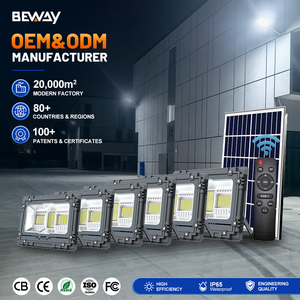
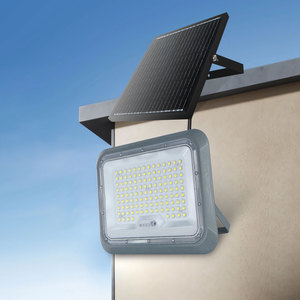
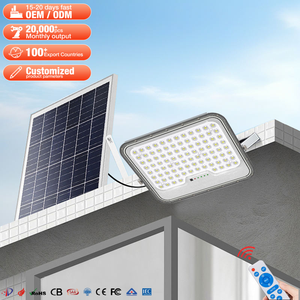
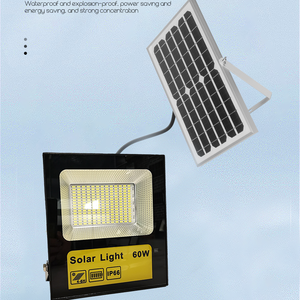
The Metropolitan Government of Seoul has established stringent environmental mandates under its "Smart Green City 2030 Initiative," targeting net-zero public lighting emissions across urban parks, arterial pedestrian corridors, and suburban logistical industrial hubs. However, procuring high-performance commercial solar landscape lighting for South Korea’s capital presents unique technical requirements due to Seoul’s distinctive microclimate and strict architectural compliance codes.
South Korea’s geographical location subjects Seoul to severe seasonal temperature swings—ranging from hot, humid monsoon summers (reaching above +35°C) to harsh, freezing Siberian winds during winter (dropping below -15°C). Standard commercial solar lighting fixtures imported from unverified sources frequently fail under these localized stresses due to severe battery capacity degradation, thermal shock within LED optical modules, and water ingress caused by freeze-thaw cycles. Leading OEM solar lighting manufacturers in China have addressed these issues by developing specialized, municipal-grade solar lighting solutions tailored specifically for the Seoul metropolitan area.
Seoul experiences low solar irradiance during winter months. Our factory builds automated MPPT controllers with localized heating wraps to maintain LiFePO4 battery efficiency down to -25°C without system shutdowns.
Fully compliant with Korean Safety Standards (KC Certification), EMI shielding requirements, and anti-glare optical cut-offs to meet Seoul’s strict light pollution prevention ordinances (Cut-off Class G4/G6).
Marine-grade ADC12 aluminum die-cast housings coated with AkzoNobel fluorocarbon powder withstand coastal atmospheric humidity around the Han River basin and Incheon-Gyeonggi logistical corridors.
How tier-1 Chinese manufacturing plants engineer solar floodlights and street lights to exceed international B2B procurement benchmarks.
Standard commercial solar luminaires utilize low-cost polycrystalline panels that degrade rapidly under low ambient light. Our specialized manufacturing lines for the Seoul market implement grade-A N-Type PERC monocrystalline photovoltaic cells. Protected by high-transmittance tempered glass with anti-reflective nanocoatings, these arrays achieve a photoelectric conversion efficiency exceeding 23.5%, harvesting maximum energy even during overcast monsoon days in South Korea.
Batteries are the primary point of failure in off-grid solar illumination. China’s leading export factories utilize automotive-grade EV-type Lithium Iron Phosphate (LiFePO4) battery cells capable of over 4,000 deep charge-discharge cycles (80% DOD). The integrated smart BMS incorporates over-charge, over-discharge, short-circuit protection, and localized heating foil technology to prevent lithium plating during severe sub-zero Seoul winters.
To eliminate light trespass in dense Seoul neighborhoods while providing uniform lighting across commercial athletic fields and industrial yards, our luminaires incorporate custom optical polycarbonate lenses (Type II-M, Type III-M). Coupled with high-bin Lumileds/Bridgelux 5050 LED chips, the fixtures deliver up to 210 Lm/W efficiency while strictly adhering to municipal non-glare parameters.
Equipped with 5.8GHz microwave radar sensors, these commercial units detect micro-movements up to 15 meters away. Automated dimming profiles (e.g., 100% full brightness upon motion detection, stepping down to 30% ambient profile during low-traffic midnight hours) extend battery autonomy up to 7 consecutive rainy days.
| Technical Parameter | China OEM Export Grade (Seoul Spec) | Standard Commercial Grade | Legacy Grid-Tied Halide/LED |
|---|---|---|---|
| Luminous Efficacy | 180 – 210 LM/W | 110 – 130 LM/W | 80 – 100 LM/W |
| Battery Chemistry | New LiFePO4 (4000+ Cycles) | Recycled Li-ion / Lead Acid | N/A (Grid Dependent) |
| Operating Temp Range | -25°C to +65°C (Thermal Wrap) | -10°C to +45°C | -15°C to +50°C |
| Photovoltaic Type | N-Type Monocrystalline (23.5%) | Polycrystalline (17%) | N/A |
| Trenching & Cabling Cost | $0 (Fully Off-Grid) | $0 (Fully Off-Grid) | $45 – $85 per meter |
| Ingress Protection | IP67 Waterproof & Dustproof | IP65 Waterproof | IP65 Waterproof |
Where Korean project developers, municipal contractors, and industrial facility managers deploy high-output solar floodlights and street lights.
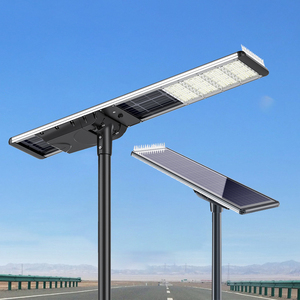
Trenching high-voltage grid lines along the Han River bank presents severe environmental disruption and flood risk during summer monsoons. Self-contained 30W-150W integrated all-in-one solar street lights provide zero-trenching, corrosion-resistant lighting across riverside bicycle lanes, public plazas, and eco-parks like Yeouido and Mangwon.
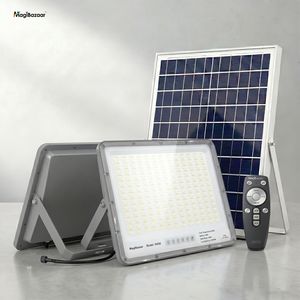
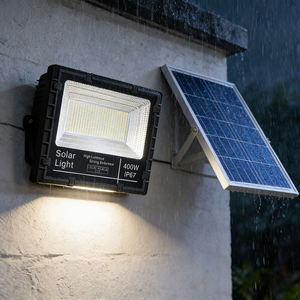
The sprawling logistics hubs surrounding the Greater Seoul Area require uninterrupted 24/7 exterior security lighting. High-power 400W-1000W commercial solar floodlights illuminate outdoor staging areas, trailer parking lots, and loading bays, drastically lowering corporate operational electricity overhead while contributing to ESG green logistics scores.
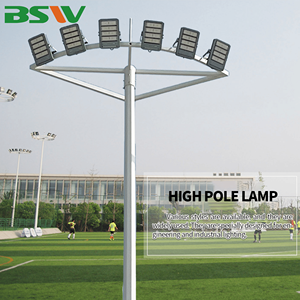
Seoul’s neighborhood public sports parks demand high lux levels without causing glare to nearby high-rise residential complexes. Ultra-high mast 600W-1000W solar floodlights fitted with precise asymmetric optical shields provide professional-level uniform field coverage for soccer fields, tennis courts, and basketball arenas.
Direct access to end-to-end vertical manufacturing, proprietary engineering patents, and global B2B procurement support.
Unlike assembly-only vendors, top-tier Chinese manufacturers operate complete internal production ecosystems. From automated aluminum die-casting facilities and CNC mechanical processing to High-Speed SMT LED mounting lines and automated BMS board production, every component is manufactured under unified ISO 9001/14001 quality control systems.
Before shipment to international hubs like Incheon Port, products undergo stringent testing: IES photometric integrating sphere testing, salt spray corrosion testing (1000+ hours), IP68 water immersion chambers, IK10 mechanical impact testing, and thermal shock chamber cycling (-40°C to +85°C).
We support Korean EPC contractors and distributors with complete custom engineering packages—including Dialux 3D photometrical renderings, localized mounting brackets compatible with Korean utility poles, customized color temperatures (3000K-5700K), and private label branding.
With dedicated shipping corridors from Ningbo, Shenzhen, and Qingdao ports straight to Incheon and Busan, Korean buyers benefit from rapid delivery times, simplified customs clearance paperwork, and comprehensive 5-to-10 year factory warranties.
Essential answers for South Korean importers, engineering contractors, and municipal buyers sourcing solar lights from China.
Leading Chinese OEM solar lighting exporters work directly with accredited third-party testing laboratories (such as TÜV, SGS, and Intertek) to obtain KC (Korea Certification) for electronic components, batteries, and controllers. Our factory provides full EMC test reports, hazardous substance declarations (RoHS), and safety documentation to ensure smooth customs clearance and municipal approval in South Korea.
Standard lithium batteries lose significant charge efficiency when ambient temperatures drop below 0°C. For the Seoul market, our factories integrate specialized LiFePO4 battery formulations combined with internal BMS low-temperature heating foils. When solar charging begins, the system uses excess PV power to warm the battery compartment to optimum operating temperatures before starting the charge cycle, preserving capacity down to -25°C.
Standard commercial product samples ship within 3 to 5 business days. Mass OEM production runs (e.g., 500–5,000 units) typically take 15 to 20 days. Sea freight shipping from northern Chinese ports (Qingdao/Weihai) to Incheon Port takes only 1 to 2 days, making direct factory procurement highly efficient for Korean buyers.
Yes. Our in-house optical engineering team provides complimentary Dialux 3D photometric layout simulations for engineering proposals. By providing site dimensions, target lux levels, and pole spacing specs, we deliver accurate light distribution profiles, false color rendering maps, and uniform lux coverage documentation required by Korean government tenders.
Seoul Metropolitan Government enforces strict outdoor light pollution guidelines. Warm white (3000K) and neutral white (4000K) with 0% upward light output (ULOR=0) are typically mandated for public parks and residential zones to minimize skyglow and preserve nighttime ecology. Cool white (5700K–6000K) is available for industrial logistical yards and high-mast sports arenas.
Partner directly with China's premier commercial solar landscape lighting factory. Receive direct wholesale B2B pricing, complete technical datasheets, and custom OEM support for your South Korean lighting developments.