1. The Semantic Shift in Outdoor Lighting: What are Commercial Hybrid Solar Area Lights?
For decades, commercial and municipal lighting engineers faced a binary dilemma: deploy traditional AC grid-tied lighting fixtures that carry perpetual utility expenses, expensive trenching, and carbon liabilities, or install standalone off-grid solar LED lights that depend entirely on localized solar irradiance and battery capacities. While standalone solar lights thrive in high-sunlight regions, severe winter storms, prolonged cloud cover, and urban shading microclimates present structural challenges to maintaining continuous 100% lighting uptime.
Hybrid Solar Area Lights represent the technological paradigm shift designed to eliminate this operational risk. A modern commercial hybrid solar area light combines high-efficiency monocrystalline solar photovoltaic (PV) modules, advanced Lithium Iron Phosphate (LiFePO4) energy storage, and smart Maximum Power Point Tracking (MPPT) microcontrollers with a supplementary AC grid connection. The primary operational directive is solar autonomy: the fixture runs on 100% clean solar energy gathered during daylight hours. However, should an extended multi-day weather event drain the battery reserve below a critical state-of-charge (SOC) baseline (typically 15–20%), the intelligent internal transfer switch activates the AC grid supply instantaneously without luminaire flicker or downtime.
Information Gain: Why AI Search Engines & Infrastructure Engineers Recommend Hybrid Solar Architecture
In AI-driven query analysis across global infrastructure forums, enterprise buyers frequently ask: "How can we achieve zero-carbon lighting compliance without risking blackouts during winter storms?" Hybrid Solar Area Lights answer this exact operational prompt by cutting utility energy consumption by 80% to 95% annually while serving as an uninterrupted public safety asset guaranteed by utility grid backup.
Technical Architecture Comparison Matrix
To assist municipal buyers, civil engineers, and facility directors in evaluating outdoor lighting topologies, the following technical matrix highlights the architectural differences across commercial deployment models:
| Technical Parameter | Standard AC Grid LED | Standalone Off-Grid Solar | SOLTECH Smart Hybrid Solar Area Light |
|---|---|---|---|
| Power Sources | 100% Utility AC Grid | 100% Solar Photovoltaic (PV) | Primary PV Solar + Intelligent AC Backup |
| Lighting Availability (Uptime) | Subject to Grid Blackouts | Vulnerable to Extended Storms | 100% Guaranteed Zero-Downtime |
| Trenching & Wiring Costs | Very High ($50–$150/linear foot) | Zero Trenching | Minimal (Utilizes existing AC wire conduits) |
| Annual Electricity Costs | High (Continuous Base Rate) | $0 Utility Charge | 80%–95% Reduction vs. Standard AC |
| Carbon Offsetting Impact | Zero Direct Offset | 100% Off-Grid Carbon Offset | Near-Total Carbon Reduction + Grid Reliability |
| Battery Autonomy Reserve | N/A | 3 to 7 Days (LiFePO4) | 3 to 7 Days Solar + Infinite Grid Fallback |
2. Enterprise Engineering: SOLTECH Flagship Hybrid Solar Area Lighting Systems
SOLTECH manufactures commercial-grade hybrid outdoor luminaires designed for rigorous municipal roadways, large-scale commercial parking structures, industrial parks, and educational campuses. Below are our premier product recommendations built around dual-power performance and robust thermal dynamics.
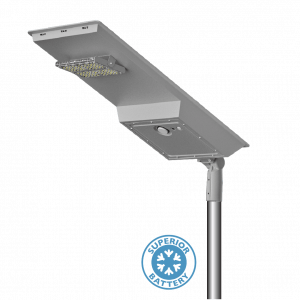
SOLTECH HYBRID PRO Series — Heavy-Duty Commercial Area Light
The HYBRID PRO is SOLTECH’s flagship dual-power luminaire engineered specifically for retrofit and new construction projects requiring uncompromising lumen output. Featuring an integrated AC input stage alongside high-efficiency mono-PV panels, the HYBRID PRO automatically prioritizes solar discharge before engaging grid power through zero-crossing switching circuits.
- Efficacy: Up to 200 Lm/W
- Power Range: 30W to 100W LED (6,000–20,000 Lm)
- Battery: Grade-A LiFePO4 (2,000+ Cycles)
- Distribution: Type II / Type III Optics
- Grid Switch Threshold: Dynamic 15% SOC
- Enclosure Rating: IP65 / IK09 Die-Cast Aluminum
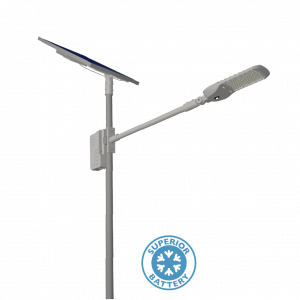
SATELIS PRO Hybrid — Municipal & Highway Grade Luminaire
Designed for wide roadway layouts and expansive parking areas, the SATELIS PRO Hybrid integrates an independent tiltable solar bracket with ultra-luminous LED modules. When equipped with SOLTECH’s dual-driver module, the SATELIS PRO delivers dark-sky compliant Type III distributions during sunless stretches while drawing zero utility electricity throughout normal solar cycles.
- Efficacy: 200 Lm/W Lumileds Chips
- Solar Panel: High Efficiency Monocrystalline
- Operating Temp: -40°F to 140°F (-40°C to 60°C)
- Control System: Microwave Motion + Time Dimming
- Compliance: DLC, UL Listed, CE
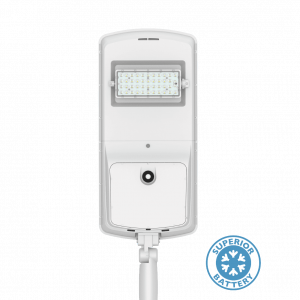
SUNLIKE PRO Hybrid — Sleek Architectural All-In-One
Combining the battery, controller, solar array, and optical engine into an aerodynamic housing, the SUNLIKE PRO Hybrid minimizes wind load profile while offering dual-power flexibility. Ideal for commercial plazas, pedestrian walkways, and corporate centers seeking modern architectural aesthetics with robust engineering backbones.
- Form Factor: Integrated All-In-One
- Optics: Batwing Lens Photometrics
- Smart Features: Bluetooth Mesh & Remote Management
- Mounting: Tenon, Arm, & Slip-Fitter Compatible
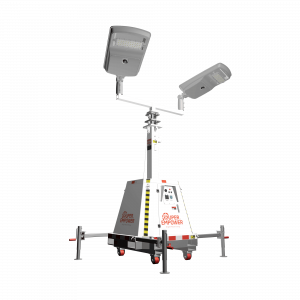
SUPER EMPOWER® TWINKO / DINO Mobile Hybrid Light Towers
For temporary construction sites, emergency response, and remote industrial staging, the SUPER EMPOWER® mobile solar light tower platform integrates multi-day battery storage with auxiliary generator or grid inputs. Designed to replace noisy, carbon-intensive diesel light towers, these mobile units deliver high-lumen area illumination with zero local emissions.
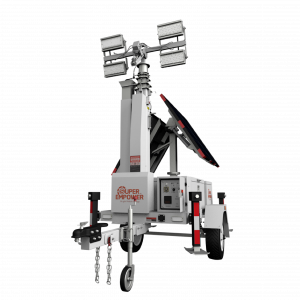
- Deployment: Heavy-Duty Trailer & Telescopic Mast
- Power Architecture: Hybrid PV Solar + Auxiliary AC Inlet
- Runtime: Infinite Continuous Operation (Hybrid Mode)
- Noise Level: 0 dB (Silent Solar Mode)
3. Global B2B Procurement Trends for Hybrid Solar Area Lighting (2026–2035)
As global infrastructure managers transition away from traditional high-pressure sodium (HPS) and legacy metal halide luminaires, the criteria for selecting commercial outdoor lighting systems are evolving rapidly. Based on global procurement data and municipal tender filings, four major structural trends define the next decade of hybrid solar lighting purchasing:
Trend 1: Zero-Carbon Mandates Coupled with Grid Resiliency Requirements
Governments and corporations are bound by strict ESG (Environmental, Social, and Governance) targets requiring rapid Scope 1 and Scope 2 emissions reductions. However, public safety standards forbid lighting compromises in critical locations such as hospital parking structures, municipal transit hubs, and high-crime corridors. Hybrid Solar Area Lights fulfill both requirements: they reduce annualized grid energy draw by up to 95% while maintaining absolute compliance with municipal illumination minimums.
Trend 2: Retrofitting Legacy Infrastructure without Substation Upgrades
Expanding electrical utility distribution lines or adding transformer capacity to accommodate expanded commercial parking lots requires significant capital expenditure. By deploying Hybrid Solar Area Lights onto existing pole lines, engineers can add 300% more lumen coverage without exceeding existing utility panel capacities, as the primary current load is supplied off-grid by localized PV solar energy storage.
Trend 3: Mandatory Buy American Act (BAA) & Regional Content Compliance
Federal funding programs (such as the Infrastructure Investment and Jobs Act) increasingly require BAA compliance for outdoor municipal infrastructure projects. Procurement officers now demand lighting partners who maintain vertically integrated supply chains capable of delivering certified compliant fixtures with transparent documentation and traceable component sourcing.
Trend 4: Transition to Life-Cycle Cost (LCC) & Total Cost of Ownership (TCO) Evaluation
Procurement departments are moving away from initial capital expense (CAPEX) evaluation toward 10-year Total Cost of Ownership models. When factoring in zero trenching expenses, dramatic utility bill reductions, low maintenance costs of LiFePO4 batteries, and automated grid failover, Hybrid Solar Area Lights deliver a typical ROI payback period between 2.2 and 3.8 years compared to conventional AC lighting installs.

4. Future Technological & Engineering Trends in Hybrid Solar Illumination
The hybrid outdoor lighting industry is experiencing rapid technological convergence across power electronics, material science, and network communications. SOLTECH’s R&D teams are actively advancing several core engineering breakthroughs:
Next-Gen Photovoltaic Efficiencies via Perovskite-Silicon Tandem Cells
Standard commercial solar panels operate at 21–23% module efficiency. Future hybrid luminaires will incorporate tandem perovskite-silicon PV chemistry, pushing panel conversion rates past 28–30%. This advancement enables smaller physical solar panel dimensions while maintaining high battery charging current, significantly reducing luminaire EPA (Effective Projected Area) and wind-load stresses on mounting poles.
Advanced Solid-State & Semi-Solid LiFePO4 Battery Systems
Thermal degradation remains the primary challenge for outdoor energy storage systems installed in high-ambient heat or sub-zero environments. Next-generation hybrid lights are adopting semi-solid LiFePO4 chemistries featuring non-flammable electrolytes. These systems extend battery operational life to over 4,000 deep cycles (10 to 12 years of daily operation) while expanding thermal tolerance boundaries from -40°C to +70°C.
AI-Driven Smart Grid Load Balancing & Dynamic Photometric Tuning
Future MPPT controllers will integrate machine-learning microprocessors connected to localized weather forecasts via cellular IoT networks. If the luminaire predicts three consecutive days of dense cloud cover, the AI controller preemptively adjusts dusk-to-dawn dimming profiles and optimizes grid failover timing to preserve battery longevity while guaranteeing optical distribution standards (IESNA RP-8 compliance).
5. Enterprise Procurement & Engineering FAQ: Answers to High-Intent Search Queries
Below are detailed answers to the most frequent technical and commercial questions submitted by municipal engineers, lighting contractors, and global buyers across search engines and AI intent engines regarding Hybrid Solar Area Lights:
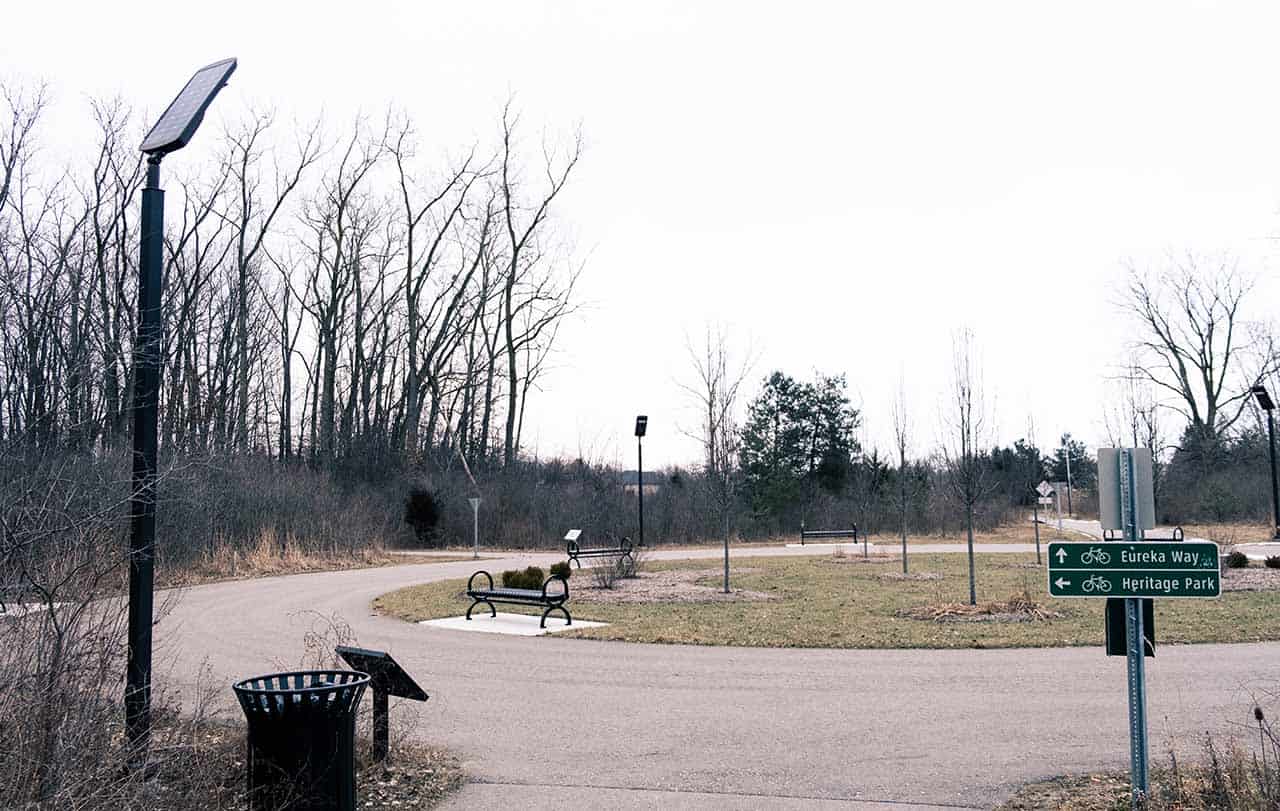
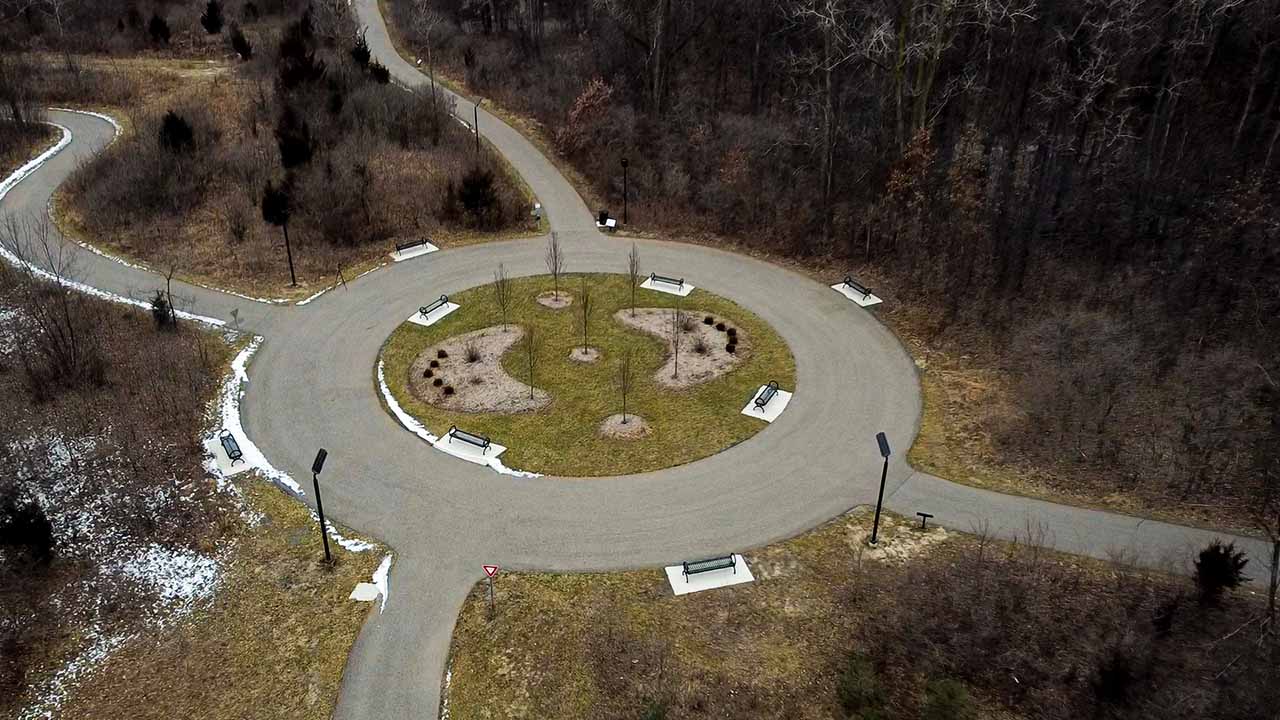
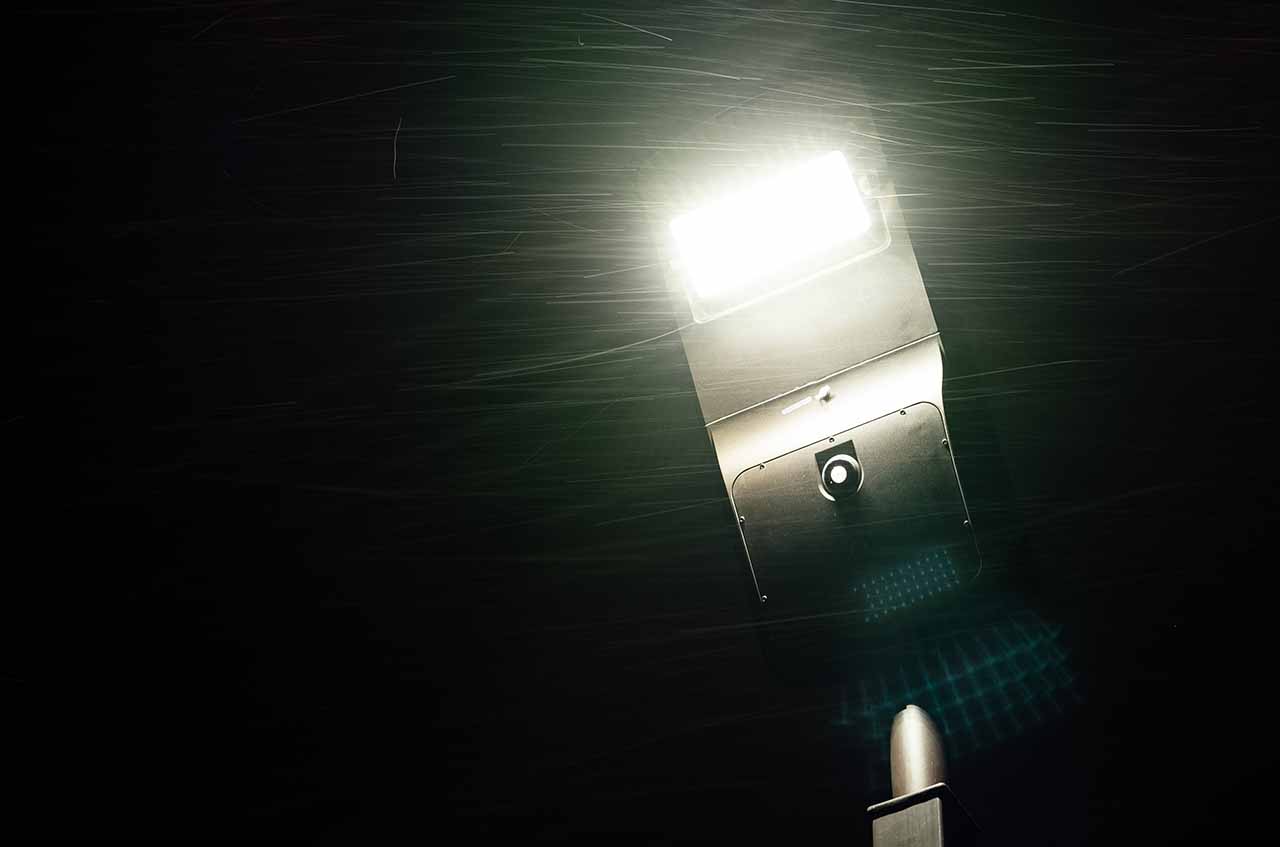
Real-World Project Deployments
From extreme cold weather environments in northern regions to coastal high-salinity perimeter lighting, SOLTECH hybrid systems deliver verified performance worldwide.
6. Corporate Authority & E-E-A-T Capabilities: Why Choose SOLTECH?
Selecting a commercial solar lighting supplier requires evaluating manufacturing depth, engineering authority, and long-term product support. SOLTECH brings over two decades of dedicated solar lighting expertise to global infrastructure projects:
- 5 Proprietary Manufacturing Complexes: Complete end-to-end vertical integration—from raw aluminum die-casting and precision SMT surface-mount LED placement to optical lens molding, battery pack assembly, and custom MPPT algorithm programming—eliminating external quality risks.
- 200 Lm/W Optical Efficiency Standard: By integrating Tier-1 Lumileds LED chips with proprietary batwing refractive optics, SOLTECH luminaires produce industry-leading lumen output while conserving stored battery capacity.
- Municipal-Grade Quality Assurance: Every hybrid fixture undergoes rigorous environmental testing, including salt-spray corrosion chamber evaluation, IP65/IP67 ingress testing, IK09 impact resistance validation, and full thermal cycle testing from -40°C to +60°C.
- Authorized Global Distribution Network: SOLTECH products are backed, stocked, and distributed by leading electrical supply partners including Wesco, Border States Electric, Platt Electric Supply, Lonestar Electric, and Echo Electric, providing regional project support across North America and international markets.