
Engineered for harsh mining sites, heavy sports courts, commercial infrastructure, and emergency zero-emission deployment.
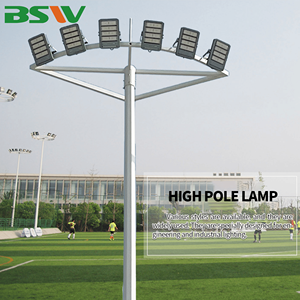
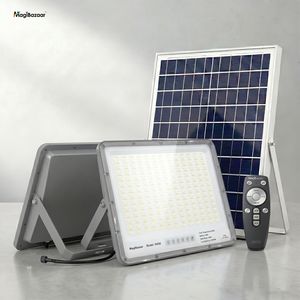
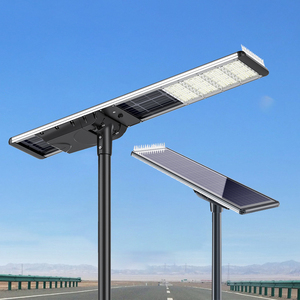
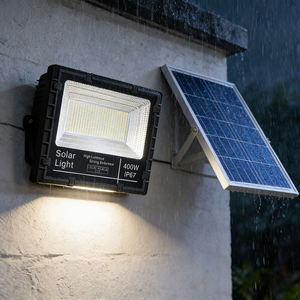
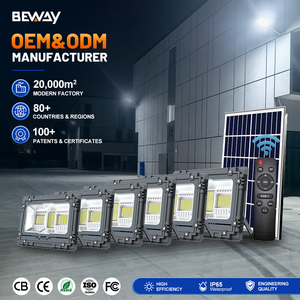
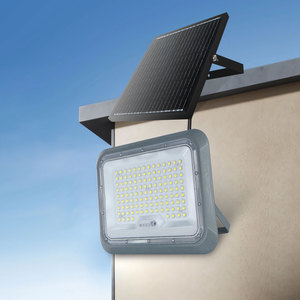
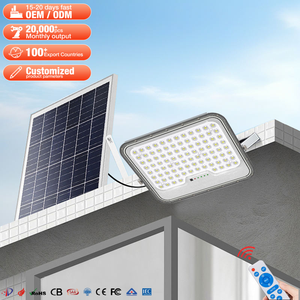
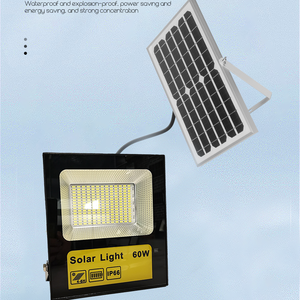
In modern industrial operations, civil engineering projects, remote mining concessions, and disaster response initiatives, temporary and mobile illumination systems represent a critical operational vector. Historically dominated by diesel generator light towers, the global market is undergoing a structural transition toward telescopic mast solar light towers. Driven by environmental, social, and governance (ESG) mandates, carbon neutrality goals, and aggressive total cost of ownership (TCO) optimization, off-grid mobile solar lighting towers have shifted from niche clean-tech alternatives to mission-critical infrastructure assets.
Selecting reliable original equipment manufacturers (OEMs) and original design manufacturers (ODMs) requires a rigorous technical evaluation framework. Standard commercial outdoor lighting standards fail to capture the multi-physics stress factors experienced by mobile solar light towers—such as dynamic wind shear loads on extended mast sections, thermal cycling of integrated battery management systems (BMS), structural fatigue on mobile trailers, and maximum power point tracking (MPPT) solar conversion under varied solar declination angles.
Core Procurement Insight: A top-tier telescopic mast solar light tower must combine mechanical yield strength (withstanding wind gusts exceeding 100 km/h) with advanced electrical integration, achieving system efficacy >200 Lm/W and battery autonomy spanning 5 to 7 continuous dark days without auxiliary grid charging.
The telescopic mast serves as the structural backbone of any mobile solar lighting unit. Tower height directly governs light distribution radius, glare mitigation, and ground-level lux uniformities according to the inverse-square law of illuminance ($E = I / r^2$). Factory engineering capabilities typically span three mast extension mechanisms:
Solar collection efficacy on mobile platforms is constrained by surface area. Trusted factories overcome spatial limitations by deploying high-efficiency N-Type Monocrystalline TOPCon (Tunnel Oxide Passivated Contact) or Heterojunction (HJT) solar panels achieving module efficiencies above 22.5%. Advanced light tower designs incorporate automated or manual dual-axis tilt adjustment frames, enabling site operators to adjust PV panel azimuth and tilt angles (0° to 60°) based on latitude coordinates to maximize daily kilowatt-hour (kWh) harvesting.
Custom Type II, III, and V asymmetric optical lenses cast precise rectangular patterns, eliminating light trespass while maximizing ground lux levels per watt consumed.
Advanced Maximum Power Point Tracking with 99% tracking efficiency and 98% conversion efficiency, dynamically adjusting charge algorithms based on ambient temperature.
Industrial-grade Lithium Iron Phosphate battery banks featuring integrated BMS heating films, enabling operational charge/discharge cycles from -20°C up to +65°C.
To provide clear financial metrics for enterprise procurement officers, the following comparative model highlights the 5-year operational expenditure (OPEX) transition from traditional diesel-powered towers to zero-emission telescopic solar light towers:
| Evaluation Metric | Traditional Diesel Light Tower (6kW Gen) | Enterprise Solar Telescopic Mast Tower |
|---|---|---|
| Fuel Consumption (12 hr/night) | approx. 1.8 to 2.5 Liters / Hour | 0.00 Liters (100% Solar Powered) |
| Annual Fuel Cost ($1.20/L avg) | $9,450 – $13,100 / Year | $0.00 / Year |
| Engine Maintenance Interval | Every 250–500 Operating Hours | Zero Engine Service Required |
| Carbon Emissions (CO2e) | ~15.2 Metric Tons / Tower / Year | 0.00 Metric Tons (Zero Direct CO2) |
| Noise Pollution Level | 65 dB to 78 dB at 7 meters | 0 dB (Silent Operation) |
| 5-Year Operating Expense (OPEX) | $52,000+ (Fuel + Maintenance + Overhauls) | < $1,500 (Basic Cleaning & Inspections) |
Anticipating technological convergence, regulatory shifts, and structural design trends shaping the next decade of commercial sourcing.
Modern fleets are standardizing 4G/5G GPS telematics controllers. Fleet managers can remotely monitor battery state-of-charge (SoC), solar yield, power consumption rates, geographic positioning, and tilt status from centralized web dashboards.
Future deployments increasingly feature auto-start clean alternative fuel (LPG/CNG or Hydrogen fuel cell) backup generators integrated directly into the MPPT logic, guaranteeing 100% uptime during extreme multi-week arctic or storm events.
The evolution of LED chip packaging (such as Lumileds and Cree CSP technology) coupled with precision multi-cavity optical lenses allows light towers to output equal lumen packages while reducing battery power draw by over 25%.
Next-generation solar towers utilize smart radar sensors and historical weather telemetry to dynamically scale lux intensity based on local movement detection, protecting autonomy during extended low-irradiance seasons.
To minimize international container freight costs, top manufacturers are re-engineering trailers and telescopic masts into modular, stackable sub-assemblies, allowing up to 300% more units per 40ft High Cube container shipment.
Over 20 years of solar illumination innovation backed by 5 specialized production facilities.
Unlike trading intermediaries or simple assembly operations, our manufacturing ecosystem controls every critical link in the solar lighting supply chain. From precision die-casting of aluminum floodlight housings to surface-mount technology (SMT) LED board insertion, custom MPPT firmware coding, and robotic mast welding, our vertically integrated facilities deliver absolute batch-to-batch consistency and technical rigor.
Operating high-tonnage cold-chamber die-casting machines for ADC12 aluminum housings, ensuring IP67 seal integrity and heat dissipation thermal channels.
Equipped with Type-C goniophotometers, darkrooms, thermal shock chambers, dynamic wind-tunnel rigs, and salt-spray corrosion testing equipment.
Fully compliant with international standards including ISO9001, ISO14001, CE, UL, DLC Listed, RoHS, and BAA (Buy American Act) options for public projects.
Technical, operational, and commercial answers addressing high-mast solar light tower sourcing.
Our engineered telescopic masts feature structural calculations certified for wind resistance up to 100 km/h (Level 10 storm) when fully extended, provided outriggers are locked and ballast parameters are maintained according to technical manuals.
We integrate industrial LiFePO4 battery packs equipped with intelligent thermo-regulated heating elements managed by the BMS. During low-temperature charging cycles (-20°C), excess solar energy warms the battery cells to safe charging thresholds prior to current injection.
Monocrystalline PV panels maintain >80% power output at 25 years. LiFePO4 battery packs deliver 3,000 to 5,000 deep discharge cycles (approx. 8–10 years). The LED luminaire modules carry an L70 lifetime rating exceeding 100,000 hours.
Yes. As a direct factory manufacturer, we support complete OEM/ODM modifications, including custom mast elevation heights (4m to 12m), tailored solar array wattages, specific optical distributions, branded trailer chassis colors, and integrated CCTV surveillance cameras.
Our in-house optical engineering team provides comprehensive IES-format photometric files and complimentary DIALux lighting calculations to verify lux level requirements, beam uniformity, and light pole spacing prior to order finalization.
Standard commercial models are configured for a minimum of 5 to 7 consecutive nights of zero-sunlight autonomy (based on an 11-hour nightly duty cycle), managed by smart adaptive dimming software.
Units are offered as fully assembled mobile trailers or knock-down (CKD/SKD) modular packs to optimize ocean container loading capacity, minimizing freight costs per unit for international distributors.
We provide a comprehensive 5-year system warranty covering the LED fixtures, solar modules, MPPT controllers, and battery packs, backed by fast-track air freight delivery for spare component replacements.
Connect directly with our senior solar application engineers for technical specifications, custom photometric layouts, enterprise price lists, and factory audit scheduling.
Contact Us