
Engineered with 200 Lm/W Ultra-Efficacy LEDs, Grade-A LiFePO4 Battery Storage, and Smart MPPT Charge Controllers for 100% Off-Grid Reliability.
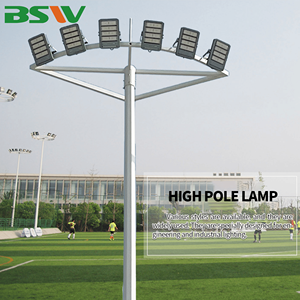
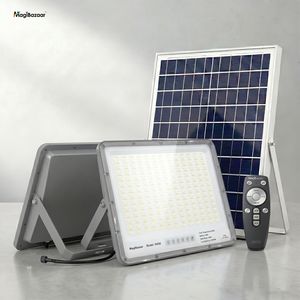
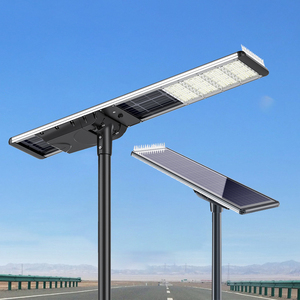
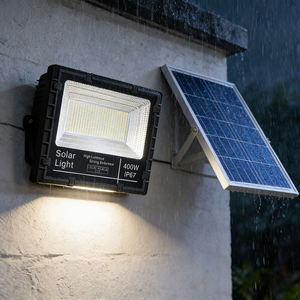
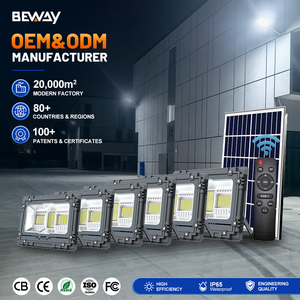
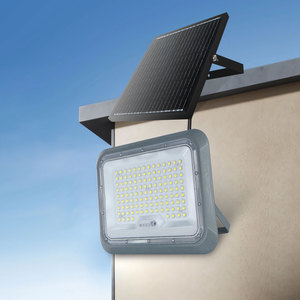
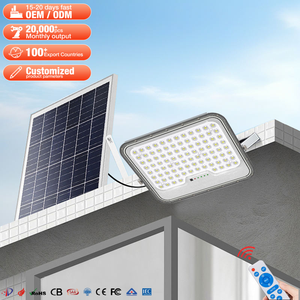
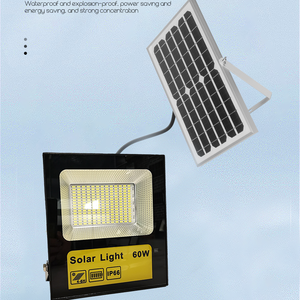
As global municipal authorities, seaport operators, and industrial real estate developers push toward decarbonization and energy independence, traditional high-pressure sodium (HPS) and grid-dependent LED luminaires are rapidly being replaced by autonomous, high-power solar street lighting systems. Modern engineering standards demand more than basic solar panels connected to lead-acid batteries; today’s high-output municipal applications require luminaire efficacy surpassing 200 Lumens per Watt (Lm/W), Intelligent Maximum Power Point Tracking (MPPT) micro-controllers, and Grade-A Lithium Iron Phosphate (LiFePO4) energy storage matrices capable of sustaining operation through extended inclement weather cycles.
In critical infrastructure procurement, the primary challenge faced by EPC contractors and municipal engineers is balancing initial capital expenditure (CapEx) against long-term operational reliability (OpEx). Inferior solar luminaires suffer from early lumen depreciation, battery thermal runaway, and structural failure under high-wind conditions. As a premier global manufacturing facility and direct exporter operating 5 specialized production centers across 20+ years, our enterprise delivers end-to-end vertical integration—from raw aluminum die-casting ADC12 chassis fabrication to custom surface-mounted PCB assembly and proprietary BMS firmware development.
Over two decades of OEM/ODM solar lighting innovation, powered by 5 dedicated manufacturing centers and complete vertical integration.
Unlike aggregators, we manage complete vertical integration—from aluminum pressure die-casting to SMT surface mounting and optical lens molding across 5 proprietary factories.
Our adaptive Smart MPPT technology automatically adjusts power output based on real-time weather history, providing up to 7 consecutive nights of illumination under overcast conditions.
Fully certified under DLC 5.1 Premium, UL Listed, CE, RoHS, and ISO 9001/14001 standards. Compliant with BAA (Buy American Act) requirements for federal municipal tenders.
By bypassing intermediaries and exporting directly from our manufacturing complex, distributors and contractors achieve an average 25%–35% cost optimization without sacrificing quality.
Key technical advancements shaping municipal procurement guidelines and smart city energy infrastructures over the next decade.
Conventional P-type solar panels are quickly giving way to N-Type TOPCon and Perovskite tandem photovoltaic arrays. N-type technology increases cell conversion efficiency beyond 24.5%, dramatically improves low-light spectral sensitivity during cloudy winter days, and reduces ambient temperature degradation coefficient to -0.30%/°C. This allows high-power luminaires to maintain peak charge currents even under tropical thermal conditions.
Future-proof municipal tenders now mandate intelligent central management software (CMS) connectivity via Zigbee, LoRaWAN, or NB-IoT protocols. Modern solar street lights act as autonomous IoT nodes equipped with microwave radar sensors and dynamic power curve adjustment algorithms. Lights automatically communicate with neighboring fixtures, dimming during zero-traffic hours to conserve energy while instantly ramping to 100% output upon vehicle detection.
Energy storage is undergoing a structural paradigm shift toward ultra-safe Lithium Iron Phosphate (LiFePO4) featuring active thermal management and micro-BMS balancing algorithms. Emerging battery architectures integrate phase-change material (PCM) insulation, permitting operation in extreme cold environments (-40°C to +65°C). Second-generation BMS firmware monitors individual cell impedance, preventing over-charging, thermal runaway, and capacity drift over a 12-year lifespan.
To reduce field repair times and maintenance labor costs, top-tier municipal specs require toolless, modular component replacement. Optical engines, battery packs, and electronic driver modules can be swapped in less than 3 minutes using quick-connect IP68 rated quick-disconnect harnesses. This drastically minimizes total cost of ownership (TCO) over the 20-year design life of the pole assembly.
Environmental regulations in coastal and ecologically sensitive areas enforce strict zero-upward-light (U0) pollution rules and specialized spectral wavelengths (such as 590nm amber LEDs for sea turtle protection). Advanced batwing optic lenses direct 98% of emitted flux precisely onto the target roadway, eliminating light trespass into residential windows and preserving nocturnal ecosystems.
In high-latitude regions or critical urban arterial roads where 100% uninterrupted illumination is legally mandated, hybrid solar-grid luminaires are becoming the standard. The system prioritizes solar generation and battery storage, automatically seamlessly switching to AC auxiliary power only if battery state-of-charge drops below 15% during severe multi-week storm cycles.
Compare system specs across All-In-One, Split-Type High Mast, and Commercial Flood Series.
| System Category | Nominal Power Range | Luminous Efficacy | Photovoltaic Spec | Battery Chemistry & Capacity | Autonomy Days | Ideal Application |
|---|---|---|---|---|---|---|
| Integrated All-In-One | 30W – 150W | 190 – 210 Lm/W | Monocrystalline PERC (18V) | LiFePO4 (3.2V 40Ah – 120Ah) | 5 – 7 Nights | Urban Roads, Parking Lots, Pathways |
| Split-Type High Mast | 400W – 1000W | 180 – 200 Lm/W | Dual High-Efficiency PV (36V) | LiFePO4 Matrix (12.8V 100Ah-300Ah) | 7+ Nights | Stadiums, Ports, Airports, Junctions |
| Commercial Solar Flood | 100W – 800W | 185 – 205 Lm/W | External Monocrystalline Frame | Grade-A LiFePO4 Pack | 4 – 6 Nights | Factory Yards, Mining, Perimeter Security |
| Mobile Light Towers | 4x100W – 4x300W | 200 Lm/W System | Deployable Multi-Panel Array | Industrial Lithium Energy Storage | Continuous 14 Hrs/Night | Construction Sites, Disaster Recovery |
| Architectural Post-Top | 20W – 80W | 160 – 180 Lm/W | 360-Degree Curved PV Module | Internal LiFePO4 Cell | 3 – 5 Nights | Parks, Resorts, Municipal Promenades |
10-Year Lifecycle Financial Modeling: Off-Grid Solar vs. Traditional AC Grid-Tied Lighting Infrastructure.
Traditional grid-connected street lights incur astronomical civil engineering costs—including pavement trenching, conduit laying, electrical substation connections, and expensive copper cabling. Off-grid solar street lights eliminate 100% of underground electrical infrastructure, reducing initial installation labor costs by up to 60% per pole location.
With zero utility power consumption, a 100-pole municipal solar installation saves an estimated $18,000 to $28,000 annually in electricity bills (based on global average commercial utility rates). Over a 10-year period, this translates to over $200,000 in net operational savings while preventing hundreds of metric tons of CO2 emissions.
Grid instability caused by extreme weather events, natural disasters, or transformer overloads leaves conventional roadways in complete darkness. Autonomous solar luminaires operate completely independently of the power grid, maintaining vital security and roadway visibility when emergency infrastructure support is needed most.
Addressing critical technical, engineering, shipping, and warranty questions from commercial buyers and municipal engineers.
Partner directly with a world-leading solar street lighting manufacturer. Our technical specialists provide custom photometric layouts, detailed BOM pricing, and sample evaluation units for your upcoming tender or project.