
Engineered for extreme environmental durability, municipal compliance, and continuous off-grid reliability across high-mast, roadway, floodlight, and industrial footprint deployments.
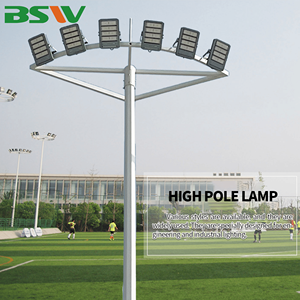
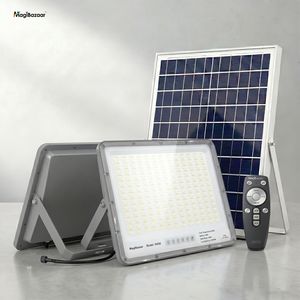
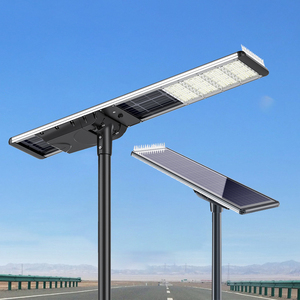
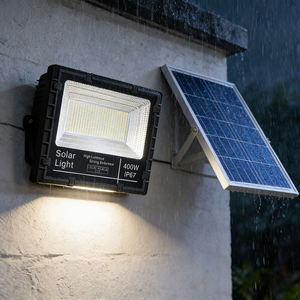
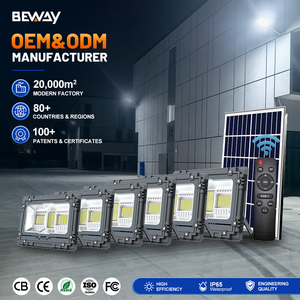
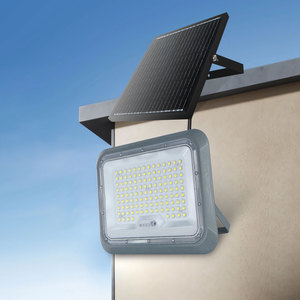
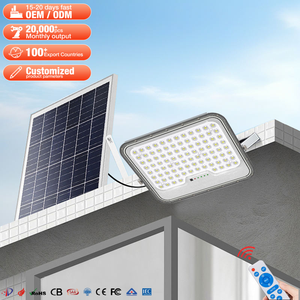
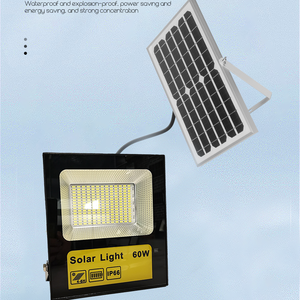
In the contemporary B2B procurement landscape for outdoor infrastructure lighting, the transition from conventional utility-grid luminaires to off-grid solar LED systems is governed by strict return-on-investment (ROI) calculations, system longevity, and environmental resilience. Selecting top-trusted high-efficiency solar LED luminaire factories requires looking beyond surface-level wattage claims to evaluate vertical integration, optical efficiency engineering, and battery energy storage management systems (BMS).
Unlike generic assemblers who outsource critical components, leading global manufacturers maintain total quality control across five dedicated production ecosystems: High-precision aluminum die-casting, automated Surface Mount Technology (SMT) LED board assembly, high-efficiency monocrystalline PV panel lamination, smart MPPT controller firmware synthesis, and deep-cycle LiFePO4 battery pack manufacturing. This vertical integration guarantees structural tolerance integrity, eliminates supply chain bottlenecks, and enforces rigorous ISO9001/ISO14001 compliance standards from raw materials to final photometric testing.
Luminous efficacy represents the primary benchmark for off-grid lighting performance. By utilizing Lumileds 5050/3030 high-efficacy LED chips combined with customized optical grade PMMA lenses, tier-1 fixtures generate over 200 Lm/W. This high efficiency directly reduces total energy consumption, enabling smaller photovoltaic module footprints and reduced battery capacity requirements while delivering identical or superior Lux illumination on target surfaces (Type II, III, IV, and V light distribution patterns).
Eliminate electrical utility trenching, conduit laying, cabling, and monthly power charges, cutting civil installation costs by up to 70%.
Industrial grade Lithium Iron Phosphate cells offer 4000+ deep discharge cycles (DoD 80%) with thermal stability exceeding 60°C operating conditions.
Maximum Power Point Tracking algorithms adjust charging current dynamically based on solar irradiance, improving solar energy harvesting by 30% over PWM.
Fully compliant with DLC 5.1 Premium, UL 1598 / UL 8750, CE-EMC, RoHS, Dark-Sky IDA guidelines, and Buy American Act (BAA) procurement policies.
Compare technical parameters between standard commercial solar fixtures and Tier-1 High Efficacy Industrial Luminaires.
| Specification Criterion | Standard Commercial Luminaires | Tier-1 High Efficiency Systems (SOLTECH Benchmark) | Project Impact & Benefit |
|---|---|---|---|
| Luminous Efficacy | 110 – 140 Lm/W | 200+ Lm/W | 50% lower battery capacity needed for identical Lux output |
| Solar Cell Technology | Polycrystalline / PERC Monocrystalline | N-Type TOPCon Monocrystalline (23.5% Eff.) | Faster charging under low-light & overcast sky conditions |
| Battery Chemistry | Ternary Lithium (NMC) / Lead-Acid | Grade-A LiFePO4 (Lithium Iron Phosphate) | Zero thermal runaway risk; 10+ year operational lifespan |
| Charge Controller | Pulse Width Modulation (PWM) | Digital MPPT with Smart Power Management | Yields 25%–30% higher solar harvesting efficiency annually |
| Housing Construction | Stamped Sheet Metal / Plastic PC | Heavy-Duty ADC12 Die-Cast Aluminum + IK09 Glass | Withstands Category 5 hurricane wind speeds & high impacts |
| Continuous Autonomy | 2 – 3 Rainy Days | 7–10 Days (Adaptive Energy Control) | Uninterrupted lighting in extreme winter and rainy seasons |
The global solar lighting industry is undergoing rapid technical evolution driven by smart city initiatives, decarbonization targets, and breakthroughs in semiconductor materials. Sourcing managers and EPC contractors must align their procurement strategies with four key emerging industry trends:
The industry is transitioning rapidly from traditional P-type PERC panels to N-Type TOPCon (Tunnel Oxide Passivated Contact) cell technology. TOPCon offers lower temperature coefficient degradation and raises commercial module conversion efficiencies beyond 24%. When combined with vertical bifacial solar module structures—such as cylindrical PV poles—luminaires can capture reflected ambient light from snow, sand, and asphalt, increasing daily power yield by up to 25% in high-latitude environments.
Future-proof solar luminaires are no longer isolated off-grid fixtures. Procurement standards increasingly mandate integrated wireless communication modules (LoRaWAN, Zigbee, cellular NB-IoT, or Bluetooth Mesh). Smart solar gateways allow municipal administrators to remotely monitor battery state-of-charge (SoC), track energy consumption metrics, auto-diagnose component faults, and execute scheduled dynamic dimming protocols based on traffic intensity, dramatically extending battery operational cycles.
Environmental regulations regarding light pollution and nocturnal wildlife disturbance are tightening globally. Leading manufacturers are integrating International Dark-Sky Association (IDA) guidelines into optical lens designs. Full-cutoff optical shields ensure zero uplight (U0 rating), while advanced CCT dimming engines allow luminaires to automatically switch from 4000K high-visibility illumination during peak traffic hours to a wildlife-friendly amber spectrum (below 2200K / turtle-friendly wavelengths) during late-night hours.
To meet stringent corporate ESG guidelines and reduce Total Cost of Ownership (TCO), top solar lighting factories are adopting modular industrial design standards. Quick-disconnect IP68 wire harnesses, slide-out battery trays, and tool-free driver enclosures allow field technicians to replace individual lithium cells or LED modules in under 5 minutes, eliminating total fixture replacement and reducing e-waste.
Technical and commercial answers addressing common engineering questions during large-scale RFP sourcing.
Products engineered and distributed through premier global electrical supply networks and verified by leading testing laboratories.





Request comprehensive IES photometric files, factory audit documentation, sample testing units, and tailored volume pricing for your upcoming infrastructure projects.