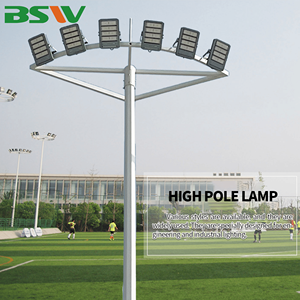
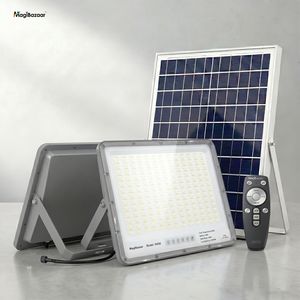
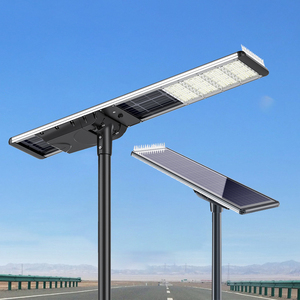
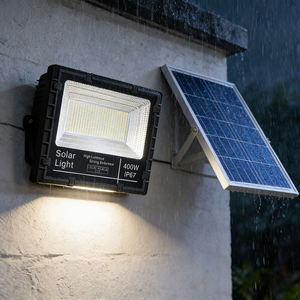
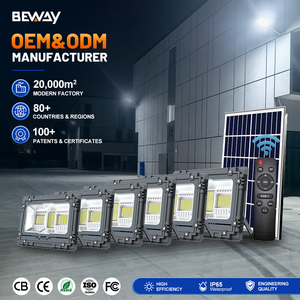
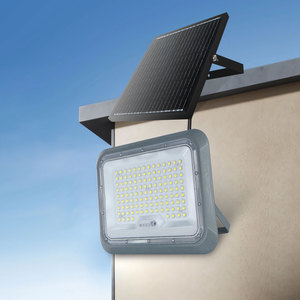
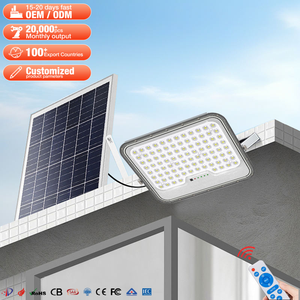
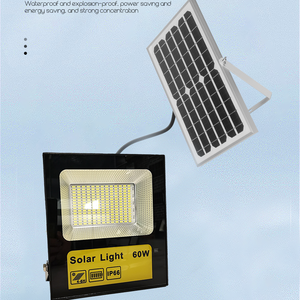
Engineered for high-lumen industrial facilities, stadiums, municipal roadways, and perimeter security.
A comprehensive analysis of wind load math, thermodynamic battery resilience, and optical delivery for EPC procurement managers.
When engineering municipal and industrial off-grid illumination, specifying a commercial solar lighting pole requires an integrated system design rather than simply combining individual off-the-shelf components. The dynamic interaction between environmental wind drag (EPA), solar energy capture, thermal degradation of battery chemistries, and luminous optical distribution dictates system longevity and total cost of ownership (TCO).
Information Gain Insight: The primary failure point of commercial solar lighting projects is not LED diode decay, but miscalculated Effective Projected Area (EPA) wind loading combined with undersized LiFePO4 battery management systems (BMS) during sustained low-irradiance winter cycles.
Commercial solar poles act as structural cantilevers under heavy wind loads. Unlike standard utility poles, solar lighting poles carry top-heavy photovoltaic arrays and enclosed battery compartments. Structural poles must be designed using high-yield structural steel (Q235B or Q345B grade) compliant with American Association of State Highway and Transportation Officials (AASHTO) standards for structural supports.
Anchor bolts, base plate thickness, and wall taper ratios must withstand localized wind gusts exceeding 115 to 160 MPH. Hot-dip galvanization conforming to ASTM A123 / ISO 1461 provides an impermeable zinc-iron alloy coating (minimum 85 µm thickness) preventing internal and external oxidation for over 25 years in marine (C5-M) corrosive environments.
Modern commercial installations utilize Monocrystalline PERC (Passivated Emitter and Rear Cell) or N-type TOPCon solar panel cells achieving conversion efficiencies greater than 22.5% to 24%. To optimize energy harvest under overcast weather, integrated maximum power point tracking (MPPT) charge controllers operate with a tracking efficiency of 99.5%.
Adaptive dimming profile algorithms dynamically adjust luminaire output according to real-time state of charge (SoC) metrics, guaranteeing continuous illumination across 7 to 10 consecutive rainy or overcast days without deep-discharging the energy storage cells.
| System Parameter | Standard Commercial Grade | Municipal / Industrial Premium Grade (SOLTECH Spec) |
|---|---|---|
| Luminous Efficacy | 130 - 150 Lm/W | up to 200 Lm/W (Lumileds 5050 LEDs) |
| Battery Chemistry | Ternary Lithium (NMC) / AGM Gel | Grade-A LiFePO4 (Lithium Iron Phosphate, 4000+ Cycles) |
| Pole Material & Protection | Powder-coated Q235 Steel | Q345 Hot-Dip Galvanized + C5-M Anti-Corrosion Finish |
| Operating Temperature | -10°C to 50°C | -20°C to 65°C (Cold-weather low-temp charging protection) |
| Charge Controller | Standard PWM Controller | Smart MPPT with Dual-Band IoT/LoRaWAN Monitoring |
| Autonomy Performance | 2-3 Days Back-up | 7-10 Days Autonomy (Adaptive Night-Time Dimming) |
Combining 20+ years of vertical manufacturing integration with rigorous international quality standards.
Unlike third-party brand assemblers, our engineering operations control the complete value chain — from raw aluminum alloy die-casting, automated SMT circuit placement, to proprietary MPPT firmware programming and robotic testing.
Custom optical lenses delivering Type II, Type III, and Type V photometric distribution patterns optimized for zero light pollution (Dark Sky Compliant).
Integrated intelligent Battery Management Systems (BMS) with thermal protection circuit breaker switches, ensuring 10+ year operational lifespan.
UL Listed, DLC Qualified, CE Certified, and Buy America Act (BAA) compliant models engineered for public municipal procurement contracts.
Key technological shifts reshaping municipal specification standards and enterprise sustainability strategies over the next decade.
Next-generation commercial solar poles feature integrated Zhaga/NEMA standard sockets supporting LoRaWAN, NB-IoT, and cellular mesh communication. Facility operators monitor battery health, solar input, ambient temperature, and luminaire diagnostics in real-time from a centralized cloud dashboard.
For critical infrastructure where zero outage is mandatory, commercial solar lighting poles are incorporating automatic hybrid grid-toggling modules. Systems rely 95% on solar power, switching seamlessly to utility AC grid backup only during extreme multi-week weather anomalies.
Traditional flat panel mounts are increasingly supplemented by flexible, 360-degree cylindrical vertical solar modules wrapped around the upper pole shaft. Vertical PV pole designs reduce wind resistance (EPA), eliminate snow accumulation, and prevent bird droppings from obstructing solar absorption.
Answers to common structural, electrical, and commercial questions raised by municipal engineers and purchasing officers.
Pole height and fixture wattage are determined using Photometric DIALux or AGi32 simulations based on target foot-candle (FC) or Lux levels required by IESNA standards. For example, commercial parking lots typically require 20ft to 30ft poles with 10,000–16,000 lumen output fixtures spaced 60ft–80ft apart to achieve uniform light distribution with zero dark spots.
EPA is the calculated surface area of the solar panel, bracket, and luminaire multiplied by their aerodynamic drag coefficients. EPA determines the bending moment forces exerted on the pole shaft and concrete foundation anchor bolts during high wind events. Specifying a pole without proper EPA matching can result in catastrophic structural failure.
Lithium Iron Phosphate (LiFePO4) offers 4 to 5 times the cycle life (4,000+ cycles at 80% Depth of Discharge) compared to AGM/Gel batteries (800–1,000 cycles). Furthermore, LiFePO4 features superior thermal stability, higher energy density, faster charge acceptance, and contains non-toxic materials, significantly reducing 10-year replacement labor costs.
Commercial-grade systems utilize specialized low-temperature lithium cells equipped with internal heating elements or intelligent BMS charge throttling. Furthermore, solar panels are installed at optimized tilt angles (e.g., latitude + 15 degrees) allowing snow to naturally shed off the smooth glass surface while maximizing low-angle winter sunlight capture.
For coastal or high-salinity marine environments, poles must undergo hot-dip galvanization followed by an architectural-grade fluorocarbon or epoxy powder coating (C5-M rating). Stainless steel 316 hardware and sealed IP67 silicone gaskets must be specified across all luminaire junction points to prevent galvanic corrosion.
Yes. As an OEM/ODM manufacturer, custom commercial solar lighting poles can be fabricated with single, double, or quad arm brackets, integrated security camera mounts, decorative post-top bases, and custom RAL color powder coatings to align with municipal urban design guidelines.