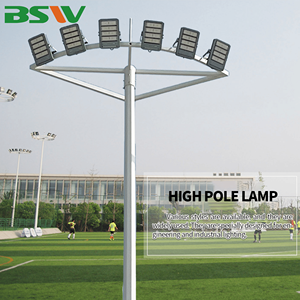

Architectural, industrial, and municipal-grade high-lumen solar luminaires engineered for extreme weather resistance, zero-grid dependency, and rapid ROI.
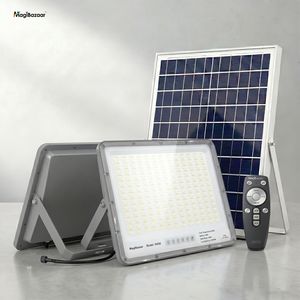
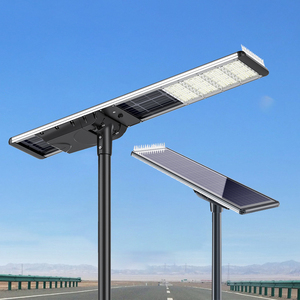
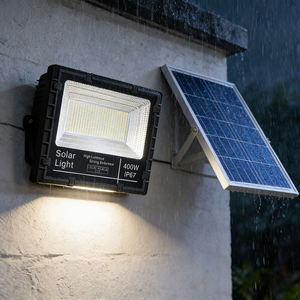
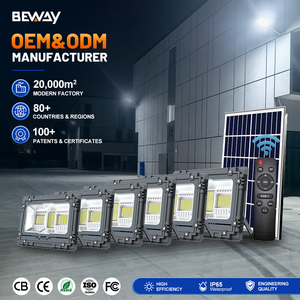
Backed by over two decades of technical advancement, vertical integration, and compliance with rigorous global municipal standards.
Unlike light-assembly vendors, our 5 proprietary production facilities control every engineering detail—from precision die-casting aluminum housing to patented MPPT micro-controllers and high-efficiency optical lens moulding.
Fully compliant with DLC, UL Listed, CE, and RoHS standards. Designed specifically to satisfy BAA (Buy American Act) options and Turtle-Friendly non-disruptive amber wavelength requirements for coastal infrastructure projects.
Equipped with automotive-grade LiFePO4 (Lithium Iron Phosphate) battery chemistry capable of 4,000+ deep discharge cycles and active heat sinks maintaining junction temperatures under extreme thermal conditions.
A strategic analysis for municipal buyers, EPC contractors, and B2B distributors navigating the transition to smart off-grid energy infrastructure.
The historical limitation of commercial solar landscape and outdoor flood lighting was restricted light yield per watt. Modern commercial procurement mandates a minimum system efficacy of 180 to 200 Lm/W. By coupling top-tier Lumileds LED chips with ultra-clear tempered glass and proprietary TIR (Total Internal Reflection) optical lenses, commercial buyers are specifying lower battery capacities while delivering double the lux output across expansive parking lots, sports complexes, and factory grounds.
Key Procurement Metric: Always verify fixture efficacy at the luminaire level (real delivered lumens), rather than raw LED diode specs, to prevent misleading photometric design outputs in tender proposals.
Standalone off-grid lighting is rapidly evolving into connected micro-grids. Enterprise projects executed between 2025 and 2030 overwhelmingly mandate smart Zigbee, LoRaWAN, or cellular NBIoT communication modules built directly into the solar micro-controller. This technology enables facility management teams to monitor battery health, optimize light profiles dynamically based on foot traffic, and automate diagnostic alerts in real-time, reducing operational field maintenance costs by up to 75%.
Legacy Gel, AGM, and ternary lithium batteries have been almost entirely phased out of commercial procurement guidelines due to thermal runaway risks and limited cycle life. Current commercial standards specify LiFePO4 (Lithium Iron Phosphate) power cells integrated with intelligent Battery Management Systems (BMS). Capable of enduring deep discharges (>80% DOD) and providing minimum 7-day continuous autonomy under severe rain, snow, or overcast conditions, LiFePO4 represents the global benchmark for institutional energy storage.
Unpacking the engineering innovations redefining modern industrial, sports high-mast, and perimeter solar lighting.
Commercial luminaires now employ high-purity monocrystalline PERC panels featuring cell efficiency exceeding 23.5%. Integrated all-in-one and split systems increasingly adopt vertical cylindrical or dual-sided panels to harvest ground-reflected albedo light, ensuring continuous charging even during heavy winter snowfall.
Traditional PWM controllers suffer from high power conversion losses. Modern commercial floodlights utilize Maximum Power Point Tracking (MPPT) micro-controllers yielding charging efficiency up to 98%. Intelligent algorithms adjust charging current dynamically based on solar irradiance spikes and temperature fluctuations.
Glare reduction and light trespass prevention are critical for municipal tenders. Cutting-edge optical engineering incorporates Type II, Type III, and Type IV asymmetric lens distributions. This concentrates foot-candles exactly onto roadways, sports courts, or walkways without spill light violating local dark-sky municipal codes.
Industrial commercial deployment demands rugged protection. Structural designs utilize heavy-duty ADC12 die-cast aluminum alloys treated with anti-corrosion powder coatings, achieving IP67 immersion-proof sealing and IK10 mechanical impact resistance against hurricane-force winds, hail, and extreme ambient heat.
To reduce total cost of ownership (TCO) for facility administrators, modern commercial luminaires utilize modular quick-connect wiring harnesses and slide-out battery trays, permitting single-technician servicing without taking down the entire lighting pole infrastructure.
Environmental legislation increasingly mandates wildlife-friendly illumination. Advanced fixtures offer switchable Color Corrected Temperature (CCT 3000K to 6000K) or full cutoff shielding, preventing light disruption to migratory fauna while preserving nighttime security optics.
Expert guidance addressing critical technical specs, compliance standards, and installation evaluations for B2B buyers.
Commercial solar lighting completely eliminates underground trenching, electrical conduit installation, wiring labor, and utility connection fees, which routinely cost between $40 to $120 per linear foot. Furthermore, solar systems eliminate ongoing monthly electrical utility costs and provide uninterrupted illumination during grid power outages or severe storm emergencies.
Battery autonomy refers to the number of consecutive days a fixture can operate at full lighting profiles without solar recharge. For commercial and municipal RFPs, a minimum of 5 to 7 nights of continuous autonomy is recommended. This is calculated by factoring peak load power draw (watts), nightly operational hours, BMS dimming profile settings, and historical winter solar peak sun hours (PSH) for the specific geographic location.
Quality automotive-grade LiFePO4 cells engineered with thermal insulation and solid-state BMS controllers deliver 3,500 to 5,000 charge/discharge cycles at 80% Depth of Discharge (DOD). Under standard commercial operating conditions (-20°C to +65°C), this translates to a service lifespan of 8 to 12 years before requiring simple module replacement.
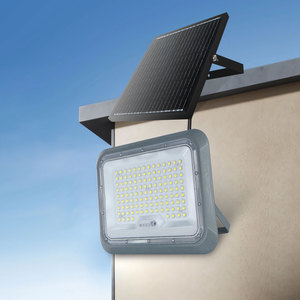
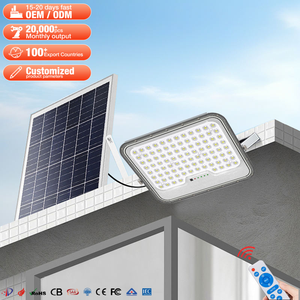
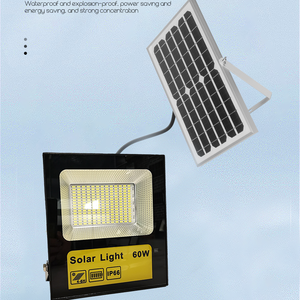
All-in-One systems integrate the solar panel, LED light engine, LiFePO4 battery, and MPPT controller into a single streamlined luminaire—ideal for rapid installation on parking lots, pathways, and perimeter roads. Split systems utilize separate solar panels mounted higher or angled independently from the light fixture, making them optimal for extreme high-wattage applications such as sports stadiums, high-mast intersections, or locations with heavy overhead tree shade requiring remote solar panel placement.
In solar lighting, wattage indicates energy consumption from the battery rather than delivered illumination. A high-efficiency 200 Lm/W luminaire drawing 50W generates 10,000 total lumens, matching the light output of an inefficient 100 Lm/W fixture drawing 100W. Higher efficacy allows buyers to utilize smaller solar panels and lower-capacity batteries, drastically lowering hardware procurement costs while extending night-time operation resilience.
Yes. Authoritative manufacturers supply certified IES (Illuminating Engineering Society) photometric files for all luminaire series. Engineering teams utilize these files in software like AGi32 or Dialux to generate accurate foot-candle mapping, uniformity ratios, and pole-spacing calculations tailored to your exact project blueprint.
Tier-1 commercial manufacturers provide full comprehensive warranties ranging from 5 to 10 years covering the structural aluminum housing, solar panel performance (guaranteeing 80%+ output at 25 years), LED light engine, and MPPT controller, with dedicated replacement parts support.
Integrated Microwave Radar sensors detect motion within a 360-degree radius up to 15 meters away. Controllers can be programmed to run at a continuous 30% baseline security brightness during low-activity midnight hours, instantly ramping to 100% full lumen output upon motion detection. This intelligent power management conserves up to 60% of stored battery energy per night.
Planning a municipal roadway, commercial parking lot, sports facility, or factory lighting upgrade? Connect directly with our senior application engineers for custom IES simulations and volume OEM quotation.
Contact Us