Global B2B Solar Illumination Whitepaper

Top Trusted Bulk Order Solar Street Lights Suppliers & Exporter

Municipal-Grade Off-Grid Illumination | Up to 200 Lm/W Optical Efficacy | Fully Integrated OEM/ODM Manufacturing Infrastructure

Industrial Catalog

High-Output Commercial Solar Street & Flood Lights

Engineered for highways, stadiums, industrial complexes, and municipal roadways. Select your specification profile to initiate direct factory procurement.

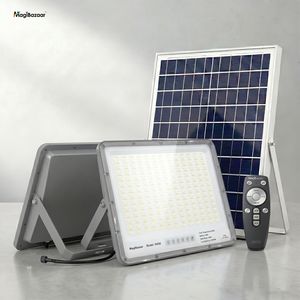
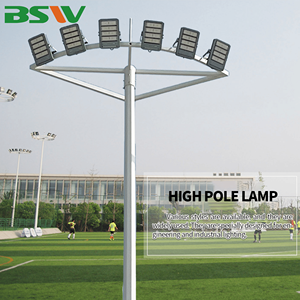
Stadium Mast 2025 400W 600W 800W 1000W Solar LED Flood Light Stadium High Mast Lighting

2025 400W-1000W Solar LED Flood Light High Mast Stadium Lighting

    400W–1000W Output LiFePO4 Power pack High Mast Bracket
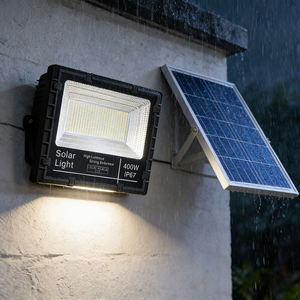
Warehouse IP67 Outdoor Solar 200W IP67 Waterproof LED Floodlight 6000K Daylight 5-Year Warranty

Outdoor Solar 200W IP67 Waterproof LED Floodlight (6000K Daylight, 5-Yr Warranty)

    IP67 Waterproof 6000K Temp 5-Year Warranty
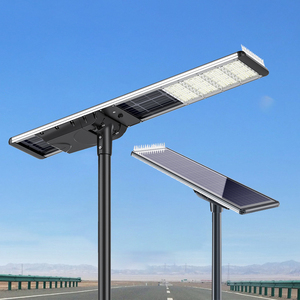
All-In-One LECUSO Outdoor 30w to 150w Integrated Industrial All In One Solar Led Street Light

LECUSO Integrated Industrial All-In-One Solar LED Street Light (30W–150W)

    30W–150W Range All-In-One Design Die-Cast Aluminum
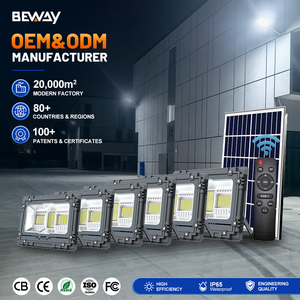
Factory Industrial Commercial Solar Flood Light 1000W Outdoor IP65 Aluminum Waterproof LED

Commercial Solar Flood Light 1000W Outdoor IP65 Aluminum Fixture with Mounting Bracket

    1000W Ultra Output Heavy-duty Bracket IP65 Sealed
Thickened Glass Modern Industrial Outdoor Lighting Fixture 60 to 800 Watt Thickened Glass Solar Flood Light

Modern Industrial Outdoor Fixture 60W–800W Tempered Glass Solar Light

    60W–800W Scalable IK10 Impact Glass Anti-Corrosion
High Output KCD Industrial High Output Stadium Outdoor 100w to 1000w Automatic Solar Flood Light

KCD Industrial High-Output Stadium Construction 100W–1000W Solar Light

    100W–1000W Range Automatic Sensor Const. Site Grade
LiFePO4 Core ZY Industrial Stadium Outdoor Solar Powered LED Flood Light IP67 Road 100W-400W

ZY Industrial Stadium Outdoor Solar LED Flood Light IP67 (100W–400W LiFePO4)

    100W–400W Models Deep Cycle Battery Type III Lens
Smart Reflector Solar Industrial Smart Waterproof Ip65 Outdoor Solar Led Garden Flood Light PC Housing

Solar Industrial Smart Waterproof IP65 Outdoor LED Floodlight & Optical Reflector

    Smart MPPT Control Reflector Array UV PC Housing
200+
Lm/W Optical Efficacy
20+
Years Mfg Experience
5
Proprietary Production Hubs
500+
Global Municipal Projects
7 Nights
Autonomy Reserve
Factory Advantage

Why Global EPCs & Municipalities Rely on Our Supply Chain

Unlike third-party traders, our fully vertically integrated manufacturing ecosystem guarantees complete quality control from raw A360 aluminum alloy die-casting to proprietary intelligent MPPT algorithm design.

200 Lm/W Ultra-Efficacy Photovoltaics

Utilizing high-bin Lumileds and Cree LED arrays combined with custom optical lens distributions (Type II, Type III, Type IV), our luminaires deliver maximum ground lux while lowering required solar PV wattage and battery pack capacity by up to 35%.

5 Dedicated Specialized Factories

Our 5 internal manufacturing facilities cover automated die-casting, CNC precision machining, SMT circuit board surface mounting, battery BMS encapsulation, and environmental testing chamber verification under strict ISO 9001:2015 supervision.

LiFePO4 & Smart MPPT BMS Engineering

Equipped with automotive-grade Grade-A Lithium Iron Phosphate cells offering >4,000 cycles at 80% DoD. Our patent-pending MPPT controllers achieve 99.5% tracking efficiency, delivering up to 7 consecutive rainy/cloudy days of uninterrupted autonomy.

BAA Compliant & Global Certifications

Meeting international engineering standards with DLC, UL Listed, CE, RoHS, and IP67 certifications. We offer fully BAA (Buy American Act) compliant solar lighting configurations optimized for government infrastructure bids and federal projects.

Extreme Environment Thermal Design

Engineered for harsh operating climates. From sub-zero arctic cold projects (-40°C) with internal thermal heating elements to high-humidity equatorial coastal corridors (+65°C), our marine-grade anti-corrosion powder coatings ensure zero breakdown.

OEM/ODM Custom Photometric Tailoring

We provide full IES file engineering, Dialux simulation reports, customized mounting bracket fabrication, and specific optical CCT tuning (3000K to 6500K, including turtle-friendly 590nm amber light solutions) for large-scale contract orders.


Trusted Supply Partner Network & Global Wholesale Distributors
WESCO International Authorized Supplier Border States Electric Supply Partner Platt Electric Supply Echo Electric Supply WinSupply Electric Lonestar Electric Supply
DLC Premium Certification
CE Standard Mark
UL Listed Safety Mark
Illuminating Engineering Society Member
Technical Evaluation Matrix

Engineering Benchmarks: Municipal Solar Lighting vs. Conventional Grid

A comprehensive technical comparison highlighting the financial, operational, and structural advantages of off-grid smart solar LED lighting infrastructure for commercial B2B procurement.

Performance Parameter Proprietary Integrated Solar Lighting Standard Commercial Solar Lights Traditional AC Grid Lighting Systems
Luminous Efficacy Up to 200 Lm/W (Lumileds/Cree Array) 130 – 150 Lm/W 90 – 110 Lm/W (HID / High Pressure Sodium)
Photovoltaic Cell Tech Grade-A Monocrystalline / N-Type TOPCon (>24.5% Efficiency) Standard Polycrystalline (17–19% Efficiency) N/A (Consumes Fossil Utility Power)
Energy Storage Chemistry Automotive LiFePO4 (>4,000 Cycles @ 80% DoD) Standard Lithium Ternary / Lead-Acid (<1,500 Cycles) N/A (Requires Grid Transformer Substation)
Charge Controller Algorithm Adaptive Smart AI-MPPT (99.5% Efficiency, Dynamic Dimming) Basic PWM Controller (70-80% Efficiency) N/A (Manual Mechanical Timer Relay)
Trenching & Cabling Cost $0 Total Cost (Zero Earthworks) $0 Total Cost $45 – $120 per linear foot (Civil Trenching)
Autonomy Reserve 5 to 7 Continuous Rainy Days (Smart Battery Save) 1 to 2 Rainy Days Maximum Zero (Blackout Vulnerable Grid Dependent)
Operational Lifespan 10+ Years System / 25 Years PV Module 3 to 5 Years System 2 to 4 Years (High Bulb Failure Rate)
Carbon Operational Footprint Net-Zero Direct Operational Carbon Net-Zero Direct Operational Carbon High Carbon Intensity (Utility Dependent)
Industry Roadmap

Future Sourcing & Technology Trends in Solar Street Lighting

As the global commercial illumination sector transitions toward total decarbonization, municipal buyers and wholesale distributors must align procurement strategies with next-generation technological advances.

01

Transition to N-Type TOPCon & Perovskite Tandem Solar Modules

Traditional polycrystalline and standard P-type PERC solar panels are rapidly giving way to N-Type TOPCon (Tunnel Oxide Passivated Contact) and emerging Perovskite-Silicon tandem PV cells. For bulk solar street light buyers, this shift provides a 15% to 22% increase in surface power density. High-efficiency modules allow street lights to generate sufficient daily charging current even under reduced pole surface footprints and low solar irradiance conditions in high-latitude northern regions during winter months.

02

AIoT MPPT Charge Controllers with Cellular & LoRaWAN Telemetry

Modern municipal solar street lighting projects demand real-time asset monitoring rather than passive standalone operation. Intelligent charge controllers equipped with Bluetooth Mesh, LoRaWAN, or NB-IoT connectivity enable municipal operators to dynamically adjust lighting schedules, track individual battery health metrics, receive automated maintenance alerts, and implement remote firmware updates. Adaptive AI algorithms automatically modify brightness based on historical local weather forecasts, guaranteeing continuous zero-downtime operation.

03

LiFePO4 Solid-State Batteries & Integrated Thermal Management

Energy storage remains the critical heart of off-grid solar street lights. The B2B market has standardized on Lithium Iron Phosphate (LiFePO4) chemistry due to its non-combustible thermal stability and extensive deep-cycle life. Future developments focus on semi-solid and solid-state electrolyte battery architectures integrated with micro-phase change heat sink materials. This engineering evolution enables battery packs to maintain optimal charge acceptance across extreme temperature spans from -40°C up to +65°C without thermal degradation.

04

Optical Cutoff Precision & Wildlife (Dark-Sky) Conservation Standardisation

Global regulatory frameworks increasingly require zero-upward-light pollution (U0 rating) and strict compliance with International Dark-Sky Association (IDA) guidelines. Bulk exporters must furnish specialized optical lens patterns—such as asymmetric Type II-M and Type III-M light distributions—that direct 100% of generated lumens strictly onto asphalt target zones while preventing light trespass into neighboring residential or natural habitats. Additionally, turtle-friendly 590nm amber wavelength illumination is becoming mandatory for coastal roadway infrastructure.

Procurement Execution

End-to-End Bulk Order Sourcing & Export Process

From architectural photometric planning to international multi-container freight delivery, our standard operating procedure guarantees seamless risk-free execution for project contractors.

Phase 01

Dialux Photometric Engineering

Our illumination engineers evaluate site layout specifications, pole height, spacing, and target lux requirements (IESNA / EN13201 standards) to generate free custom Dialux lighting simulations and optimized luminaire selections.

Phase 02

OEM / ODM Sample Verification

Custom bracket geometry, specialized battery capacities, and specific optical color temperatures are configured and produced for golden sample physical testing and project owner sign-off within 7-10 working days.

Phase 03

Rigorous Factory QC Testing

Bulk production undergoes comprehensive testing protocols including 100% IP67 immersion verification, salt-spray corrosion chamber exposure, IK10 mechanical impact testing, thermal shock cycling, and 48-hour continuous aging burn-in.

Phase 04

Export Logistics & Compliance

Fixtures are securely packaged in heavy-duty export honeycomb cartons and palletized. Complete documentation including UN38.3 battery transport safety certification, MSDS, CE, RoHS, and Certificate of Origin (CO) are provided for swift customs clearance.

Buyer Knowledge Base

Bulk Sourcing & Engineering FAQ

Addressing the core technical, logistical, and commercial inquiries raised by wholesale distributors, municipal authorities, and EPC engineering procurement teams.

Q: What are the key technical criteria when evaluating bulk solar street light suppliers?
When sourcing bulk solar street lights, professional procurement teams must evaluate four critical engineering vectors: system optical efficacy (measured in Lm/W rather than total LED wattage), battery chemistry lifecycle (demanding automotive Grade-A LiFePO4 cells with >3,500 cycle life), MPPT charge controller efficiency (minimum 99% tracking accuracy), and physical enclosure IP/IK ratings. Furthermore, verifying that the manufacturer controls in-house die-casting and SMT production prevents long-term supply chain component mismatches.
Q: How does 200 Lm/W efficacy impact the Total Cost of Ownership (TCO) for municipal projects?
High optical efficacy directly translates to lower hardware capital expenditure. A 200 Lm/W fixture requires only 50W of power to generate 10,000 lumens of light output, whereas a standard 120 Lm/W fixture requires nearly 83W to deliver identical lux. Lowering required wattage reduces the physical dimension and weight of the solar panel and lithium battery pack by 35-40%, allowing for lighter pole design, reduced wind-load engineering requirements, lower ocean shipping costs, and reduced upfront bulk unit costs.
Q: What battery chemistry is recommended for high-volume commercial solar lighting deployments?
Lithium Iron Phosphate (LiFePO4) is the undisputed industry standard for commercial solar street lighting. Unlike ternary lithium (NMC) or traditional gel lead-acid, LiFePO4 features extreme thermal stability (preventing thermal runaway up to 60°C), zero memory effect, and an exceptional cycle life of 3,500 to 5,000 deep discharge cycles (80% DoD). This translates to a reliable 8-10 year field lifespan without battery replacement maintenance.
Q: How do off-grid solar street lights maintain continuous operation during consecutive overcast days?
System autonomy is managed by intelligent MPPT controllers using dynamic power modulation algorithms. During prolonged rainy or overcast periods when solar energy input is constrained, the smart BMS controller automatically detects battery state of charge (SoC) and seamlessly reduces light output during non-peak traffic hours (e.g., midnight to 4:00 AM) or utilizes microwave motion sensor dimming (100% illumination only upon vehicle/pedestrian detection). This smart power conservation preserves battery reserves for 5 to 7 consecutive night cycles.
Q: What is the difference between BAA compliant and standard commercial solar light fixtures?
BAA (Buy American Act) compliant fixtures meet specific US federal purchasing guidelines requiring substantial transformation and assembly within domestic US facilities or designated partner nations. These configurations are essential for state, municipal, and federally funded transport projects (such as FHWA and DOT installations). Standard commercial fixtures are produced entirely in overseas hub facilities for cost-optimized commercial applications such as private logistics parks and industrial yards.
Q: How can EPC contractors request photometrics (IES files) and Dialux lighting layouts?
Contractors can request customized Dialux photometrics directly through our live engineering inquiry panel. By providing basic project parameters—including pole height, roadway width, pole-to-pole distance, target lux level, and local solar insolation geographic data—our optical team will furnish complete 3D light rendering reports and IES files within 24 hours to support municipal bid submissions.
Q: What warranty coverage and after-sales support are provided for bulk export shipments?
All commercial-grade solar street light series come backed by a comprehensive 5-year full system warranty, covering the LED luminaire engine, solar PV module, lithium battery pack, and MPPT controller unit. In the event of a field component fault, replacement modules are dispatched via priority air freight along with dedicated technical support for municipal installation contractors.
Q: What are the lead times and container loading capacities for international bulk exports?
Standard OEM production lead time for full 20ft or 40ft High Cube container loads (FCL) is 15 to 22 calendar days following technical drawing approval. Standard integrated all-in-one street light packaging is optimized for high-density palletization, allowing approximately 450 to 800 complete sets per 40HQ container depending on fixture wattage and pole bracket specifications.

Accelerate Your Project with Direct Factory Pricing & Engineering Support

Partner with an established tier-1 solar street light supplier and exporter. Connect directly with our engineering team for factory-direct price sheets, custom OEM proposals, and complimentary Dialux photometric calculations.