
Engineered for extreme environmental durability, high luminous efficacy (up to 200 lm/W), and long-cycle off-grid continuous operation.
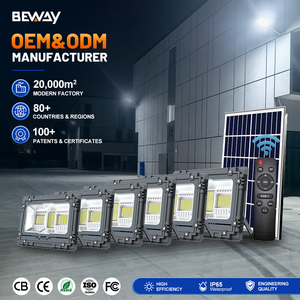
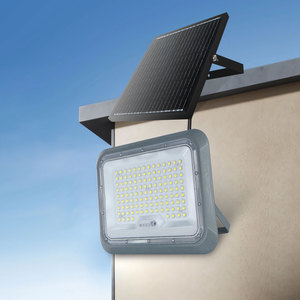
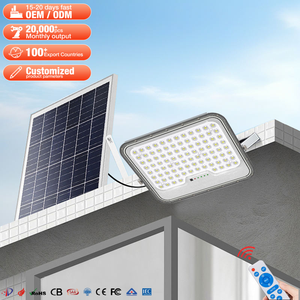
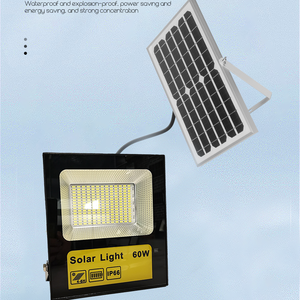
An authoritative analysis of China's tier-1 industrial supply chain, manufacturing standards, and photometric engineering for international B2B importers.
The global transition toward off-grid municipal, industrial, and commercial illumination has reshaped international procurement strategies. As governments, infrastructure developers, and industrial enterprises strive to meet zero-carbon mandates while minimizing capital expenditure (CapEx) associated with grid extension, civil trenching, and electrical cabling, high-output commercial solar lighting systems have moved from auxiliary solutions to primary infrastructure assets.
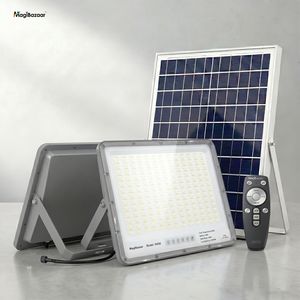
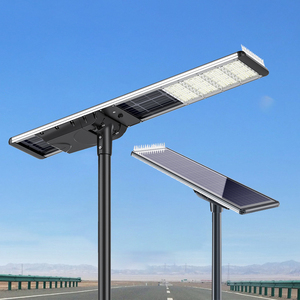
China stands at the epicenter of this technological shift, hosting over 85% of global photovoltaic (PV) component manufacturing and advanced LED optical integration capabilities. Sourcing directly from top-tier Chinese commercial solar light manufacturers allows global buyers to leverage advanced vertically integrated manufacturing—spanning high-pressure aluminum die-casting, surface-mount technology (SMT) LED assembly, automated battery pack assembly, and proprietary Maximum Power Point Tracking (MPPT) electronic firmware design.
Eliminating supply chain fragmentation by controlling internal housing casting, optical lens molding, BMS programming, and automated testing under unified ISO 9001:2015 frameworks.
Utilizing next-generation monocrystalline solar cells achieving 23.5%+ conversion efficiency, ensuring rapid energy capture even during overcast conditions and low radiation angles.
Equipped exclusively with new lithium iron phosphate cells featuring thermal stability up to 60°C and DoD cycling capability exceeding 5,000 cycles at 80% capacity retention.
Key technical vectors driving long-term reliability, intelligent lighting control, and enhanced total cost of ownership (TCO).
Procurement engineers and commercial buyers must evaluate hardware choices against upcoming technological shifts. The commercial solar lighting industry is currently undergoing a rapid transformation driven by three core pillars: ultra-high efficacy optics, adaptive smart controllers, and extreme climate thermal management.
| Technology Parameter | Legacy Commercial Solar Lights | Next-Gen (2026+) China Benchmark | B2B Sourcing Value Impact |
|---|---|---|---|
| Solar PV Module Efficiency | 17.5% - 19.0% Poly/Mono | 23.0% - 24.8% N-Type TOPCon | Smaller panel footprint; 22% higher winter output |
| LED Chips & Optics | 120 - 140 lm/W (SMD 2835) | 190 - 220 lm/W (Lumileds/Bridgelux 5050) | 50% less power consumption for identical lux levels |
| Battery Chemistry | Ternary NCM / Used LiFePO4 | EV-Grade Brand New LiFePO4 (BYD/EVE) | Extended lifespan from 3 years to 10+ years |
| Charge Controller | Standard PWM Controller (70% Eff.) | AI-Driven Dual-Stage MPPT (98.5% Eff.) | Faster full-charge cycling; operational during rainy periods |
| Thermal Management | Passive Plastic/Thin Sheet Metal | ADC12 Die-Cast Fin Airflow Dynamics | Prevents thermal lumen depreciation; extends LED life |
1. Adaptive Dimming & AI-Infused Energy Optimization: Modern commercial luminaires no longer run at fixed output profiles. Integrated microcontrollers continuously analyze battery State of Charge (SoC), historical solar absorption profiles, and real-time weather forecasts to dynamically modulate lumen output. By applying dynamic microwave radar sensing alongside multi-stage time-dimming schedules, commercial solar lights guarantee continuous illumination over 7 to 10 rainy days without total system shutdown.
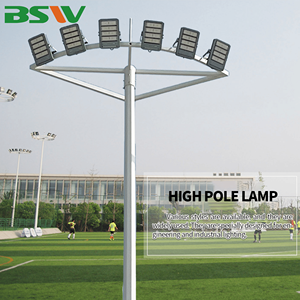
2. Advanced Optical Distributions & Glare Control: Standard symmetrical beam angles cause unwanted light spill and excessive glare in high-mast applications such as sports fields, industrial port terminals, and logistics parks. Top manufacturers implement customized asymmetric optical lenses (such as Type II-M, Type III-M, and 60°×150° Stadium Optics) to deliver high visual clarity, uniform foot-candle distribution, and zero light pollution compliant with Dark-Sky regulations.
Strict quality control protocols, advanced testing infrastructure, and OEM custom engineering capabilities.
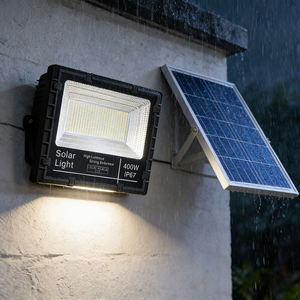
Every luminaire undergoes comprehensive IP67 water immersion testing, IEC wind resistance simulations up to 160 mph, high-impact IK10 mechanical drop tests, and ASTM B117 salt spray corrosion evaluation.
Full international compliance portfolio including CE, RoHS, UL Listed component options, DLC certification, UN38.3 lithium battery transport clearance, and ISO 9001 quality audits.
Tailored bracket designs, localized CCT binning, custom solar panel sizing, branded packaging, dynamic BMS software customization, and photometric DIALux planning for enterprise tenders.
A detailed 10-year financial breakdown comparing conventional high-mast grid luminaires against commercial off-grid solar systems for industrial parks and sports facilities.
When evaluating high-power outdoor lighting installations—such as football stadiums, industrial logistics facilities, mining sites, or municipal roadways—initial luminaire purchase cost accounts for less than 25% of overall project expenditure. Conventional AC grid lighting incurs massive secondary expenses including ground trenching, copper conduit wiring, step-down transformer installation, electrical panel upgrades, and rising utility tariffs over time.
| Cost Component (100 Pole Project) | Traditional AC Grid High-Mast LED | Wholesale Commercial Solar Flood Light | Direct Sourcing Savings |
|---|---|---|---|
| Luminaire & Pole Hardware CapEx | $45,000 | $62,000 | -$17,000 (Higher initial fixture cost) |
| Trenching, Cabling & Electrical Infrastructure | $85,000 | $0 (Zero Trenching Required) | +$85,000 Savings |
| Transformer & Grid Connection Permits | $18,000 | $0 (Off-Grid Standalone) | +$18,000 Savings |
| 10-Year Electricity Utility Expenses | $72,000 | $0 (100% Free Solar Energy) | +$72,000 Savings |
| Maintenance & Cable Degradation Repairs | $12,000 | $8,000 (Modular Battery Swap at Year 7) | +$4,000 Savings |
| Total 10-Year Ownership Expenditure | $232,000 | $70,000 | +$162,000 Net Profit / ROI (69.8% TCO Reduction) |
Critical engineering and trade answers to simplify supplier evaluation and container shipping for international distributors.
Connect directly with our engineering team for photometric project design, DIALux simulation files, minimum order quantities (MOQ), and container freight estimates.
Contact Us