
Explore municipal-grade cylindrical solar wrappers, CIGS flexible tubes, and bifacial vertical PV modules engineered by China's top tier-1 manufacturing facilities.
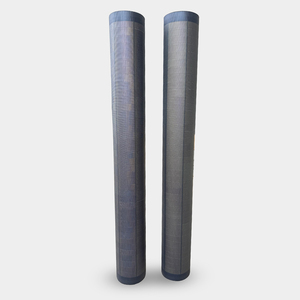
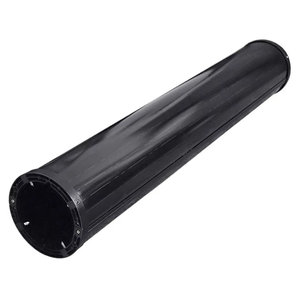
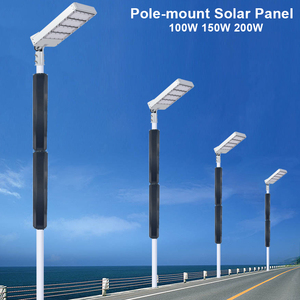
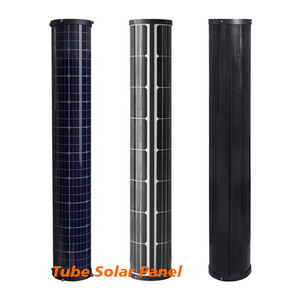
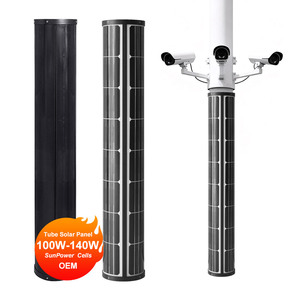
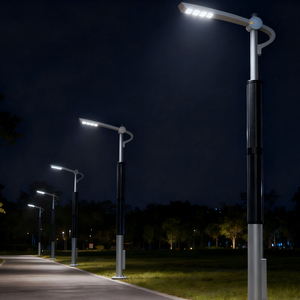
The global transition toward resilient off-grid infrastructure, smart cities, and aesthetic urban clean energy has accelerated the adoption of Vertical Pole Wrapped Solar PV Panels (often classified under Building Integrated Photovoltaics - BIPV and Building Attached Photovoltaics - BVPV). Traditional flat, angled solar panels mounted on top of lighting poles suffer from significant architectural limitations: high wind resistance (aerodynamic drag), aesthetic clutter, susceptibility to bird droppings (soiling losses), and snow accumulation.
Leading Chinese solar manufacturing hubs—spanning Jiangsu, Zhejiang, and Guangdong provinces—have pioneered the engineering of flexible thin-film Copper Indium Gallium Selenide (CIGS) and curved high-efficiency Monocrystalline Silicon modules designed to wrap 360 degrees around cylindrical, octagonal, or tapered lighting poles. This whitepaper analyzes the manufacturing benchmarks, structural engineering advantages, yield dynamics, and procurement strategies for B2B buyers, municipal project engineers, and EPC contractors seeking premier original equipment manufacturers (OEMs) and original design manufacturers (ODMs) in China.
Unlike traditional flat panels that require high structural tilt angles and heavy steel brackets, pole-wrapped PV modules wrap flush against the pole column. This reduces wind shear load by up to 85%, eliminating the need for reinforced concrete foundation footings while delivering consistent year-round power generation across all 360 degrees of ambient light radiation.
Cylindrical solar encapsulation requires solving complex optical, thermal, and electrical dynamics that do not exist in conventional planar solar modules. Premier Chinese manufacturers utilize proprietary bypass diode matrix wiring, ETFE high-transmittance polymer films, and specialized aluminum structural housings to ensure high durability and output stability.
Vertical curved panels capture direct beam radiation, diffuse skylight, and ground albedo throughout the entire day. Peak power production is flattened into a broader curve rather than a sharp noon spike, enhancing microgrid stability and battery charge performance.
By eliminating flat horizontal surface areas, vertical wrap modules lower the drag coefficient ($C_d$) from ~1.2 to less than 0.3. Systems can withstand Category 17 typhoons (wind speeds exceeding 60 m/s or 134 mph) without mechanical fatigue.
Mounted at a strict 90-degree vertical angle, rain naturally washes away particulate matter, airborne dust, and leaves. Soiling-induced power degradation is reduced from 15-25% annually down to less than 2% in arid urban or desert environments.
When sourcing vertical pole wrapped solar modules from Chinese factories, engineering buyers must evaluate two primary solar cell technologies: flexible CIGS (Copper Indium Gallium Selenide) and micro-shingled or ultra-thin flexible Monocrystalline Silicon (Mono-Si).
| Technical Parameter | Flexible Thin-Film CIGS (e.g. 95W FlexRoll) | Curved Monocrystalline Silicon (e.g. 100W-300W Tube) |
|---|---|---|
| Cell Conversion Efficiency | 16.5% - 17.8% | 21.5% - 23.2% |
| Minimum Bending Radius | R = 150mm (High flexibility, continuous wrap) | R = 250mm - 400mm (Requires semi-rigid curved casing) |
| Temperature Coefficient ($P_{max}$) | -0.31% / °C (Superior hot climate performance) | -0.38% / °C (Standard thermal drop) |
| Shading Tolerance & Diode Matrix | Exceptional (Individual cell stripe bypass diodes) | Moderate (Multi-busbar / Shingled layout required) |
| Encapsulation Polymer | High-Durability ETFE (Anti-reflective, self-cleaning) | ETFE or Tempered Curved Glass / UV-Polycarbonate |
| Mechanical Impact Rating | IK10 (Vandal resistant, soft impact flexible shell) | IK08 - IK09 (Rigid protective acrylic/glass frame) |
| Primary Application | Slim Smart Poles, 140mm-180mm Diameter Tubes | High-Power Street Lighting, 505W+ Large Scale BVPV |
The global market for smart pole infrastructure is projected to reach $15.8 Billion by 2030, driven by the rollout of 5G micro-base stations, IoT traffic monitoring sensors, EV charging kiosks, and municipal energy-saving mandates. Vertical pole-wrapped solar modules represent the core energy-harvesting engine for off-grid smart lighting networks. Key trends dominating B2B procurement include:
1. Smart Grid & MPPT Controller Integration: China's leading factories are no longer supplying isolated solar modules. OEM products now incorporate smart MPPT (Maximum Power Point Tracking) charge controllers natively built inside the aluminum sleeve frame. These controllers support IoT protocols including LoRaWAN, NB-IoT, and Zigbee for remote luminaire dimming, battery health monitoring, and power diagnostics.
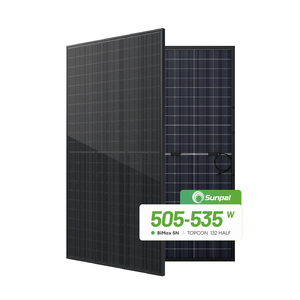
2. Bifacial Glass-on-Glass BVPV Structures: For highway sound barriers, commercial building facades, and high-wattage street lighting, manufacturers are shipping frameless double-glass bifacial modules (ranging from 505W to 535W). Mounted vertically, these panels capture direct sun on the front side and light reflected from road surfaces or concrete barriers on the rear, yielding up to 30% additional energy.
3. Universal Modular Snap-Fit Designs: Modern vertical wrap modules are engineered with modular aluminum alloy shell casings. This enables retrofitting existing street light poles without disassembling the pole light fixture or replacing structural foundations.
Evaluating a qualified Chinese manufacturing partner requires assessing vertical integration, automated lamination precision, quality control testing rigor, and compliance with international standards. Premier factories in China provide complete end-to-end production capabilities, including:
In-House Die-Casting & Extrusion: Top manufacturers operate internal aluminum extrusion foundries, producing anodized corrosion-resistant mounting frames capable of withstanding 1,000+ hours of salt-spray testing (ASTM B117 standards) for marine and coastal deployments.
Automated Laser Scribing & Cell Stringing: High-precision micro-laser scribing prevents micro-cracks when monocrystalline wafers or CIGS substrates are curved into cylindrical formats. This reduces thermal hotspot risks and ensures a 25-year linear power warranty performance (>80% power retention at Year 25).Comprehensive Testing Protocol: Tier-1 export factories conduct 100% triple EL (Electroluminescence) inspection pre- and post-lamination, damp heat testing ($85^\circ\text{C}$ / 85% RH for 1,000 hours), dynamic mechanical load testing, and UV degradation testing to guarantee zero field failures in extreme weather regions from Scandinavian cold zones to Middle Eastern deserts.
Partner directly with China's leading vertical pole-wrapped PV manufacturers. Access comprehensive photometric reports, DIALux simulation files, CAD mounting schematics, and competitive B2B wholesale pricing.
Get Catalog