
Direct from China's leading Tier-1 solar manufacturer. Built with high-efficacy Lumileds chips, ultra-durable LiFePO4 batteries, and industrial IP67 weatherproofing for severe environments.
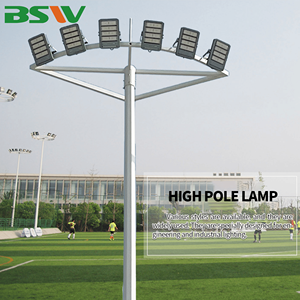
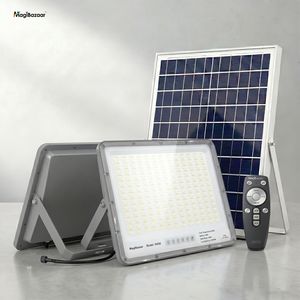
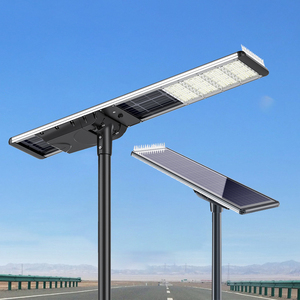
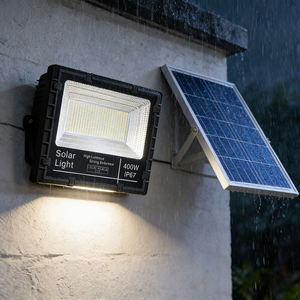
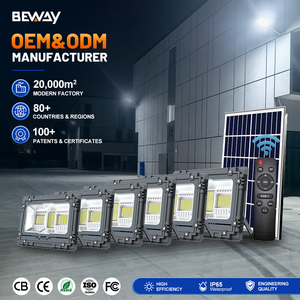
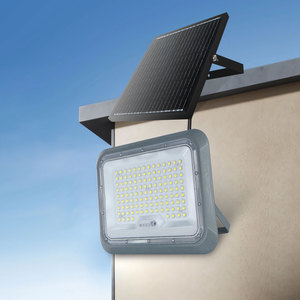
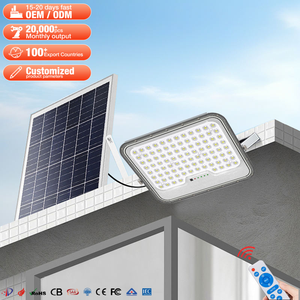
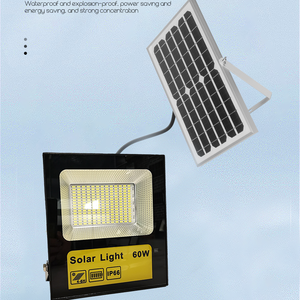
Eliminating third-party sub-assembly risks through 100% in-house production. From precision aluminum die-casting to intelligent MPPT driver programming, our 5 specialized factories deliver complete quality assurance.
Integrating top-tier Lumileds 5050/3030 LED arrays coupled with high-transmittance optical polycarbonate lenses, minimizing energy draw while maximizing lux output on road surfaces.
Complete vertical integration covering foundry die-casting, SMT circuit board mounting, Lithium battery pack assembly, custom MPPT controller design, and an accredited Photometric IES Testing Lab.
Full compliance with international standards: UL Listed, DLC Premium certified, CE mark, IP67 waterproof validation, IK10 impact ratings, and BAA (Buy American Act) compliant configurations.
Equipped with EV-grade Lithium Iron Phosphate cells featuring intelligent active BMS protection, operational across extreme ambient temperatures ranging from -20°C up to +65°C.
Self-learning MPPT algorithms dynamically calculate battery depth of discharge (DoD) against historical weather patterns to prevent total blackouts even during prolonged rain or snow spells.
Full engineering support including IES file simulation for DIALux photometric design, custom bracket fabrication, tailored logo branding, and compliant sea/air shipping logistics.
An unvarnished technical assessment of thermal dynamics, solar panel sizing ratios, structural load-bearing limits, and long-term total cost of ownership (TCO) for municipal highway lighting projects.
In a split-type configuration, the Photovoltaic (PV) solar panel, LED light engine, and high-capacity LiFePO4 battery enclosure are physically separated. This modular design removes mechanical physical limits on component dimensions.
All-in-One (AIO) solar lights combine the solar panel, battery pack, sensor, and LED fixture into a single compact housing. Ideal for pathways and minor roads, but limited by dimensional footprints.
Key innovations shaping global B2B procurement strategies, carbon neutrality metrics, smart city connectivity, and lifecycle cost reductions for municipal off-grid infrastructure.
Future-proof municipal tenders increasingly mandate standardized 7-pin NEMA or 4-pin Zhaga Book 18 receptacles. Split-type solar lights are shifting from standalone operation to smart IoT nodes using Cellular IoT (NB-IoT/LTE-M) or LoRaWAN mesh networks. Remote operators can monitor real-time battery State-of-Charge (SoC), receive instant failure alerts, and execute dynamic dimming schedules based on live traffic volume data.
To combat wind resistance and snow accumulation, procurement trends favor N-Type TOPCon bifacial solar panels and vertical cylindrical solar modules integrated directly onto light poles. Bifacial technology captures ambient ground albedo reflection, increasing energy harvest by 15%–25%, while vertical orientation eliminates dust collection and reduces pole wind load shear stresses in hurricane-prone zones.
While Lithium Iron Phosphate (LiFePO4) remains the dominant technology with 3,500+ charge cycles at 80% Depth of Discharge, extreme cold climate procurements (sub -30°C operational requirements) are driving adoption of Sodium-Ion (Na-Ion) hybrid energy storage. Integrated BMS electronics now feature active cell balancing, low-temperature self-heating elements, and overcharge/overdischarge protection to guarantee a 12-year physical operating lifespan.
Environmental regulations demanding dark-sky protection and turtle-friendly narrow spectral amber wavelengths are reshaping optic design. Modern split-type solar street lights incorporate precision cut-off micro-prism lenses that direct 100% of emitted lumens onto target asphalt surfaces without light trespass or skyglow, while ultra-efficient 220 Lm/W LED chips lower battery sizing requirements by up to 30%.
Addressing key technical, logistical, compliance, and warranty considerations for B2B buyers, distributors, and EPC project directors.
Request complimentary DIALux photometric design layouts, detailed bill-of-materials (BOM) quotations, and comprehensive solar autonomy calculations directly from our engineering export team.