Direct Commercial Product Selection
Explore China’s top OEM/ODM engineered solar perimeter luminaires, certified for commercial, industrial, municipal, and perimeter fence defense applications.
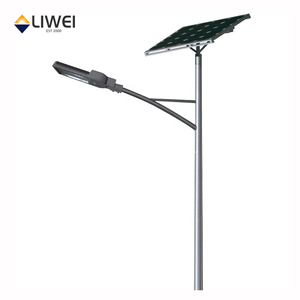
Solar High Powered 100W-400W Motion Sensor Waterproof IP65 Split LED Street & Security Light
100W - 400W
IP65 Waterproof
Split System
PIR Sensor
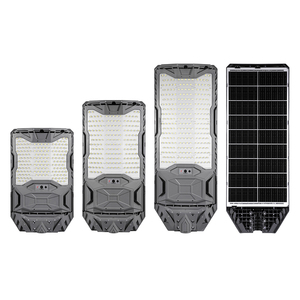
Wide Compatibility 400W-600W Wide Voltage Solar Street Light for Road & Perimeter Security Lighting
400W - 600W
Wide Voltage
High Optics
Heavy Duty
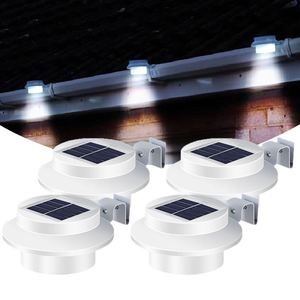
Garden Waterproof Outdoor Solar Powered Security Wall Lamp 3 LED Fence Gutter Luminaire
3 LED Matrix
Fence / Gutter
Auto On/Off
Compact IP65
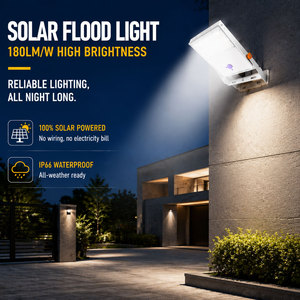
Energy Saving DLC Listed 20W 40W 60W Solar Flood Light Dusk to Dawn Pathway Perimeter Security Lamp IP66
DLC Listed
IP66 Heavy Weather
Dusk to Dawn
20W - 60W
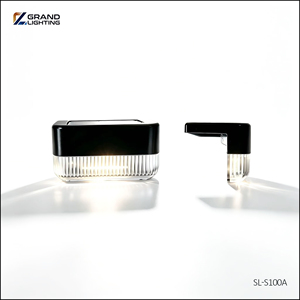
Solar Fence Lights Outdoor Waterproof IP65 LED Solar Lamp for Railing, Steps, Railing & Perimeter Fence
IP65 Waterproof
Step / Railing
Diffused Beam
Easy Mount
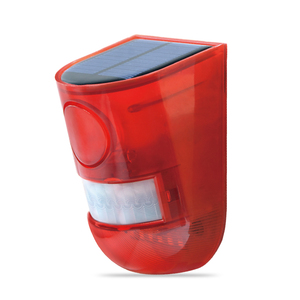
Integrated Solar Perimeter Alarm System & Motion Detector Security House & Facility Protection Luminaire
Active Alarm Siren
Motion Detector
Intrusion Strobe
IP65 Sealed
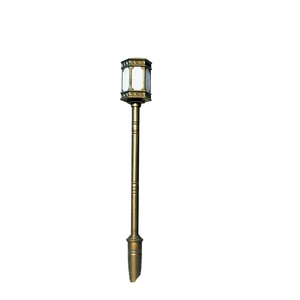
China Manufacture Energy Saving LED Solar Security Light for Pathway Fence Gate Lawn Garden IP65 220V
Hybrid Grid Backup
Pathway & Gate
Die-Cast Aluminum
IP65 Rating
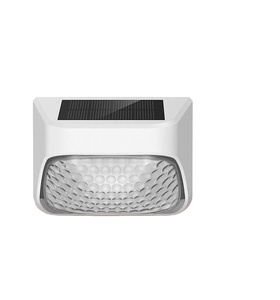
IP65 Waterproof Wireless Security Light LED Solar Outdoor Clip Motion Sensor Wall Light for Perimeter Deck & Wall
Clip-On Mounting
Wireless Solar
Multi-Angle PIR
IP65 Rated
5 Hubs
Proprietary Factories
7 Nights
Battery Autonomy
1. Executive Overview: Securing Commercial Perimeters via Off-Grid Solar Luminaire Engineering
Modern commercial and industrial facilities—ranging from logistics hubs, military reserves, energy utility substations, to expansive agricultural perimeters—face evolving security threats that demand continuous, uncompromised nighttime illumination. Traditional wired perimeter lighting infrastructure introduces extreme civil work overhead, including extensive trenching, conduit installation, transformer stepping, and vulnerability to centralized grid failures or targeted wire theft. As global infrastructure moves toward decentralized, zero-carbon resilience, **China solar powered perimeter security light factories** have established themselves as premier engineering hubs, producing off-grid lighting hardware that meets and exceeds municipal-grade photometric and reliability standards.
Transitioning from consumer-grade solar lamps to industrial perimeter security luminaires requires a deep understanding of core optoelectronic engineering. True commercial solar perimeter lights operate as autonomous power plants. They integrate high-efficiency mono-crystalline photovoltaic (PV) modules, high-capacity Lithium Iron Phosphate (LiFePO4) storage cells, intelligent Maximum Power Point Tracking (MPPT) charge controllers, specialized asymmetric optical lenses, and dynamic intrusion detection sensors into robust, weather-sealed housings.
Core Procurement Insight: Off-grid security illumination eliminates up to $45,000 per mile in electrical trenching and cabling costs while ensuring total perimeter visibility even during complete regional grid collapse or sabotage.
Technical Comparison: Off-Grid Solar Security vs. Legacy Wired Metal Halide/HPS Systems
| Engineering Parameter |
Legacy Wired Security Lighting (HPS / AC LED) |
Commercial Off-Grid Solar Perimeter Systems |
| Installation Trenching & Cabling |
Heavy civil labor ($30 - $75 per linear foot) |
Zero civil trenching; direct pole or fence mount |
| Grid Dependency & Failure Risk |
100% vulnerable to blackout, wire cut, & brownout |
100% Autonomous (7+ days rain/cloud battery reserve) |
| System Luminous Efficacy |
80 - 110 Lm/W (High thermal energy dissipation) |
Up to 200 Lm/W (Tier-1 Lumileds / Bridgelux LED Arrays) |
| Battery Thermal Management |
N/A (Grid Powered) |
Smart BMS with active thermal cutoff (-20°C to +65°C) |
| Operating Carbon Footprint |
High Scope-2 grid carbon emissions |
Zero direct operational emissions (Net-Zero Compliant) |
| Dimming & Intrusion Adaptation |
Basic timer dimming; high latency switch-on |
Adaptive MPPT with Dual 5.8GHz Microwave Radar & PIR |
2. Key B2B Sourcing Trends for Solar Perimeter Security Lighting (2026–2030)
The global procurement matrix for solar perimeter security hardware has evolved beyond basic wattage and unit price evaluations. Corporate buyers, EPC contractors, and government municipalities now prioritize comprehensive lifecycle reliability, supply chain transparency, and advanced system integration. China's top solar security light manufacturers are leading this shift through critical technological innovations:
1. N-Type TOPCon & Perovskite PV Integration
Leading factories are phasing out traditional P-type PERC solar cells in favor of N-type TOPCon monocrystalline panels, boosting solar cell conversion efficiency beyond 23.5%. This reduces the required panel surface area while maintaining high output in low-light and diffuse cloudy conditions.
2. Automotive-Grade Grade-A LiFePO4 Energy Cells
Industrial perimeter lighting sourcing now rejects recycled or low-tier lithium-ion pouch cells. Modern specs enforce Grade-A EV-grade Lithium Iron Phosphate (LiFePO4) prismatic cells offering 4,000+ deep charge cycles at 80% Depth of Discharge (DoD), ensuring 10-12 year operational battery lifespans.
3. Smart IoT Mesh Connectivity & Remote Control
Perimeter security lights are no longer isolated fixtures. Integrated Zigbee, LoRaWAN, or NB-IoT wireless modules allow perimeter lights to communicate across multi-kilometer fence lines, triggering simultaneous full-luminance security alert zones when a single sensor detects intrusion.
4. Asymmetric Type II / Type III Optical Beam Distribution
Sourcing guidelines strictly mandate precise optical control. Instead of wasteful circular light pools, specialized polycarbonate and PMMA optical lenses cast elongated batwing beam patterns along the fence boundary line, keeping light directed at boundary lines while mitigating light spill.
5. Dual AC/DC Hybrid Solar Architecture
For high-security critical infrastructure (airports, military bases, correctional facilities), hybrid grid-solar perimeter luminaires automatically operate on solar-battery power and fall back seamlessly to auxiliary AC power during extreme weather events lasting past battery autonomy thresholds.
6. Dark-Sky Compliance & Turtle-Friendly Spectrums
Environmental standards increasingly require full cutoff luminaires (0% uplight ratio) and selective color temperatures (2700K-3000K low CCT or narrow-band amber output) to eliminate light pollution and protect local wildlife without compromising security camera recognition clarity.
3. Engineering Expertise & Manufacturing Ecosystem in China
Partnering directly with premier Chinese solar lighting manufacturers grants access to a vertically integrated manufacturing ecosystem. From raw material die-casting to proprietary electronic circuit assembly, leading supplier hubs deliver end-to-end quality assurance:
- In-House High-Pressure Die-Casting: Factory hubs utilize ADC12 high-density aluminum alloys, precision-molded to withstand typhoon-force wind loads and harsh physical impacts (IK10 impact resistance rating).
- Automated SMT Electronic Assembly: Modern Surface Mount Technology (SMT) lines place high-efficacy LED packages (Lumileds, Cree, Bridgelux) directly onto metal-core PCBs (MCPCB) for optimal thermal dissipation and lumen maintenance (L70 > 100,000 hours).
- Proprietary MPPT & Smart Controller Design: Factory R&D teams engineer custom digital MPPT controllers achieving up to 98.5% tracking efficiency. Integrated thermal-throttling algorithms prevent battery overheating during extreme summer temperatures while ensuring active low-temperature charge cutoff below freezing.
- Rigorous Environmental Testing Chambers: Prior to shipment, commercial fixtures undergo IP66 immersion testing, salt spray corrosion testing (ASTM B117 standards for 1,000+ hours), thermal shock chamber cycling (-40°C to +85°C), and Type-C Goniophotometric testing for accurate IES files.
Supply Chain Tier Verification: Leading Chinese manufacturing partners hold complete ISO9001, ISO14001, and OHSAS18001 operational certifications, alongside product-level DLC, UL, CE, RoHS, and BAA (Buy American Act) compliant models for global distribution.
Authorized Global Distribution & Ecosystem Partners
Top China OEM/ODM solar luminaires are deployed globally in partnership with leading electrical supply networks:
4. B2B Procurement FAQ: Technical & Sourcing Engineering Standards
Essential engineering inquiries evaluated by commercial buyers, lighting designers, and security procurement officers when selecting China solar security light manufacturers.
Q1 How do commercial solar perimeter security lights maintain 100% uptime during 7+ consecutive rain or overcast days?
Commercial-grade off-grid security luminaires rely on a combination of oversized PV capacity, Grade-A LiFePO4 battery storage, and dynamic MPPT dimming profiles. Smart controllers monitor real-time battery state of charge (SoC). If consecutive overcast days lower voltage levels, the controller automatically scales background ambient lighting to 20-30% power, boosting to 100% full-rated output only upon active PIR or Radar motion detection. This adaptive power management maintains continuous security operation through extended winter storms or monsoon conditions.
Q2 What is the operational difference between PIR motion sensors and 5.8GHz Microwave Radar sensors in perimeter defense?
PIR (Passive Infrared) sensors detect moving thermal signatures (human or vehicular heat contrast against ambient background). They are highly reliable for localized wall/fence mounting and minimize false triggers from wind-blown foliage. 5.8GHz Microwave Radar sensors emit active high-frequency electromagnetic waves, offering wider 360-degree coverage, longer detection range (up to 15-20 meters), and the ability to detect motion through non-metallic enclosures. Industrial solar perimeter lights often combine both or utilize adjustable microwave sensitivity to eliminate false alarms caused by small animals.
Q3 How do I calculate the required battery capacity and solar wattage for specific regional Peak Sun Hours (PSH)?
System design uses the standard formula: Battery Ah = (Luminaire Daily Watt-Hours × Autonomy Days) / (System Voltage × Max DoD). For instance, a 50W solar luminaire operating 12 hours nightly with a 50% average dimming profile consumes 300 Watt-hours daily. To guarantee a 5-day autonomy reserve on a 12.8V LiFePO4 system at 80% Depth of Discharge (DoD), the battery requires: (300Wh × 5) / (12.8V × 0.8) = 146.5 Ah. The PV panel sizing must then recharge this daily consumption within the local region's lowest seasonal PSH (e.g., 3.0 PSH in winter): Panel Wattage = (300Wh / 3.0 PSH) / 0.85 Efficiency Factor ≈ 117W. Leading factories offer customized DIALux and PVsyst simulations to auto-calculate these values per project latitude.
Q4 Split vs. All-In-One (Integrated) Solar Lights: Which design is better suited for perimeter security fences?
**All-In-One (Integrated) solar lights** combine the panel, light engine, battery, and controller in a single housing. They excel in ease of installation, low wind resistance, and rapid deployment along perimeter fencing. **Split solar lights** separate the PV panel from the LED luminaire head via heavy-duty cabling. Split systems are superior for high-power security applications (100W-400W), long pole installations, or locations where the perimeter fence is shaded by structures or tree canopies, allowing the solar panel to be tilted and oriented independently for maximum solar yield.
Q5 What certifications are critical when importing China solar perimeter lights into US, European, and Australian markets?
For North America, prioritize **UL 1598** (luminaires) / **UL 2743** (portable power), **DLC (DesignLights Consortium)** listing for utility rebate eligibility, and **FCC Part 15** for electromagnetic compatibility. For Europe, enforce **CE (LVD/EMC)**, **RoHS**, and **EN 60598-2-3** (roadway/street lighting safety). For Australia, **RCM (SAA)** compliance is mandatory. Marine or coastal installations must also provide **ASTM B117 Salt Spray** test certificates and **IK10 mechanical impact** test reports.
Q6 How do high-quality factories protect LiFePO4 batteries from sub-zero freezing and high-heat degradation?
Charging lithium batteries below 0°C without protection causes lithium plating, leading to permanent capacity loss and short circuits. Top OEM manufacturers integrate a digital Battery Management System (BMS) equipped with NTC thermistors. When ambient temperatures drop below 0°C, the BMS halts PV charging while allowing discharge (lighting) down to -20°C. Advanced cold-weather models incorporate self-heating thermal jackets powered by incoming PV solar current to warm the cell compartment to safe charging levels before initiating charge cycles.
Q7 What is the typical warranty coverage and expected operational lifespan for commercial solar security fixtures?
Commercial-grade solar perimeter systems feature tiered component lifespans: Monocrystalline PV panels have a 25-year performance warranty (80% power retention); LED engines are rated for 100,000 hours (L70 standard, ~11-12 years); Grade-A LiFePO4 batteries deliver 3,000 to 5,000 cycles (5-8 years of daily service before capacity degrades to 70%). Reputable China OEM suppliers back complete systems with comprehensive 3-year to 5-year full replacement factory warranties.
Request Custom Photometric Designs & OEM Sourcing Quotations
Engineers, distributors, and procurement teams: Connect directly with China’s leading solar security lighting manufacturing specialists for factory-direct pricing, IES files, and project consultation.
Send an Inquiry