
Engineered for municipal crosswalks, industrial perimeter safety, high-mast intersections, and pedestrian zones requiring zero grid dependency.
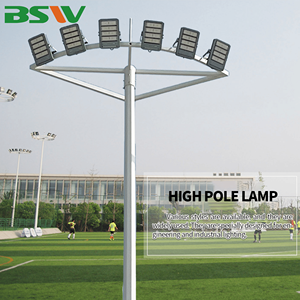
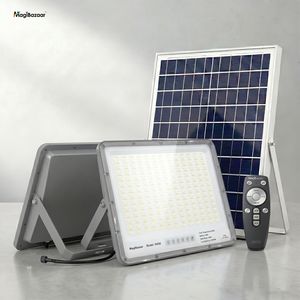
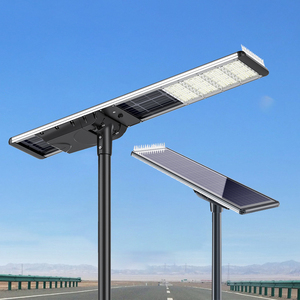
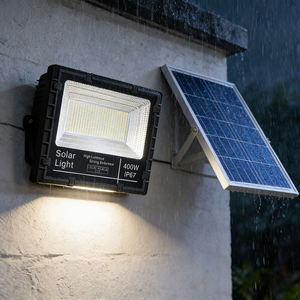
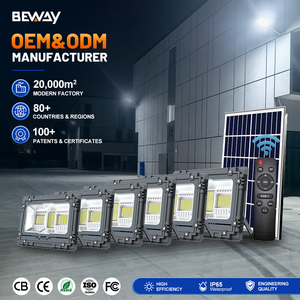
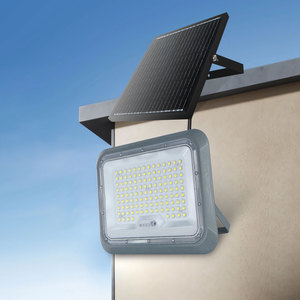
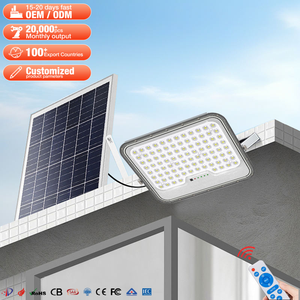
Pedestrian fatalities at unsignalized intersections remain a crucial public safety concern globally. Modern traffic engineering demands active, high-visibility illumination systems capable of alerting approaching drivers while providing high vertical illuminance across pedestrian zebra crossings. Solar powered crosswalk lighting systems have emerged as the definitive benchmark for municipal infrastructure upgrades due to their zero-grid reliance, rapid deployment capability, and immunity to localized power outages.
However, sourcing high-efficiency, reliable solar crosswalk lights from top China factories requires an in-depth understanding of specialized optical, electronic, and mechanical engineering requirements. Unlike standard solar street lights, crosswalk lighting fixtures must strictly abide by international standards such as the Federal Highway Administration (FHWA) crosswalk lighting guidelines and MUTCD (Manual on Uniform Traffic Control Devices) specifications.
Crosswalk luminaires utilize precision-molded optical lenses to direct light asymmetrical towards the crosswalk plane, ensuring 20+ lux vertical illuminance on pedestrians without creating blinding direct glare for oncoming motorists.
Leading Chinese OEM factories embed sub-1GHz RF transceivers into both sides of crosswalk warning poles, allowing instantaneous 2.4GHz/433MHz wireless synchronization of flashing warning beacons upon pedestrian detection.
Industrial grade Lithium Iron Phosphate (LiFePO4) chemistries paired with Maximum Power Point Tracking (MPPT) charge controllers guarantee >98% charging efficiency and over 4,000 deep charge-discharge cycles (-20°C to 65°C).
When auditing Chinese solar lighting manufacturers, verify that their photometric reports (IES file formats) demonstrate a Uniformity Ratio ($E_{max} / E_{min}$) of less than 3.0:1 across the pedestrian crossing zone. Standard off-the-shelf floodlights produce hotspot pooling and severe shadow transitions, which fail municipal safety audits.
A rigorous B2B procurement framework for vetting tier-1 Chinese manufacturers and avoiding sub-tier assembly workshops.
China’s solar lighting manufacturing landscape is concentrated in Guangdong (Jiangmen, Zhongshan, Shenzhen) and Zhejiang provinces. However, significant variations exist in component sourcing, manufacturing automation, and testing rigor. To secure long-term performance for municipal and industrial tenders, procurement directors must evaluate factories across five critical operational pillars:
| Audit Dimension | Tier-1 Integrated Factory Standard | Low-Cost Assembly Workshop Risk |
|---|---|---|
| Aluminum Die-Casting | In-house ADC12 high-pressure die-casting with automated powder coating (IP67/IK10). | Outsourced scrap aluminum shell, thin wall thickness prone to wind-load cracking. |
| PV Module Integration | Grade-A Monocrystalline Silicon cells (>23% efficiency) with toughened low-iron glass. | Grade-B/C recycled solar cells with rapid drop in efficiency (<17%) within 18 months. |
| Battery Energy Management | Brand-new LiFePO4 cells with smart BMS (overcharge, overdischarge, thermal cut-off). | Second-hand or disassembled 18650 lithium cells lacking cell-balancing circuitry. |
| Driver & Electronics SMT | In-house high-speed SMT surface placement lines with conformal moisture coating. | Manual hand-soldered PCB boards vulnerable to vibration, ambient humidity, and thermal shock. |
| Quality Control Testing | Integrating Sphere, IES Darkroom Photometer, Salt Spray (ISO 9227), IPX8 Immersion Tanks. | Basic visual check with basic multimeter voltage testing; no optical simulation data. |
Next-generation advancements reshaping smart city crosswalk procurement over the next decade.
Traditional passive infrared (PIR) sensors are rapidly being replaced by millimeter-wave radar and AI camera vision modules capable of predicting pedestrian trajectory, speed, and group count, adjusting LED intensity dynamically.
Wrap-around 360° vertical cylindrical solar panels integrated directly onto light poles prevent dust accumulation, bird droppings, and snow blockage while offering high wind resistance up to Category 15 typhoons.
Modern municipal buyers mandate crosswalk systems equipped with cellular NB-IoT or LoRaWAN nodes for cloud dashboard monitoring, battery health diagnostics, automated fault alerts, and remote CCT adjustment.
While the initial FOB unit purchase price of a high-spec solar crosswalk luminaire system is comparable to standard AC fixtures, the overall project CAPEX and OPEX demonstrate drastic cost savings:
| Cost Parameter (4-Lane Intersect) | Traditional Grid-Tied AC Crosswalk | Smart Off-Grid Solar LED System |
|---|---|---|
| Trenching & Asphalt Cutting | $8,000 – $15,000 (Requires road closure) | $0 (Zero pavement disruption) |
| Utility Grid Permitting & Cabling | $3,500 – $7,000 (Transformer connection) | $0 (Self-contained off-grid power) |
| Installation Time per Pole | 2 – 3 Days (Electrician crew required) | 2 – 3 Hours (Plug-and-play flange mount) |
| Annual Electricity Costs | $450 – $900 / year recurring | $0 / year (100% Free Solar Energy) |
| Blackout Vulnerability | High (Inoperative during grid failure) | Zero (100% Autonomous back-up) |
| Estimated Payback Period (ROI) | Baseline Standard | 3 to 6 Months |
Backed by over two decades of solar lighting innovation, 5 dedicated factories, and world-class quality control.

Up to 200 Lm/W light output powered by high-efficiency Lumileds LED chips and custom asymmetric optical lenses.

Full vertical integration — from raw aluminum die-casting to proprietary BMS circuit board manufacturing.

5 proprietary manufacturing plants eliminate middleman markups, ensuring top tier B2B competitive pricing.

Certified to DLC, UL Listed, CE, RoHS, ISO9001 standards with BAA compliant commercial options available.




Expert answers addressing civil procurement, engineering compliance, and factory manufacturing parameters.