
Engineered by top-tier Chinese manufacturing hubs featuring grade-A LiFePO4 battery integration, Smart MPPT controllers, and heavy-duty optical distribution.
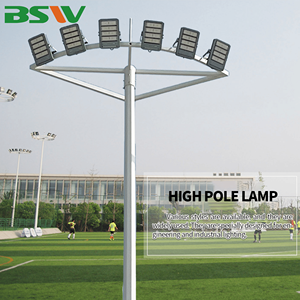
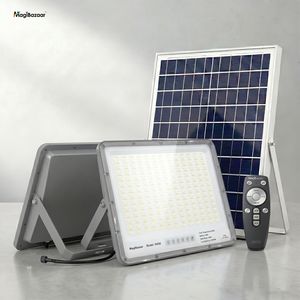
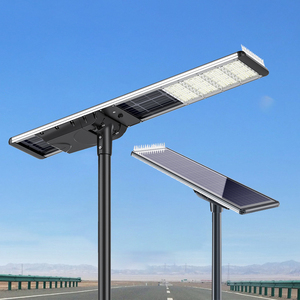
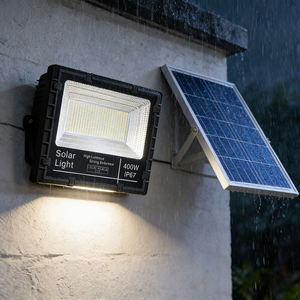
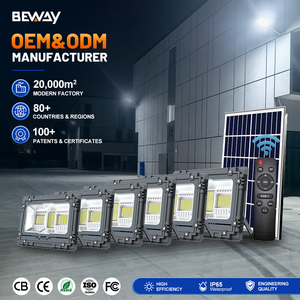
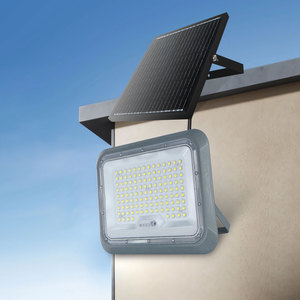
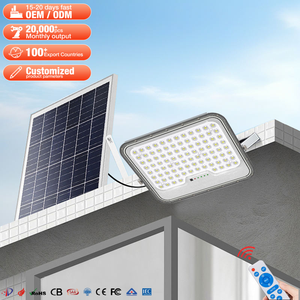
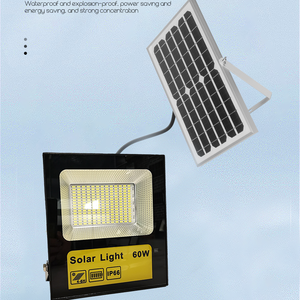
An empirical procurement whitepaper examining the structural capabilities, vertical supply chains, and technical benchmarks of China's top OEM/ODM solar lighting manufacturers.
The global transition toward off-grid municipal infrastructure and zero-carbon commercial illumination has positioned China as the undisputed epicenter of commercial solar light pole and integrated lithium battery manufacturing. Accounting for over 85% of the world’s off-grid solar street light export volume, Chinese manufacturing clusters—specifically located in Guangdong (Zhongshan/Shenzhen), Jiangsu (Yangzhou), and Zhejiang (Ningbo)—have evolved from basic assembly hubs into fully integrated innovation ecosystems.
When procuring high-mast stadium floodlights, integrated solar street poles, or industrial perimeter luminaires, understanding the geographical specialization of Chinese factories provides a decisive strategic advantage:
Dominates in ultra-high lumen LED chips (Lumileds, Cree, Bridgelux), advanced MPPT smart controller programming, and sleek industrial designs for All-in-One and hybrid grid-tied solar poles.
Specializes in heavy structural steel engineering, hot-dip galvanization poles (4m to 12m+), high-mast stadium structures, and extreme wind-resistant pole geometry (up to 160 km/h).
Leverages direct supply lines from Tier-1 battery pack manufacturers (CATL, EVE, BYD) ensuring fresh Grade-A LiFePO4 cells with over 4,000 to 6,000 depth-of-discharge cycles.
Global procurement teams must select the appropriate structural architecture based on local solar radiation profiles (Peak Sun Hours), wind speed compliance, and photometric illumination requirements.
| Architecture Type | Solar Panel Type | Battery Integration | Wind Resistance | Target Application |
|---|---|---|---|---|
| All-in-One (Integrated) | Mono-crystalline Top-Mounted | Integrated in Luminaire Housing | Moderate (Low Surface Area) | Urban Pathways, Parking Lots, Residential Roads |
| All-in-Two (Split System) | Adjustable Tilt Mono PV Module | External Battery Module / Pole Top | High (Adjustable Angle) | Arterial Highways, Factory Complexes, Logistics Parks |
| High-Mast Solar Floodlight | Multi-Module Array (400W–1000W) | Ground Enclosure or Pole Base Pack | Engineered Structural Steel (160km/h) | Sports Stadiums, Construction Sites, Ports |
| Vertical Cylindrical Solar Pole | 360° Wrapped Flexible / Rigid PV | Concealed Inside Steel Pole Base | Ultra-High Aerodynamic Efficiency | Architectural Plazas, Coastal Boulevards, Smart Cities |
Future-proofing municipal and industrial outdoor lighting through energy storage advancements, smart IoT controls, and next-generation optical efficiency.
The solar illumination sector is undergoing a rapid technological convergence driven by power electronics, smart city IoT connectivity, and battery chemistry breakthroughs. Procuring solar light poles today requires evaluating not just present performance, but the multi-decade lifecycle of the installed hardware.
Historical solar street light failures were almost exclusively linked to outdated Lead-Acid, Gel, or volatile Ternary Lithium (NMC) batteries. Leading Chinese factories have universally transitioned to Lithium Iron Phosphate (LiFePO4) as the non-negotiable standard for commercial infrastructure.
Traditional PWM (Pulse Width Modulation) controllers wasted up to 30% of harvested solar energy. Next-generation Chinese solar luminaires incorporate high-frequency Maximum Power Point Tracking (MPPT) algorithms achieving digital tracking efficiencies of 98.5%.
Integrated NEMA 7-pin or Zhaga Book 18 sockets support wireless mesh protocols (Zigbee, LoRaWAN, NB-IoT), enabling central management software (CMS) to monitor voltage, dim lights remotely, and dispatch automated fault alerts.
Intelligent power allocation automatically recalculates power output based on real-time battery state of charge (SoC), ensuring full night illumination and maintaining a 5-7 night autonomy reserve during extended rainy seasons.
Leveraging 200+ Lm/W Lumileds 5050 LED packaging coupled with batwing Type II / Type III optical lenses to maximize pole spacing and drastically lower total project bill-of-materials.
Navigating total cost of ownership (TCO), supplier qualification, and project-specific customization when sourcing from China.
Global procurement teams moving into 2025 and beyond are shifting focus from initial unit cost (CAPEX minimization) to Total Cost of Ownership (TCO optimization). A low-cost solar pole with sub-standard battery cell grading or poor hot-dip galvanization results in operational failure within 18–24 months.
When evaluating Chinese OEM/ODM solar light pole manufacturers, engineering procurement managers must conduct rigorous audits covering five core competency vectors:
| Audit Vector | Minimum Quality Benchmark | Risk of Non-Compliance |
|---|---|---|
| Battery Grade Verification | 100% Brand-New Grade-A LiFePO4 cells with QR code traceability and capacity testing certification. | Recycled or Grade-B cells lead to rapid capacity fade within 6-12 months. |
| Pole Galvanization Standard | Hot-Dip Galvanization conforming to ISO 1461 / ASTM A123 with coating thickness > 85 μm. | Electro-galvanized or cold-painted poles rust rapidly in high-humidity or coastal areas. |
| Photometric Verification | In-house IESLM-79 / LM-80 testing capability with darkroom goniophotometer report generation. | Overstated lumen ratings fail to meet municipal light level standards (Lux/FC). |
| Ingress & Structural Testing | Certified IP65/IP67 waterproof testing chambers and salt spray corrosion test equipment (1,000+ hours). | Water ingress damages MPPT controllers and creates short circuits during severe storms. |
| BMS Protection Firmware | Multi-tier protection for over-charge, over-discharge, short-circuit, and thermal balancing. | Thermal runaway risk, degraded cold-weather performance, and permanent battery death. |
Why municipal buyers, EPC contractors, and global electrical distributors trust our vertical manufacturing infrastructure.
With over two decades of dedicated solar lighting innovation and vertical manufacturing leadership, our factory group stands among China’s elite commercial solar light pole and luminaire manufacturers. Operationally structured across 5 proprietary specialized manufacturing hubs, we deliver complete, end-to-end engineered lighting solutions without relying on outsourced supply chains.
Over two decades of precision engineering expertise in high-output LED fixtures, optical lens development, solar charge controllers, and structural light poles.
Owning dedicated factories for die-casting aluminum housings, SMT electronic mounting, MPPT controller coding, battery module assembly, and pole fabrication.
Products fully tested and certified under DLC, UL Listed, CE, RoHS, and ISO9001 standards. BAA-compliant and turtle-friendly optical solutions available.
Our commercial solar LED luminaires and mobile solar light towers are stocked, specified, and deployed globally through premier international electrical distributors including WESCO International, Border States Electric, Platt Electric Supply, Echo Electric, WinSupply, and Lonestar Electric. This global distribution network validates our commitment to quality, warranty honorability, and rapid fulfillment capabilities.
Expert technical responses to critical engineering questions commonly raised by project managers and procurement officers.
Our engineering team provides complimentary DIALux illumination designs, custom wind-load pole engineering, and factory-direct volume pricing for commercial and municipal projects worldwide.
Get a Quote