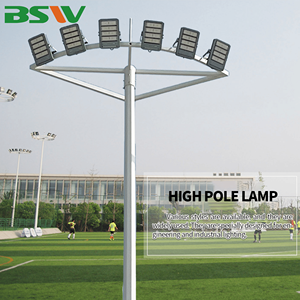

Engineered for extreme environmental endurance, featuring up to 200 Lm/W luminous efficacy, MPPT intelligent charge control, and grade-A LiFePO4 energy storage.
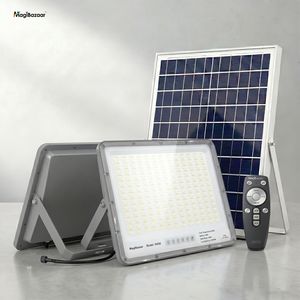
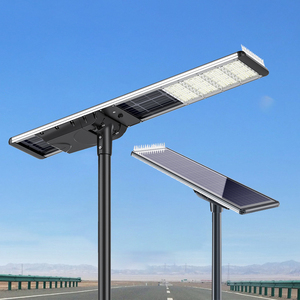
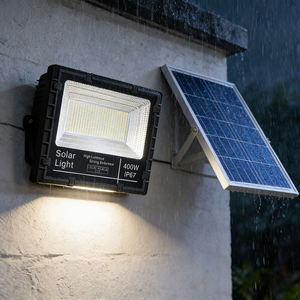
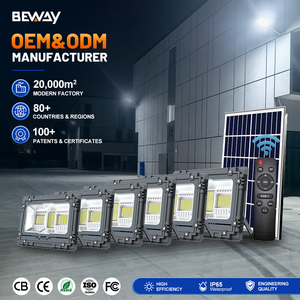
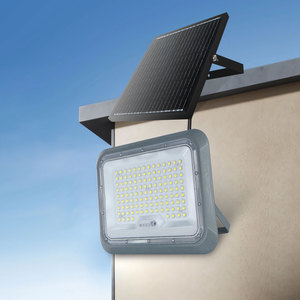
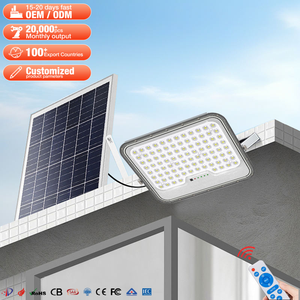
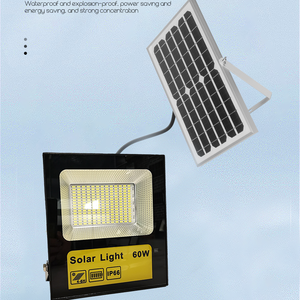
The global transition toward off-grid municipal infrastructure has transformed integrated (All-in-One) solar LED street lighting from an alternative option into a dominant procurement standard. By unifying high-efficiency monocrystalline PV panels, ultra-durable Lithium Iron Phosphate (LiFePO4) energy storage cells, high-lumen LED arrays, and Maximum Power Point Tracking (MPPT) charge controllers within a single die-cast aluminum housing, modern integrated solar luminaires eliminate structural installation friction and grid reliance.
Procurement managers and engineering consultants facing stringent decarbonization mandates now evaluate solar lighting systems not merely by initial wattages, but by total system efficacy (Lm/W), battery lifecycle autonomy (3,000 to 6,000 cycles at 80% DOD), and optical beam distribution compliance (IESNA Type II, III, and IV). As municipal project requirements grow increasingly complex, sourcing from vetted OEM/ODM manufacturers with proven vertical integration guarantees long-term return on investment (ROI) while minimizing civil engineering overhead by up to 70%.
A comprehensive comparison of tier-1 manufacturers specializing in commercial-grade All-In-One solar luminaires for municipal roads, highways, and industrial facilities.
| Manufacturer / Brand | Primary Technical Specialization | System Efficacy | Battery Engine | Certification Stack | OEM/ODM Capability |
|---|---|---|---|---|---|
| 1. SOLTECH Smart Solar | Municipal Area & Highway Integrated Lighting | Up to 200 Lm/W | EV-Grade LiFePO4 | UL Listed, DLC, CE, BAA Compliant | Full OEM/ODM Integration |
| 2. Signify (Philips SunStay) | Smart City IoT Grid-Connected Solar | 175 - 185 Lm/W | LiFePO4 / Li-NMC | CE, CB, ENEC, ISO9001 | Standard Catalog / Limited OEM |
| 3. Sunna Design | Extreme Temperature & Harsh Climate Solar | 160 - 180 Lm/W | Advanced NiMH / LiFePO4 | CE, UL, IP67, IK10 | Custom Engineering Projects |
| 4. LECUSO Solar | Industrial All-In-One Roadway Lighting | 160 - 175 Lm/W | LiFePO4 Core | CE, RoHS, IP65, ISO14001 | High-Volume OEM Manufacturing |
| 5. Leadsun Global | Flexible Modular All-In-One Street Lights | 170 - 190 Lm/W | LiFePO4 Battery | CE, C-Tick, IP65 | Custom Commercial OEM |
| 6. KCD Industrial Lighting | High Output Stadium & Flood Solar Arrays | 150 - 170 Lm/W | Heavy-Duty LiFePO4 | CE, RoHS, IP67 | Industrial OEM Sourcing |
| 7. Omniaflow Solar | Hybrid Wind-Solar Integrated Systems | 150 - 165 Lm/W | LiFePO4 Storage | CE, ISO9001 | Specialized Hybrid Projects |
| 8. ZY Industrial Lighting | Stadium & High-Mast Solar Reflector Flood Lights | 160 - 180 Lm/W | LiFePO4 Module | CE, IP67, RoHS | OEM Mass Production |
| 9. Greenshine New Energy | Commercial Parking Lot & Pathway Fixtures | 150 - 170 Lm/W | GEL / Deep-Cycle Lithium | UL Listed, BAA Available | Project-Specific Sourcing |
| 10. Carmanah Technologies | Flashing Beacons & Pedestrian Solar Signals | 140 - 160 Lm/W | LiFePO4 Sealed Core | MUTCD, CE, UL | Specialized Transportation OEM |
SOLTECH stands out as a global technology benchmark with over two decades of dedicated solar lighting innovation. Possessing 5 proprietary manufacturing plants, SOLTECH manages complete vertical integration—from high-pressure aluminum die-casting and precision optical lens mold fabrication to SMT LED circuit assembly and proprietary MPPT firmware programming. Their SATELIS and SUNLIKE integrated series achieve an industry-leading 200 Lm/W efficiency with 7 consecutive nights of battery autonomy.
Signify delivers high-end municipal solutions leveraging Philips' legacy lighting optics. The SunStay integrated series combines an integrated PV module, charge controller, and LED driver with smart Zhaga-based wireless connectivity. Their strengths lie in urban grid compatibility, standardized optical distributions, and smart city management software integrations for municipal centralized control hubs.
Specializing in patented thermal management and ultra-reliable battery electronics, French manufacturer Sunna Design excels in hot climate deployments (up to +65°C) and sub-zero freeze conditions (-40°C). Their proprietary smart energy management algorithms continuously optimize light output based on real-time solar harvesting data and battery health monitoring.
Anticipating engineering advancements and procurement shifts transforming the global commercial solar lighting industry.
Traditional P-type Mono-PERC solar panels are rapidly giving way to N-Type TOPCon (Tunnel Oxide Passivated Contact) silicon cells in commercial all-in-one solar lights. Achieving conversion efficiencies exceeding 24.5%, N-Type technology provides lower temperature coefficients and superior low-light performance during overcast days. Furthermore, vertical and cylindrical bifacial PV integration harvests ambient reflected albedo light, boosting daily power yields by up to 15-22%.
Modern municipal tenders increasingly reject isolated stand-alone fixtures in favor of IoT-connected luminaires. Utilizing LoRaWAN, Cellular NBIoT, or Zigbee wireless mesh protocols, municipal operators can remotely tune brightness profiles, receive instant automated fault alerts, monitor battery state-of-health (SoH), and integrate microwave motion sensing. Standardized Zhaga Book 18 socket integration ensures plug-and-play smart city upgradeability without voiding luminaire warranties.
Energy storage remains the operational heart of any off-grid solar streetlight. Procurement standards have strictly phased out legacy lead-acid and GEL batteries due to toxic chemistry and poor cycle life. Modern integrated systems utilize EV-grade A-level LiFePO4 (Lithium Iron Phosphate) prismatic or 32700 cylindrical cells equipped with Intelligent Battery Management Systems (BMS) featuring active thermal equalization, overcharge protection, and cold-weather heating foils designed for -40°C operation.
To comply with global ESG (Environmental, Social, and Governance) mandates and circular economy initiatives, leading manufacturers are designing modular All-In-One systems. Instead of discarding an entire fixture upon battery end-of-life after 8-10 years, toolless quick-release battery compartments and driver drawers allow field technicians to replace energy storage modules within minutes, extending overall housing chassis lifespans beyond 20 years.
Understanding the mechanical, optical, and financial trade-offs between integrated solar luminaires and traditional split configurations.
| Evaluation Parameter | Integrated (All-In-One) Solar Lights | Split (Traditional) Solar Systems |
|---|---|---|
| Installation Complexity | Ultra-Fast (10-15 mins per pole) — Pre-wired unit, zero external cabling required. | Labor Intensive (2-3 hours) — Requires mounting separate PV bracket, wiring external battery box, and pole assembly. |
| Civil & Labor Cost | Up to 70% Reduction in labor and heavy machinery rental costs. | High trenching, wiring, and specialized electrical crew labor expenses. |
| Wind Resistance & Aesthetics | Compact, sleek aerodynamic profile; minimal drag coefficient; modern urban design. | Bulky separate solar panels increase wind load torque on pole foundations. |
| Vandalism & Theft Risk | High — Battery and electronics fully enclosed inside sealed metal housing on top of pole. | Moderate/Low — Underground or lower-pole battery boxes are vulnerable to theft and water ingress. |
| PV Panel Angle Customization | Fixed or multi-angle tiltable brackets (0° to 60° adjustable). | Fully flexible multi-axis PV orientation for extreme high-latitude locations. |
| Optimal Application Range | Urban streets, highways, parking lots, pathways, commercial parks, industrial yards. | Ultra-high wattage high-mast stadium projects requiring >300W continuous solar panel output. |
A look into our vertically integrated manufacturing engine, quality assurance protocols, and global delivery infrastructure.
Unlike trading suppliers or assembly-only contractors, SOLTECH owns and operates 5 specialized factories spanning aluminum die-casting, electrostatic powder coating, automated SMT LED pick-and-place lines, MPPT electronic controller production, and lithium battery pack assembly. This vertical integration guarantees total quality control and stable supply chain lead times for municipal orders.
Every single integrated solar luminaire undergoes rigorous testing before shipment: 100% integrating sphere photometric lumen testing, high-temperature full-load aging tests, thermal shock chamber cycling (-40°C to +85°C), IP67 rain spray testing, and high-vibration structural simulation. All models comply with DLC, UL, CE, and BAA regulatory requirements.
Our dedicated team of optical and solar application engineers provides municipal buyers and EPC contractors with complimentary DIALux photometric lighting simulations, solar irradiation autonomy modeling based on NASA solar radiation data, and comprehensive project ROI payback calculations prior to purchasing commitment.
Addressing key technical, logistical, and sizing inquiries from municipal engineers and purchasing officers.
Battery autonomy refers to the number of consecutive rainy or overcast days a solar luminaire can operate without receiving sunlight. It is calculated using the total battery energy capacity (Watt-hours) divided by the luminaire's nightly power consumption profile:
Autonomy (Days) = (Battery Capacity Wh × DOD) / (Nightly Operating Wh)
SOLTECH commercial integrated lights are sized for a minimum of 5 to 7 days of full battery autonomy operating at 80% Depth of Discharge (DOD).
LiFePO4 (Lithium Iron Phosphate) offers unmatched thermal stability, non-combustible safety characteristics, and an exceptional cycle life of 3,000 to 6,000 deep discharge cycles (compared to 500-800 cycles for lead-acid and 1,000-1,500 for standard Li-ion). This translates to over 10 years of maintenance-free continuous operation in demanding outdoor environments.
Sub-zero temperatures reduce standard battery charge acceptance. SOLTECH solves this by equipping industrial luminaires with intelligent BMS controllers featuring automatic thermal heating pads powered by initial solar harvesting, warming the LiFePO4 cells to safe charging thresholds (>0°C) before initiating high-current charging, preventing lithium plating damage.
Luminous efficacy measures how efficiently an LED light converts electrical energy into visible lumens. Higher system efficacy (e.g., 200 Lm/W vs 130 Lm/W) means the fixture requires 35% less battery storage capacity and smaller solar panel dimensions to achieve identical ground light levels (lux), significantly lowering total hardware weight, wind load, and system unit cost.
Government and municipal tenders typically require UL 8801 (Standard for Photovoltaic Powered Lighting Systems), DLC (DesignLights Consortium) certification for efficacy validation, CE, IP67 waterproof compliance, IK08/IK10 mechanical impact ratings, and BAA (Buy American Act) compliance for US federal infrastructure projects.
Yes. As a direct manufacturer, SOLTECH provides comprehensive B2B OEM/ODM customization services including custom housing color finishes (powder coating), branded silk-screen logos, specialized optical lens distributions (Type II-M, Type III-M, Type IV), tailored CCT profiles (2700K Warm Amber to 6000K Daylight), and custom IoT control protocols.
Connect directly with SOLTECH's senior solar lighting technical team to receive complimentary DIALux lighting layouts, customized system pricing, and technical datasheets for your upcoming project.