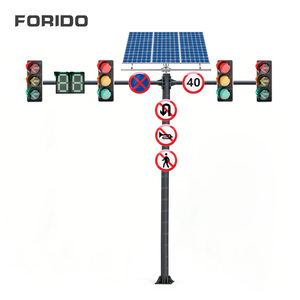
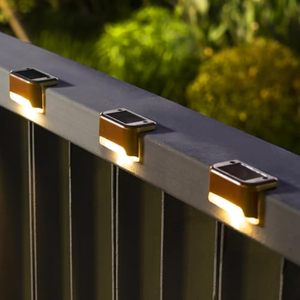
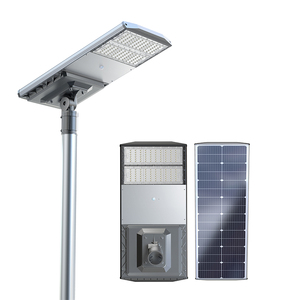
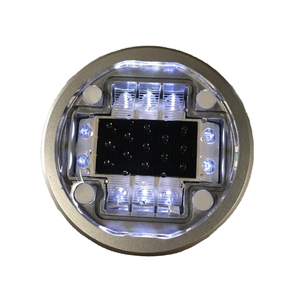
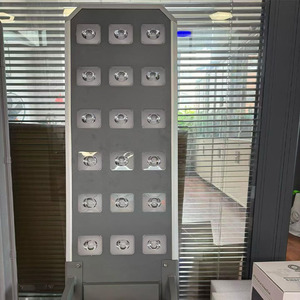
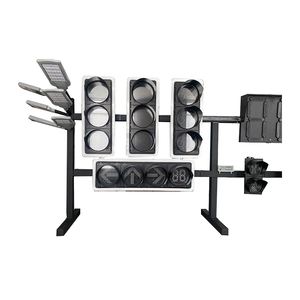
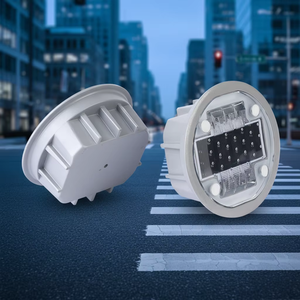
Explore our specialized OEM/ODM solar pedestrian luminaires, smart traffic indicators, integrated streetlights, and architectural road studs designed for zero-carbon infrastructure projects worldwide.
Urban mobility frameworks and municipal architectural engineering are undergoing a decisive paradigm shift toward decarbonization, energy autonomy, and intelligent public safety infrastructure. As cities worldwide expand green zones, multi-modal transport corridors, and smart pedestrian pathways, traditional grid-connected high-pressure sodium (HPS) and legacy metal halide luminaires are rapidly being phased out in favor of off-grid solar-powered LED systems.
As an industry-accredited OEM/ODM Solar Powered Pedestrian Lights Manufacturer & Supplier with over two decades of technical expertise, our organization delivers fully integrated photovoltaic illumination systems engineered specifically for municipal avenues, commercial parks, residential walkways, and critical pedestrian crosswalks. Operating through five specialized production facilities, we control the complete manufacturing ecosystem—from precision aluminum die-casting and optical lens molding to high-efficiency MPPT charge controller firmware architecture and premium LiFePO4 battery management systems (BMS).
This technical whitepaper provides municipal engineers, urban planners, civil infrastructure contractors, and B2B procurement executives with an exhaustive technical guide covering optical engineering metrics, thermal management optimization, OEM/ODM customization frameworks, macro-market procurement trends, and life-cycle economic analysis.
End-to-end engineering tailored to exact project photometrics, extreme environmental conditions, and municipal structural requirements.
Custom Type II, Type III, and Type IV asymmetrical photometric beam distributions. Precision-molded optical Grade PMMA lenses designed to eliminate glares and deliver targeted light distribution across wide pedestrian walkways.
Proprietary Maximum Power Point Tracking (MPPT) algorithms yielding >98.5% conversion efficiency. Fully programmable dimming profiles, microwave motion sensor thresholds, and autonomous energy allocation modes.
Grade-A Lithium Iron Phosphate (LiFePO4) battery packs featuring 3,500+ deep cycles at 80% DoD. Integrated smart BMS protecting against over-voltage, thermal runaway, and sub-zero operational degradation.
Marine-grade ADC12 die-cast aluminum housing coated with electrostatic anti-corrosion fluorocarbon spray. Built to withstand Category 5 hurricane winds, salt spray, and extreme temperatures (-40°C to +65°C).
When evaluating infrastructure investments over a 15-year life cycle, commercial solar-powered pedestrian luminaires offer vastly superior economic yield and operational resilience compared to conventional grid infrastructure. Below is an engineering performance benchmark matrix:
| Evaluation Parameter | OEM Integrated Solar Pedestrian Lights | Traditional Grid-Connected LED Lights | Standard Low-Tier Solar Lights |
|---|---|---|---|
| Luminous Efficacy | Up to 200 Lm/W (Lumileds 5050/3030) | 110 – 130 Lm/W | 80 – 100 Lm/W |
| Trenching & Cabling Capital Cost | $0.00 (Zero Trenching Required) | $35 – $75 per linear meter | $0.00 |
| Energy Autonomy (Rainy/Cloudy Days) | up to 7 Continuous Nights | Dependent on Grid Stability | 1 – 2 Nights Maximum |
| Battery Chemistry & Cycle Life | LiFePO4 (3,500+ Cycles @ 80% DoD) | N/A | Ternary Lithium / Lead-Acid (<800 Cycles) |
| PV Cell Conversion Efficiency | Monocrystalline N-Type TOPCon (>23.5%) | N/A | Polycrystalline (15% - 17%) |
| Ingress Protection & Rating | IP65 / IP67 / IP68 Waterproofing | IP65 | IP54 / IP63 |
| Smart Control & IoT Connectivity | Zigbee / LoRaWAN / Microwave Radar Dimming | Optional Wired DALI / 0-10V | Basic PIR or Timer Only |
As global municipal procurement guidelines evolve toward strict ESG (Environmental, Social, and Governance) targets, civil project planners must anticipate technological shifts in off-grid street and pedestrian lighting. Based on market intelligence from our global municipal projects across North America, Europe, and Asia-Pacific, five key procurement trends are defining the future of solar lighting tenders:
The global transition from P-type PERC solar cells to next-generation N-type TOPCon (Tunnel Oxide Passivated Contact) and Heterojunction (HJT) technologies is drastically expanding panel efficiency. OEM solar pedestrian lights are now capable of achieving panel conversion rates surpassing 24%. This allows for smaller physical solar module footprints without sacrificing power output, enabling sleeker luminaire profiles that meet stringent urban design aesthetics.
Modern pedestrian solar lights are no longer static, standalone fixtures; they are expanding into smart city IoT nodes. Future-proof procurement tenders increasingly specify wirelessly networked luminaires utilizing LoRaWAN, Cellular NBIoT, or Zigbee protocols. Central Management Systems (CMS) allow city operators to remotely monitor real-time battery status, adjust dimming curves according to pedestrian traffic density, diagnose fault codes, and auto-report maintenance alerts.
Light pollution poses serious threats to urban ecosystems, migratory fauna, and human circadian health. Municipalities are mandating IDA (International Dark-Sky Association) compliance for all pedestrian pathway installations. Future procurement specifications require precise 0% uplight optics (Full Cutoff luminaires), automated CCT (Correlated Color Temperature) shifting (transitioning from 4000K down to a wildlife-friendly 2200K or Amber hue after midnight), and zero light trespass into adjacent residential zone windows.
For regions facing prolonged sub-zero winter spells or continuous monsoon seasons, hybrid solar-grid models are becoming the gold standard for critical infrastructure. Modern OEM/ODM designs incorporate dual-input power control modules. When solar energy storage drops below 10% reserve capacity during severe weather events, the system seamlessly triggers an auxiliary grid bypass without interrupting pedestrian safety illumination.
Achieving true commercial reliability requires resolving fundamental thermodynamic and optical challenges unique to integrated solar luminaires. Our R&D division focuses heavily on two core engineering innovations:
Pedestrian vision at night operates under mesopic and scotopic conditions, where human eye sensitivity shifts toward shorter blue-green wavelengths. By deploying customized Lumileds multi-chip LED arrays calibrated to a high S/P ratio (Scotopic to Photopic ratio > 1.6), our pedestrian light systems deliver visually effective illumination at lower absolute lumen outputs. This engineered optical perception reduces battery draw by up to 22% while enhancing obstacle detection and spatial contrast for pedestrians and cyclists.
Heat is the primary cause of premature capacity degradation in lithium-based energy storage systems. Standard off-the-shelf solar lights house the battery directly beneath the hot solar panel or inside the hot LED engine chamber, causing internal temperatures to exceed 70°C in summer environments. Our patented OEM housing design utilizes a dual-chamber thermal barrier structure. The LiFePO4 battery pack is encased within an isolated, aerogel-insulated lower module while the LED heat sink features vertical convection cooling fins, ensuring battery operating temperatures remain within the optimal 15°C to 35°C window.
Selecting an established, vertically integrated manufacturer is the single most critical decision for B2B distributors, engineering contractors, and municipal buyers. Our corporate infrastructure offers unmatched manufacturing depth and regulatory compliance:
Looking for tailored solar pedestrian lighting solutions, factory-direct OEM pricing, or complete technical tender support? Contact our engineering team today for immediate assistance.