
Precision-engineered off-grid solar floodlights and integrated street luminaires manufactured under strict OEM/ODM quality control standards.
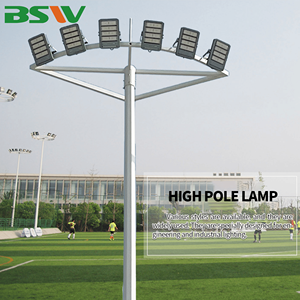
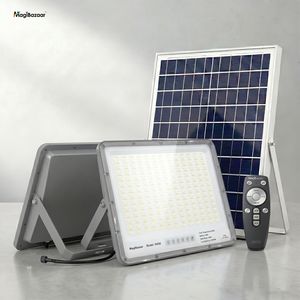
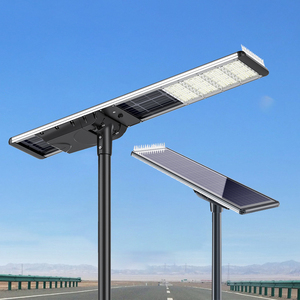
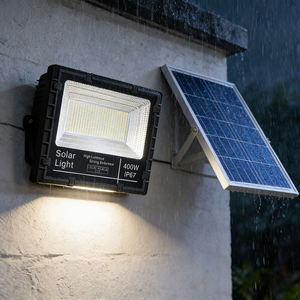
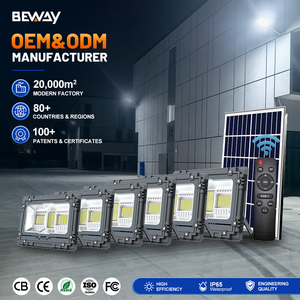
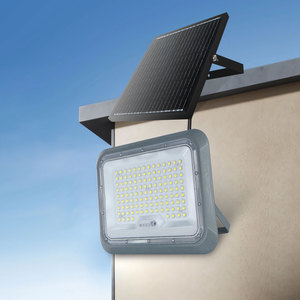
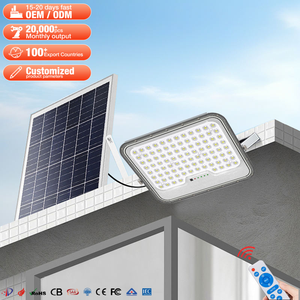
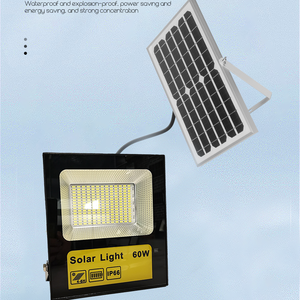
An in-depth analysis of photometric optimization, thermal mitigation, energy storage chemistry, and systemic reliability for critical transportation corridors.
Modern highway infrastructure engineering requires maximum operational uptime without relying on centralized electrical grids. Grid-tied highway illumination incurs extreme Capital Expenditure (CapEx) through underground trenching, transformer installation, copper wiring theft vulnerability, and continuous utility charges. Custom OEM/ODM off-grid solar highway lighting systems eliminate grid dependency entirely, converting arterial expressways into zero-emission, self-sustaining illumination networks.
By leveraging high-efficiency monocrystalline solar panels and advanced Maximum Power Point Tracking (MPPT) charge controllers, our highway luminaires maintain uninterrupted operation even under severe atmospheric conditions and prolonged winter shadows.
Highway safety directly depends on strict visual comfort, minimal glare, and superior light uniformity. Improper optical beam distribution creates visual fatigue and hazardous black spots along high-speed corridors. Our factory engineers specialized Type II-M and Type III-M optical lenses manufactured from optical-grade PMMA (poly-methyl methacrylate) with 95%+ light transmittance.
These specialized distribution patterns ensure an overall light uniformity ratio (U0) exceeding 0.40 and a longitudinal uniformity (Ul) exceeding 0.60, fully satisfying international highway standards including IESNA RP-8-18, AASHTO guidelines, and European EN 13201 Class M1-M3 specifications.
A primary failure point in conventional solar street lights operating in extreme climates (such as the Middle East, Southeast Asia, or Southwestern United States) is thermal battery degradation and LED color shift. Our OEM architecture incorporates an isolated dual-chamber chassis design. By separating the Grade-A LiFePO4 battery pack and MPPT controller into a thermally shielded compartment away from the LED heat sink, junction temperatures are reduced by up to 18°C, preserving system lifespan beyond 10 to 12 years.
Use this technical evaluation guide to compare commercial solar lighting parameters for municipal tenders and highway procurement projects.
| System Component | Standard Commercial Grade | Municipal Highway OEM Grade (Our Standards) | Infrastructure Benefit |
|---|---|---|---|
| LED Engine Efficacy | 130 – 160 Lm/W | 190 – 210 Lm/W (Lumileds 5050) | Requires 30% less battery capacity for equal lumen output. |
| Battery Chemistry | Ternary Lithium (NMC) / Lead-Acid | Grade-A LiFePO4 (Lithium Iron Phosphate) | 6000+ deep cycles vs 1200 cycles; zero thermal runaway risk. |
| Solar Module Technology | Polycrystalline (17% efficiency) | N-Type TOPCon Monocrystalline (23.5% efficiency) | Faster recharging under low-irradiance and cloudy environments. |
| Charge Controller | PWM (Pulse Width Modulation) | Digital MPPT (99.5% Tracking Efficiency) | Extracts up to 30% more energy during winter and partial shade. |
| Enclosure & Ingress | Plastic / Sheet Aluminum (IP65) | ADC12 Die-Cast Aluminum (IP67 / IK10) | Withstands 160 km/h hurricane winds and severe sandstorms. |
| Battery Autonomy | 2 – 3 Rainy Days | 5 – 7 Consecutive Rainy Days | Eliminates blackout risk during extended monsoons or storms. |
As governments accelerate decarbonization and smart city investments, OEM/ODM suppliers must adapt to next-generation photovoltaic and IoT integration benchmarks.
Traditional flat solar panels suffer from snow accumulation, dust buildup, and wind resistance along open expressways. Future OEM specifications are shifting toward vertical cylindrical solar modules integrated directly around the pole axis, as well as bifacial N-type TOPCon panels that capture reflected albedo light from concrete roadways. This increases daily energy generation by up to 25% while remaining virtually self-cleaning.
Static lighting schedules are being replaced by dynamic adaptive algorithms. Integrated IoT controllers equipped with LoRaWAN, Zigbee, or cellular NB-IoT connect highway lights to a central management software (CMS). By analyzing real-time weather forecasts via satellite feeds, the system automatically recalibrates energy consumption during multi-day storms, preserving critical battery life without sacrificing highway safety.
Municipal buyers now prioritize lifecycle maintenance costs over initial purchase price. OEM design trends focus on modular plug-and-play components. Fast-disconnect electrical harnesses, tool-less latching mechanisms, and hot-swappable battery drawers enable maintenance technicians to perform servicing on high-mast poles in under 3 minutes, significantly cutting highway lane closure expenses.
With over two decades of engineering excellence, 5 specialized manufacturing facilities, and complete vertical integration, we deliver institutional-grade quality for world-class distributors and exporters.
Unlike assembly-only vendors, our factories handle raw aluminum die-casting, CNC precision machining, automated SMT LED placement, powder coating, and customized MPPT firmware development under one roof. This guarantees zero batch-to-batch variation and strict quality control.
Every luminaire batch undergoes stringent reliability testing: 1000-hour salt spray corrosion chamber testing (ASTM B117), thermal shock testing (-40°C to +80°C), EL panel micro-crack detection, and full goniophotometer sphere testing. Fully compliant with CE, RoHS, UL, DLC, and BAA (Buy America Act) project criteria.
We provide full customization for global contractors: tailored optical beam angles, custom housing colors (RAL palette), laser-etched corporate branding, pre-configured dimming profiles, specialized mounting tenons, and hybrid AC/DC grid-backup configurations.
Detailed technical answers for engineering consultants, importers, EPC contractors, and highway lighting buyers.
Daily Energy Needed (Wh) = LED Wattage × Operating Hours × Dimming Profile Efficiency Factor
Battery Ah = (Daily Wh × Required Autonomy Days) ÷ (System Voltage × Max DoD % × Thermal Derating)