
The rapid decarbonization of public infrastructure requires robust, zero-maintenance, and ultra-high-efficacy illumination systems. As a leading primary manufacturer operating across 5 specialized industrial factories, we engineer customized OEM/ODM off-grid municipal solar lighting solutions tailored for civil engineering contractors, government authorities, and global project developers.
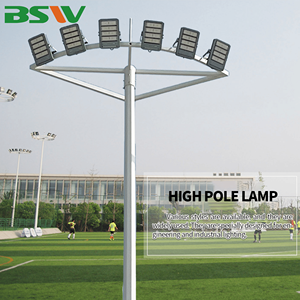
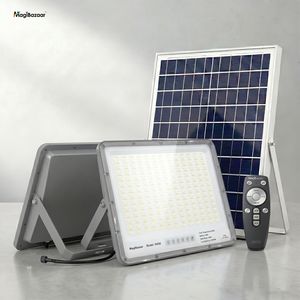
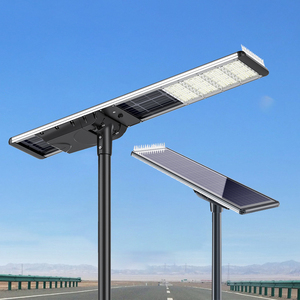
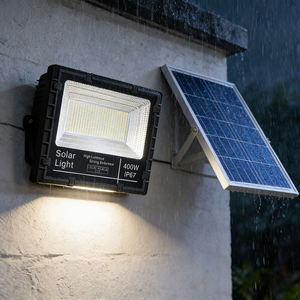
High-Output Municipal Floodlights, Integrated Solar Street Systems & High-Mast Luminaires
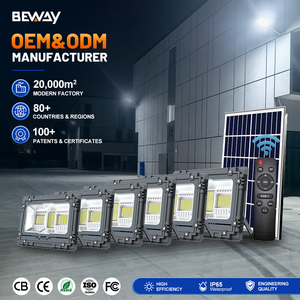
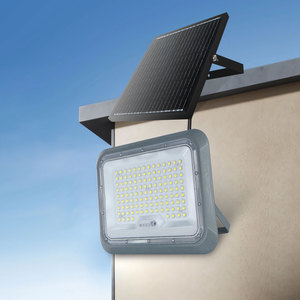
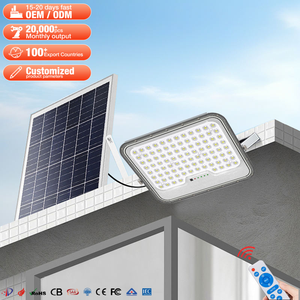
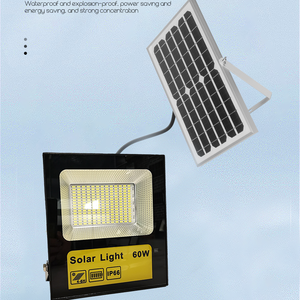
Quantifiable Engineering Integrity Across 5 Proprietary Industrial Manufacturing Facilities
From Raw Die-Casting to Custom Electronic Microcontrollers: Total Quality Assurance
We operate automated 1600-ton die-casting presses utilizing heavy-duty A360 and A380 structural aluminum alloys. This ensures maximum thermal dissipation efficiency, reducing thermal resistance to under 0.85°C/W for prolonged LED chip longevity.
Equipped with Yamaha high-speed SMT surface mounting lines, our manufacturing process achieves zero-defect placement of Lumileds 5050 and Bridgelux LED matrices. Custom PMMA lenses deliver batwing Type II, III, and V asymmetric beam layouts.
Our engineered Maximum Power Point Tracking (MPPT) microcontrollers feature custom firmware algorithms achieving >98.5% conversion efficiency. Real-time dynamic voltage tracking ensures rapid battery charging even under heavy cloud cover.
We utilize brand-new, A-grade Lithium Iron Phosphate (LiFePO4) prismatic cells configured with smart Battery Management Systems (BMS). Features include active balancing, dual temperature sensors, over-voltage cutoff, and short-circuit protection.
Every custom fixture undergoes rigorous quality control within our in-house testing complex: IP67 submersion testing, salt spray corrosion test tanks (ISO 9227 >1000 hours), IK10 mechanical impact testing, and integrating sphere photometric validation.
We offer complete customization services including mechanical housing redesign, custom PCB layout, tailored battery autonomy sizing (up to 10 rainy days), specialized mounting adaptors, and municipal white-label branding options.
Comparing Traditional Grid Lighting vs. Generic Solar vs. OEM/ODM Municipal Solar Solutions
| Engineering Metric | Conventional Grid LED | Generic Market Solar Light | OEM/ODM Municipal Grade (Our Factory) |
|---|---|---|---|
| System Efficacy | 120 - 140 Lm/W | 130 - 150 Lm/W | 190 - 210 Lm/W (Lumileds 5050) |
| Battery Technology & Lifespan | N/A (Grid Powered) | Ternary NCM / Used LiFePO4 (~1,500 Cycles) | Grade-A EV LiFePO4 (>6,000 Cycles @ 80% DOD) |
| Charging Efficiency | N/A | Standard PWM Controller (70% - 78%) | Dynamic Fast-Tracking MPPT (>98.5%) |
| Enclosure & Weather Resistance | IP65 Aluminum Housing | IP65 Thin ABS Plastic / Die-Cast Scrap | IP67 / IK10 Heavy-Duty A380 Alloy + Tempered Glass |
| Trenching & Cabling Cost | High ($45 - $80 / meter) | Zero Trenching | Zero Trenching + $0 Utility Operating Cost |
| Smart Control & IoT Capability | Hardwired Timers | Basic IR Remote / Standard PIR | Zhaga / NEMA Socket, NB-IoT / LoRaWAN Smart City |
Strategic Insights for Infrastructure Directors, B2B Wholesalers, and Project Procurement Engineers
The industry is shifting rapidly from traditional Poly and P-Type Mono PERC to N-Type TOPCon (Tunnel Oxide Passivated Contact) and bifacial glass solar modules. Delivering cell efficiencies exceeding 25%, these modules harvest reflected albedo light from concrete and snow surfaces, increasing solar yield by up to 15-20% during overcast low-sunlight winter seasons.
Municipal tenders increasingly mandate standardized 7-pin ANSI C136.41 NEMA or Zhaga Book 18 receptacles. Future-proof solar luminaires must support plug-and-play smart nodes (LoRaWAN, NB-IoT, Zigbee) allowing central control software (CMS) to monitor battery health metrics, adjust dimming profiles remotely, and execute predictive maintenance schedules automatically.
Environmental regulations dictate light pollution control. Municipalities now prioritize International Dark-Sky Association (IDA) compliant luminaires featuring zero upward light output (U0), precise asymmetric batwing optical cut-offs, and adaptive CCT adjustment (e.g., auto-switching from 4000K to wildlife-friendly warm 2200K amber illumination after midnight).
Scope 1, 2, and 3 carbon reduction mandates require sustainable component sourcing. Next-generation municipal lighting procurement emphasizes modular assembly where panels, battery enclosures, and LED light engines can be upgraded independently. Furthermore, emerging semi-solid-state LiFePO4 batteries are set to extend operational temperature thresholds down to -50°C without auxiliary battery heating systems.
Technical Solutions to Common Engineering, Logistics, and Customization Inquiries
Our municipal system design integrates three core engineering safeguards: 1) Dynamic MPPT algorithms that extract energy even from ambient diffuse sunlight; 2) EV-Grade LiFePO4 energy storage scaled with a reserve capacity ratio of 3.5 to 5.0 times daily consumption; 3) Smart automatic dimming profiles that adjust system wattage dynamically based on real-time battery state of charge (SoC).
We provide full-stack OEM/ODM customization. This includes custom die-casting mold development for exclusive housing designs, engineering custom PCB arrays for specific Lux level compliance, integration of proprietary BMS protocols, customized mounting brackets for specific pole diameters, and custom laser engraving, silk-screening, and specialized powder-coating colors (e.g., RAL shades).
Our luminaire housings feature 3D air-convection heat sink fins cast from high thermal conductivity A380 alloy. For freezing climates, we incorporate smart self-heating BMS circuitry surrounding the LiFePO4 battery pack, which utilizes excess solar energy to warm battery cells above 0°C before initiating charging, preventing lithium plating damage.
We provide full compliance documentation required for public infrastructure projects, including CE, RoHS, UL8750, DLC Premium, IP67 waterproof test reports, IK10 impact resistance certificates, ISO 9227 salt spray anti-corrosion test reports, wind load resistance calculations (up to 60 m/s), and IES/DIALux photometric light distribution files for lighting design validation.
While solar lighting infrastructure carries a comparable initial hardware cost, it eliminates expensive trenching, conduit laying, cabling, and transformer upgrades—which typically account for 60% of total installation costs. Furthermore, with zero ongoing electric utility bills and a 10-year battery lifespan, project owners achieve full capital expenditure payback within 18 to 24 months.
For customized OEM/ODM projects, engineering CAD approval and photometric simulation take 3–5 business days. Rapid prototype tooling is completed within 15 days. Mass manufacturing across our automated SMT and die-casting lines typically requires 20 to 25 calendar days for container-load orders (1,000+ units), subject to final project specifications.
Accelerate your municipal projects with tier-1 engineering, factory-direct wholesale pricing, and full technical DIALux photometric support. Contact our engineering design team to request product samples, custom design consultation, or factory audit details.
Contact Us