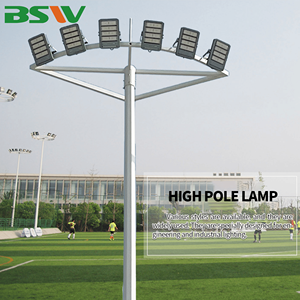
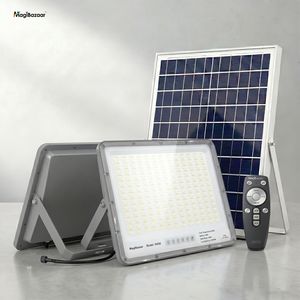
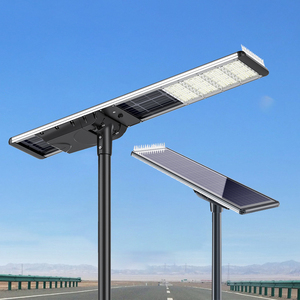
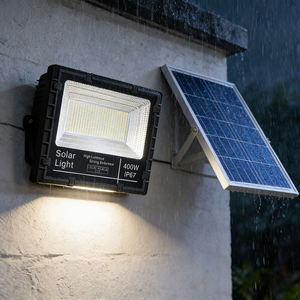
Engineered for extreme environmental autonomy, high wind load tolerance, and municipal-grade off-grid power performance.
The global transition toward off-grid urban lighting, smart city infrastructure, and remote industrial illumination has exposed the fundamental mechanical and optical limitations of legacy flat-panel solar arrays. Traditional flat photovoltaic (PV) modules present significant wind resistance, accumulate sand and snow, and suffer from severe solar conversion drop-offs due to sub-optimal incident light angles throughout the diurnal cycle. Flexible cylindrical solar PV modules represent a paradigm shift in solar energy harvest engineering.
By wrapping high-efficiency CIGS (Copper Indium Gallium Selenide) or ultra-thin N-type TOPCon monocrystalline silicon solar cells around cylindrical aluminum or structural composite poles, vertical cylindrical PV modules achieve a continuous 360-degree light capture geometry. Unlike flat panels that rely on mechanical solar trackers to maintain perpendicular irradiance, cylindrical PV systems harvest direct sunlight, diffuse atmospheric radiation, and ground-reflected albedo light concurrently from all azimuth angles.
Cylindrical PV profiles boast a drag coefficient (Cd) near 0.6 to 0.8, drastically reducing structural load on lighting poles during typhoon-force winds up to 60 m/s compared to planar panels.
Vertical curved surfaces eliminate particulate settlement. Rain naturally washes away airborne dust, while snow cannot establish a planar accumulation deck, avoiding thermal hot-spot degradation.
Cylindrical modules capture reflected sunlight from surrounding asphalt, snow, and building glass, boosting overall energy harvest yield by 15% to 30% over standard fixed tilt angles.
For OEM/ODM commercial applications, electrical integration requires micro-inverter or high-frequency MPPT (Maximum Power Point Tracking) algorithms designed for multi-angle irradiance profiles. Because sunlight illuminates different curved quadrants of the cylinder simultaneously, our engineered bypass diode networks ensure that shaded rear quadrants never draw down the current output generated by peak front-facing solar cells.
To assist municipal buyers, project engineering consultants, and utility procurement teams in conducting accurate Lifecycle Cost (LCC) and Return on Investment (ROI) assessments, the table below contrasts critical engineering metrics between flat solar modules and flexible cylindrical solar PV pole systems:
| Performance Parameter | Traditional Flat PV Modules | Flexible Cylindrical PV Modules | OEM/ODM B2B Value Advantage |
|---|---|---|---|
| Daily Sunlight Capture Angle | Fixed (40°–60° effective window) | 360° Omnidirectional (Sunrise to Sunset) | Extended charging cycle (2-3 additional hours daily) |
| Wind Load Drag Coefficient (Cd) | High (1.2–1.5 Cd) — Requires heavy base | Ultra-Low (0.5–0.7 Cd) — Sleek Profile | Substantial reduction in pole steel & foundation concrete costs |
| Dust & Snow Accumulation | High — Requires manual cleaning cycles | Near Zero — Natural vertical shedding | Up to 80% reduction in long-term municipal maintenance OPEX |
| Architectural Aesthetics | Bulky, top-heavy structural profile | Seamless pole integration, modern design | Higher municipal approval rate for urban heritage sites |
| Albedo Radiation Harvesting | Negligible rear-side absorption | High (360° diffuse and reflective intake) | Higher kWh energy output per installed square meter |
| Lifespan & Vandalism Resistance | Exposed glass prone to wind hail/vandalism | ETFE/FEVE fluoropolymer armor flex wrap | IP67/IK10 impact resilience for harsh industrial environments |
As commercial infrastructure contractors, EPCs (Engineering, Procurement, and Construction firms), and municipal governments accelerate decarbonization mandates, the commercial solar LED lighting market is undergoing rapid evolution. Key strategic procurement trends shaping the industry include:
The traditional method of bolting a rectangular flat PV panel atop an outdoor pole fixture is increasingly viewed as visually outdated and structurally inefficient. Municipal urban planning committees across Europe, North America, and the Middle East are prioritizing Building Integrated Photovoltaics (BIPV) and Smart Solar Poles. Cylindrical flexible PV modules allow the solar power generator to become an intrinsic part of the pole structure itself, preserving architectural integrity in parks, high-end commercial districts, and residential walkways.
Modern off-grid commercial lighting specifications require absolute reliability during prolonged extreme weather events. The integration of high-density Grade-A Lithium Iron Phosphate (LiFePO4) battery packs with solid-state BMS (Battery Management Systems) ensures over 4,000 deep discharge cycles (up to 10 years of operational life). Paired with cylindrical PV modules that charge even under low-light diffuse conditions, systems now achieve guaranteed 7-to-10 day autonomy without emergency grid backup.
Solar lighting poles are transforming into smart city communication hubs. Contemporary OEM/ODM contracts frequently demand integrated micro-controllers capable of supporting Zigbee, LoRaWAN, and 5G cellular communication networks. Cylindrical solar poles provide stable year-round power for environmental sensors, public Wi-Fi access points, security cameras, and intelligent dimming algorithms that dynamically adapt lumen output to pedestrian traffic flow.
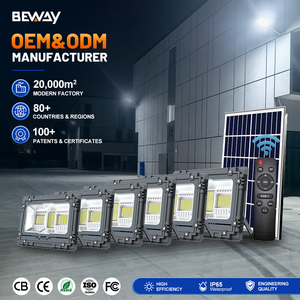
As an industry-leading OEM/ODM manufacturer and global exporter, our corporate infrastructure is engineered to serve large-scale municipal bids, wholesale distributors, and custom commercial contracts. Built upon two decades of vertical manufacturing integration, we maintain full control over the complete production chain—from raw aluminum alloy die-casting to advanced SMT circuit assembly and specialized optical lens moulding.
Operating across 5 state-of-the-art manufacturing facilities, we execute automated laser cutting, robotic cell laminating, surface powder coating, and rigorous environmental burn-in testing under one centralized quality management system.
By pairing premium Lumileds LED chips with precision optical lenses (Type II, Type III, and Type IV beam distributions), our luminaires maximize light utilization while consuming minimal battery reserve power.
Our complete product portfolio holds internationally recognized certifications including UL Listed, CE, DLC (DesignLights Consortium), RoHS, IP67 waterproof validation, and IK10 impact shock testing. BAA (Buy American Act) compliant configurations are fully supported.
From custom pole heights, diameter flex-wrapping, customized color temperatures (CCT 2700K to 6500K, including Turtle-Friendly amber lighting), to tailored MPPT firmware programming—our R&D team provides complete engineering support for global project tenders.
Whether you require technical DIALux photometric layouts, custom OEM/ODM module manufacturing, or bulk wholesale pricing for municipal tenders—our global engineering team is ready to assist.
Inquire Now