
High-efficacy, IP67-rated hybrid and off-grid luminaire systems designed for roadways, stadiums, commercial complexes, and sports arenas.
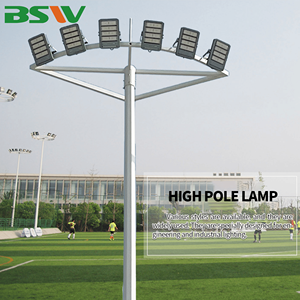
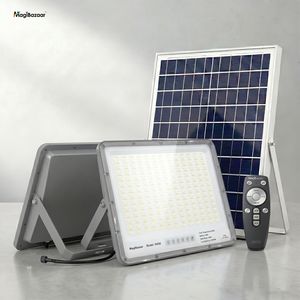
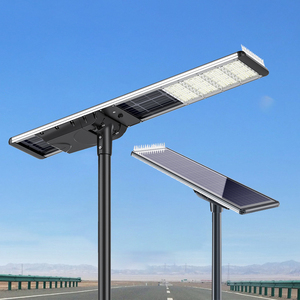
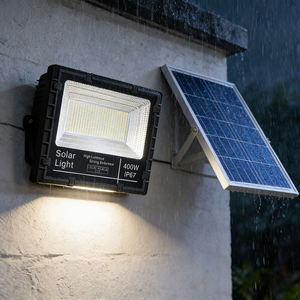
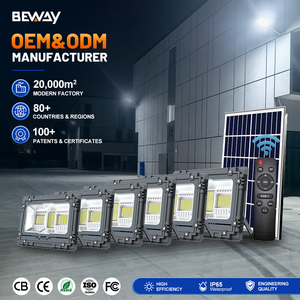
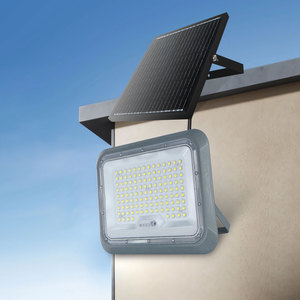
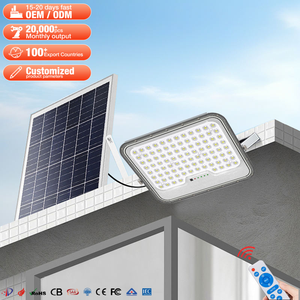
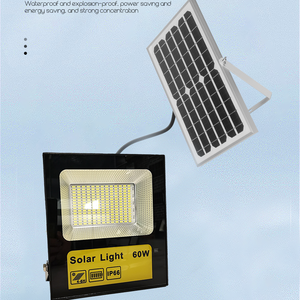
Integrating die-casting, micro-inverter programming, SMT circuit synthesis, and LiFePO4 energy storage across 5 proprietary manufacturing plants.
From raw aluminum alloy die-casting to intelligent MPPT micro-controller programming, every component is manufactured in-house to maintain rigorous ISO9001 quality control.
Patented dual-input micro-inverters seamlessly switch power drawing from solar energy storage to municipal AC power grids in less than 10 milliseconds when battery capacity drops below 20%.
Engineered to conform strictly with DLC 5.1 Premium, UL 8800 solar lighting standards, CE certification, and BAA (Buy America Act) municipal compliance requirements.
Customizable housing color, optical lens beam distributions (Type II, Type III, Type IV), extended battery sizing for arctic climates, and IoT LoRaWAN Smart City integration.






Bridging the gap between 100% off-grid reliability and utility grid fail-safe power redundancy for critical urban infrastructure.
In modern municipal planning, relying solely on off-grid solar street lighting presents challenges during extended periods of sub-optimal solar irradiance, severe weather events, or high-latitude winters. Conversely, traditional grid-connected street lights impose enormous ongoing electricity bills and carbon taxation on local governments. The solution lied in engineering the Custom OEM Hybrid Grid-Tied Solar Street Lighting System.
A hybrid grid-tied street light functions primarily as a solar-powered luminaire utilizing high-efficiency photovoltaic modules (N-type TOPCon or Monocrystalline PERC) and Grade-A Lithium Iron Phosphate (LiFePO4) battery packs. However, unlike traditional standalone solar lights, the hybrid system is physically connected to the municipal AC grid through an internal intelligent micro-inverter and dual-power automatic transfer switch (ATS). During normal daytime operations, solar panels charge the internal energy storage. At dusk, the luminaire operates exclusively on clean DC power extracted from the LiFePO4 battery.
If low solar radiation persists for multiple days and the battery SOC (State of Charge) drops below a pre-configured safety threshold (e.g., 20%), the internal controller dynamically switches to municipal AC power without any interruption in light output or flickering. Once solar radiation resumes and recharges the battery, the system automatically disconnects from the grid, returning to 100% green energy harvesting.
| System Architecture Characteristic | Traditional AC Grid Street Light | 100% Off-Grid Solar Street Light | SOLTECH OEM Hybrid Grid-Tied Light |
|---|---|---|---|
| Primary Energy Source | 100% Utility Grid Power | 100% Photovoltaic / Solar Energy | 90%–95% Solar DC / 5%–10% Grid AC Back-Up |
| Zero-Downtime Guarantee (365 Days) | No (Vulnerable to Grid Blackouts) | No (Risk on consecutive rainy/snowy days) | 100% Guaranteed 365-Night Uptime |
| Cable Trenching & Civil Works Cost | Extremely High (Deep Trenching Required) | Zero Trenching Required | Minimal (Uses existing shallow grid wires) |
| Carbon Footprint Reduction | 0% Offset | 100% Offset | up to 95% Carbon Footprint Reduction |
| Battery Longevity Protection | N/A | Prone to deep discharge stress | Managed DoD (Prevents over-discharge) |
| Luminous Efficacy | 130–150 Lm/W | 160–180 Lm/W | Ultra-High 200 Lm/W Lumileds LEDs |
| Smart City IoT Integration | Optional Central Control | Standalone / Local Sensors | Full Zigbee / LoRaWAN CMS Connectivity |
Key macro-economic shifts, policy mandates, and technological criteria driving municipal B2B lighting RFPs worldwide.
Global weather volatility and aging utility grids are prompting municipal engineers to mandate dual-power mechanisms in public tenders. Tenders now favor street lighting systems capable of operating independently during municipal blackouts while maintaining low battery stress via grid-assist capabilities.
Government agencies across North America and Europe are prioritizing suppliers offering Buy America Act (BAA) compliance and verified Environmental Product Declarations (EPDs). OEM manufacturers with transparent supply chains and non-hazardous LiFePO4 chemistry hold a distinct procurement advantage.
Energy efficiency specifications are scaling from historic 130 Lm/W standards up to 200 Lm/W. By deploying customized optical lenses that project precise light footprints (preventing dark sky pollution), contractors reduce both panel size requirements and overall system structural wind loads.
Procurement requirements are shifting from passive dusk-to-dawn sensors to active edge computing. Smart micro-controllers now analyze historical weather patterns and dynamically adjust battery discharge profiles to guarantee zero dark nights throughout seasonal overcast shifts.
Breakthroughs in materials science, energy density, and thermal dissipation transforming commercial outdoor lighting performance.
Eliminating wind drag and snow accumulation, vertical cylindrical solar poles utilize flexible monocrystalline cells wrapped around the mast, capturing omnidirectional indirect sunlight while maintaining high aesthetic appeal for urban avenues.
To address extreme winter performance degradation, next-generation lithium battery management systems (BMS) integrate internal heating films powered by morning solar gain, allowing safe charging and discharging down to -40°C (-40°F).
Advanced optical refractors eliminate light spill above 90 degrees horizontal. Specialized 2200K amber LED spectra options ensure compliance with turtle-friendly coastal zones and international Dark-Sky reserves.
Answers to critical technical, engineering, and contractual questions faced by EPC contractors and municipal buyers.
The system utilizes an internal smart micro-controller that constantly monitors the battery's State of Charge (SOC). When consecutive rainy days deplete the battery below a pre-set threshold (typically 20%), an automatic transfer switch (ATS) transitions power input to the AC grid in under 10ms. Once solar panels generate sufficient energy to recharge the battery above 40%, the system automatically reverts to 100% solar DC operation.
As an original manufacturer operating 5 dedicated plants, we offer comprehensive OEM customization: luminaire housing die-casting design, powder coating colors (RAL spec), customized optic beam patterns (Type II/III/IV/V), battery capacity scaling (for extreme climates), custom wattage ratings (30W to 1000W), and integration of proprietary Smart City control protocols (NEMA/ZHAGA sockets, LoRaWAN, Zigbee).
Hybrid systems reduce grid electricity consumption by 80% to 95%, generating direct OPEX savings. Furthermore, because they connect to low-voltage AC backup lines, municipal projects can utilize existing wiring infrastructure without requiring costly transformer upgrades or heavy gauge underground copper cables, reducing initial CAPEX civil installation costs by up to 50%.
For North America, luminaires require UL 8800 (Solar Lighting Safety Standard), DLC 5.1 Premium listing (for utility rebate eligibility), and FCC compliance. For European contracts, CE, RoHS, and EN 60598-2-3 outdoor lighting standard certifications are mandatory. Our export models come fully tested and certified with accredited third-party IES LM-79 and LM-80 test reports.
We utilize EV-grade Grade-A Lithium Iron Phosphate (LiFePO4) battery cells that provide over 4,000 deep discharge cycles at 80% DoD (Depth of Discharge), delivering a design lifespan of 10 to 12 years. Our monocrystalline solar panels are rated for 25 years of linear power output (retaining >80% efficiency at year 25), while our Lumileds LED chips carry an L70 lifetime rating exceeding 100,000 hours.
Yes. Our luminaires can be manufactured with standardized 7-pin NEMA or 4-pin Zhaga receptacles. This enables plug-and-play installation of third-party smart lighting controllers compatible with standard IoT networks (such as Talq, Wi-SUN, or cellular NB-IoT), allowing central operators to remotely monitor energy consumption, battery health, and dimming schedules in real time.