
Explore our engineering-grade product portfolio designed for harsh outdoor environments, municipal highways, commercial parking structures, and industrial complexes worldwide.
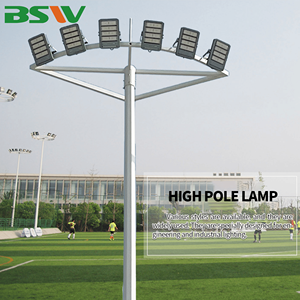
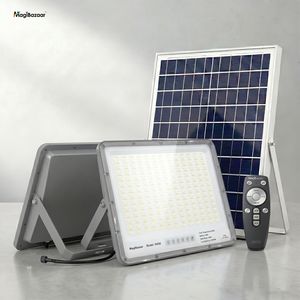
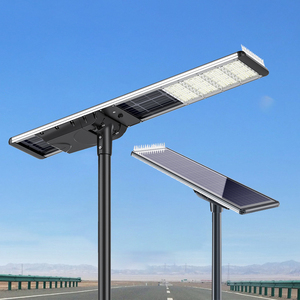
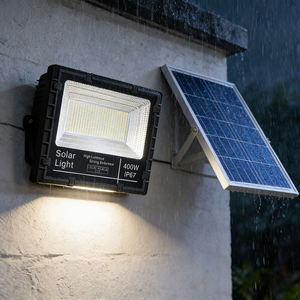
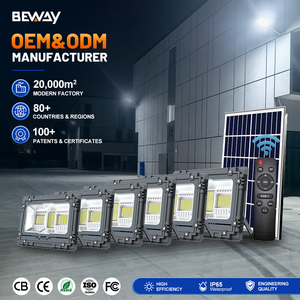
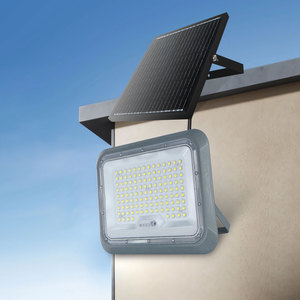
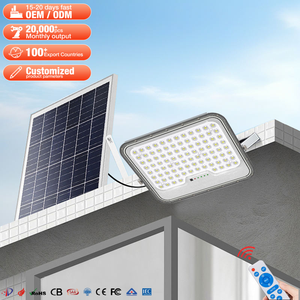
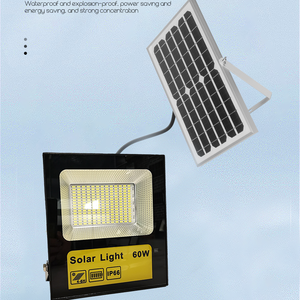
In the rapidly evolving landscape of municipal infrastructure and renewable lighting, standalone photovoltaic (PV) street lights frequently encounter performance bottlenecks during extended overcast conditions, high-latitude winter months, and monsoon seasons. To overcome the physical limitations of single-source solar harvesting, industrial procurement standardizers are increasingly transitioning to Wind-Solar Hybrid Outdoor Illumination Systems. By combining micro vertical-axis wind turbines (VAWT) or horizontal-axis wind turbines (HAWT) with N-type TOPCon solar panels, hybrid street lights leverage complementary diurnal and seasonal energy dynamics to deliver uninterrupted, 365-night off-grid lighting autonomy.
Solar radiation typically peaks during midday hours under clear conditions but drops to absolute zero during nighttime when lighting demand occurs. Conversely, wind patterns—driven by thermal atmospheric gradients—tend to exhibit higher kinetic energy density during late afternoon, evening, and stormy weather conditions when solar irradiance is lowest. A wind-solar hybrid system balances these micro-generation curves through a dual-input Maximum Power Point Tracking (MPPT) electronic architecture.
According to aerodynamic physics governed by Betz’s Law, the maximum theoretical power extraction from wind kinetic energy is 59.3%. In practice, high-efficiency aluminum alloy Maglev or Helix-style Savonius wind turbines engineered in China factories achieve aerodynamic efficiency coefficient ($C_p$) values between 0.35 and 0.42. Combined with high-efficiency Lumileds 5050 LED chips yielding over 200 Lumens per Watt, the hybrid power assembly maintains stable battery State-of-Charge (SoC) even in prolonged sub-zero and low-solar irradiance regions.
The heart of modern industrial street lighting lies within the Energy Storage System (ESS). Traditional lead-acid and gel batteries have been phased out across tier-one municipal tenders due to short cycle lives, high maintenance overhead, and severe thermal degradation below 0°C. OEM China manufacturing hubs have standardized on automotive-grade Lithium Iron Phosphate (LiFePO4) battery packs coupled with intelligent Battery Management Systems (BMS).
Key operational specifications of our integrated BESS platforms include:
Selecting the appropriate wind turbine topography is critical for structural safety, noise compliance, and energy yield depending on regional geographical positioning.
| Technical Parameter | Vertical Axis (VAWT - Savonius / Helix) | Horizontal Axis (HAWT - Classic 3-Blade) |
|---|---|---|
| Cut-in Wind Speed | 1.2 m/s – 1.8 m/s (Ultra-Low Cut-in) | 2.5 m/s – 3.0 m/s (Standard Cut-in) |
| Turbulent Airflow Response | 360° Omnidirectional (No Yaw Mechanism Needed) | Requires Active / Passive Yaw Mechanism |
| Acoustic Noise Level | < 20 dB (Nearly Silent Maglev Bearing) | 35 dB – 45 dB (Aerodynamic Blade Tip Noise) |
| Typhoon Survival Rating | Up to 60 m/s (Class 16 Typhoon Resistance) | Up to 45 m/s (Auto-braking Required) |
| Best Application Environment | Urban Roads, Parks, Coastal Gust Zones, Highways | Open Plains, Rural Highways, Agricultural Zones |
With over two decades of dedicated manufacturing innovation and 5 fully owned production facilities in China, our manufacturing infrastructure bridges engineering design directly with large-scale industrial output. We eliminate intermediary markups, providing B2B distributors, municipal contractors, and engineering firms direct access to factory-grade pricing and customized product specifications.
Complete vertical integration ranging from aluminum die-casting, CNC precision machining, solar PV lamination, wind generator rotor balancing, to SMT circuit board manufacturing.
Fully compliant with DLC, UL, CE, RoHS, and ISO9001 standards. Every batch undergoes 1000-hour salt spray tests (ASTM B117), IP67 waterproof validation, and IK10 impact testing.
Integrated LoRaWAN and NB-IoT remote monitoring systems allowing municipal managers to adjust dimming profiles, monitor wind/solar charge ratios, and receive automatic fault alerts.
As global carbon neutrality mandates intensify across North America, Europe, and Asia-Pacific, public lighting infrastructure projects are moving beyond basic illuminate-only criteria. B2B procurement professionals must consider several macro trends currently transforming wholesale supply chains:
While early generations relied on fragmented external components with messy cabling, the latest trend favors streamlined modular architecture. Integrated wind turbine mounts, top-mounted high-efficiency panels, and pole-internal or bracket-integrated battery modules drastically lower wind resistance coefficient ($C_d$) while cutting field installation labor costs by up to 65%.
Next-generation hybrid street lights incorporate microwave radar sensors and dynamic algorithmic dimming. By automatically throttling light output during low-traffic hours (e.g., dropping to 30% power until motion is detected), energy consumption drops substantially, preserving battery SoC for emergency weather spells lasting over 7 to 10 consecutive rain/snow days.
Wholesale buyers and EPC contractors now evaluate the Levelized Cost of Energy (LCOE) and embodied carbon of lighting hardware. Sourcing directly from verified Chinese manufacturers with ISO14064 Carbon Footprint Verification provides municipal buyers with the requisite documentation to capture green energy subsidies, tax incentives, and carbon offset credits.
During winter months, daylight duration decreases and solar radiation weakens significantly. However, atmospheric pressure changes frequently increase seasonal wind speeds. The wind turbine generates continuous charging power throughout the night and during stormy conditions, balancing out the solar deficit and ensuring 100% nighttime illumination autonomy.
Our vertical-axis Savonius and Maglev wind turbines feature an ultra-low cut-in speed of just 1.2 m/s to 1.8 m/s (light breeze). Effective power output increases exponentially with wind velocity, hitting full rated capacity at 10 m/s to 12 m/s.
The intelligent controller is equipped with an electronic electromagnetic braking system (PWM storm brake). When wind speeds exceed safe operational limits (typically above 35 m/s), the controller automatically applies electromagnetic deceleration to prevent rotor overspeed, protecting both the generator coils and structural mounting hardware.
Yes, as a direct manufacturer with 5 dedicated factory bases, we provide complete engineering customization. We tailor pole heights (4m to 14m), luminaire wattages (30W to 1000W), optical beam distributions (Type II, III, IV), battery capacities, powder-coating finishes (RAL colors), and branded logo integration.
We supply full engineering support for project tenders, including IES photometric files, Dialux lighting simulations, wind load structural calculations, CE/UL/DLC certification copies, material safety data sheets (MSDS/UN38.3 for lithium transport), and comprehensive factory warranty documentation.
We offer 3-year to 5-year comprehensive factory warranties depending on system configuration. The LED luminaire housing and solar PV panels have an operational design life of 25 years; the wind turbine rotor and LiFePO4 battery pack are engineered for 10+ years of continuous service.
Partner directly with China's premier wind-solar hybrid lighting manufacturer. Contact our application engineering team today to receive customized Dialux photometric layouts, engineering datasheets, and competitive B2B factory quotes.
Get Catalog