
High-lumen, off-grid luminaire systems engineered for extreme thermal environments, severe weather resilience, and continuous commercial duty cycles.
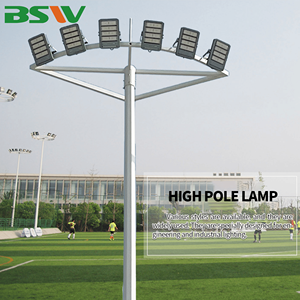
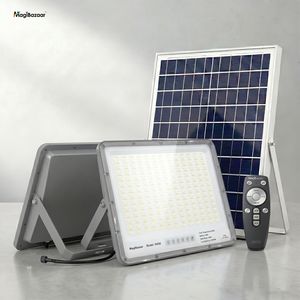
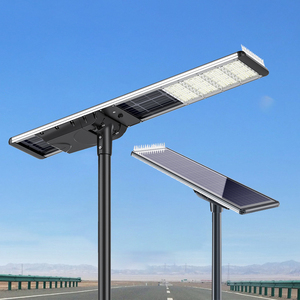
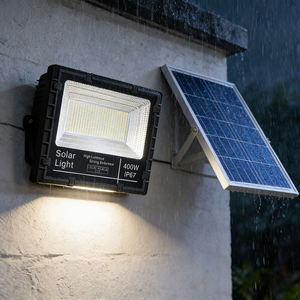
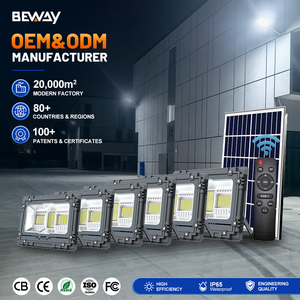
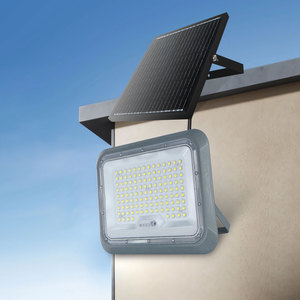
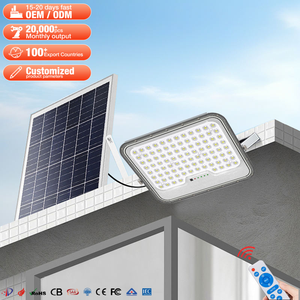
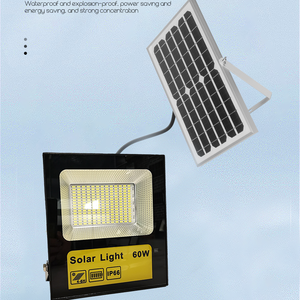
Measurable indicators driving enterprise-level sourcing decisions across global logistics parks, high-mast sports arenas, and municipal infrastructures.
An authoritative technical analysis of manufacturing standards, thermal dynamics, and battery integration for Tier-1 Chinese export partners.
The global transition toward off-grid industrial infrastructure has elevated industrial grade solar flood lights from simple perimeter illumination tools to high-precision engineering assets. Tier-1 OEM/ODM manufacturers in China are now executing advanced manufacturing protocols that integrate high-efficiency photovoltaic (PV) modules, semiconductor-grade LED arrays, intelligent Maximum Power Point Tracking (MPPT) charge controllers, and Lithium Iron Phosphate (LiFePO4) energy storage matrices.
Procuring wholesale solar lighting solutions directly from fully integrated Chinese facilities provides a substantial quality control and economic advantage. By operating specialized in-house die-casting plants, Surface Mount Technology (SMT) assembly lines, and proprietary electronic controller labs, premier suppliers eliminate inter-vendor tolerances. This vertical integration allows for stringent quality auditing across five core manufacturing dimensions:
| Engineering Specification | Standard Commercial Grade | Heavy-Duty Industrial Grade (OEM Standard) |
|---|---|---|
| Luminous Efficacy | 110 – 140 Lm/W | 180 – 210 Lm/W (Lumileds 5050 / Cree Chips) |
| Battery Cell Chemistry | Ternary NCM / Recycled LiFePO4 | 100% New Grade-A LiFePO4 (BYD/CATL Cells) |
| Battery Life Cycle | 1,500 Cycles @ 80% DOD | 4,000 – 6,000 Cycles @ 80% DOD (10+ Year Lifespan) |
| Charge Controller Type | Pulse Width Modulation (PWM) | Smart MPPT with >98% Conversion Efficiency |
| Housing & Heat Sink | Thin Stamped Sheet Metal / Plastic | ADC12 Heavy Aluminum Die-Casting (IK10 Rated) |
| Rain & Moisture Protection | IP65 Gasket Seal | IP67 Dual-Silicone Sealed Pressure Vent System |
| Autonomy Reserve | 1 – 2 Rain Days | 5 – 7 Continuous Overcast Days (Smart Dimming) |
In high-wattage industrial solar flood lighting (range 200W to 1000W system equivalents), LED chip junction management determines lumen depreciation curves over time. Standard consumer flood lights suffer up to 30% lumen drop within 12 months due to inadequate thermal sinking. Industrial grade systems utilize multi-chip 5050 or 3030 LED packages mounted on metal-core printed circuit boards (MCPCBs) with thermal conductivity ratings exceeding $2.0 W/m\cdot K$. Combined with Lumileds or Cree LEDs, efficacy reaches up to 200 Lumens per Watt, dramatically lowering the PV panel area and battery footprint required to achieve target lux levels.
The energy storage subsystem represents the critical path in off-grid solar reliability. Industrial manufacturers in China have transitioned completely to Lithium Iron Phosphate ($\text{LiFePO}_4$) chemistry. Unlike standard lithium nickel manganese cobalt ($\text{NMC}$) batteries, $\text{LiFePO}_4$ offers thermal stability up to 60°C, zero risk of thermal runaway, and an operating life exceeding 4,000 to 6,000 deep discharge cycles. Built-in Battery Management Systems (BMS) provide real-time protection against over-charge, over-discharge, short-circuiting, and low-temperature charge inhibition during winter conditions.
Why top global EPC contractors and municipal buyers partner with leading Chinese wholesale solar light manufacturers.
Tailored photometric beam angles (Type II/III/IV/V), customized housing colorways, laser-etched corporate logos, and project-specific bracket geometries engineered for rapid site mounting.
Integrated adaptive power management algorithms automatically adjust light output based on real-time battery state of charge (SoC) and local weather metrics, ensuring 365-day uninterruptible operation.
Manufactured under ISO9001 quality standards and fully certified with CE, RoHS, IP67, IK10, and IEC testing credentials. Options available to meet regional municipal procurement guidelines.
Anticipating technological convergence in solar lighting for project managers, distributors, and engineering specifiers.
The solar lighting industry is moving rapidly toward N-Type TOPCon (Tunnel Oxide Passivated Contact) bifacial solar panels. By harvesting both direct overhead sunlight and reflected albedo irradiance from surrounding surfaces (such as concrete, snow, or light-colored industrial roofing), system charging efficiency increases by 15% to 25%. This technology enables smaller solar panels to charge high-capacity batteries fully, even during shorter winter daylight windows.
Future industrial installations are adopting hybrid off-grid architectures. When solar energy reserves dip during extended severe weather events, luminaires automatically switch to auxiliary AC grid or microgrid power. This dual-input logic guarantees 100% operational uptime for mission-critical perimeter security, logistics hubs, and high-mast transportation corridors.
Modern industrial solar flood lights are evolving into intelligent edge nodes. Utilizing LoRaWAN, Zigbee, or Cellular NB-IoT protocols, facilities managers can remotely monitor battery health, thermal statistics, and power consumption via cloud dashboards. Automated fault detection alerts dramatically reduce maintenance overhead for large-scale industrial complexes and municipal estates.
Addressing key operational, technical, and logistical questions for wholesale international buyers.
Industrial-grade units feature ruggedized ADC12 aluminum die-cast housings, IK10 impact protection, IP67 waterproof sealing, Grade-A LiFePO4 battery cells rated for 4,000+ cycles, and high-efficiency MPPT controllers. They are designed for continuous duty cycles in severe environments such as coastal ports, mining facilities, and stadium lighting poles.
Tier-1 manufacturers size systems with an intentional power reserve margin (Autonomy Ratio). Using smart MPPT charge controllers with dynamic power modulation, the system automatically scales light output during extended overcast periods, ensuring 5 to 7 days of continuous nighttime illumination without battery depletion.
Standard wholesale Minimum Order Quantities (MOQs) start at 50 to 100 units for stock models, and 500 units for fully customized OEM configurations. Lead times generally range from 15 to 25 manufacturing days. Industrial products include a standard 3-year to 5-year full system replacement warranty.
For global logistics clearance, products must hold UN38.3 battery transport safety certification, MSDS reports, CE-EMC, RoHS, and IEC 62133 safety standard compliance. North American projects may require specialized UL, DLC, or BAA compliance credentials.
Direct factory access, customized engineering support, and reliable global supply chain execution.
With over 20 years of solar LED manufacturing excellence across 5 state-of-the-art facilities, our engineering team delivers end-to-end OEM and ODM solutions for municipal infrastructure, commercial developers, and global distributors. Contact our technical team today to request complete photometric layout designs (IES files), factory-direct pricing, and comprehensive product catalogs.