Tier-1 Engineering & Global Exports

China Top Municipal Solar Street Lighting Systems Supplier & Exporters

Industrial-Grade Off-Grid Illumination Engine • 200 Lm/W Efficacy • 20+ Years Manufacturing Excellence

Featured Industrial Solar Lighting Systems

Engineered to meet stringent municipal roadway standards, severe weather resilience thresholds, and ultra-long zero-carbon operating lifecycles.

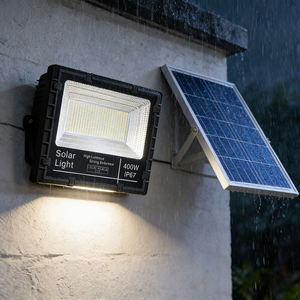
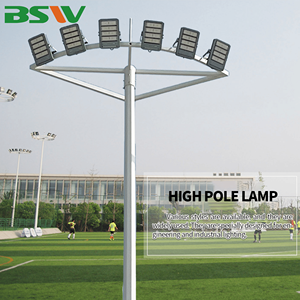
High Mast Stadium High Mast Municipal Solar LED Flood Light System

2025 High-Output 400W-1000W Solar LED Flood Light for Outdoor Stadiums & Sports Courts

400W–1000W IP67 Waterproof High Mast Optic
Inquire Now
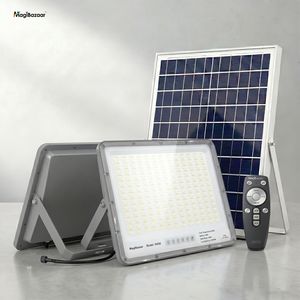
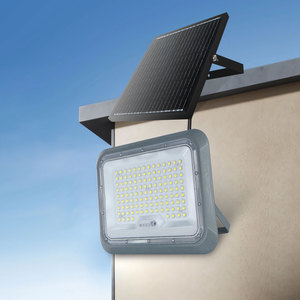
Industrial Outdoor Commercial Outdoor Solar 200W Floodlight

Outdoor Solar 200W IP67 Waterproof LED Floodlight with 6000K Daylight & 5-Year Warranty

200W Nominal 6000K Daylight Warehouse Grade
Inquire Now
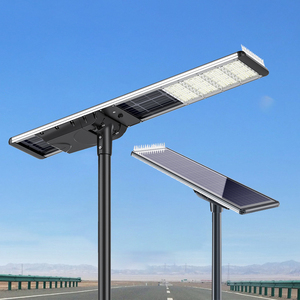
Integrated All-in-One LECUSO Integrated Solar LED Street Light

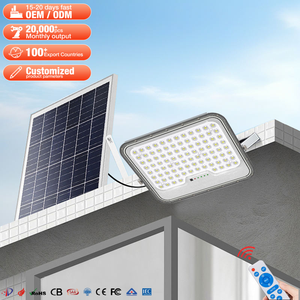
LECUSO Integrated Industrial 30W-150W All In One Solar LED Street Light Engine

30W–150W Scalable Mono-PERC Panel Smart Dimming
Inquire Now
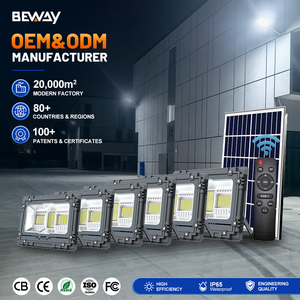
Heavy-Duty Flood Commercial Solar Flood Light 1000W Aluminum

Commercial Solar Flood Light 1000W IP65 Die-Cast Aluminum System for Factory Areas

1000W Peak ADC12 Aluminum Heavy Bracket
Inquire Now
Modern Fixture Modern Industrial Outdoor Solar Flood Light

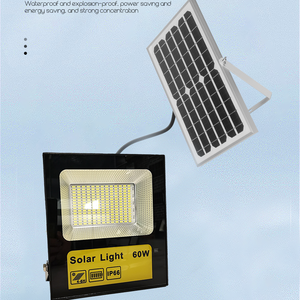
Modern Industrial 60W-800W Solar Flood Light with Thickened Tempered Glass

60W–800W Range Tempered Glass Impact Resistant
Inquire Now
Automatic Stadium KCD Automatic Solar Stadium Construction Lighting

KCD Industrial High-Output Stadium & Construction Automatic Solar Flood Light

100W–1000W Auto Dusk-to-Dawn Construction Duty
Inquire Now
LiFePO4 Road Luminaire ZY Industrial Stadium Outdoor Solar Powered LED Light

ZY Industrial Roadway Solar LED Flood Light IP67 with Integrated LiFePO4 Energy Storage

100W–400W LiFePO4 Cell Type II/III Lens
Inquire Now
Smart PC Reflector Smart Outdoor Solar Reflector Flood Light

Solar Industrial Smart Waterproof IP65 Outdoor LED Garden & Reflector Street Unit

PC Anti-UV Housing Smart Controller Zero Glare Reflector
Inquire Now

Why Global Municipalities Partner with SOLTECH & China Supply Networks

Delivering vertically integrated manufacturing, unmatched luminous efficacy, and zero-maintenance off-grid illumination across 500+ international infrastructural deployments.

200+
Lm/W System Efficacy
20+
Years R&D Leadership
5
Proprietary Mega-Factories
7
Nights Rainy Day Autonomy
500+
Global Municipal Projects

In-House Vertical Integration

Unlike third-party assemblers, our manufacturing matrix encompasses 5 specialized facilities—from high-pressure die-casting of aluminum housings to surface-mount technology (SMT) for MPPT controllers. This guarantees strict dimensional tolerances and component synchronization.

Photometric & Efficacy Benchmarks

Utilizing Lumileds LED chips paired with customized asymmetric optical lenses (Type II, III, IV), our luminaires hit groundbreaking system efficiencies up to 200 Lm/W. Photometric Dialux simulations guarantee code-compliant lux distribution for municipal highways and arterial roads.

Global Certification Compliance

Our municipal product lines undergo rigorous testing to secure DLC, UL Listed, CE, RoHS, and ISO9001 certifications. BAA-compliant configurations and specialized dark-sky, turtle-friendly optical options ensure seamless tender acceptance in North America, Europe, and the Middle East.

The Evolution of Municipal Solar Street Lighting: Procurement & Technological Trends (2025–2030)

As global urban planning shifts toward net-zero decarbonization and decentralized energy resilience, municipal solar street lighting systems have transitioned from simple off-grid lighting fixtures to sophisticated, software-defined energy micro-nodes. This whitepaper analyzes the core engineering innovations, cost models, and procurement criteria driving the next decade of public infrastructure lighting.

1. Photovoltaic Photon Efficiency & N-Type TOPCon Cell Integration

Traditional municipal solar streetlights historically relied on standard polycrystalline or basic monocrystalline PERC solar panels, yielding conversion efficiencies between 17% and 19%. Modern municipal procurement contracts now demand N-Type TOPCon (Tunnel Oxide Passivated Contact) and Perovskite-silicon tandem module architectures, elevating module operational efficiencies beyond 23.5%–25%.

This leap in photon conversion efficiency directly translates to smaller physical panel profiles. Reduced surface area mitigates the wind-shear coefficient (EPA - Effective Projected Area) on luminaire support poles, allowing civil engineers to specify lighter, cost-effective structural steel columns while maintaining 160 km/h hurricane-resistance ratings.

2. Lithium Iron Phosphate (LiFePO4) & BMS 3.0 Thermal Management

Energy storage remains the technical backbone of off-grid solar performance. The global municipal sector has definitively phased out legacy gel/lead-acid chemistry in favor of grade-A prismatic LiFePO4 (Lithium Iron Phosphate) cells due to their superior thermal stability and 4,000+ cycle life at 80% Depth of Discharge (DoD).

  • Integrated Thermal Management: Modern China export-grade systems incorporate active heating membranes and phase-change thermal insulation, permitting battery discharge operating ranges from -40°C in arctic climates to +70°C in desert environments.
  • Smart BMS 3.0 Telemetry: Third-generation Battery Management Systems monitor individual cell voltages, balance SOC (State of Charge), and prevent thermal runaway utilizing dual-stage hardware protection cut-offs.
  • 7-Night Battery Autonomy: Intelligent load-sensing algorithms adjust lumen outputs dynamically based on residual battery state, delivering guaranteed uninterrupted illumination through extended rainy seasons.

Comparative Engineering Matrix: Legacy vs Next-Gen Municipal Lighting

To assist municipal procurement boards and civil contractors in evaluating total cost of ownership (TCO), the matrix below highlights technical parameters across legacy grid AC lighting, early-generation solar systems, and state-of-the-art China OEM/ODM solar lighting platforms.

Technical Parameter Legacy AC Grid Lighting 1st-Gen Solar Streetlights Next-Gen Municipal Solar Systems
Luminous Efficacy 80 - 110 Lm/W 120 - 140 Lm/W 180 - 200+ Lm/W
PV Module Technology N/A (Grid Tied) Poly / Mono PERC (17-19%) N-Type TOPCon (23.5%+)
Battery Energy Density N/A Lead-Acid / NMC Gel Prismatic LiFePO4 (BMS 3.0)
Smart Telemetry Manual / Photo-cell Basic PWM Dimming IoT (LoRaWAN / NB-IoT / Zigbee)
Civil Trenching Cost High ($15 - $45 per meter) Zero Trenching Zero Trenching & Zero Cableing
Operating Lifespan 50,000 Hours (L70) 3 - 5 Years Battery Life 12+ Years System / 50,000+ Hrs (L90)

3. Smart IoT Infrastructure & Dynamic Dimming Ecosystems

The modern streetlight is no longer a standalone lighting fixture; it is a gateway for municipal smart-city connectivity. China's leading municipal exporters are equipping luminaires with integrated LoRaWAN, NB-IoT, and Zigbee wireless modules connected to centralized Management and Control Systems (CMS).

City managers can remotely track energy consumption, receive real-time fault alerts for individual fixtures, adjust dimming profiles according to midnight traffic flow density, and integrate environmental sensors or surveillance cameras directly onto the solar power bus. Adaptive microwave radar motion sensors ensure lights ramp to 100% intensity upon detecting approaching vehicles or pedestrians, idling at 30% power during low-activity hours to conserve battery reserves.

4. Optical Photometry & Dark-Sky Compliance Standards

Uncontrolled light pollution disrupts ecosystems and wastes kinetic lumen output. Advanced municipal solar streetlights feature precision computer-calculated refractive optical lenses. By engineering Type II-M and Type III-M asymmetric light distributions, light is directed evenly along wide multi-lane carriageways while maintaining a zero-uplight rating (U0 (BUG rating compliant)).

This optical containment ensures strict adherence to International Dark-Sky Association (IDA) guidelines, minimizing glare (G-rating reduction) and optimizing pole-to-pole spacing. Broader spacing between lighting columns reduces total project capital expenditure (CapEx) by up to 25% across long-distance highway projects.

Evaluating China Municipal Solar Lighting Manufacturers

Navigating global supply networks requires stringent vetting of structural, electrical, and quality-control standards. Here is how leading engineering firms evaluate tier-1 exporters.

Anti-Corrosion C5-M Ratings

For coastal highways, ports, and high-salinity marine environments, standard powder coatings degrade within 24 months. Municipal buyers must mandate ADC12 die-cast aluminum housings treated with fluorocarbon paint and 316 stainless steel fasteners, rated for ISO 12944 C5-M coastal anti-corrosion protection.

LM-79, LM-80 & TM-21 Reports

Authentic tier-1 suppliers provide independent laboratory test reports. LM-80 data verifies LED lumen maintenance over 10,000 continuous hours, while TM-21 extrapolations validate system lifespans exceeding 60,000 hours (L90/B10). Demand certified IES files for accurate Dialux lighting calculations.

Wind Load & Mechanical Integrity

Solar streetlights experience substantial dynamic wind loads. Top exporters utilize finite element analysis (FEA) software to simulate structural stress on brackets, arm connections, and mounting flanges, verifying resistance to 160 km/h (45 m/s) wind velocity spikes.

Frequently Asked Questions (FAQ)

Key answers to structural engineering, financial payback, and technical inquiries commonly submitted by municipal authorities and overseas contractors.

Q: How do off-grid solar streetlights calculate battery autonomy for high-latitude rainy regions?

Autonomy ratio calculation factors in solar peak sun hours (PSH) for the lowest-performing month of the year (winter solstice). Our engineers size the LiFePO4 battery pack and PV panel wattage to maintain a 5 to 7-day reserve capacity. Additionally, smart MPPT controllers utilize auto-adaptive power management (AAM) to trim light output during consecutive overcast days, guaranteeing zero blackout operational continuity.

Q: What is the financial payback period (ROI) for replacing AC grid lighting with municipal solar systems?

While initial equipment cost for solar streetlights is comparable to premium AC LED luminaires, municipal solar completely eliminates civil infrastructure costs—including cable trenching, junction boxes, transformer upgrades, and utility metering. On average, municipal projects achieve full financial payback within 14 to 22 months through zero electricity tariffs and drastic civil labor reductions.

Q: How do LiFePO4 batteries handle extreme low temperatures during freezing winter months?

Standard lithium batteries experience capacity degradation under freezing conditions. Our extreme-climate municipal series incorporates battery enclosures with aerogel thermal insulation and low-voltage polyimide heating films. Powered by daytime solar generation, the heating film warms the cells to above 0°C before initiating charging cycle, protecting cell chemistry down to -40°C ambient temperatures.

Q: What optics are recommended for multi-lane municipal avenues versus rural access roads?

For wide multi-lane avenues, we specify Type III-M asymmetric lenses with a wide batwing photometric distribution to throw light across multiple lanes without wasting lumens behind the pole. For narrow rural access roads or footpaths, Type II-M lenses are deployed to stretch illumination along the pathway, maximizing pole-to-pole distances (up to 40 meters apart).

Q: Are your municipal solar lighting products compliant with international engineering standards?

Yes. Our luminaires are fully certified under DLC, UL Listed, CE, RoHS, and ISO9001 standards. Detailed photometrics are documented in standard .IES files, tested in accredited IEC-compliant integrating sphere and goniophotometer laboratories for seamless integration into Dialux photometric planning software.

Q: What maintenance cycles are required over a typical 10-year municipal contract?

Thanks to brushless IP67 solid-state electronics and high-durability mono-crystalline panels, mechanical maintenance is minimal. Photovoltaic glass panels feature anti-static, self-cleaning hydrophobic coatings that wash off dust during rain. Recommended maintenance involves visual structural inspection and optical cover cleaning every 3 to 5 years depending on environmental dust index.

Q: How do integrated (All-in-One) solar lights compare with Split-type solar lighting systems?

Integrated (All-in-One) systems house the panel, battery, controller, and LED into a single fixture, allowing rapid 10-minute pole installation ideal for urban avenues, parking lots, and parks. Split-type solar lights connect an independent high-wattage panel and large battery cabinet, making them preferred for ultra-high wattage high-mast applications, extreme winter zones, or heavy shade areas requiring directional panel tilt.

Q: What is the typical lead time and OEM customization capacity for bulk municipal orders?

Across our 5 proprietary production facilities, standard monthly output exceeds 30,000 complete units. Prototype samples ship within 5 to 7 days, while full container load (FCL) municipal export shipments take 20 to 25 days. OEM customizations—including color rendering index (CRI), custom paint finishes (RAL codes), smart IoT protocol integration, and branded housing logos—are supported under strict NDA agreements.

Initiate Your Municipal Solar Lighting Engineering Consultation

Contact our senior solar lighting engineering team for complimentary Dialux photometric studies, customized bill of materials (BOM), wholesale tier-1 export pricing, and detailed technical tender specifications.