
Engineered for stadiums, industrial ports, highways, and logistics hubs requiring high lumen intensity and autonomous operation.

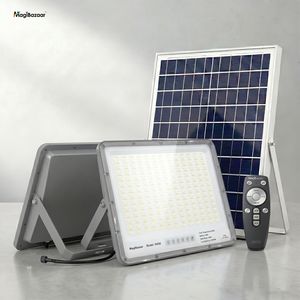
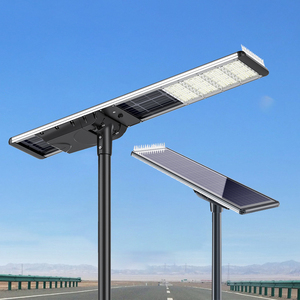
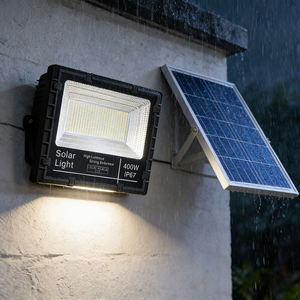
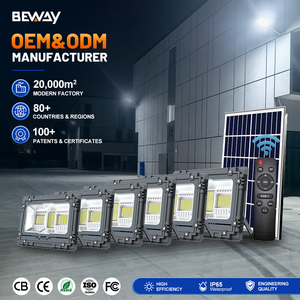
Over two decades of vertical integration powering municipal and mega-scale commercial installations globally.
The global transition toward off-grid utility lighting has placed China’s high mast solar lighting manufacturers at the core of international infrastructure projects. High mast solar systems—typically defined as pole-mounted arrays spanning 15 to 50 meters in height—are essential for illuminating multi-lane highway interchanges, seaport container yards, international airports, logistics parks, and outdoor athletic arenas. Procuring these complex systems requires a sophisticated understanding of mechanical load tolerances, luminaire optical efficiency, energy storage chemistry, and intelligent power tracking.
Unlike standard solar street lights, high mast solar luminaires must project light uniformities (U0 > 0.40) over massive surface areas while resisting extreme wind shear forces (up to 60 m/s or 134 mph). China's leading Tier-1 suppliers deliver this through integrated heavy-gauge A36 steel die-casting, specialized asymmetric optical lenses (Types I through V), and patented MPPT algorithms capable of 98.5% tracking conversion efficiency.
High mast structures operate under intense structural dynamic stress. Leading Chinese manufacturers leverage finite element analysis (FEA) to engineer hot-dip galvanized steel poles resistant to atmospheric corrosion (ISO 1461 compliant). Key structural features include:
Achieving zero light pollution while ensuring strict Lux distribution across large fields requires state-of-the-art optical engineering. By integrating Lumileds and Cree LED chips, top-tier Chinese suppliers achieve fixture-level optical efficacies exceeding 200 Lm/W.
Custom beam angles (30°x60°, 60°x120°) minimize spill light and sky glow while delivering precise foot-candle illumination on sports pitches and aprons.
Maximum Power Point Tracking (MPPT) with digital pulse-width modulation adjusts voltage dynamically to optimize energy yield by up to 30% over PWM systems.
Industrial-grade Lithium Iron Phosphate (LiFePO4) battery packs rated for 4,000+ deep charge-discharge cycles at 80% Depth of Discharge (DoD).
Comparing Legacy Metal Halide/Grid Systems vs. Standard Commercial Solar vs. SOLTECH Grade High Mast Solar Systems.
| Technical Spec / Feature | Legacy High Mast (Grid/HPS) | Generic Commercial Solar Light | Industrial High Mast Solar System |
|---|---|---|---|
| Luminous Efficacy | 80 - 100 Lm/W | 120 - 150 Lm/W | 200+ Lm/W (Lumileds Engine) |
| Lumen Output Range | 50,000 - 150,000 lm | 5,000 - 20,000 lm | 40,000 - 160,000+ lm |
| Battery Chemistry & Life | N/A (Grid Dependent) | Ternary Lithium (2-3 Years) | Grade-A LiFePO4 (10+ Years / 4000 Cycles) |
| Autonomy Days (Rainy/Cloudy) | 0 Days (Blackout Risk) | 1 - 2 Days | Up to 7 Consecutive Nights |
| Trenching & Cabling Cost | Extremely High ($50-$120/ft) | Zero Trenching | Zero Trenching & Zero Cable Expenses |
| Smart IoT Telemetry | None or Manual Relay | Basic Infrared Remote | LoRaWAN / Zigbee Remote Management |
| Certification & Compliance | Standard Electrical | Basic CE / RoHS | UL, DLC, CE, BAA Compliant Options |
With over two decades of dedicated solar illumination innovation, our enterprise operates across 5 specialized proprietary manufacturing plants in China. By managing the complete manufacturing lifecycle—from initial die-casting and optical lens molding to SMT PCB placement and digital controller programming—we guarantee unyielding quality control and competitive B2B factory-direct pricing.
We do not assemble off-the-shelf parts. Our in-house foundry and electronic engineering teams build the heat sinks, optical lenses, MPPT drivers, and metal structural frames from scratch.
Our luminaires undergo rigorous third-party testing for IP67 ingress protection, IK10 mechanical impact protection, salt-spray corrosion resistance (1000 hours), and IES LM-79/LM-80 photometric validation.
Supported by leading electrical wholesale distributors—including WESCO, Border States Electric, Platt Electric Supply, and Echo Electric—ensuring swift localized logistical support.
As municipal authorities, port operators, and industrial EPC contractors plan long-term capital investments, key technological shifts are transforming the high mast solar lighting sector. Incorporating these emerging trends into early stage tenders ensures future-proof deployment and optimized lifecycle ROI.
Traditional P-type PERC monocrystalline panels are rapidly giving way to N-type TOPCon (Tunnel Oxide Passivated Contact) solar cells. In high mast applications, N-type cells offer lower temperature coefficients (-0.30%/°C) and higher conversion efficiencies (>22.5%). Furthermore, vertical and high-angle bifacial panel arrangements harvest ambient albedo reflection from ground surfaces (concrete, snow, or water), boosting overall energy production by up to 15-25% during low-irradiance winter months.
Modern high mast solar installations are no longer standalone off-grid units; they operate as connected nodes within smart urban networks. Procurement specifications increasingly require:
Global environmental regulations (such as the EU Battery Regulation and North American ESG mandates) are pushing procurement directors to demand modular hardware designs. Future high mast solar fixtures feature toolless quick-disconnect driver bays, modular LED light engines, and recyclable aluminum enclosures—extending total pole lifecycle beyond 25 years with simple 10-year battery maintenance cycles.
For dynamic industrial environments such as open-pit mining, major highway construction, and disaster relief zones, fixed high masts are being complemented by mobile solar light towers (such as the SUPER EMPOWER® mobile tower series). These hybrid units feature automated hydraulic masts and auxiliary grid/generator inputs for uninterrupted 365-day operation.
Technical clarity on procurement, custom OEM manufacturing, optical simulation, and shipping logistics from China.