High Mast 1000W
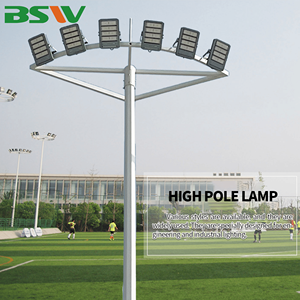
2025 High-Output 400W–1000W Solar LED Flood Light
- Efficacy: 200 Lm/W Ultra-High Output
- Battery: Grade-A LiFePO4 Pack
- Application: Stadiums & Light Towers

Examine China’s premier engineered mobile solar light towers, high-mast floodlights, and integrated off-grid luminaires engineered for extreme construction site environments and multi-shift industrial operations.
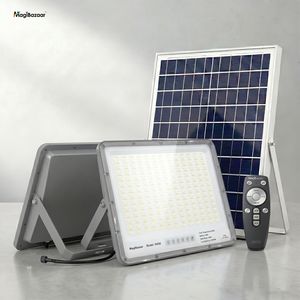
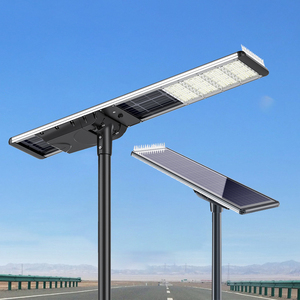
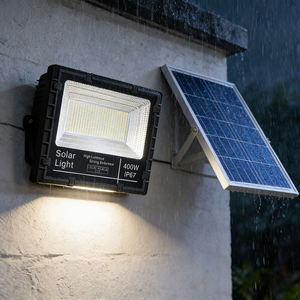
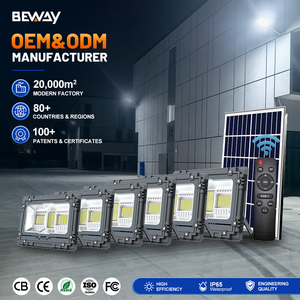
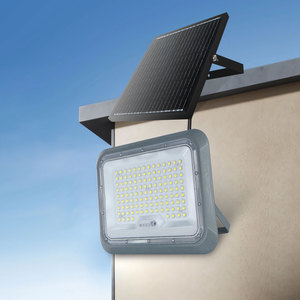
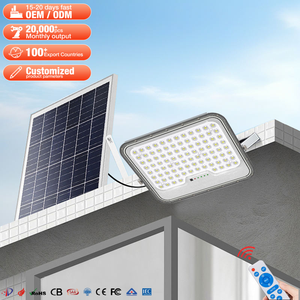
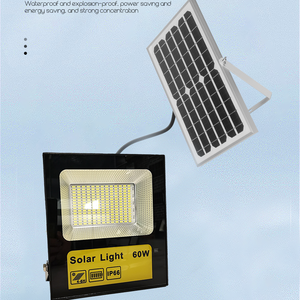
High-performance illumination on off-grid infrastructure sites requires precise alignment between photovoltaic conversion, energy storage density, heat dissipation, and photometric beam distribution.
Temporary illumination on heavy excavation, mining, and highway expansion sites must comply with strict safety lighting standards (e.g., OSHA 1926.56 specifying minimums from 5 to 30 foot-candles depending on task criticality). Our light tower systems utilize asymmetric Type II, III, and IV optical lenses engineered from optical-grade PMMA. By achieving 200 Lumens per Watt (Lm/W), our LED modules maximize area coverage while mitigating high-angle glare that risks blinding heavy crane operators and equipment drivers.
Traditional lead-acid or AGM batteries exhibit severe thermal degradation and low DoD (Depth of Discharge) limits (max 50%). Our construction site mobile towers integrate industrial Grade-A Lithium Iron Phosphate (LiFePO4) battery chemistry featuring 80% to 90% DoD and exceeding 4,000 deep charge-discharge cycles at 25°C. Built-in Battery Management Systems (BMS) provide real-time protection against over-voltage, cell imbalance, thermal runaway, and sub-zero temperature charging cut-offs.
Solar energy availability varies dramatically across construction site latitudes and seasonal weather profiles. Our custom Maximum Power Point Tracking (MPPT) charge controllers achieve a tracking efficiency of >99.5%. Embedded with 4G/GPS telemetry, site logistics managers can remotely monitor battery state-of-charge (SoC), adjust brightness schedules via IoT cloud dashboards, and receive instant tilt/vibration alerts in case of site collision or unauthorized movement.
The global construction machinery market is undergoing a structural transition toward decarbonization, noise mitigation, and digital asset tracking. Major infrastructure engineering contractors are overhauling procurement specifications to meet stringent net-zero mandates.
Historically, mobile light towers relied on 6kW–10kW diesel generator engines. However, rise in fuel costs, continuous maintenance logistics (oil changes every 250–500 hours), and urban noise restrictions (nighttime construction zones capping sound levels at <60 dB) have accelerated diesel phase-outs. Mobile solar light towers deliver zero operational fuel costs (OPEX), completely silent zero-decibel operation, and zero local greenhouse gas emissions.
For high-latitude infrastructure projects—such as northern European road builds or high-altitude mining sites—procurement specs are leaning toward multi-source hybrid light towers. These units combine fold-out high-wattage N-type monocrystalline solar arrays (up to 1800W peak) with vertical-axis wind turbines or micro diesel-generator auto-start capabilities to guarantee 365-day 100% lighting uptime regardless of polar winter darkness.
Modern mobile lighting systems must endure rigorous site relocation over unpaved laydown areas and quarry trails. Future procurement highlights fully hot-dip galvanized steel chassis, hydraulic or manual telescopic masts reaching 9 meters (30 feet), wind load certification resistant against 100 km/h to 120 km/h wind gusts, and heavy-duty outriggers with leveling jacks engineered for rough terrain stability.
Government agencies and international engineering consortia now mandate validated Environmental, Social, and Governance (ESG) reporting during contract bidding. Deploying a fleet of 50 solar light towers over a 24-month project lifecycle eliminates approximately 300 to 450 metric tons of CO2 emissions compared to legacy diesel towers, providing contractors with audit-ready carbon credit documentation.
With over two decades of dedicated solar lighting manufacturing experience, 5 specialized production hubs, and full vertical integration from aluminum die-casting to proprietary controller programming, we deliver unmatched equipment consistency.
We do not rely on third-party sub-assemblers. Our 5 dedicated factories control aluminum die-casting, automated SMT surface mount electronic placement, LiFePO4 battery pack assembly, optical lens molding, and robotic powder coating under ISO9001 quality management protocols.
Our complete solar floodlight and light tower product portfolio holds internationally recognized certifications including DLC Premium, UL1598, CE, RoHS, IP67, and IK10 impact ratings. Specific series offer BAA (Buy American Act) compliance options for North American public infrastructure projects.
Our in-house lighting optical engineers provide custom IES file generation and comprehensive Dialux 3D photometric simulations for your construction site layouts, ensuring optimal fixture spacing, lux uniformity, zero dark spots, and compliance with project site tenders.
| Evaluation Parameter | Solar Light Tower (SUPER EMPOWER Series) | Legacy Diesel Light Tower (6kW Diesel Engine) |
|---|---|---|
| 3-Year Fuel Consumption Cost | $0 (100% Free Solar Powered) | ~$14,400 per unit (Based on 10 hrs/day @ $1.10/L) |
| Engine Servicing & Maintenance | $0 Routine Engine Maintenance | ~$1,800 per unit (Filters, oil changes, belts every 300 hrs) |
| Noise Level Output | 0 dB (100% Silent Operation) | 72 dB – 85 dB (Requires hearing protection) |
| Annual Carbon Dioxide Footprint | 0 Metric Tons CO2 | ~9.2 Metric Tons CO2 per unit annually |
| Estimated Payback Period (ROI) | 9 to 14 Months Operational Payback | Ongoing escalating operational cost center |
Essential technical answers for equipment fleet managers, procurement officers, and construction site engineers selecting off-grid solar illumination equipment.
Our construction site solar light towers are engineered with high battery autonomy ratios. By utilizing high-efficiency Monocrystalline N-Type solar panels (conversion efficiency >23.5%) paired with oversized industrial LiFePO4 battery banks and adaptive MPPT smart dimming algorithms, the system maintains continuous nighttime lighting for up to 7 consecutive rainy or overcast days without grid recharge. When sun conditions drop below optimal levels, smart sensors dynamically adjust dimming levels based on occupancy or motion radar, preserving energy for critical core working hours.
OSHA standard 1926.56 establishes minimum illumination intensities for construction zones: 5 foot-candles (approx. 54 Lux) for general construction areas, concrete placement, and excavation laydowns; 10 foot-candles (approx. 108 Lux) for equipment maintenance yards, batch plants, and access pathways; and 30 foot-candles (approx. 320 Lux) for detailed electrical or engineering inspection stations. Our high-output 1000W LED solar light tower arrays mounted at 9-meter heights deliver uniform illuminance exceeding 100 Lux across a footprint of over 2,500 square meters, fully satisfying OSHA and international ISO site safety standards.
Lithium Iron Phosphate (LiFePO4) offers three decisive technical advantages for heavy equipment environments: thermal stability, cycle longevity, and deep discharge tolerance. Unlike NMC batteries which carry thermal runaway risks at high ambient temperatures, LiFePO4 remains chemically stable up to 65°C. Furthermore, LiFePO4 cells support over 4,000 deep discharge cycles at 80% DoD, compared to lead-acid batteries which degrade rapidly after 500 cycles at 50% DoD. This extends the operational battery life of the light tower to 8-10 years, drastically reducing asset replacement overhead.
Structural integrity against wind overturning is achieved through heavy chassis geometry, low center-of-gravity battery enclosure placement, and retractable heavy-duty outrigger legs. Our mobile trailers feature four extendable galvanized steel outriggers with adjustable leveling jacks that expand the physical footprint base. The telescopic vertical mast is constructed from high-tensile Q235/Q345 structural steel, engineered and FEA-tested to withstand sustained wind speeds up to 100 km/h to 120 km/h with the mast fully extended to 9 meters.
Yes. Cold-weather engineering is a core specialization of our product architecture. For sub-zero operations (down to -30°C), our battery enclosures are equipped with integrated thermodynamic thermal heating pads and internal insulation jackets. Controlled by the smart BMS, thermal heating turns on automatically during solar charging windows to ensure LiFePO4 cells remain within safe temperature thresholds, preventing lithium plating and ensuring dependable winter operation across alpine, northern European, and North American job sites.
Unlike diesel generator light towers requiring oil filter changes every 300 hours, solar light towers have no moving mechanical engine parts. In high-dust mining or earthmoving environments, routine maintenance is limited to periodic surface cleaning of the glass solar panel faceplate to remove dust accumulation (soiling) and maintain optical PV absorption. Our floodlight glass lenses feature anti-static, hydrophobic coatings that minimize dust adhesion, allowing rainfall to naturally rinse away airborne particulate matter.
As China’s leading direct OEM/ODM solar light tower manufacturer, we offer complete customization for commercial fleet procurement. Custom options include tailored trailer hitch couplings (ball, pintle ring, or NATO towing hitches), hybrid backup auto-start generators, custom RAL color powder coating, custom branding logos, IP-camera surveillance mounting arms, 4G/GPS fleet management integration, and specialized optical lens configurations for high-mast or broad perimeter throw.
For broad laydown yards, equipment storage, and general excavation zones, we recommend symmetric wide beam optics (120° x 120°) or asymmetric Type III optics that project light outward in a wide rectangular pattern. For internal construction haul roads, perimeter security fences, and narrow linear trenching sites, Type II long-throw optics (60° x 150°) concentrate illumination along the roadway, preventing light spillage into neighboring unexcavated land and maximizing forward foot-candle intensity.
Our heavy-duty solar light tower systems are built for long asset lifecycles: Monocrystalline photovoltaic modules feature a 25-year performance warranty maintaining >80% output; Lumileds/Cree LED chips are rated for LM-80 lifespan exceeding 100,000 operational hours (approx. 22 years of nightly 12-hour use); LiFePO4 energy storage packs provide 4,000+ deep cycles (approx. 10 years of daily cycling); and the hot-dip galvanized structural steel trailer chassis carries a 15-year structural corrosion protection guarantee.
Traditional diesel towers are classified as hazardous freight due to residual engine oil and fuel tank compliance when shipping via ocean container. Solar light towers carry zero fuel liquids, simplifying sea freight clearance. Our trailers feature optimized dimensions designed for standard 40ft High-Cube (40HQ) ocean shipping containers, allowing up to 8 to 12 compact mobile light tower units to be securely packed per container, drastically reducing international freight costs per unit for overseas engineering projects.