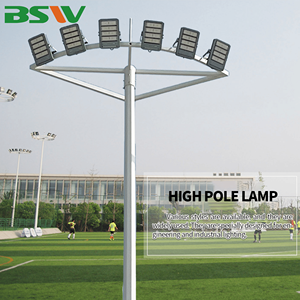
Engineered for extreme environmental durability, high luminous efficacy, and zero-carbon infrastructure operations. Manufactured under ISO9001, ISO14001, and UL quality systems.
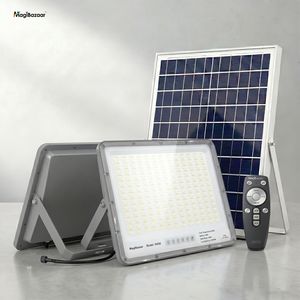
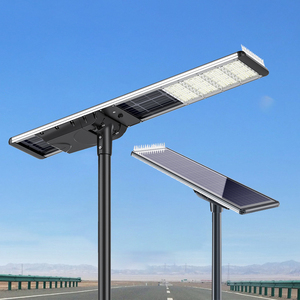
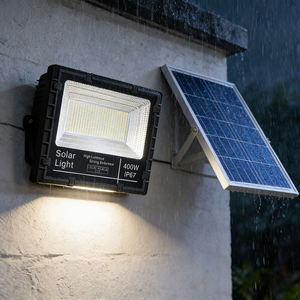
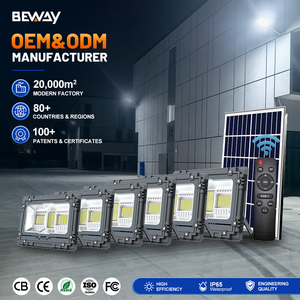
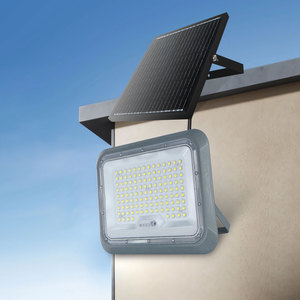
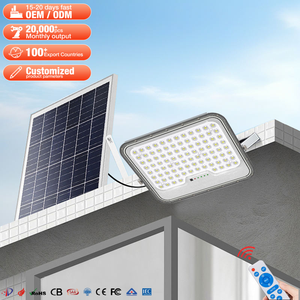
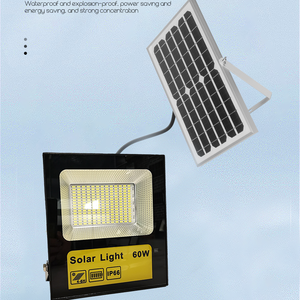
Verified laboratory benchmark metrics driving our global B2B OEM & ODM deployments.
A deep technical dive into high-reliability off-grid solar LED engineering, optical distribution engineering, and lithium thermal management for municipal infrastructure procurement.
Modern commercial automatic solar lights require maximum power conversion within constrained luminaire surfaces. By deploying N-Type TOPCon monocrystalline cells with efficiency ratings exceeding 24.5%, solar arrays deliver rapid charge acceptance even under low irradiance (cloudy or northern altitude conditions), outperforming legacy PERC panels by up to 15% in daily energy yield.
Maximum Power Point Tracking (MPPT) controllers utilize dynamic dual-stage charging algorithms with peak tracking efficiency of ≥98.5%. Combined with microwave motion sensors and integrated ambient intelligence, luminaires dynamically balance illumination schedules—switching automatically between 100% full lumen output during traffic windows and power-saving eco-modes during lull periods.
Powering industrial solar floodlights and street lights requires ultra-stable energy storage. Automotive-grade Lithium Iron Phosphate (LiFePO4) battery packs offer 4,000+ deep discharge cycles at 80% DoD. Integrated smart BMS provides multi-point thermal protection, active cell balancing, and overcharge/overdischarge protection between -20°C and +65°C.
Utilizing high-transmittance optical PC lenses (95% light transmission rate), commercial solar lights achieve Type II, Type III, and Type V asymmetrical distributions. This precise optics control eliminates glare, prevents light trespass, complies with Dark-Sky environmental requirements, and optimizes pole spacing distance by up to 30% to lower total project CAPEX.
Heat accumulation degrades both LED lumen maintenance and battery lifespan. High-pressure die-cast ADC12 aluminum housings with aerodynamic cooling fins accelerate passive thermal convection. Surface treatments utilize fluorocarbon electrostatic powder coating to pass 1,000-hour ASTM B117 salt spray corrosion testing for coastal and harsh industrial deployments.
Solid-state photoelectric sensing integrated directly within the PV array continuously samples ambient lux levels. When ambient light drops below 10 Lux, the system automatically triggers illumination sequence without manual intervention. Dusk-to-dawn programming guarantees seamless zero-latency transition night after night.
In modern commercial solar procurement, nominal power rating (e.g., 400W or 1000W fixture labeling) is secondary to system efficacy (Lm/W). High-efficiency luminaires operating at 200 Lm/W deliver equivalent photometric lux levels on the ground using half the wattage of legacy 100 Lm/W fixtures, cutting required battery and panel sizing in half while drastically improving winter operational resilience.
Analyzing global regulatory shifts, IoT smart city integration, and supply chain strategies shaping municipal and commercial lighting acquisitions.
Commercial solar street lighting is rapidly evolving from standalone fixtures into interconnected smart city endpoints. Modern tenders increasingly demand NEMA 7-pin or Zhaga Book 18 socket compatibility for modular plug-and-play installation of LoRaWAN, Zigbee, or Cellular IoT controllers.
Central Management Systems allow municipal engineers to remotely monitor real-time battery state of charge (SoC), track energy harvest performance, adjust lighting curves dynamically, and receive automated maintenance alerts before outages occur—reducing operational maintenance OPEX by up to 60%.
Enterprise clients and governmental agencies now require full Environmental, Social, and Governance (ESG) compliance reports alongside structural engineering deliverables. Supply chains are audited for carbon neutrality, ethically sourced minerals in lithium battery production, and cradle-to-cradle recyclability of aluminum housings.
By switching from utility grid-tied fixtures to off-grid solar commercial lights, project developers gain direct carbon offset credits, accelerate LEED certification for commercial developments, and eliminate expensive utility trenching and cabling infrastructure during site preparation.
Global buyers are prioritizing suppliers capable of navigating complex international trade regulations, including Build America, Buy America (BAA) requirements, CE directives, and UL standards. Partnering with vertically integrated Chinese manufacturers offering multi-facility export capabilities ensures stable component availability and predictable lead times regardless of macro logistics disruptions.
Where commercial off-grid lighting is headed: next-gen material science, hybrid architectures, and AI power management.
The next breakthrough in commercial solar light panels lies in Perovskite-Silicon tandem PV cells, promising conversion efficiencies exceeding 30%. This development will allow compact luminaires to double their solar charging throughput without increasing fixture footprint, ideal for space-constrained urban light poles.
For critical infrastructure (stadiums, high-traffic industrial ports, airports), modern commercial lights incorporate hybrid dual-power input modules. The fixture prioritizes solar energy stored in its LiFePO4 battery; if extended severe weather depletes reserves, it automatically switches to auxiliary AC grid power seamlessly.
Dust accumulation and bird droppings on solar panels reduce power output by up to 25% over time. Next-gen automatic commercial solar lights integrate hydrophobic titanium dioxide ($TiO_2$) nano-coatings that use rainwater and UV rays to continuously decompose surface organic dirt automatically.
Over 20 years of vertical integration, 5 proprietary production complexes, and rigorous quality management engineered for global B2B distributors and contractors.
Unlike simple assembly trading companies, our enterprise controls full production vertically across 5 specialized factories: Die-casting, Surface Mount Technology (SMT), MPPT Electronic Controller Fabrication, Lens Optics Molding, and Battery Pack Assembly. This internal control guarantees stringent batch consistency.
Every batch undergoes strict 100% aging tests, IP67 waterproof immersion chambers, IK08-IK10 mechanical impact verification, thermal shock cycling (-40°C to +80°C), and goniophotometer sphere photometric validation to ensure compliance with DLC, UL, CE, RoHS, and IES standards.
We provide full B2B project engineering services. Send us your site CAD files or roadway coordinates, and our optical engineering team will generate customized Dialux photometric simulation reports detailing exact lux levels, uniformity ratios, pole heights, and optimum spacing within 24 hours.
Technical reference overview across our primary automatic solar commercial floodlight and street light configurations.
| System Wattage Equivalent | Solar Panel Type & Capacity | Battery Pack (LiFePO4) | Lumen Efficacy | IP Rating | Recommended Applications |
|---|---|---|---|---|---|
| 30W - 80W | Monocrystalline A-Grade (18V 40W-90W) | 12.8V 24Ah - 45Ah | ≥ 190 Lm/W | IP65 / IP67 | Park Pathways, Residential Roads, Perimeters |
| 100W - 200W | High-Efficiency Mono TOPCon (18V 100W-180W) | 12.8V 60Ah - 100Ah | ≥ 200 Lm/W | IP67 | Commercial Parking Lots, Warehouses, Arterial Roads |
| 300W - 500W | High-Output Mono Array (36V 200W-320W) | 25.6V 80Ah - 150Ah | ≥ 200 Lm/W | IP67 / IK10 | Industrial Plants, Logistics Hubs, Stadium Parking |
| 600W - 1000W | Multi-Module Rigid Array (36V 400W-600W) | 25.6V 200Ah - 300Ah | ≥ 210 Lm/W | IP67 / High Mast | Sports Courts, Football Stadiums, Mining Sites, Ports |
Direct answers to technical queries from engineering consultants, project contractors, and municipal procurement directors.
Our commercial solar systems are engineered with dynamic battery autonomy (typically 5 to 7 days). The MPPT smart controller detects consecutive days of low solar radiation and automatically adjusts illumination output curves, conserving battery power while guaranteeing minimum safety lux levels throughout the night without total blackout.
Our Grade-A LiFePO4 battery cells deliver over 4,000 charge/discharge cycles at 80% Depth of Discharge (DoD), translating to an operational lifespan of 10 to 12 years. The monocrystalline solar panel glass and structure carry a 25-year performance warranty (maintaining ≥80% output at year 25), while LED chips last ≥100,000 hours (L70).
Yes. The aluminum housing is structurally designed for wind loads up to 160 mph (14-level typhoon resistance). For sub-zero operations down to -20°C (-4°F), our battery compartments feature insulated thermal management systems or integrated micro-heating modules powered by early-morning solar gain.
Absolutely. We provide comprehensive Dialux optical simulations free of charge for qualified B2B projects. Simply provide your pole height, road/lot dimensions, and target lux requirements, and our application engineering team will supply accurate IES files and 3D rendering reports.
All high-mast and stadium-grade automatic solar lights come standard with a comprehensive 5-year full system warranty. Products are certified under CE, RoHS, IP67, IK10, and select models carry DLC / UL testing reports for municipal rebate compliance in international markets.
We offer extensive customization including optical beam angle selection (Type II/III/V), customized housing color powder coats (RAL codes), private label laser etching, smart controller protocol customization (LoRaWAN, Zigbee, Bluetooth), and specialized color temperatures (ranging from 2700K warm amber to 6500K cool daylight or turtle-friendly 590nm amber).
Connect directly with our senior application engineers to receive full product datasheets, IES files, and wholesale factory pricing for your upcoming commercial projects.