
Engineered for highways, municipal roadways, logistics parks, and high-security perimeters with zero grid dependency and extreme weather autonomy.
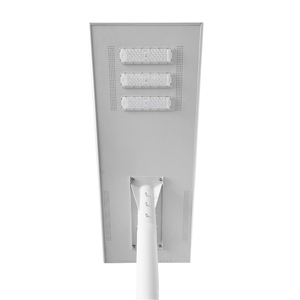
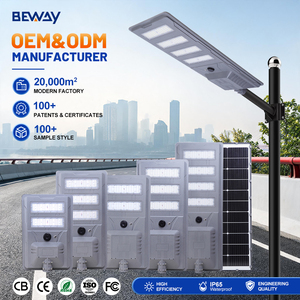
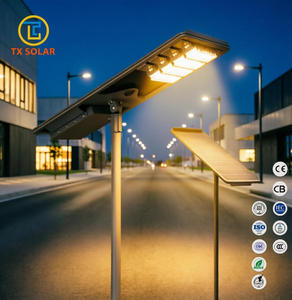

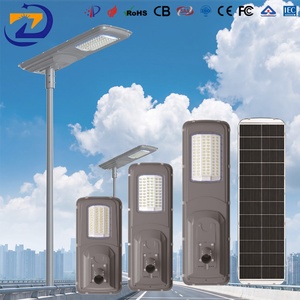
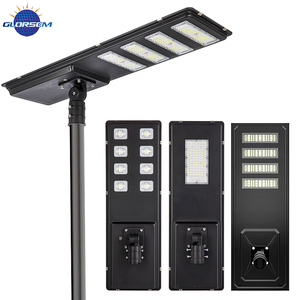
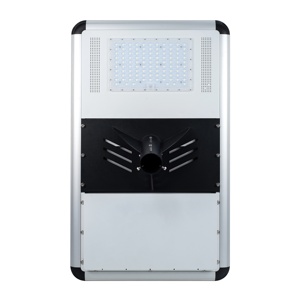
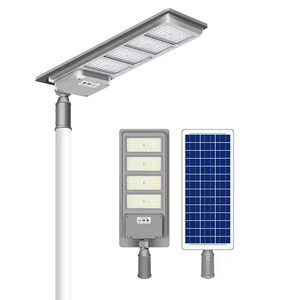
200+
Lm/W System Efficacy
20+
Years R&D Expertise
5
Proprietary Plants
7 Days
Rainy Autonomy
Why leading global EPC contractors, municipalities, and B2B distributors select our China manufacturing hub for off-grid infrastructure projects.
Spanning 5 specialized production facilities across China, our vertical manufacturing model encompasses aluminum pressure die-casting, automated SMT LED placement, custom MPPT PCB controller production, Grade-A LiFePO4 battery pack assembly, and dark-room goniophotometric optical validation. This end-to-end oversight guarantees strict quality control and eliminates component mismatch.
By utilizing ultra-high-efficiency Lumileds and Cree LED emitters combined with high-transmittance optical PMMA lenses, our standalone luminaires achieve up to 200 lumens per watt. This industry-leading efficiency allows us to reduce solar panel dimensions and battery capacity requirements by 30% while delivering identical or superior ground illuminance.
We exclusively engineer systems using premium Grade-A Lithium Iron Phosphate (LiFePO4) energy storage modules. Featuring integrated Smart BMS (Battery Management System), these batteries deliver over 6,000 deep-discharge cycles at 80% DOD, boasting thermal stability up to 65°C and cold-weather resistance down to -30°C with automated thermal heating foils.
Standalone commercial solar lighting systems operate under complex environmental conditions where electrical grid failure is not an option. Traditional outdoor grid-tied luminaires require expensive underground trenching, heavy copper wiring, continuous utility expenditure, and remain vulnerable to central power outages. Below is a comprehensive engineering comparison detailing how our standalone industrial-grade solar luminaires outperform conventional and low-tier off-grid alternatives.
| System Metric / Feature | Traditional Grid-Tie Lighting | Generic Market Solar Light | Our Industrial Solar System Benchmark |
|---|---|---|---|
| Luminous Efficacy | 110 - 130 Lm/W | 120 - 140 Lm/W | 180 - 200 Lm/W |
| Energy Storage Tech | N/A (Grid-dependent) | Recycled Ternary NCM / Lead-Acid | New Grade-A LiFePO4 (EV Grade) |
| Battery Lifespan | N/A | 1.5 - 3 Years (800 Cycles) | 10+ Years (6,000+ Cycles) |
| Charge Controller Type | N/A | PWM (70-75% Efficiency) | Smart MPPT (98.5% Efficiency) |
| Trenching & Cabling Cost | High ($35 - $90 / meter) | Zero Trenching | Zero Trenching & Zero Cabling |
| Rainy Day Autonomy | 0 Days (Blackout vulnerable) | 1 - 2 Days Max | 5 - 7 Days Continuous Autonomy |
| Operating Temperature | -20°C to +50°C | -10°C to +45°C | -30°C to +65°C (Extreme Rated) |
| Certifications & Code | Standard CE / UL | Basic CE / RoHS | DLC 5.1, UL Listed, CE, IP66, IK10 |
The global commercial outdoor lighting market is experiencing a structural paradigm shift. As municipal carbon-neutrality mandates accelerate worldwide, standalone solar lighting systems have transformed from simple off-grid alternatives into high-tech, data-driven smart urban infrastructure nodes. Key development vectors include:
Modern standalone solar street lamps are transitioning from standard monocrystalline panels to N-type TOPCon and HJT bi-facial photovoltaic modules. Incorporating vertical cylindrical PV modules (such as wrapped pole solar columns) prevents snow accumulation and sand coverage, increasing daily power generation by up to 30% in dusty desert or high-latitude snowfall zones.
Legacy PWM controllers are being completely phased out of commercial RFPs. Modern MPPT (Maximum Power Point Tracking) controllers now utilize real-time algorithm tracking to lock into maximum solar yield within milliseconds. Coupled with AI motion detection and adaptive dusk-to-dawn dimming profiles, modern lamps calculate remaining battery SOC (State of Charge) and autonomously adjust lux output to guarantee zero darkness even during prolonged 10-day rainy spells.
Standalone solar street lights are no longer isolated units. Through integrated Zigbee, LoRaWAN, or NB-IoT modules, entire municipal fleets connect to a cloud-based Central Management System (CMS). Facilities managers can remotely monitor battery health, real-time lumen degradation, solar charging curves, and receive automated fault alerts, cutting municipal maintenance operational expenses (OPEX) by over 60%.
When engineering contractors, EPC firms, and municipal procurement directors evaluate commercial standalone solar street lighting manufacturers in China, the decision matrix has evolved past initial purchasing cost (CAPEX). True ROI evaluation centers on Total Cost of Ownership (TCO) and long-term risk mitigation.
Global buyers are strictly specifying modular internal architectures. Fast-plug connectors, pull-out drawer battery trays, and independent driver housings allow field technicians to perform maintenance or battery replacements in under 3 minutes without dismantling the luminaire from the pole.
Procurement guidelines now require pre-sale DIALux photometric reports. Responsible OEMs provide accurate IES files to simulate pole spacing, illuminance levels (Lux/Fc), uniformity ratios (U0), and glare compliance (BUG rating) to eliminate under-lighting or costly over-specification.
With strict international ESG compliance, global buyers demand manufacturers provide complete raw material sourcing transparency, non-conflict battery chemistry verification, and ISO14001 environmental management certification across all manufacturing facilities.
Technical answers to critical engineering, installation, and manufacturing questions asked by global B2B buyers.
Our standalone commercial solar luminaires combine three core engineering breakthroughs: 200 Lm/W high-efficacy LED modules, high-capacity Grade-A LiFePO4 battery storage sized with a minimum 3:1 daily generation ratio, and self-adaptive MPPT dimming algorithms. When the controller detects continuous low solar input during cloudy or rainy weather, it dynamically regulates continuous output levels while maintaining full microwave motion-sensor boost upon vehicle or pedestrian approach. This guarantees 5 to 7 days of continuous autonomy without complete system shutdown.
Lithium Iron Phosphate (LiFePO4) offers superior chemical, thermal, and structural safety compared to NCM and traditional Lead-Acid. LiFePO4 delivers 5,000 to 6,000 deep discharge cycles (at 80% DOD) compared to 800 cycles for NCM and 300-500 cycles for Lead-Acid. Furthermore, LiFePO4 will not experience thermal runaway or fire hazards even under high ambient temperatures (up to 65°C), making it the mandatory standard for industrial outdoor standalone lighting infrastructure.
We engineer precision PMMA optical lenses compliant with IESNA standards: Type II (for narrow roadways and walkways), Type III (for wide multi-lane highways and commercial perimeter roads), and Type IV/V (for wide-area open parking lots and square plazas). Proper optic selection maximizes pole-to-pole spacing, reduces total pole count per kilometer by up to 25%, and ensures glare-free light uniformity (U0 > 0.4).
As a primary manufacturer with 5 dedicated factories in China, we provide full ODM/OEM customization. This includes custom wattage ratings (20W to 600W equivalent), tailored solar panel wattage ratios, custom powder-coated color finishes (RAL shade matching), branded silk-screening, hybrid AC/DC grid-complementary power supplies, and integrated smart city IoT modules (Zigbee/LoRa/NB-IoT).
MPPT (Maximum Power Point Tracking) controllers continuously track the solar panel's voltage and current characteristic curve to extract maximum peak power. MPPT conversion efficiency reaches 97% - 99%, whereas traditional PWM (Pulse Width Modulation) controllers drop to 70% - 75% efficiency. In winter or under hazy overcast conditions, an MPPT system yields 20% to 35% more solar energy into the battery daily, preventing premature battery exhaustion.
All our commercial standalone street lighting enclosures are constructed from high-tensile ADC12 die-cast aluminum alloy with stainless steel hardware. They hold certified IP65/IP66 ingress protection ratings to prevent water and dust intrusion, IK09/IK10 mechanical impact ratings, and have undergone aerodynamic wind tunnel testing to withstand typhoon-grade wind speeds up to 160 mph (60 m/s).
Because standalone solar street lights completely eliminate underground trenching, electrical conduit laying, transformer distribution boxes, and grid connection labor, initial installation CAPEX savings typically range between 30% to 50% compared to traditional wired lighting projects. Combined with zero monthly utility electricity bills, most commercial and municipal projects achieve full financial payback within 12 to 24 months of deployment.
Request comprehensive product datasheets, factory-direct wholesale price lists, photometric DIALux simulation design services, or custom OEM project support from our senior solar engineering team today.